




Related News: Growth in Used Vehicle Values Expected at Least Through Spring 2022
Why Used Vehicle Values Will Not Crash
Analysis: A big drop of 20% to 30%, as one report suggests, is highly unlikely. History tells us a decline of more than 10% is rare indeed.
by Jonathan Smoke, senior economist, Cox Automotive
January 12, 2022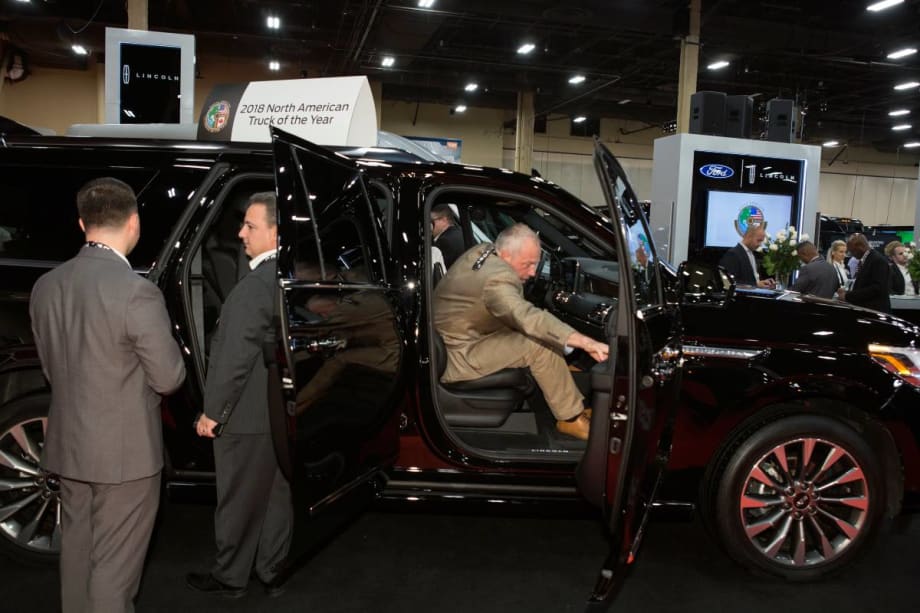
Used values for all types of vehicle classes, such as this 2018 Lincoln Navigator SUV, are not going to collapse amid the latest supply chain driven price increases.
Photo: Bobit
5 min to read
Our team held the quarterly Manheim Used Vehicle Value Index call last week. We reviewed the used-vehicle market performance through the final quarter of 2021 and provided our forward-looking view of the market into 2022.
A key topic in the discussion, of course, was the elephant in the room: Has the recent run-up of used-vehicle prices set the market up for a crash in 2022?
There is no doubt that last year was a remarkable one for the market. As my colleague Kevin Chartier, vice president of Manheim Consulting, noted during the call, “2021 was the perfect storm: massive financial stimulation thrown into a re-opening market, just as new-vehicle availability collapsed.” In those conditions, it’s no surprise used-vehicle values ended the year well into record territory leading some industry analysts to call for a pending “crash” of used-vehicle prices.
Vehicle Market Fundamentals Look Good
But here’s the bottom line: The fundamentals of the market do not support such a scenario.
The core argument behind the crash scenario seems to rest on the premise that retail used-vehicle prices and retail new-vehicle prices are severely out of whack. But in fact, the relationship — the gap between new and used — is not very far from the range experienced within the last decade.
In 2019, the average new-vehicle price was 179% of the average used-vehicle price. In 2021, the average was 163%. The gap in 2021 narrowed because used-retail prices increased 25% while new-vehicle average transaction prices (ATPs), according to our Kelley Blue Book team, increased around 14% in 2021.
The gap between new- and used-vehicle prices is not static, as it varies substantially over time. In 2014 it averaged 167%. This was following a very strong spring for used-vehicle values. The market did not see a major or fast market price correction as a result. It merely saw 24 months of above-average depreciation in the second halves of 2014 and 2015 and much of 2016, which was also when the new vehicle market was at peak supply and demand started to weaken.
It is our view that used-vehicle prices are not substantially out of alignment with new vehicle prices. Going forward, we expect used vehicles to depreciate in 2022. New-vehicle prices, however, are likely to see continued above-average inflation, as inventory levels improve but remain historically tight, and the mix of new vehicles produced favors expensive SUVs, trucks and new electric vehicles. That means, by year-end, the relationship between new and used prices could be back within historical norms and there would be no basis to judge values as being out of alignment.
No Crashes in Previous Financial Crisis
A significant crash in used-vehicle prices — a drop of 20% to 30%, as one well-publicized report suggests — is highly unlikely. History tells us that a decline of more than 10% is rare indeed. Why? As prices fall, demand builds. In 25 years, we have never seen a decline of as much as 13% within a year. A few points to consider:
Following the 9/11 terrorist attacks in New York City in September 2001, used-vehicle values declined 5.7% over 2 months as the economy struggled to get back on its feet. Values fully recovered within 6 months.
In the lease implosion in the fall of 2002, used-vehicle values declined 11.3% over an 8-month period and took 35 months to fully recover. This, however, was a relatively unique market problem, with far and away too much new and used supply.
In 2008, when the global financial system was close to collapse, used-vehicle values declined 12.6% over 3 months. Values took 7 months to recover.
In 2020, at the start of the pandemic, when the economy came to a standstill, values declined 10.1% in 1 month and were fully recovered 3 months later and headed into record territory.
The fundamental conditions are simply not in place to deliver even a double-digit correction in the coming year. Wholesale used prices have never seen a greater than 5% correction without an extreme oversupply situation. And we don’t see that happening. Just the opposite: With declines in sales to fleets and leases since 2019, the sources of wholesale vehicles are constrained at least through 2023. And there remains pent-up demand as a result of last year’s lack of supply. Furthermore, new-vehicle supply is likely to remain constrained at least through 2022.
Negative Vehicle Equity Overstated
On our call last week, there were questions about the potential negative equity consumers could be facing, having paid “too much” for a used vehicle in recent months. Again, we think those concerns are overstated.
Vehicles have been bought and sold at market prices, and comparisons to pre-pandemic values are misleading. We’ve had a step-change in values, and values have never gone back to prior levels, even with recessions. As long as there is inflation in new vehicle prices and in the economy, values will rise. Therefore, it is extremely unlikely that we will ever see 2019 values again. Auto credit does not face a growing negative equity problem.
Vehicles are depreciating assets. Auto loans are underwritten with that in mind and are designed to have negative equity throughout their terms. With higher down payments combined with appreciation already experienced in 2021, current auto loan-to-value ratios are lower, not higher. If we merely see above-average depreciation in 2022, risks will not grow for lenders and investors. Buyers will not be faced with negative equity challenges that are any different from what we experienced prior to the pandemic.
It is true that used-car margins will contract, but they are likely to remain above what they were pre-pandemic through at least the first half of 2022. Dealers need to be careful about acquiring and managing used-vehicle inventory as the peak in used-vehicle values approaches and a more normal pattern of depreciation returns. Barring economic catastrophe, however, we won’t see a return to pre-pandemic levels in used-vehicle values. We are forecasting wholesale used-vehicle values to lose about 3% year over year by the end of 2022. No one, dealers nor consumers, needs to worry about a crash in used-vehicle values.
Topics:Used Vehicle PricesNew Vehicle Pricesautomotive supply chainvehicle purchasingRemarketing & LifecycleSmall Fleet
Originally posted on Vehicle Remarketing
Subscribe to Our Newsletter
More Remarketing & Lifecycle

Ford Pro Launches Certified Pre-Owned Program for Class 1-7 Work Trucks
Ford Pro Advantage brings manufacturer-backed inspections, warranties, roadside assistance, and service support to used Class 1-7 commercial trucks and vans.
Read More →
The Hidden Cost of Idling
A low-mileage truck can still be one of the fleet’s hardest-working and most worn assets. Engine hours, idle time, and duty cycle reveal what the odometer misses.
Read More →
Building a Better Vehicle Replacement Model
Meter readings still matter, but engine hours, idle time, maintenance trends, and utilization can help fleets spot costly vehicles before the odometer does.
Read More →

AP Fleet Management Expands Remarketing Program for Commercial Work Trucks
AP Fleet Management expanded its commercial vehicle remarketing program with dedicated resale services and an online marketplace for used work trucks.
Read More →
What Actually Makes a Truck Reliable for Fleets?
What makes a truck reliable for fleets? From uptime to maintenance and spec’ing, here’s what really drives performance, and where fleets can weigh in.
Read More →
REP Inspection Services Launches, Delivering Professional Equipment Inspections
REP Inspection Services, led by someone with more than 30 years of industry experience, has launched its professional inspection services for trucks, trailers, and equipment across the commercial vehicle industry.
Read More →
Introducing Work Truck’s 2025 Remarketing Report Series
Work Truck’s 2025 Remarketing Report Series uncovers how data, timing, and technology are reshaping resale value and driving smarter fleet strategies.
Read More →
Fleet Remarketing Outlook 2026: EVs, Policy, and the Power of People [Part 4]
From EVs to policy changes, the 2026 fleet remarketing outlook is all about people, progress, and finding opportunity in stability.
Read More →
Digital Fleet Remarketing: How Tech and Transparency Build Buyer Confidence [Part 3]
Technology and trust are reshaping fleet remarketing in 2025. See how data, transparency, and partnerships drive better resale outcomes.
Read More →
Fleet Replacement Strategy 2025: When to Hold and When to Fold [Part 2]
Knowing when to sell or hold is key in 2025. Discover how fleet professionals use data and TCO insights to make smarter remarketing calls.
Read More →