




Fleet Remarketing Outlook 2026: EVs, Policy, and the Power of People [Part 4]
From EVs to policy changes, the 2026 fleet remarketing outlook is all about people, progress, and finding opportunity in stability.

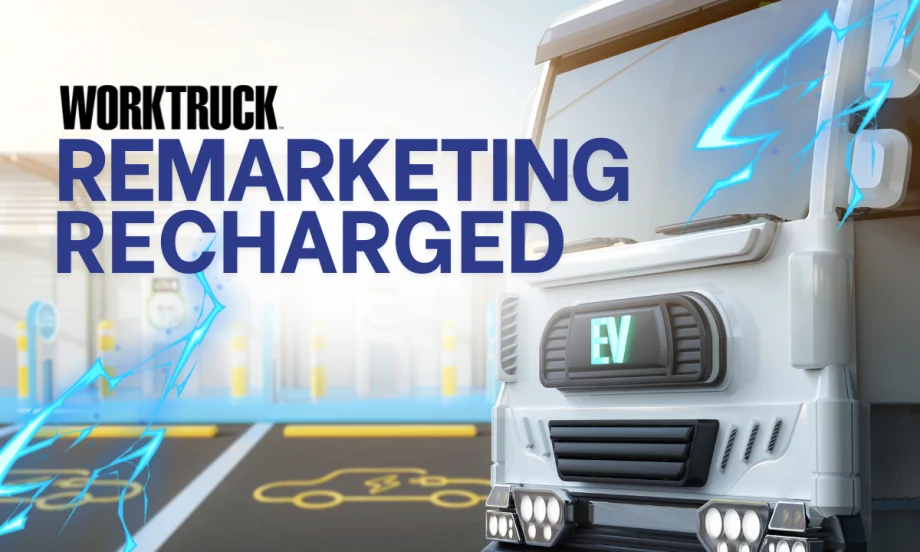
Remarketing is recharged for 2026. From electric trucks to evolving policies and people power, Work Truck’s final report explores what’s next for the future of resale.
Photo: Work Truck
The final installment of Work Truck’s 2025 Remarketing Report Series looks toward 2026, where electric trucks, shifting policies, and the people powering the fleet world will define the next chapter of remarketing.
Read through to the end for links to the rest of the series!
Electrification Meets the Secondary Market
After years of anticipation, electric trucks have officially entered their second life, and remarketers are navigating new territory. The used EV market is still small, but its impact is already being felt in valuations, buyer expectations, and fleet strategy.
“Electrification has become one of the most important shifts in years,” said Amber Powell, director of Vehicle Management at Black Book. “Twenty percent of new medium-duty sales and 12% of Class 7–8 sales are now battery-electric, supported by infrastructure investment and incentive programs. This transition is creating both opportunities and uncertainties for remarketers, as the secondary market begins absorbing its first wave of used electric trucks.”
EVs are entering resale channels with plenty of promise… and plenty of question marks. Buyers are eager for fuel and maintenance savings, but wary of long-term value, battery health, and technology obsolescence. The result? An evolving market that demands equal parts optimism and caution.
Steve Bender, president of Fleet Street Remarketing, summed it up plainly: “Considering that the excitement around EVs has cooled, we expect to see an influx of EVs coming into the remarketing space.”
That cooling, he explained, isn’t a sign of failure; it’s the natural next step.
“Fleets are testing, learning, and adjusting,” he said. “The rush to electrify is giving way to smarter strategies that balance sustainability with residual value.”
A Market Still Watching the Horizon
Remarketing veterans know that success often depends on the bigger picture, and 2026 is shaping up to be another year defined by outside forces.
Bill Bishop, senior vice president of sales and marketing at FLD, predicts a steady footing in the short term. “Overall, we see continued consistency and stability in the used wholesale market through the end of 2025 and Q1 2026,” he said.
But that stability comes with some fine print.
“Events on the world stage, from interest rate cuts to Middle East tensions and domestic policy shifts, will all have a big effect on asset remarketing in 2026, and any major developments could spoil this feeling of stability,” Bishop added.
Looking a bit further out, Bishop said vehicle prices are expected to climb modestly in the coming years.
“After weighing predictions from respected organizations like Cox Automotive and the National Automobile Dealers Association, we see roughly a $4,000 uptick in the price of the average new 2026 light-duty vehicle versus the same unit’s cost in 2025, with imported vehicles rising closer to $5,500 and U.S.-built models about $1,000,” he explained.
He added that the upward trend isn’t slowing anytime soon.
“That figure will be just south of $5,000 more for the average new light-duty vehicle — domestic or import — in 2027,” Bishop said, noting that such increases could have ripple effects across the market. “Most importantly, we believe these figures could reduce the 2026 and 2027 SAAR by as much as a million vehicles.”
The tightening will also affect used supply. “We expect the average age of used vehicles to increase, and the availability of low-mileage, late-model units will continue to narrow as we head into 2026 and 2027,” Bishop noted.
He expects fuel prices to stay relatively steady barring major geopolitical shocks. “Vehicle prices will rise only slightly — there’s not much more room to go,” he added.
Bishop is also keeping a close eye on how policy and regulation could shift the tone of the industry. “One potential trend I’ll be watching is what comes out of the current administration,” he said. “Some decisions have removed regulations and roadblocks on trucking. While much of this has been warmly received, not everything being proposed would have a positive effect, so we’ll be keeping an eye on what happens in the new year.”
Across the board, the sense is clear: 2025 may be the calm after the storm, but remarketing professionals aren’t getting too comfortable.
People Power in a Digital World
For all the focus on technology, pricing models, and policy, the heart of remarketing remains human. Every truck tells a story, every sale reflects a relationship, and every challenge (from tariffs to interest rates) ultimately comes down to the people who adapt, innovate, and persevere.
Bender shared a deeply personal reminder of that human spirit.
“The last year has presented a mountain of challenges personally that have kept me away from fleet more than I wanted. As most everyone in the industry knows, my son Sean was hit by a speeding boat a year ago and has spent the last year fighting back from the brink,” Bender shared. “Today, I’m happy to say he is back at college and thriving, and both my wife Jill and I are beyond thankful for his recovery and the outpouring of support we have received from the fleet industry.”
That gratitude runs deep, and so does his commitment to the community that supported him.
“I’m so lucky to have a skilled and talented team that kept our business running smoothly, and I look forward to getting back to the important work we do to help our clients in 2026: maximizing ROI, building on the human connections that make fleet so special, and helping fleets decide the right time and place to sell,” he said.
Bender’s story reflects what keeps this industry grounded: resilience. The work truck world runs on data and discipline, but its foundation is people: those who drive the trucks, analyze the numbers, and keep commerce moving no matter what’s happening in the headlines.
The 2026 Outlook: Stability, Strategy, and Strength
Across the insights from Black Book, FLD, and Fleet Street Remarketing, one clear theme has emerged: 2025 is the year remarketing got its footing back.
The volatility that defined the past few years has given way to cautious optimism. Fleets are leaning on data, staying disciplined about total cost of ownership, and taking advantage of opportunities when they appear, whether that’s cycling before tariffs hit or reinvesting proceeds into cleaner, more efficient models.
Together, their insights form a clear message: the remarketing world may be more digital, more measured, and more complex than ever, but its foundation hasn’t changed. It’s about timing, trust, and tenacity.
Keep Reading the 2025 Work Truck Remarketing Report Series
Explore the full series for more insights from fleet remarketing experts:
Part 1: The 2025 Work Truck Remarketing Market: Prices, Pressure, and What Comes Next: How the 2025 remarketing market has stabilized after years of volatility, and what shifting prices, rates, and economic pressures mean for fleets.
Part 2: Fleet Replacement Strategy 2025: When to Hold and When to Fold: How fleets are rethinking replacement timing, using data to hit the resale sweet spot, and finding the right balance between old and new iron.
Part 3: Digital Fleet Remarketing: How Tech and Transparency Build Buyer Confidence:
Discover how technology, transparency, and collaboration are reshaping remarketing success, and why strong partnerships still drive the best results.
More Remarketing
AP Fleet Management Expands Remarketing Program for Commercial Work Trucks
AP Fleet Management expanded its commercial vehicle remarketing program with dedicated resale services and an online marketplace for used work trucks.
Read More →
REP Inspection Services Launches, Delivering Professional Equipment Inspections
REP Inspection Services, led by someone with more than 30 years of industry experience, has launched its professional inspection services for trucks, trailers, and equipment across the commercial vehicle industry.
Read More →
Introducing Work Truck’s 2025 Remarketing Report Series
Work Truck’s 2025 Remarketing Report Series uncovers how data, timing, and technology are reshaping resale value and driving smarter fleet strategies.
Read More →
Digital Fleet Remarketing: How Tech and Transparency Build Buyer Confidence [Part 3]
Technology and trust are reshaping fleet remarketing in 2025. See how data, transparency, and partnerships drive better resale outcomes.
Read More →
Fleet Replacement Strategy 2025: When to Hold and When to Fold [Part 2]
Knowing when to sell or hold is key in 2025. Discover how fleet professionals use data and TCO insights to make smarter remarketing calls.
Read More →
The 2025 Work Truck Remarketing Market: Prices, Pressure, and What Comes Next [Part 1]
Fleet remarketing in 2025 is stabilizing. Experts share how prices, rates, and new tech are shaping used truck values and resale strategies.
Read More →
Copart and One Inc. Partner to Improve Auto Claims Process
ChatGPT said: One Inc and Copart partner to speed up lienholder payments, helping insurers process total loss vehicle claims faster and improve customer experiences.
Read More →
Fleet Remarketing Industry Council Launches to Shape Future Resale Value
What if fleets could shape how their vehicles are valued after resale? Now they can.
Read More →
CAR Partners with NAFA Fleet Management Association For 2026 Event
The event will connect fleet managers with vehicle remarketers to delve into topics that help fleet operations find remarketing solutions.
Read More →
How Technology, Transparency, and Trust Are Reshaping Commercial Trucking
How are tech, transparency & trust reshaping truck protection? National Truck Protection’s new President, Kevin Hull shares insights on dealer-first solutions & industry evolution
Read More →