





Braking Beyond Basics: Practical Tips to Extend Work Truck Brake Life
What Your Fleet's Brakes Might Be Telling You About Tailgating
Could frequent brake replacements reveal a driver following too closely? Learn how brake wear, driving habits, and maintenance costs connect.
November 18, 2026

Following too closely can lead to more frequent braking as traffic speeds change. Giving the vehicle ahead more space allows drivers additional time to react, potentially reducing unnecessary brake wear and improving safety.
Credit:
Work Truck | Enavato/Wirestock
8 min to read
We've all seen that driver. The one who seems convinced that getting a few feet closer to the vehicle ahead will somehow make traffic move faster. They're practically attached to the bumper in front of them, tapping the brakes every time traffic slows even slightly.
Meanwhile, the driver who leaves a little breathing room can ease off the accelerator, let the vehicle slow naturally, and keep moving without constantly reaching for the brake pedal.
And all that extra braking isn't necessarily getting anyone to their destination faster. We've all seen drivers tailgating, weaving through traffic, and accelerating around everyone, only to end up at the same stoplight a few minutes later.
We talk plenty about the safety risks of tailgating, but what about the maintenance costs? Could a driver who regularly follows too closely also be wearing through brake pads and rotors faster than necessary? And if a fleet doesn't have dashcams or technology monitoring following distance, could its maintenance records offer a clue?
Let’s make one thing clear right away: Brake wear alone can't prove someone is tailgating, but it might give fleet managers a reason to look more closely.
Why Following Distance Matters to Your Brakes
Let’s think about what happens when a driver is on the road in traffic. The vehicle ahead slows down. If they've left enough space, they have time to notice what's happening, take their foot off the accelerator, and let the vehicle start slowing before they need to apply the brakes.
Now think about the driver who is following that same vehicle much more closely.
There's less time to react, and even a small change in traffic speed may require you to brake to maintain your already limited following distance. Repeat that pattern throughout a workday, and the driver is using more of the vehicle’s braking system than necessary.
A quick Vehicle 101 refresher (feel free to skip ahead if you know your brakes): Brake pads press against rotating discs, or rotors, creating friction that slows the vehicle. That friction generates heat and gradually wears down the brake pads. More frequent braking, especially hard braking, can accelerate that wear. Brake life also depends on vehicle weight, speed, driving conditions, and the braking system itself.
Of course, frequent braking isn't always a sign of aggressive driving. Delivery routes, congested streets, steep grades, and heavy payloads can all increase brake use. But when comparable vehicles doing similar work have noticeably different brake service intervals, it's worth asking why.
What Could Unnecessary Braking Be Costing Your Fleet?
Brake maintenance isn't cheap, especially when replacement intervals start getting shorter. According to RepairPal's September 2026 estimate, replacing brake pads on a Ford F-150 costs approximately $246 to $303, including parts and labor. That doesn't include related repairs or additional necessary work.
Rotors may also need replacement depending on their condition, and costs can be considerably higher for larger commercial vehicles.Now consider what happens when brake service becomes more frequent.
Imagine a fleet of 25 F-150s, each traveling 30,000 miles annually. Using the higher $303 estimate for brake pad replacement and assuming service is normally needed every 50,000 miles, the fleet's annualized brake pad replacement expense would be approximately $4,545.
Shorten that interval to 35,000 miles, and the expense increases to approximately $6,493. That's an additional $1,948 annually for the same fleet traveling the same distance.
And remember, we're only talking about brake pads. Add rotors, additional repairs, vehicle downtime, or larger trucks with more expensive braking systems, and the potential costs increase.
These are hypothetical figures, not documented costs associated with tailgating. No universal percentage tells us how much close following shortens brake life. But the calculation illustrates why replacement frequency matters, especially when you consider shop time, vehicle downtime, and the potential disruption to daily operations.
The question isn't whether you can prevent every brake replacement. It's whether some are happening earlier than necessary because of driving habits that could be improved.
Calculate the Cost of Shorter Brake Life
What would more frequent brake replacements mean for your fleet's maintenance budget? Use our interactive calculator to enter your actual brake service costs, fleet size, and replacement intervals. See how quickly the additional expense can add up, and what improving brake life might mean for your bottom line.
Note: This calculator estimates the financial impact of shorter brake service intervals, not the specific costs caused by tailgating.
Can Brake Wear Reveal a Tailgating Problem?
Most fleet managers already have access to maintenance records showing when vehicles were serviced, what repairs were performed, and how many miles they've traveled. But how often do you review that information for possible differences in driving behavior?
Let's say two nearly identical work trucks operate similar routes, carry comparable loads, and follow the same maintenance schedule. One consistently needs brake work around 50,000 miles. The other requires service closer to 30,000 miles.
Does that mean the second driver is tailgating? Not necessarily, but again, it's worth investigating.
Start with the vehicle. A sticking caliper, dragging brake, or other mechanical problem could explain premature wear. Then consider the route, traffic conditions, payload, towing, and other factors that influence braking demands.
Brake pad thickness measurements taken during routine inspections can also help identify changes in wear rates. Uneven wear between wheels may point toward a mechanical problem rather than driving habits. Once you've considered those factors, it may be worth looking at the driver.
What About Telematics?
Fleets with telematics may have additional information to review, even without dashcams. Harsh-braking alerts can help identify situations where drivers are decelerating suddenly. Sometimes those events are unavoidable, such as when another motorist cuts off a truck or traffic stops unexpectedly.
Other times, they may indicate a driver is following too closely or failing to anticipate changing conditions. But there's another limitation worth remembering. A driver doesn't necessarily need to brake hard to create unnecessary wear.
Someone who repeatedly accelerates toward the vehicle ahead and then lightly applies the brakes to maintain a close following distance might never trigger a harsh-braking alert. Combining maintenance records with available driving data and route information can provide a better picture than relying on any single metric.
And for fleets without telematics, maintenance trends, driver conversations, and occasional ride-alongs can still help identify opportunities for improvement. The goal should be to understand what's happening, not to find someone to blame.
Give Your Drivers a Little Breathing Room
Improving following distance doesn't require an expensive technology investment or a complicated training program. It starts with helping drivers understand why a few extra seconds of space can make a difference.
The Federal Motor Carrier Safety Administration recommends that commercial drivers allow at least one second of following distance for every 10 feet of vehicle length at speeds below 40 mph, adding another second at higher speeds.
For example, a 40-foot commercial vehicle should maintain at least four seconds of following distance below 40 mph and five seconds at higher speeds. You need more space in poor conditions.
Here are a few habits worth reinforcing during driver meetings or safety training.
- Look farther down the road. Watching traffic several vehicles ahead can provide an earlier warning that conditions are changing.
- Ease off the accelerator sooner. When conditions allow, letting the vehicle slow naturally before braking can reduce unnecessary brake applications.
- Count the seconds. Pick a fixed object along the road and count how long it takes to reach that point after the vehicle ahead passes it.
- Don't race to the red light. Accelerating toward stopped traffic only to brake hard a few seconds later accomplishes very little.
- Remember what you're carrying. Additional payload, trailers, and poor road conditions require more room to stop safely.
- Let other drivers merge. Someone will inevitably move into that gap. Back off and reestablish a safe following distance instead of accelerating to close it.
None of these habits means avoiding the brakes when they're needed. Drivers should always brake promptly when safety requires it. The goal is smoother, more predictable driving that reduces unnecessary braking without compromising safety.
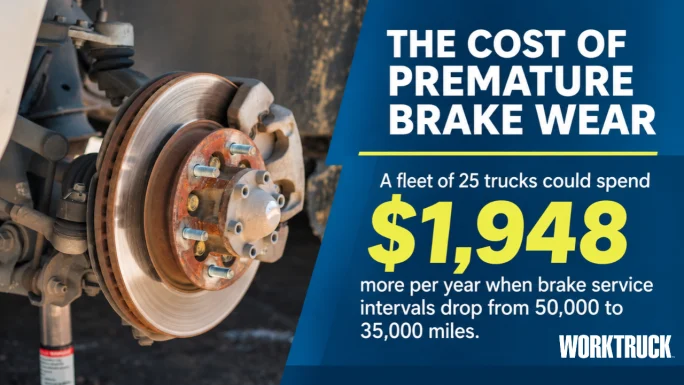
What could premature brake wear cost your fleet? In this hypothetical example, 25 trucks traveling 30,000 miles annually could incur an additional $1,948 in brake pad replacement costs if service intervals shorten from 50,000 to 35,000 miles, assuming $303 per service. Actual costs vary by vehicle and operating conditions.
Credit:
Work Truck | Envato/Poungsaed_eco
Sometimes the Maintenance Shop Has a Story to Tell
A truck might complete every assignment on time, return without damage, and generate no driver complaints. From an operations standpoint, everything looks fine. But if that same truck regularly needs brake service earlier than comparable vehicles, it might be worth looking beyond the maintenance invoice.
Maybe the route is harder on the vehicle than expected, or there's a mechanical problem that hasn't been fully addressed. Or maybe the driver could benefit from some coaching on following distance and anticipating traffic.
Brake wear isn't a driver scorecard, but it's another piece of information worth reviewing. Giving the vehicle ahead a little more space provides more time to react, more opportunities to slow gradually, and potentially fewer unnecessary brake applications.
That's good for safety, and it may also reduce maintenance costs. After all, getting closer to the bumper ahead doesn't get the job done any faster. It just leaves a lot less room for everything that can happen along the way.
Did this article give you something to think about? Maybe even a reason to dig a little deeper into your own maintenance records? I'd love to hear what you find! Have you spotted a connection between driving habits and brake wear, or found ways to reduce maintenance costs while keeping your drivers safer? Send me an email and let's chat. Your experience might just inspire our next Work Truck story!
Subscribe to Our Newsletter
More Safety & Compliance
Recalls You Need to Know About in November 2026
If you have Altec, Autocar, Battle Motors, Chrysler, Daimler Truck, Ford, General Motors, Kalmar, Mack Trucks, Paccar, Rivian, Terex, Toyota, or Volvo Trucks vehicles in your fleet, you should check these important recalls issued by the National Highway Traffic Safety Administration.
Read More →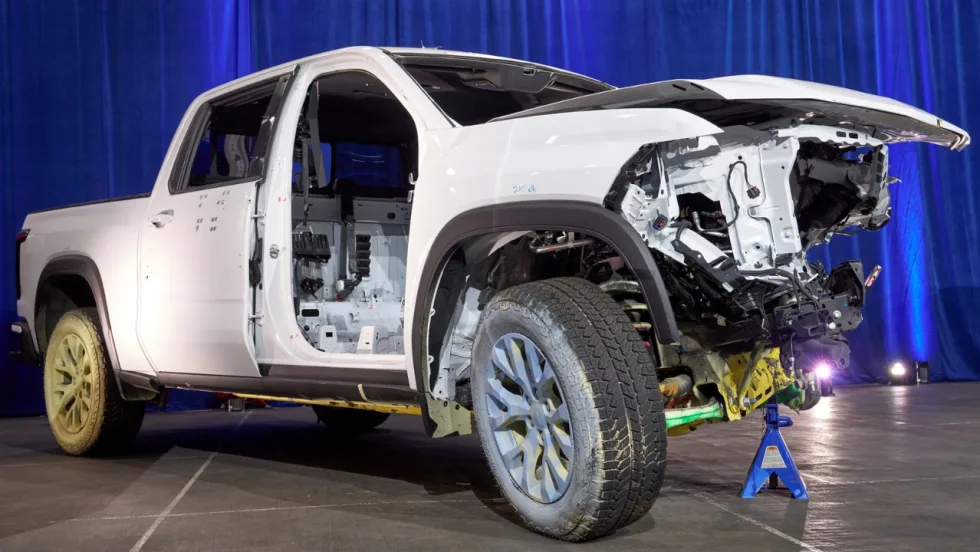
GM Runs 92,000 Virtual Crash Tests to Develop 2027 Chevrolet Silverado 1500
GM used 92,000 simulated crashes to evaluate the 2027 Chevrolet Silverado 1500's safety performance before confirming results through physical testing.
Read More →
Thanksgiving Cargo Theft Risks Put Fleet Security in Focus
J. J. Keller shares cargo theft prevention tips for work truck fleets ahead of Thanksgiving, when parked vehicles and reduced staffing can increase security risks.
Read More →From Our Partners



5 Winter Fleet Videos to Help Keep Trucks Running and Drivers Safe
From preventing cold-weather breakdowns to navigating icy roads, these five videos offer practical winter preparation tips for work truck fleets.
Read More →
Navigating the Effects of Daylight Saving Time on Work Truck Fleets
Discover how daylight saving time impacts work truck fleets and get essential tips for fleet managers and drivers to navigate the "fall back" transition.
Read More →
How Halloween Changes the Job for Work Truck Drivers
Truck traffic doesn’t take the same Halloween break as other drivers. What fleet managers should know about timing, neighborhood stops, and braking data.
Read More →
Tips for Driving Safely on Halloween Night
This video features a reminder from the Connecticut Department of Transportation (DOT) and the Connecticut Police Chiefs Association, urging drivers to prioritize safety this Halloween.
Read More →
Re-rating Gross Vehicle Weight Ratings (GVWR): Why and How it's Done
Sometimes, it is not in a fleet’s best interests to have a vehicle at a given GVWR. Changing the GVWR to a special value can be done, but the process is complicated.
Read More →
When a Work Truck Gets Stolen, the Real Loss Is Time
A stolen work truck can take more than a vehicle off the road. From tools and access cards to crew downtime, here’s how fleets can prepare for theft before it disrupts the entire workday.
Read More →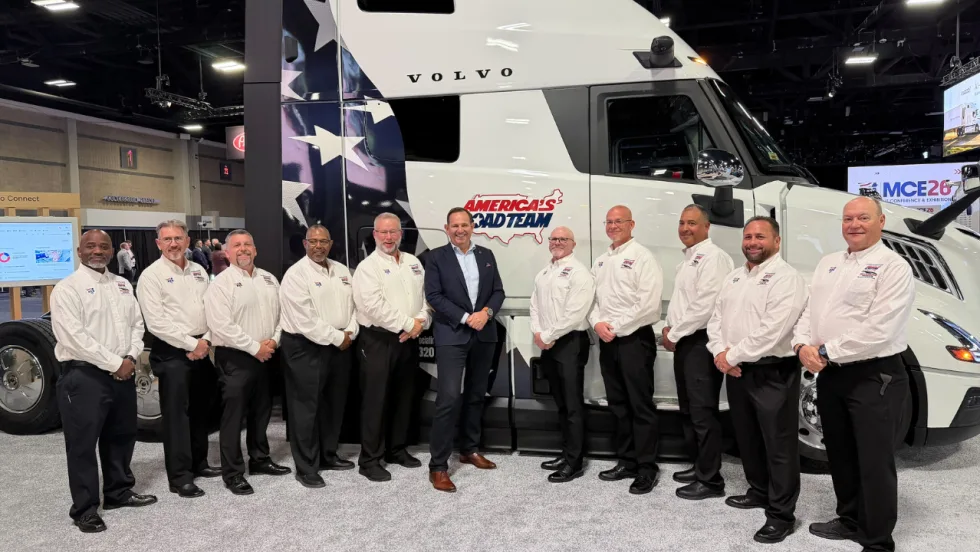
Volvo Trucks Marks 25 Years as Exclusive Sponsor of America's Road Team
Volvo Trucks North America will serve as the exclusive sponsor of the American Trucking Associations' America's Road Team, marking 25 years of Volvo sponsorship. The group of professional drivers promotes safety and the industry as they travel the country.
Read More →