




Learn More: Understanding the Ins and Outs of DOT Compliance
Fleet 101: A Guide to Vehicle Classes and Uses
What, exactly, is a Class 1 truck? From light-duty to heavy-duty trucks, explore the weight ranges and wide-ranging applications of vehicle classes in fleet.

Hillary Weiss・Senior Editor
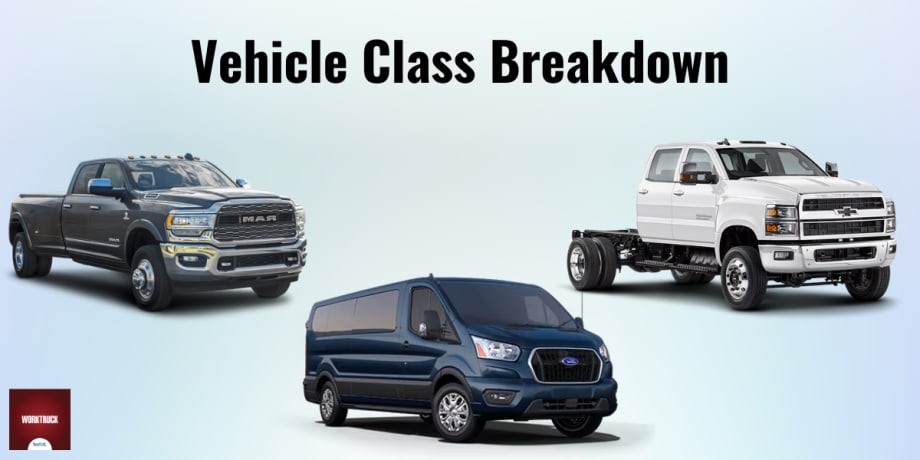
Do you know your truck classes?
Photo: Work Truck
5 min to read
Vehicles in a commercial fleet come in various shapes and sizes to accommodate different needs and purposes.
Each vehicle falls into a specific class that determines its weight range and primary use, from compact pickup trucks and vans to semi-trucks.
These classes, ranging from light-duty Class 1 to heavy-duty Class 8, categorize vehicles based on their gross vehicle weight rating (GVWR).
Understanding the distinctions between these classes can help select the appropriate vehicle for specific tasks:
Let's explore the work truck classes’ weight ranges and diverse applications.
Navigating Light-Duty Truck Classes
Light-duty work trucks — Class 1 to Class 3 — encompass vehicles with lower weight ranges.
Class 1 trucks and vans: GVWR ranging from 0 to 6,000 pounds.
Class 2 trucks and vans can go up to 10,000 pounds.
Class 3 trucks have a GVWR between 10,001 and 14,000 pounds.
These light-duty trucks are commonly used for various tasks and industries.
Breaking Down Light-Duty Trucks & Vans
Class 1 trucks, which include compact pickups and utility vehicles, are popular among individuals and small businesses, such as repair services and plumbing.
Examples include:
Chevrolet Silverado 1500.
Ford Transit Connect.
Class 2 trucks, or full-size pickups, are versatile vehicles used by individuals, construction crews, landscaping businesses, and small contractors. They offer increased towing and hauling capacities, making them suitable for moderately heavy loads.
Examples include:
Ram 2500.
Chevrolet Silverado 2500.
Ford F-250.
Class 3 trucks, often called heavy-duty pickups, find applications in commercial sectors such as construction, agriculture, and landscaping.
With their enhanced payload and towing capabilities, these trucks can handle more substantial loads, making them ideal for transporting construction materials, equipment, and larger trailers.
Examples include:
Ford F-350.
International MV Series.
Ram 3500.
Mercedes-Benz Sprinter 3500.
Most truck brands, like Ford and Ram, have the class number as the first digit in the model’s name, so it’s easy to tell which class the truck belongs to.
Light-duty trucks and vans are the backbone of various industries, providing reliable transportation and versatility for many tasks.
Trucks weighing over 10,001 pounds may require a Department of Transportation (DOT) number.
Payload Definitions for Pickup Trucks
Informal categorizations such as ½-ton, 3/4-ton, and 1-ton are commonly used to classify pickup trucks based on their payload capacities. These indicate the maximum cargo and passenger weight they can accommodate.
It is important to note that payload includes items carried in the truck bed, combined weight of occupants, belongings, and trailer tongue weight.
Here is the breakdown:
½-Ton — Class 1 and 2 trucks fall into this category with 1,000-pound payloads.
3/4-Ton — Class 2 and 3 trucks fall into this category with 1,500-pound payloads.
1-Ton — Class 3 and 4 trucks fall into this category with 2,000-pound payloads.
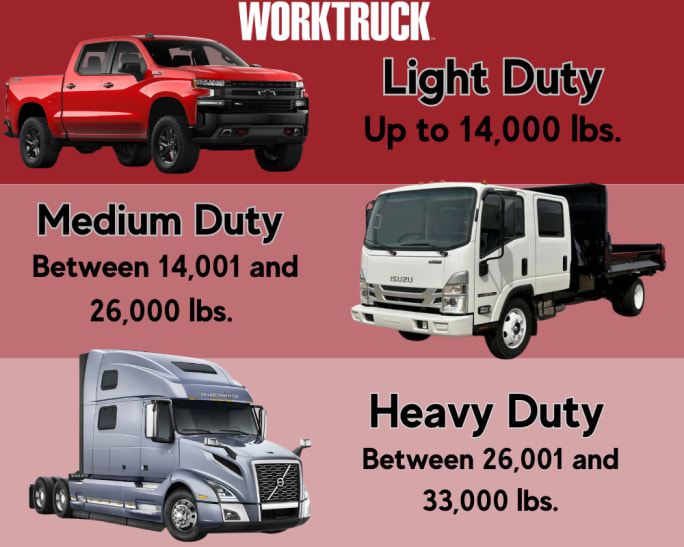
Weight ranges for vehicle classes.
Photo: Work Truck
Unveiling Medium-Duty Truck Classes
Medium-duty trucks — Class 4 to Class 6 — bridge the gap between light-duty and heavy-duty trucks regarding weight ranges and capabilities.
These trucks are designed to handle more substantial loads and are commonly employed in various commercial applications.
Dissecting Medium-Duty GVWR
Class 4 trucks typically have a GVWR between 14,001 and 16,000 pounds.
They are often used for delivery services, small-scale construction projects, landscaping, and municipal services.
These trucks offer increased payload capacities, allowing for transporting heavier goods and materials.
Examples include:
Ford F-450.
Ram 4500.
GMC 4500HD.
Class 5 trucks have a GVWR between 16,001 and 19,500 pounds.
They find extensive use in construction, towing, moving services, and emergency response industries.
With their robust construction and enhanced power, Class 5 trucks can handle heavier loads and tow larger trailers.
Examples include:
Peterbilt 325.
Chevrolet Silverado 5500HD.
GMC Sierra 5500HD.
Kenworth T170.
Class 6 trucks, also known as medium-duty work trucks, have a GVWR ranging from 19,501 to 26,000 pounds.
They are widely utilized in local delivery, utility services, and construction industries.
These trucks offer substantial payload capacities and have specialized bodies or equipment to suit specific work requirements.
Examples include:
Chevrolet Silverado 6500HD.
Ford F-650.
Ram 6500.
Kenworth T280.
Medium-duty trucks play a crucial role in the transportation and logistics sectors, providing reliable and efficient solutions for businesses with a balance between payload capacity and maneuverability.
Their versatility makes them suitable for various applications, contributing to the smooth operation of industries across various sectors.
Walk-In Vans: The Perfect Delivery Vehicle
Walk-in vans, or step vans, fall into the medium-duty class. They’re a type of commercial vehicle that is specifically designed for delivery and distribution purposes.
They are characterized by their boxy shape, flat front end, and high roof, allowing easy entry and movement inside the vehicle.
Examples include:
Chevrolet Express.
Freightliner MT45.
Utilimaster Reach.
Exploring Heavy-Duty Truck Classes
Heavy-duty trucks — Class 7 and Class 8 — are the powerhouses of the transportation industry.
These trucks are designed to handle the most demanding tasks and carry significant payloads across long distances.
They are commonly utilized in commercial sectors that require large hauling capabilities.
Any driving operating a vehicle over 26,001 pounds needs a valid Class A driver's license.
The Powerhouses of Heavy-Duty Trucks
Class 7 trucks typically have a GVWR between 26,001 and 33,000 pounds (11,794 to 14,969 kilograms). These trucks are often employed in industries such as local and regional delivery, construction, waste management, and utility services.
Examples include:
Kenworth K370.
Chevrolet Silverado 7500HD.
Ford F-750.
Class 8 has a GVWR exceeding 33,000 pounds.
As the largest and most powerful commercial vehicles on the road, they’re primarily used for long-haul transportation such as freight hauling, intermodal operations, and heavy-duty construction projects.
Class 8 trucks feature hardy engines, advanced suspension systems, and extensive towing capacities, enabling them to transport massive loads over extended distances.
Examples include:
Volvo Truck VNL.
Peterbilt 389.
Hino XL8.
Freightliner Cascadia.
The heavy-duty truck class plays a vital role in the global economy by facilitating the movement of goods and materials across vast distances.
From the logistics and shipping sectors to construction and infrastructure development, heavy-duty trucks are the backbone of various industries, enabling efficient and timely transportation of goods and materials.
Subscribe to Our Newsletter
More Vehicle Research
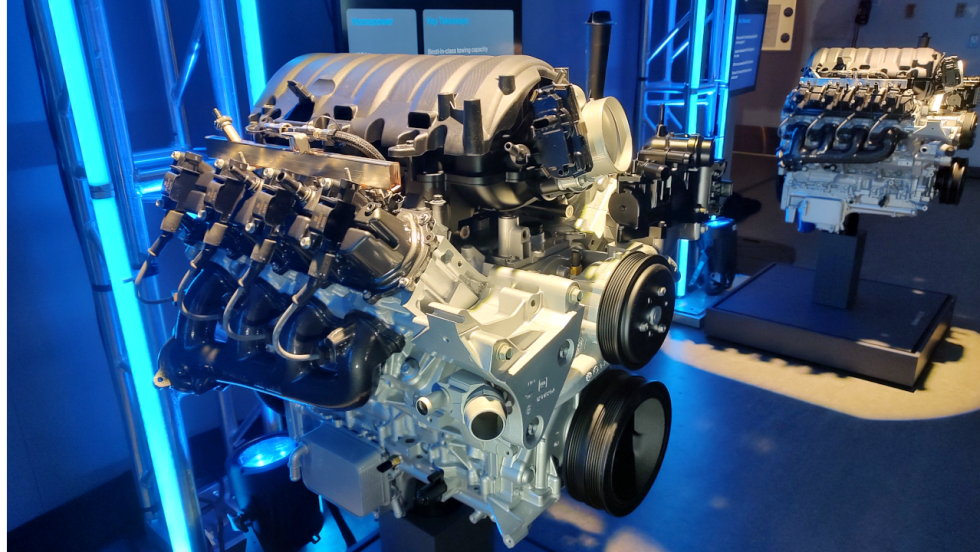
GM Unveils New Sixth-Generation Small Block Engines for 2027 Light-Duty Pickups
General Motors unveiled two new small-block engines, backed by extensive real-world validation and more than 70 years of small-block V8 manufacturing experience, as part of the engine portfolio for the 2027 Chevrolet Silverado 1500 and GMC Sierra 1500.
Read More →
2026 Ram 1500 Tradesman Put to a Real-World Fleet Test
A few days behind the wheel of a 2026 Ram 1500 Tradesman turned into a test of visibility, parking, work-ready features, and even severe-weather driving.
Read More →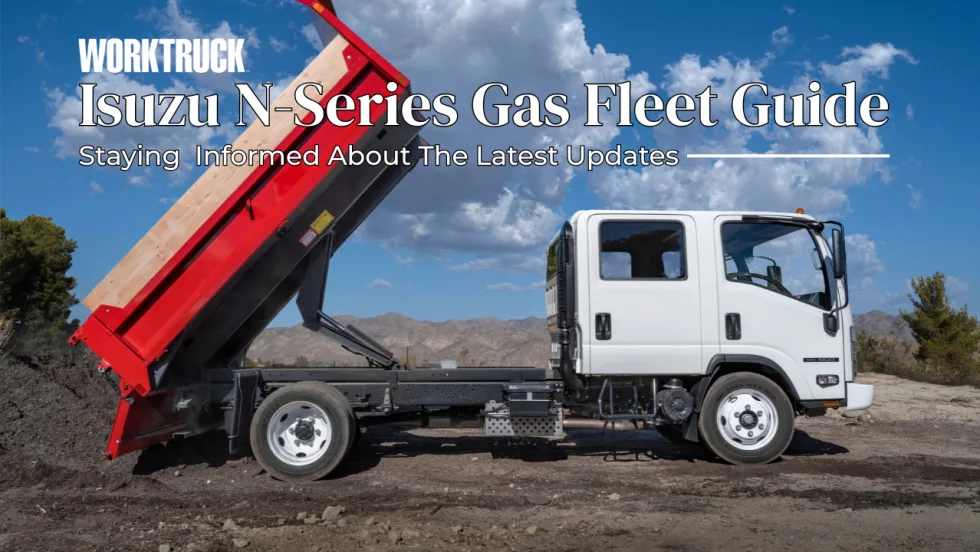
Isuzu N-Series Gas Fleet Guide: Specs, Capability and 2027 Model-Year Updates
Explore Isuzu Truck North America’s N-Series Gas fleet specs, engine performance, GVWR and payload capability, configurations, chassis dimensions, work-focused features, and 2027 model-year information.
Read More →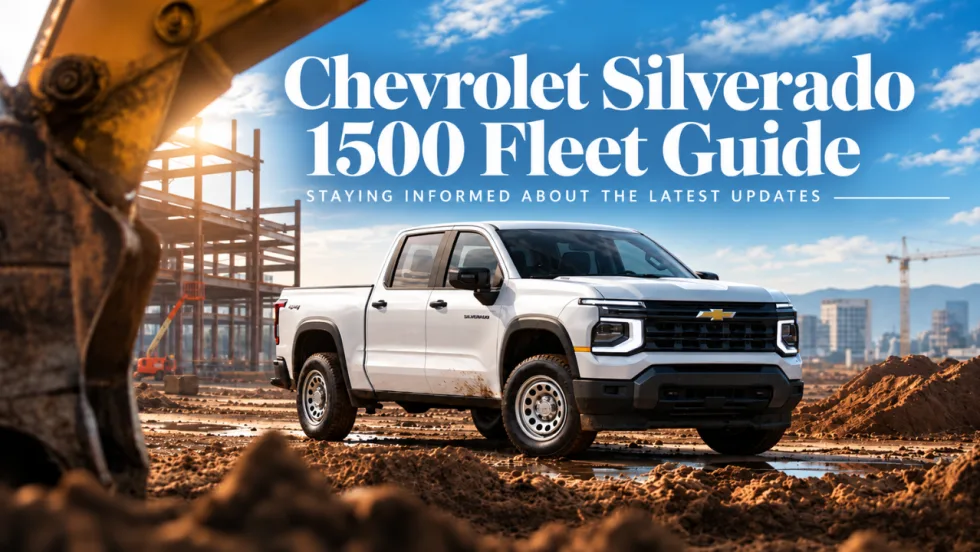
Chevrolet Silverado 1500 Fleet Guide Specs Capability and 2027 Model-Year Updates
The next-generation 2027 Chevrolet Silverado 1500 brings new V-8 engines, updated technology, expanded safety features, and a fleet-focused Work Truck. Here’s what commercial fleets need to know so far.
Read More →
Ram ProMaster City Fleet Guide Specs Cargo Capacity and 2027 Updates
Work Truck’s Ram ProMaster City Fleet Guide tracks the latest specifications, cargo capability, configurations, fleet technology, pricing, and model-year updates for Ram’s mid-size commercial van.
Read More →
Ford F-150 Fleet Guide Specs Capability and 2026 Model-Year Updates
Explore 2026 Ford F-150 fleet specs, engines, towing and payload capability, configurations, work features, technology, and model-year updates.
Read More →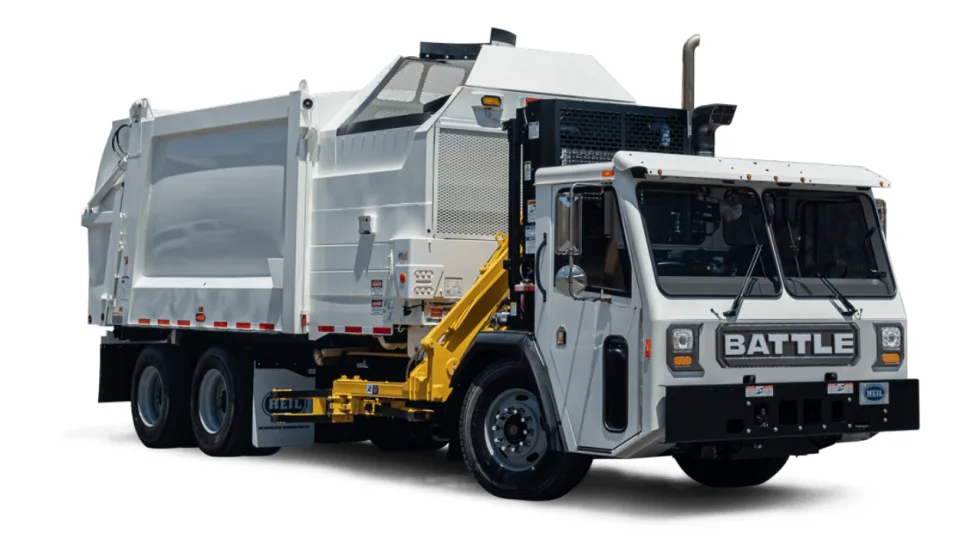
TCI Now Sells & Supports Battle Motors’ Vocational Trucks
Midwest truck dealer Truck Centers, Inc. (TCI) has expanded its transportation solutions with sales and service support for Battle Motors’ heavy-duty vocational trucks at locations in locations in Indiana, Illinois, and Missouri
Read More →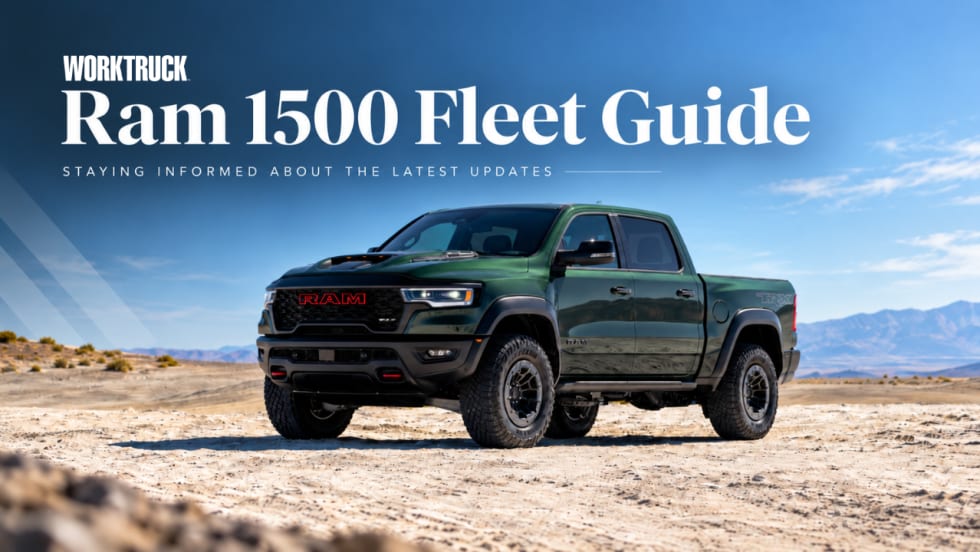
Ram 1500 Fleet Guide Specs, Capability and 2027 Model-Year Updates
Explore always up-to-date Ram 1500 fleet specs, engines, towing and payload capability, configurations, technology, pricing updates, and model-year changes.
Read More →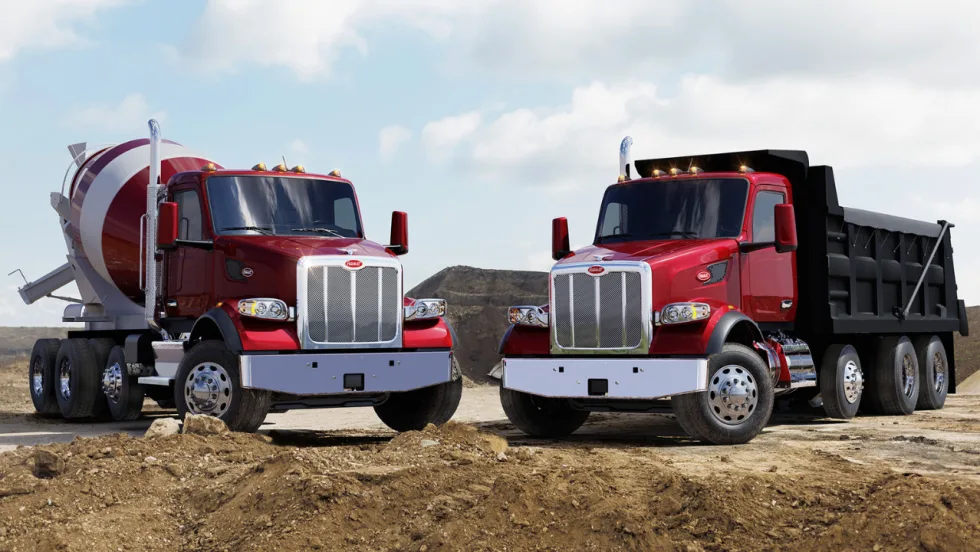
Peterbilt Trucks Equipped with Paccar TX-18 Pro Boost Efficiency for Maryland Fleet
Patuxent Companies is replacing aging trucks with the Peterbilt Model 567 and Model 589, specified with the Paccar TX-18 Pro 18-speed automated transmissions, and is reporting an 8% to 10% improvement in fuel economy.
Read More →
Stellar Expands into Fire Apparatus Market with Acquisition of Midwest Fire
Stellar Industries has acquired Midwest Fire, a custom fire apparatus manufacturer headquartered in Luverne, Minnesota, with nearly four decades of specialized apparatus experience.
Read More →