




Top 10 Steps to Developing Better Chassis Specifications
The ultimate goal in chassis specification is a vehicle that’s right for its intended application. An orderly approach to the process begins with identifying upfitting requirements, performance criteria, and design constraints.
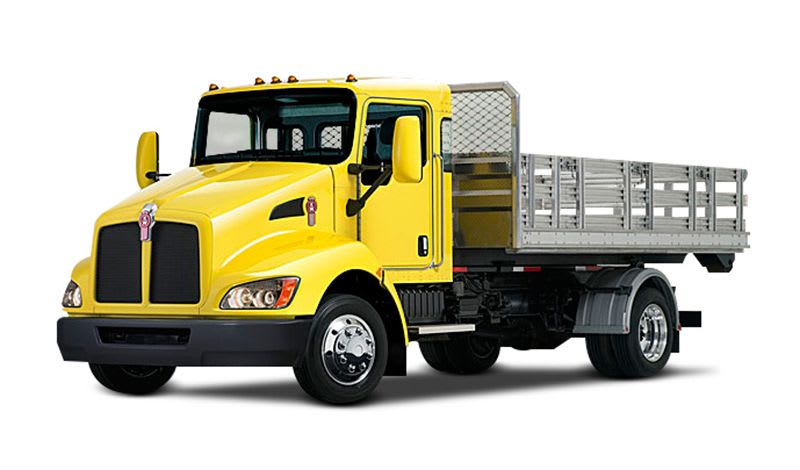
There is an orderly procedure that should be followed to identify chassis requirements.
Photo courtesy of Palmer Trucks
When spec'ing the chassis for a vocational vehicle, the ultimate objective should be to ensure that the completed vehicle is optimized for its intended application. This process results in a safer, more productive vehicle while minimizing the overall lifecycle cost of ownership.
Far too often, fleets select a chassis for a given application based on intuitive factors, including past experience, recommendations from others, or just a guess as to the size or kind of chassis required. There is, however, an orderly procedure that should be followed to identify chassis requirements.
While a comprehensive explanation of chassis spec’ing can take several hours, the procedure outlined here describes the basic elements. One caveat before outlining this procedure, however. Fleets must look at their specific vehicle applications in relation to a particular specification. For example, spec’ing a dump truck that carries abrasive or caustic material must consider that material’s effect on the truck body.
How to Identify Key Factors
To properly spec a chassis, several key factors must be identified first:
Second-unit (upfitting) requirements.
Completed vehicle performance criteria.
Regulatory and other design constraints.
These requirements will ultimately determine the final design of the completed vehicle; therefore, they should drive the chassis specification process. Once the initial factors are pinpointed, the overall design and specification process can be broken down into 10 discrete steps. Following this process helps ensure the completed vehicle is right for the desired application.
The 10 steps listed here include examples of the types of information required for each step.
Step 1: Identify Basic Application Requirements
What will the vehicle be used for?
What are the performance requirements for the second unit?
What is the application’s projected duration?
What type of second-unit body and/or special equipment is desired?
Step 2: Determine Applicable Design Constraints
Dimensional limits (width, height, length, weight).
Operational restrictions.
Regulatory issues.
Contractual requirements.
Financial constraints.
Step 3: Determine Net Payload Requirements.
Payload weight.
Payload volume.
Dimensional requirements (size of transported materials).
At this point, stop and determine if any factors identified to this point are mutually exclusive. For example, if the completed vehicle cannot exceed 26,000 lbs. total weight and the required payload is 24,000 lbs., a conflict most likely will arise. If a conflict is identified, start over and revise the requirements as necessary. Otherwise, proceed to the next step.
Step 4: Identify Primary Special Equipment/Second-Unit Requirements
Size of special equipment and/or second unit to be upfitted to the chassis.
Weight of upfitting components.
Cargo storage and security requirements.
Component installation requirements (chassis frame requirements, clear cab-to-axle distance, exhaust system location restrictions, etc.).
Operational requirements (equipment power sources and access requirements, etc.).
Step 5: Identify Secondary Special Equipment/BodyRequirements
Size of accessory items.
Weight.
Installation requirements.
Step 6: Determine Gross Payload Requirements
Net payload.
Second unit weight.
Special equipment weight.
Trailer towing loads (tongue weight/total weights).
Crew weight.
Fuel requirements (weight).
Operational requirements.
At this point, stop again and ensure that no mutually exclusive requirements have been identified for the completed vehicle. If so, they must be addressed before continuing.
Step 7: Identify Vehicle Operating Conditions and Environment
Duty cycle – percentage on/off road; operational cycle (desired cycle times, daily hours of operations, etc.).
Loading cycle – static or dynamic loading (impacts selection of suspension components).
Climate / weather.
Terrain.
Maintenance considerations, including existing vehicle maintenance histories.
Step 8: Determine Desired Vehicle Performance Requirements
Starting gradability, on/off road.
Maximum gradability.
Reserve gradability.
Maximum road speed.
Braking requirements.
Step 9: Preliminary Chassis Design
Availability of appropriate chassis: GVWR/GCWR, frame, dimensions, and powertrain options.
Completed unit’s estimated weight.
Using the rough data from the preliminary chassis selection, make a final determination that the completed vehicle will meet all previously identified criteria.
Step 10: Final Chassis Specification
Spec the chassis, ensuring that all critical design factors have been addressed, including:
Gross axle weight loadings do not exceed GAWRs (including trailer loadings).
Gross vehicle weight does not exceed GVWR (including trailer loadings).
Gross combined weight does not exceed GCWR (with the heaviest trailer).
Frame selection meets or exceeds chassis OEM and equipment requirements.
Suspension is matched to other requirements.
Powertrain provides desired performance (engine, transmission, and final drives).
Support systems, such as electrical, cooling, etc., meet or exceed identified requirements.
Auxiliary equipment requirements are addressed (PTO provisions, exhaust system routings, etc.).
Other non-functional considerations:
Employee retention / productivity issues (comfort and convenience).
Resale value. Return on items added for resale value should cover carrying cost for life of the unit.
Driver/operator skills.
More Operations
Family Ties Inside the Fleet Families Building Careers Across Generations
Three fleet families share what it really takes to work together, learn across generations, and keep business from following them home.
Read More →
Shades of Fleet Call for Voices: Fleet's Hidden Heroes
Fleet’s hidden heroes are often the ones keeping everything moving behind the scenes. September’s Shades of Fleet is looking for dispatchers, coordinators, parts specialists, and other support pros to share their stories.
Read More →
Truck Centers, Inc. Celebrates National Truck Driver Appreciation Week with $1,000 Fuel Card Giveaways
During National Truck Driver Appreciation Week, Truck Centers, Inc. is offering customers a chance to fuel up for free. Customers at all Truck Centers locations can enter to win one of four $1,000 fuel cards from Sept. 14 - 18.
Read More →
Fleet Guides, AI Time-Savers, Truck Tariffs & Fuel Strategy Lead the News
This week’s Truck Chat Cheat Sheet covers new fleet vehicle guides, practical AI use cases, U.S.-Canada truck production, mixed-energy strategy, and more.
Read More →
What Fleet Employers Are Missing When Hiring Veterans
What if some of the strongest candidates for fleet are already out there, but their experience is written in a language our industry does not always recognize?
Read More →
Automotive Fleet Opens 2026 Personal Use Survey for Commercial Fleet Managers
Less than two weeks left! Commercial and corporate fleet managers are invited to share how their organizations handle company vehicle personal-use policies, charges, and driver eligibility.
Read More →
What Resilient Fleets Do Differently When Conditions Change
Fleet resilience is about more than reacting to disruption. Lauren Fletcher talks with AP Fleet’s Alex Coveney about flexibility, planning, scaling, and what helps fleets adapt when business conditions shift.
Read More →
If We Want the Next Generation in Automotive, We Have to Give Them a Reason to Care
The automotive industry talks constantly about its workforce shortage. But before we can recruit the next generation, we may need to do a better job giving kids a reason to care about automotive in the first place.
Read More →
Ram ProMaster City Under $40K, Truck Tariffs, and AI Maintenance Lead the News
A sub-$40K commercial van, tariff questions, AI-powered maintenance, and a new EV production strategy headline this week’s Truck Chat Cheat Sheet.
Read More →
Bob Adamsky Shares the Fleet Lessons You Usually Learn the Hard Way
After more than 30 years in fleet, Arrow International’s Bob Adamsky has learned that the job is about far more than vehicles. He shares the lessons he wishes every fleet manager could learn a little earlier.
Read More →