





Want more? Learn About the Growth of Mobile Maintenance & Truck Fleets
Mobile Fueling for Emissions Reduction
Mobile fueling is known for saving time, but for fleets looking to focus on environmental goals, it can also help reduce overall emissions.
December 14, 2021
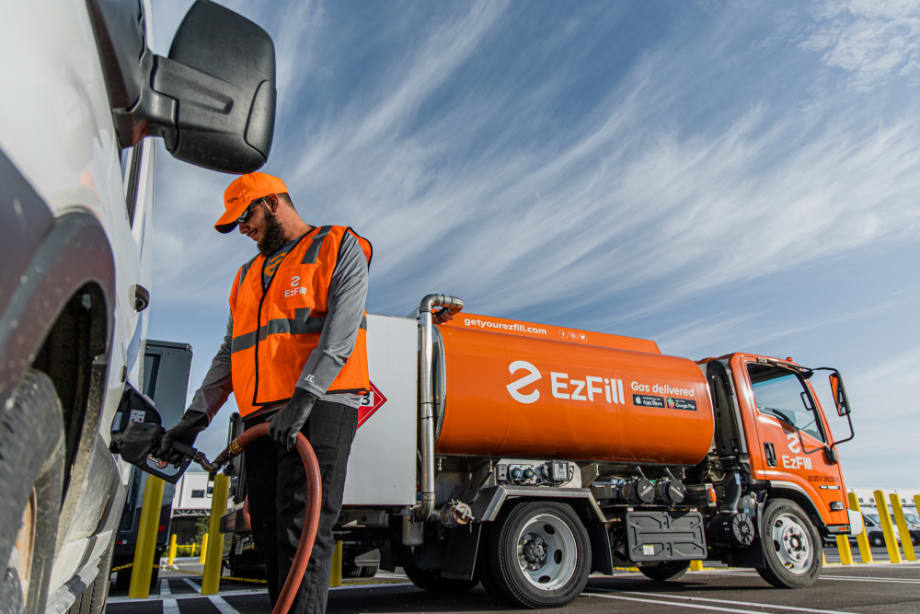
Overall, the benefits of reduced vehicle emissions will vary from fleet to fleet depending on many variables, including the proximity to a fueling station, size of the fuel tanks, and more.
Photo: EzFill
4 min to read
At the most basic definition, mobile fueling is simply the act of fueling up vehicles anywhere BUT a fueling station.
Several mobile fuel providers are working with fleets today. Work Truck spoke with two of them to find out more about mobile fueling and the emissions reduction benefits that can be achieved in addition to savings in time and fuel expense.
Booster provides last-mile fuel delivery services for fleets, and EzFill delivers fuel (gasoline and diesel) directly to fleets.
Reducing Emissions Through Mobile Fueling
Since the inception of mobile fueling, time savings and savings at the pump have been well understood. But, one benefit that hasn’t been shouted from the rooftops is reduced vehicle emissions.
“Vehicle emissions are simply a product of the duration of time that the internal combustion engine is operating. According to research conducted by www.askwonder.com, fleet owners spend 62 hours per year per vehicle to refill fuel tanks. With mobile fueling, these same vehicles can now return to base after the route is completed. Moreover, the emissions historically released by traveling to a fueling station, fueling, and then returning to base are completely removed,” said Mike McConnell, CEO of EzFill.
According to Jason Godley, president of Booster, mobile fueling can reduce a fleet’s overall emissions in two key ways:
Offering access to lower carbon fuels. Access to lower-carbon fuels is a significant inhibitor in their adoption. Most fuel stations still do not offer any renewable fuel products at all. Through Booster, renewable fuels are easy to adopt and economical.
Eliminating trips to the gas station and reducing vehicle miles traveled and fuel consumed. A study by Geotab pointed out that mobile fueling saves 1.9 pounds of CO₂ emissions per vehicle by skipping the gas station. Other findings in the report include:
Drivers are diverted about two miles out of the way to get gas.
A gas station stop adds more than 20 minutes to each trip a vehicle makes for fuel.
Gas station stops release an additional 3 pounds of CO₂ into the atmosphere monthly on average.
Overall, the benefits of reduced vehicle emissions will vary from fleet to fleet depending on many variables, including the proximity to a fueling station, size of the fuel tanks, etc., McConnell added.
But how, exactly, does mobile fueling reduce emissions?
“Reengineering the fuel delivery supply chain to skip the gas station altogether leads to a more environmentally-friendly supply chain with fewer fuel transfers and no need to store gas underground at gas stations. Booster also employs trained service professionals who work to avoid or eliminate spillage (we know that gas stations spill an average of 40 gallons per year from customer misuse). A study by Ashworth Leininger Group pointed out that mobile fueling also drives 26% volatile organic compound (VOC) reductions when compared to gas station refueling,” Godley said.
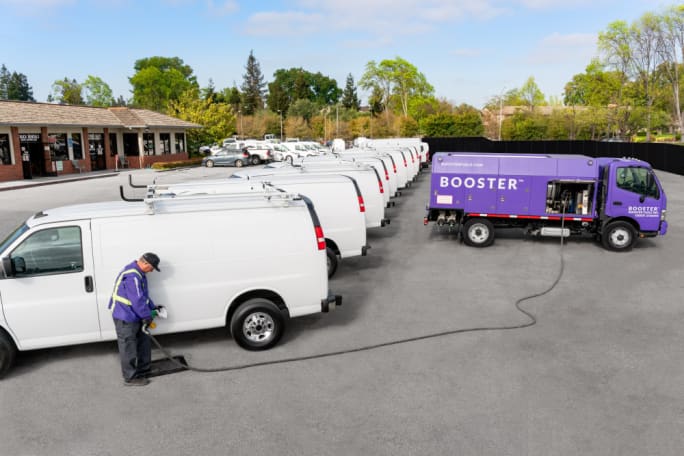
Mobile fueling can increase a fleet’s productivity, reduce downtime, and reduce expenses. In addition to all of these benefits, it can also help reduce a fleets overall emissions.
Photo: Booster
Top 4 Benefits of Mobile Fueling Beyond Emissions
Beyond emissions reductions, there are several benefits of mobile fueling, the top of which include:
1. Improved productivity.
Mobile fueling increases a fleet business’s productivity in several ways.
“First, fueling vehicles during off-hours allows drivers to begin routes with full tanks. This reduces the stops drivers must make, allowing them to spend more time serving customers. Additionally, by consolidating fuel to a monthly invoice, the administrative work that would have been spent expensing gas station receipts is greatly reduced. Importantly, it also helps companies avoid gas station accidents and fuel fraud,” said Godley of Booster.
McConnel of EzFill agreed, noting that “eliminating the need for gas stations, onsite mobile fuel delivery reduced stops for drivers, helping keep them on schedule and focused on revenue generation activities for the company.”
2. Reduced Wear & Tear
Vehicle wear and tear is a considerable component in overall fleet operating costs.
“By eliminating the need for drivers to waste time searching and waiting to refuel, the overall life of the vehicle is extended. It also enables the fleet to stay out longer, thereby generating more revenue for the company,” McConnell shared.
3. Infrastructure for Alt-Fuels
Mobile fueling also provides the delivery infrastructure that makes alternative fuels more accessible to businesses and individuals.
“Even though you can replace conventional diesel with renewable blends, fewer than 1% of fuel stations offer renewable fuels such as biodiesel (B-20 and above) according to the U.S. Department of Energy’s Alternative Fuels Data Center. Mobile fuelers can easily deliver a wide variety of energy choices to clients, including charging for electric vehicles,” said Godley.
4. Lower Fuel Costs
Budgeting for fuel costs can feel like an impossible task with all of the factors that impact rises in prices that are outside of a fleet’s control.
“Retail gasoline prices often vary as much as $1 per gallon between stations no further than five miles apart. With mobile fueling, one negotiated price is universal across the fleet, which gives fleet managers the advantage of leveling their fuel expenses. In addition, managers can ensure that every gallon purchased is pumped into their company vehicles,” McConnell said.
Subscribe to Our Newsletter
More Fuel

The Smart Way to Build a Mixed-Energy Fleet Isn’t About Picking a Side
Mixed-energy fleets aren’t about picking a winning fuel. Sarah Booth of WEX explains how vehicle data, duty cycles, charging strategy, and real-world costs can help fleets choose the right energy source for each job.
Read More →
Ignoring This Dashboard Warning Could Cost Your Fleet Thousands in Fuel
New research suggests neglected diesel aftertreatment systems could waste up to $30 in fuel per vehicle each day. Here's why vocational fleets should pay attention.
Read More →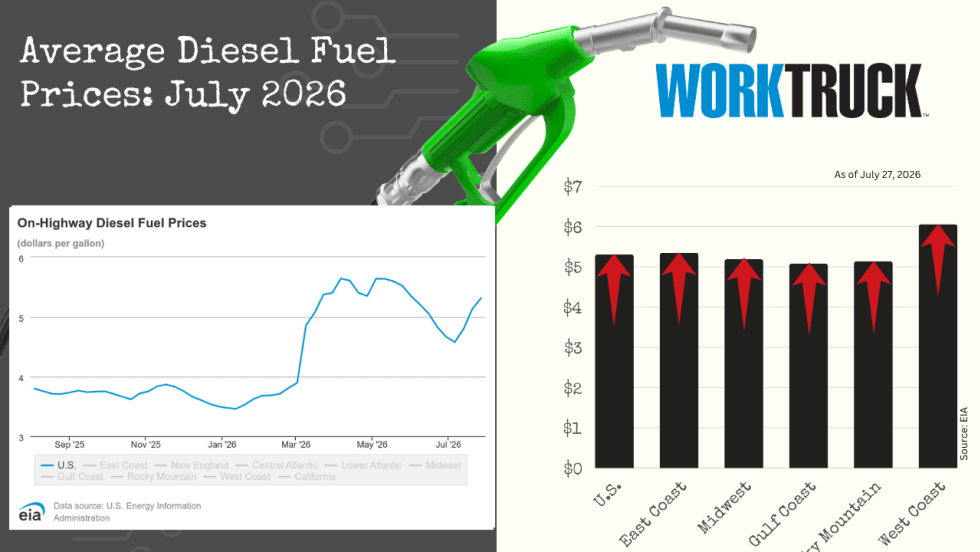
July Diesel Trends Update
The average price of a gallon of diesel increased again this week, and the EIA reported a new national average of $5.31 at the start of the week.
Read More →
WEX Brings Standard Fleet's Connected Vehicle Platform to Fleet Customers
This week’s product launch with Standard Fleet’s connected vehicle platform reflects WEX Venture Capital's strategy of turning startup innovation into customer solutions. Standard Fleet is now available to WEX fleet customers.
Read More →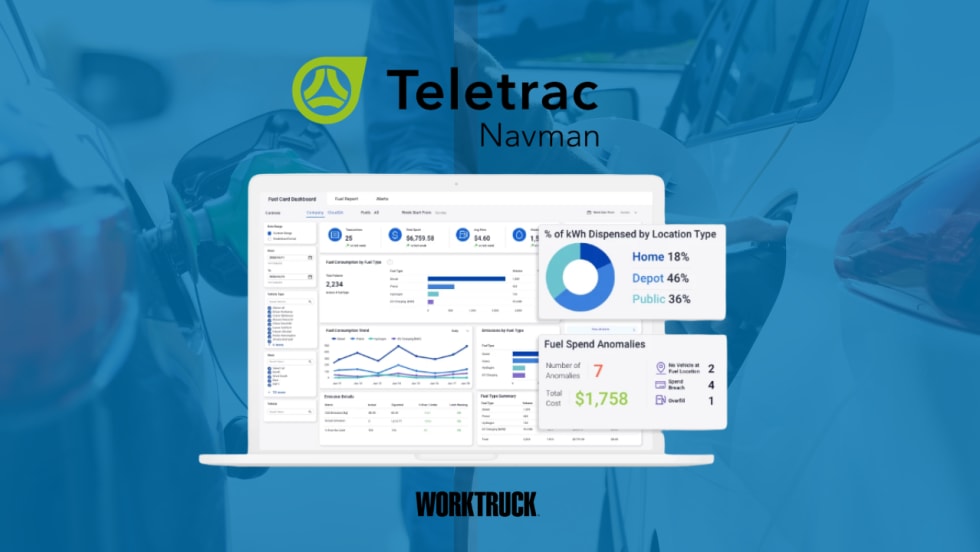
Teletrac Navman Adds Mixed-Energy Fleet Tools to TN360
The new Energy Hub combines fuel transactions, EV charging data, vehicle range, and energy costs in one dashboard for fleets operating multiple vehicle and energy types.
Read More →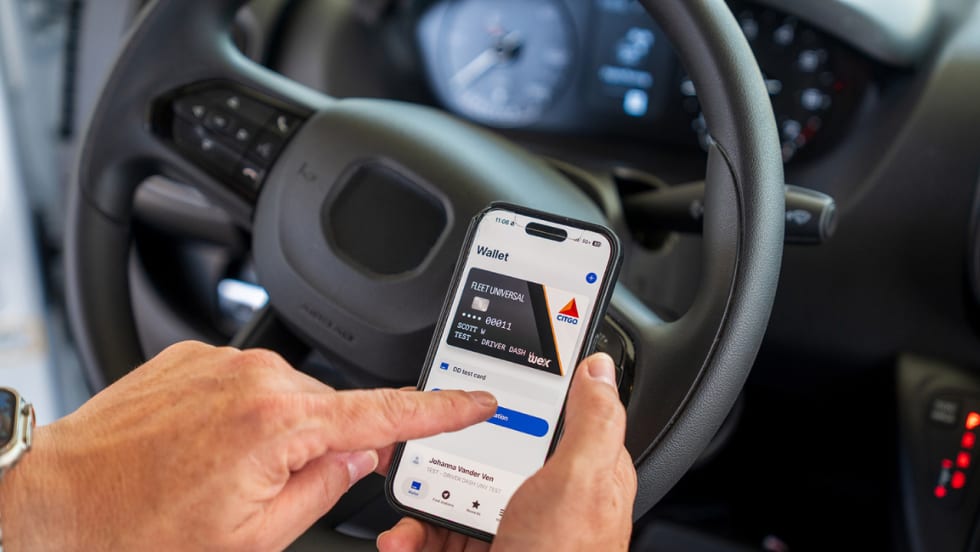
WEX DriverDash adds CITGO, Expands Nationwide Access for Fleets
The DriverDash mobile payment app, by WEX, has been integrated into the CITGO merchant network, which means WEX has expanded its U.S. station footprint with the addition of approximately 4,000 CITGO locations.
Read More →
Mixed Energy Fleet Tips for Balancing EVs, Gas and Diesel Vehicles
Mixed energy fleets are becoming the new normal. Learn how fleet managers are balancing EVs, gas and diesel vehicles while controlling costs and planning for the future.
Read More →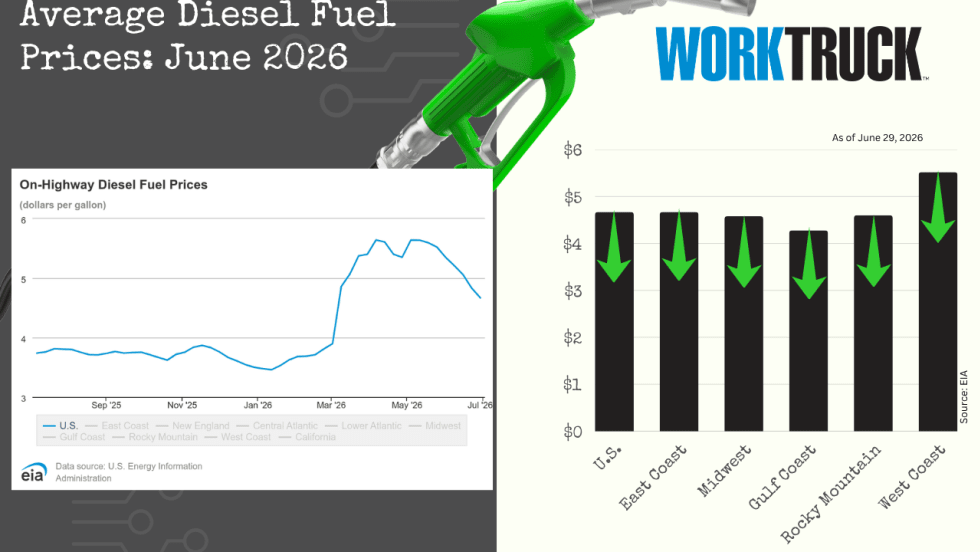
June Diesel Trends Update
The national average price of a gallon of diesel has dropped again, this week by more than 16 cents. All five regions reported lower average prices, ranging from almost 13 cents to more than 28 cents cheaper than a week ago.
Read More →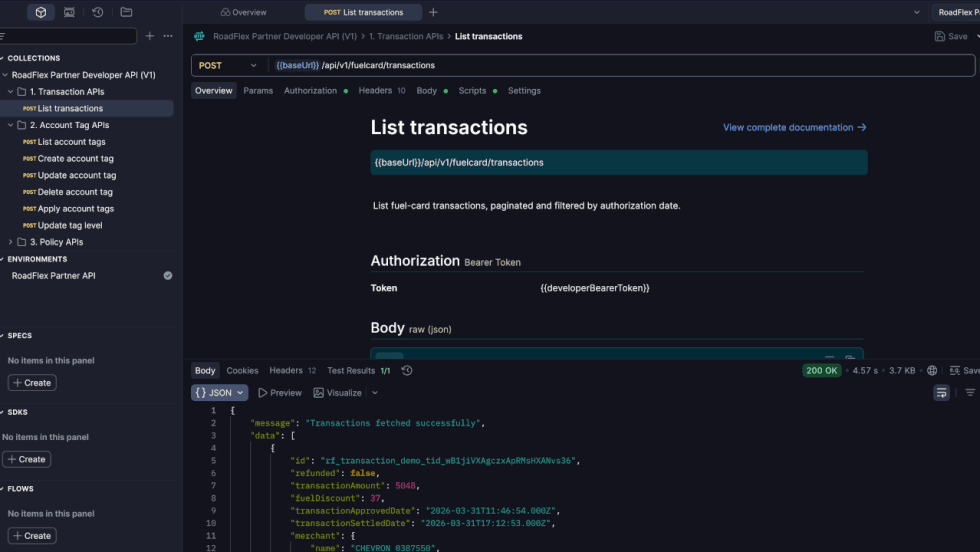
RoadFlex Launches RoadFlex Direct Open API Platform
RoadFlex Direct connects fuel cards, controls, and data to the telematics and fleet management systems fleets already run, from Geotab and Samsara to Fleetio and RTA, with no separate dashboard or double data entry.
Read More →
The Key to Fuel Efficiency Sits in the Cab
Learn how driver behavior, telematics, coaching, and fuel data can help fleets improve fuel efficiency, lower costs, and reduce emissions.
Read More →