




How Do Trim Levels Affect Lifecycle Costs?
With many options and trim levels to choose from, lifecycle costs vary greatly within the same model.


The first step in any lifecycle analysis is to come up with values for the models you’re considering in your fleet and then compare them.
This can be a daunting task, however, because these days new models have seemingly countless permutations of trim levels and options to choose from, and each package returns a different cents-per-mile and total cost of ownership.
For this analysis, we decided to take a look at trim levels on compact, midsize and large sedan models popular with fleets to determine the variance in ownership costs within a model. Then we compared those costs to their compact, midsize and large brothers.
We took the base trim level and top trim level for each model. We eliminated outlying trims that don’t see much action in commercial fleets, such as those used in rental fleets, luxury trims and those with sport engines and sport appearance packages. All models have automatic transmissions.
We used values from Vincentric, our lifecycle analysis provider. The Vincentric data measures eight cost elements for more than 2,000 vehicle configurations, including depreciation, financing, fees and taxes, fuel, insurance, maintenance, opportunity cost and repairs. Vincentric Fleet Price is calculated as invoice plus destination minus published fleet incentives.
Vincentric assumed 20,000 miles per year over three years for 2013 model-year vehicles. At the time of analysis (Aug. 14, 2014) complete data for 2014 models was not obtainable.
CHOOSING A TRIM LEVEL
First, a note about “base” models: The lowest trim levels of today are not destined to languish on a car rental lot with rollup windows, manual locks and no air conditioning.
While some models are more sparsely equipped, today these lower trims might include full power, keyless entry, six-speaker sound, CD/MP3 players, USB ports and even Bluetooth connectivity — so don’t think your drivers will suffer if you choose this route.
Looking at the higher trim levels, expect amenities such as larger alloy wheels, leather, power and heated seats, a premium sound system, heated mirrors, heated seats, a larger touchscreen interface, a rear-view camera and often a larger engine.
Check the specs closely, as options found in each trim level vary widely by model and manufacturer.
WORTH A HIGH TRIM?
The difference in acquisition cost between the low and high trim levels within the analyzed models range from $699 to $7,794, a wide gap.
Yet the gap shrinks when looking at the total cost of ownership at end of term. In almost every case, the higher trim levels held their values better than the lower trims of that model.
For example, while the initial fleet cost for a Chevrolet Cruze LTZ will run about $23,300 — or $4,903 more than the Chevrolet Cruze LS — the spread in total ownership cost is only $2,850 in favor of the LS model.
If you’re considering the Toyota Corolla, the LE presents a greater case over the base version. While the initial cost of the LE is $699 more than the base model, the LE’s total cost of ownership comes out to $28 less than the base model.
Rewarding your drivers with a higher trim level will cost more initially, but you’ll make up some of the cost by the time you de-fleet. Of course, if you’re leasing, this is factored into your monthly payment.
SEGMENT COMPARISONS
As costs vary widely within trim levels of the same model, is a larger model with a base trim level a better value than a loaded smaller sedan?
In only a few cases, this analysis turned out to favor the bigger car. When looking at the large Chevrolet Impala against the midsize Malibu, the total cost of ownership of the base Chevrolet Impala LS ($36,258) is $3,467 less than the top-of-the-line Chevrolet Malibu LZ ($39,725).
A Dodge Avenger SE incurs $31,882 in total cost; that’s $546 less than the top-of-the-line Dodge Dart.
Fleet administrators might want to consider the Toyota Avalon XLE. While the Avalon XLE shares the same engine as the Camry XLE, it produces virtually the same total cost of ownership as well. If given a choice, your drivers might opt for the more luxurious Avalon for the same cost out of your pocket.
THE FUEL-SAVING EQUATION
With the trend toward environmental sustainability and fuel conservation, manufacturers have introduced engines designed specifically for fuel savings.
For GM and Ford models, we added the Eco (GM) and EcoBoost (Ford) engines to see how these fuel-saving technologies affect total costs of ownership. We also included the Dodge Avenger and Dodge Charger SXT trims, designated as fuel-saving versions of those models. Complete data for the Dodge Dart Aero was not available.
Unlike the traditional assumption that you pay for more power, in this case you pay more for fuel savings. In the case of the Ford Fusion, you’ll pay about $734 upfront to add the EcoBoost engine to the SE. For the Ford Taurus SE, you’d pay an extra $888.
The Chevrolet Cruze Eco engine runs a full $2,450 over the base model Cruze in our analysis. But in GM’s case, the Eco engine comes with its own trim level. GM also includes extra amenities such as a 7-inch touchscreen display and the Chevrolet MyLink system in the Eco package.
For the Chevrolet Malibu, adding the Eco engine will run $2,862 more, but again, you get trim level extras with the Eco engine. And the Eco engine for the Malibu is actually boosted by a small electric motor with start-stop technology.
Turning to the bottom line, adding the EcoBoost engine to the Ford Taurus will save $1,240 in fuel after 60,000 miles and net $628 in total cost of ownership. For the Ford Fusion, adding the EcoBoost engine will net $864 in total lifecycle savings.
Choosing the Chevrolet Cruze Eco or Malibu Eco engines will save you fuel; though with the higher premiums for the Eco engines, you’ll spend slightly more in net total cost.
Again, this is not a straight apples-to-apples comparison when factoring in the added options of the Eco packages. However, comparing Eco models with the higher LTZ trim levels of those same models will return a favorable cost of ownership for the Eco packages.
YOUR RESULTS? THEY’LL VARY
The old adage, “Your results will vary,” is important to this analysis.
Your actual ownership costs will be based on many variables, such as your ability to negotiate the capitalized cost or the terms of your lease, your insurance and repair costs, your real-world fuel economy and how much your vehicle will be worth when it is sold.
Keep in mind that the vehicles analyzed were 2013 models. Major redesigns such as the 2014 Chevrolet Impala and the Toyota Corolla change the equation yet again.
As well, there are obvious functionality variables. Your drivers may require the extra trunk space of a large car, or need the power of a six-cylinder engine over a more economical four-cylinder choice.
The key takeaway is to understand the numerous lifecycle costs for just one make and model, which may allow you to come up with more choices of cost-effective vehicles for your fleet.
More Remarketing & Lifecycle
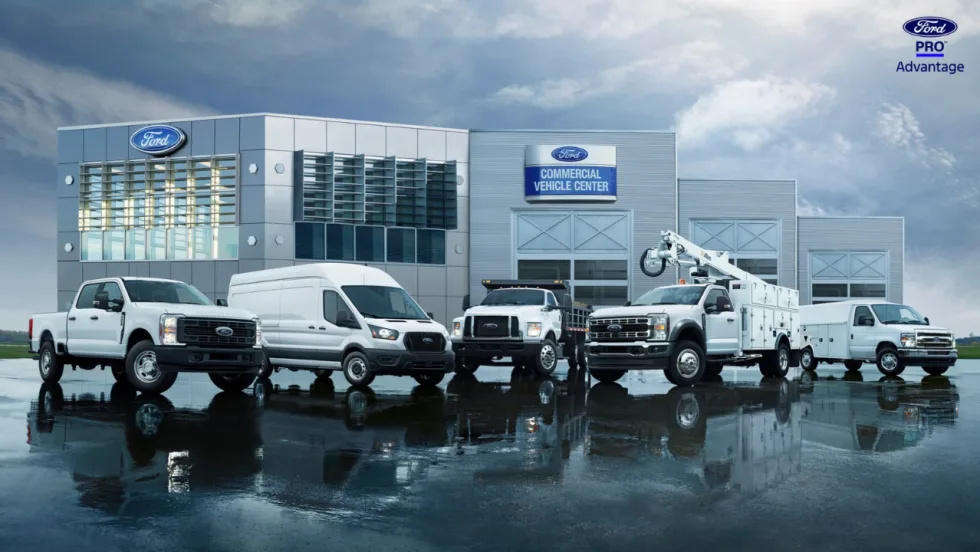
Ford Pro Launches Certified Pre-Owned Program for Class 1-7 Work Trucks
Ford Pro Advantage brings manufacturer-backed inspections, warranties, roadside assistance, and service support to used Class 1-7 commercial trucks and vans.
Read More →
The Hidden Cost of Idling
A low-mileage truck can still be one of the fleet’s hardest-working and most worn assets. Engine hours, idle time, and duty cycle reveal what the odometer misses.
Read More →
Building a Better Vehicle Replacement Model
Meter readings still matter, but engine hours, idle time, maintenance trends, and utilization can help fleets spot costly vehicles before the odometer does.
Read More →
AP Fleet Management Expands Remarketing Program for Commercial Work Trucks
AP Fleet Management expanded its commercial vehicle remarketing program with dedicated resale services and an online marketplace for used work trucks.
Read More →
What Actually Makes a Truck Reliable for Fleets?
What makes a truck reliable for fleets? From uptime to maintenance and spec’ing, here’s what really drives performance, and where fleets can weigh in.
Read More →
REP Inspection Services Launches, Delivering Professional Equipment Inspections
REP Inspection Services, led by someone with more than 30 years of industry experience, has launched its professional inspection services for trucks, trailers, and equipment across the commercial vehicle industry.
Read More →
Introducing Work Truck’s 2025 Remarketing Report Series
Work Truck’s 2025 Remarketing Report Series uncovers how data, timing, and technology are reshaping resale value and driving smarter fleet strategies.
Read More →
Fleet Remarketing Outlook 2026: EVs, Policy, and the Power of People [Part 4]
From EVs to policy changes, the 2026 fleet remarketing outlook is all about people, progress, and finding opportunity in stability.
Read More →
Digital Fleet Remarketing: How Tech and Transparency Build Buyer Confidence [Part 3]
Technology and trust are reshaping fleet remarketing in 2025. See how data, transparency, and partnerships drive better resale outcomes.
Read More →
Fleet Replacement Strategy 2025: When to Hold and When to Fold [Part 2]
Knowing when to sell or hold is key in 2025. Discover how fleet professionals use data and TCO insights to make smarter remarketing calls.
Read More →