Cut Hidden Costs: Four Ways to Improve Your Fleet’s Bottom Line
Fleet managers often focus on controlling the biggest fixed operating costs for the acquisition of trucks and fuel. However, it’s the hidden costs that keep fleet managers from achieving their organization’s goals for efficiency and profitability. Renewable diesel is one option to help cut costs.
by Matt Leuck
October 14, 2019
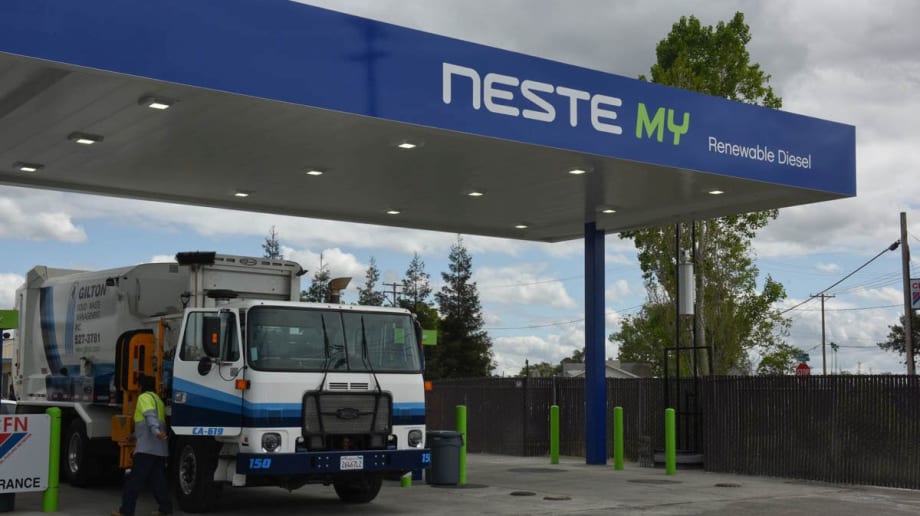
Idling varies by fleet but some fleet managers report that their trucks idle as much as 20% of the time.
Photo: Neste
6 min to read
Fleet managers often focus on controlling the highest fixed operating costs for the acquisition of trucks and fuel. However, it’s the hidden costs that keep fleet managers from achieving their organization’s goals for efficiency and profitability.
Ad Loading...
Forget the old saying, “What you don’t know can’t hurt you.” Four hidden costs can slow down fleets of all sizes, across industries and government services:
Ad Loading...
Fuel spend management.
Unscheduled maintenance and repairs.
Driver behavior.
Productivity.
Properly managing and reducing unnecessary costs can increase a fleet’s contribution to achieving the organization’s financial goals.
Here’s what fleet managers should know to identify these expenses and follow routes to better financial control.
1. Fuel Spend Management: Where to Start
The cost of fuel can surpass any other operating expense category. While prices at the pump are influenced by factors beyond a fleet manager’s control, there are many hidden fuel-related expenses that fleet managers and their drivers can work to reduce. For a better handle on fuel costs, fleets should take the following measures:
Turn Off Engines When Parked
Idling varies by fleet but some fleet managers report that their trucks idle as much as 20% of the time. Even in California, which strictly limits idling to five minutes for heavy-duty diesel vehicles that do not meet certain Clean Idle Certification standards, there are still opportunities to reduce fuel consumption.
Ad Loading...
The hidden cost: Idling burns one-fifth of a gallon of fuel per hour; that’s up to 1.6 gallons per work day day, times $3.047 per gallon (the average fuel price in early October 2019), for an estimated $1,267.55 annually per vehicle.
The solution: Instruct drivers to turn off engines whenever possible when they’re not on the road.
Rein in Diesel Purchases
Fleets often neglect to control fuel purchase frequency, the price paid at the pump, and designated refueling locations — even when they participate in fuel card programs.
The hidden cost: Fleets waste as much as 10% of their annual budget because of noncompliance with fuel purchase policies, lack of policy enforcement, or the fact that a fleet has not established purchase policies.
The solution: Participate in a fuel card program and ensure your fleet takes advantage of all the program benefits. Require drivers to stop at designated refueling centers for discounted pricing along their route.
Keep Tires Properly Inflated
Tire air pressure can impact fuel usage as well as tread wear and vehicle handling.
The hidden cost: Underinflated tires can reduce fuel efficiency by up to 3%.
The solution: Require mechanics and drivers to perform tire pressure checks before vehicles leave the fleet terminal. Create a schedule that’s sustainable with available resources and that supports delivery deadlines.
Ad Loading...
Avoid Overloading
Fleet managers delicately balance customers’ delivery requirements with the fleet’s need to maximize revenue-generating payload within the 80,000-pound limit.
The hidden cost: Every 100 pounds in vehicle weight can reduce miles per gallon up by 2%. Overloading vehicles raises the likelihood that tires would need to be replaced early, wheels must be aligned more frequently, and front-end and suspension parts could wear out sooner than their life expectancy and have to be replaced.
The solution: Adjust loads to keep gross vehicle weight at or just below the vehicle’s rated capacity.
Eliminate Storage Tank Additives
The variability of petroleum diesel and environmental conditions prompts fleet owners to rely on additives to enhance fuel performance, enhance long-term storage capability, improve flow in cold weather, and clean fuel pumps and injectors.
The hidden cost: Fleets often invest in anti-gelling and anti-microbial additives and cetane enhancers. The cost can add up to $0.01 to $0.10 per gallon.
The solution: Switch from fossil diesel to clean alternatives such as Neste MY Renewable Diesel to eliminate the need for additives.
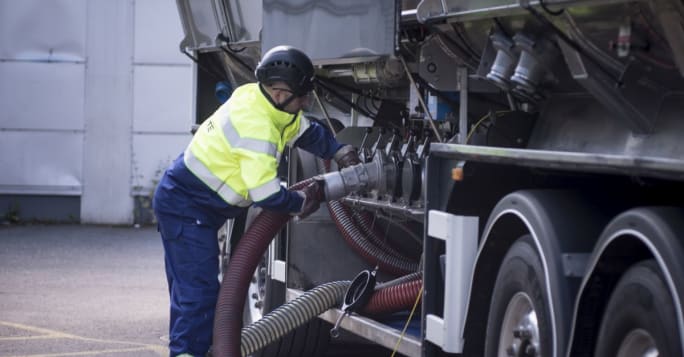
When fleets skip routine maintenance, vehicles invariably experience breakdowns and accrue costs for repairs and undelivered loads.
Photo: Neste
2. Unscheduled Maintenance and Repairs: Stick to Schedules
Vehicle maintenance is predictable. Fleet managers know when they should replace filters, fuel injectors, and tires; change fluids; and lubricate suspension or steering components on schedules recommended by manufacturers. When fleets skip routine maintenance, vehicles invariably experience breakdowns and accrue costs for repairs and undelivered loads.
Ad Loading...
The hidden cost: Improper maintenance reduces fuel efficiency by 10% to 30%. Fleets incur missed-opportunity costs while vehicles remain out of service and unavailable for trips that generate revenue. Finally, continuing to run high-mileage vehicles past their expected life span risks major costly breakdowns.
The solution: Follow vehicle manufacturer recommendations for routine maintenance. Create a capital expenditure plan that funds replacement of at least 10% of a fleet’s oldest vehicles each year. Set an asset utilization goal of at least 90% to reduce cost per mile and overall costs. Switch to renewable diesel to reduce time for parked regeneration of diesel particulate filters (DPF), manual cleaning, or premature replacement of emission control systems.
3. Driver Behavior: Teach Safe Driving Techniques
Driver performance directly correlates with safety, along with the expense line of fleet budgets. Also, 20% of fleet drivers are projected to be involved in accidents each year. Fuel efficiency can be negatively impacted by how drivers operate fleet vehicles, especially when drivers exceed the speed limit, accelerate rapidly, and brake harshly.
The hidden cost: A fleet with 500 vehicles is estimated to experience 100 accidents a year at an average cost of $2,500 per occurrence. That’s $250,000 a year. Aggressive driving can lower fuel economy by 33% at highway speeds and by 5% on city streets.
The solution: Provide drivers with safety training available from insurance companies and transportation industry associations. Implement telematics to track driver behavior and teach eco-driving techniques that increase fuel efficiency. By using proven driving methods, a single truck averaging 35,000 miles per year can reduce fuel consumption by more than 1,200 gallons.
4. Productivity: Go Further with Technology
Staying profitable while hauling freight on long trips across the state or country or in the last mile around town demands that fleet managers maximize the utilization of vehicles as well as labor. Many fleets still schedule deliveries manually or use outdated logistics software.
The hidden cost: Failing to precisely map delivery routes wastes time and fuel.
The solution: Turn to route planning and navigation systems that dynamically adjust to recalculate routes to account for changing traffic conditions, remaining deliveries, and requests at specific load docks or customer locations. UPS, for example, introduced software that now saves about one mile every day along each of its 96,000 routes and lowers fleet expenses by as much as $50 million annually.[17]
Ad Loading...
Hiding in Plain Sight: Cut Fuel Costs First
My best advice to fleet managers considering how to better manage hidden costs is no secret: Prioritize fuel spend.
Operational changes — such as increasing routine maintenance or adding route planning systems — certainly help to bring down expenses. Implementing telematics for visibility into fuel usage, idle time, engine hours, and driver behavior also benefits fleets. However, all of these solutions take longer to implement.
To gain early wins, focus on fleet fuel costs first by doing the following:
Collaborate with drivers to cut engine idling.
Add a fuel card program that provides discount pricing and establishes fuel spend controls.
Make the switch from fossil-based diesel to a renewable diesel. No equipment investment or vehicle modifications are needed.
Editor's note: Matt Leuck is the renewable diesel fuel technical manager at Neste North America.
Mixed-energy fleets aren’t about picking a winning fuel. Sarah Booth of WEX explains how vehicle data, duty cycles, charging strategy, and real-world costs can help fleets choose the right energy source for each job.
New research suggests neglected diesel aftertreatment systems could waste up to $30 in fuel per vehicle each day. Here's why vocational fleets should pay attention.
This week’s product launch with Standard Fleet’s connected vehicle platform reflects WEX Venture Capital's strategy of turning startup innovation into customer solutions. Standard Fleet is now available to WEX fleet customers.
The new Energy Hub combines fuel transactions, EV charging data, vehicle range, and energy costs in one dashboard for fleets operating multiple vehicle and energy types.
The DriverDash mobile payment app, by WEX, has been integrated into the CITGO merchant network, which means WEX has expanded its U.S. station footprint with the addition of approximately 4,000 CITGO locations.
Mixed energy fleets are becoming the new normal. Learn how fleet managers are balancing EVs, gas and diesel vehicles while controlling costs and planning for the future.
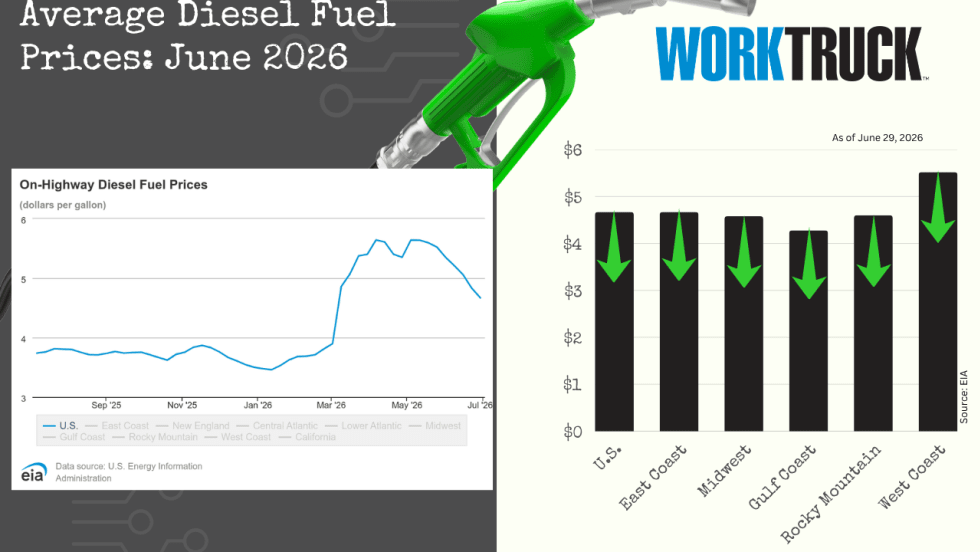
The national average price of a gallon of diesel has dropped again, this week by more than 16 cents. All five regions reported lower average prices, ranging from almost 13 cents to more than 28 cents cheaper than a week ago.
RoadFlex Direct connects fuel cards, controls, and data to the telematics and fleet management systems fleets already run, from Geotab and Samsara to Fleetio and RTA, with no separate dashboard or double data entry.