2026 is coming in hot for work truck fleets, with higher costs, tighter expectations, and less room for reactive decision-making.
Credit:
Work Truck
6 min to read
Every year, fleet leaders ask the same core questions, just with slightly different stress levels: What’s changing? What’s coming next? And what should we be doing now so we’re not scrambling later?
This year’s answers weren’t just interesting. They were clarifying.
Ad Loading...
Because if you manage a light- or medium-duty work truck fleet, you’re already feeling it: costs are higher, expectations are higher, and the margin for error is smaller. What’s different heading into 2026 is that fleets are shifting from reactive decision-making to strategic planning that can flex.
In other words, it’s not just “what’s the next trend?” It’s “how do we build a fleet operation that can handle volatility, disruption, and new technology without breaking down?”
That’s why we created Work Truck’s 2026 fleet forecast series, a set of five full-length features grounded in what industry leaders are seeing, predicting, and preparing for right now. If you’re looking for fluff, sorry. You’re in the wrong place. This series is built for fleet managers who want real insight they can use for planning, budgeting, safety strategy, and equipment decisions.
Here’s what’s inside, what it means, and why 2026 is shaping up to be a turning point for work truck fleets.
The Big Question Behind Every 2026 Forecast
Across every forecast we collected, one theme kept coming up in different forms: fleets are moving from “best practices” to “must-do practices.”
That shift matters because it changes the baseline expectations for fleet operations.
The things that used to feel optional are quickly becoming table stakes:
Fleet data that drives decisions (not just reports)
Technology that integrates instead of creating more work
Maintenance strategies that prevent downtime instead of reacting to it
Safety that lives inside daily operations, not a separate program
Powertrain planning that’s realistic, resilient, and aligned with real work
Fleets that treat these as core operating principles will have a much easier time navigating what’s ahead. Fleets that don’t will still get through 2026… but it will feel like running uphill in steel-toe boots.
Now let’s get into the five big forecast themes shaping light- and medium-duty work truck fleets in 2026.
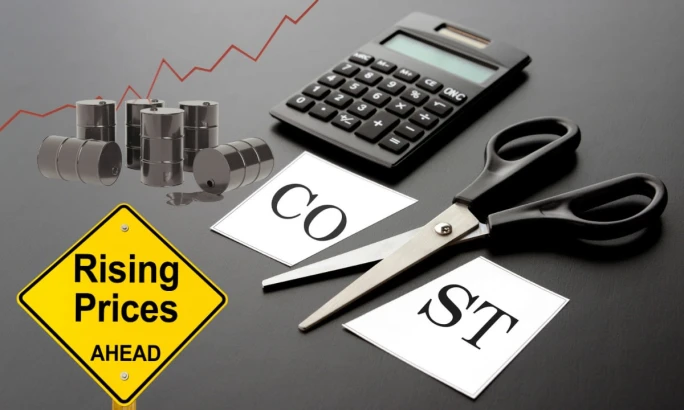
The cost squeeze isn’t letting up in 2026, pushing fleets toward zero-sum budgeting, stronger ROI proof, and smarter decisions around equipment, insurance, and operating costs.
Credit:
Work Truck
The Cost Squeeze Is Not Letting Up, and Fleets Are Planning Like It
Let’s start with the disruptor that touches everything: money.
Rising equipment prices, insurance premiums, and tariff uncertainty are forcing fleets into a new budgeting mindset, one where every dollar has to prove its worth. This is where fleet planning becomes less about tradition and more about strategy.
One of the most telling ideas we heard is the rise of “zero-sum budgeting,” where discretionary spending gets challenged hard unless it shows measurable ROI. That’s not just about cutting back. It’s about buying smarter, rightsizing vehicles, modeling total cost of ownership, and building more flexibility into replacement cycles.
If you’ve ever had to justify a fleet investment to leadership using spreadsheets, logic, and sheer force of personality, you’re going to feel seen.
Are we still using fixed replacement cycles, or are we planning around real-world pricing and availability?
Can we prove the ROI of every major fleet decision?
Fleet tech in 2026 shifts from a stack of tools to an integrated system, with AI acting as the control layer, but only if fleets can trust the data and demand transparency.
AI is moving from being a feature to being a control layer, automating processes and turning data into action. But the real shift isn’t just that AI is growing up. It’s that fleets are demanding integration, trust, and transparency.
There’s a major push toward embedded and OEM telematics, shared data visibility, and tech stacks that behave more like ecosystems than a pile of disconnected platforms.
And in 2026, “responsible AI” becomes a procurement expectation, not a bonus. Transparency, bias checks, audit trails, and the ability for humans to override decisions will matter.
In other words, the future isn’t “AI everywhere.” It’s “AI you can trust.”
What Fleet Managers Should Be Asking
Are our fleet systems integrated, or are they creating more administrative work?
Do we trust the data enough to act on it?
If we adopt AI, can we explain how decisions are made and how drivers are evaluated?
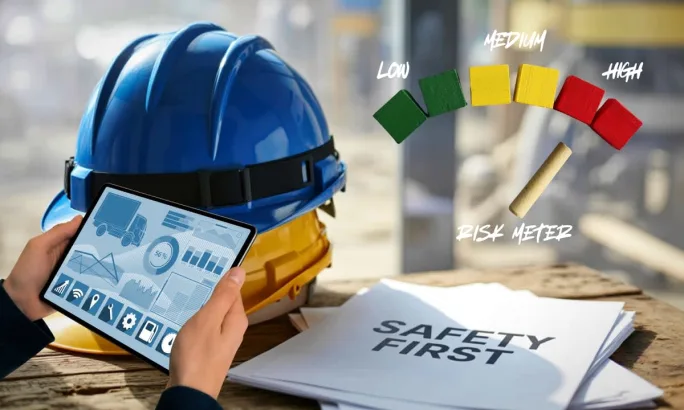
Hard hats, a tablet showing analytics, “Safety First” paperwork, and a risk meter graphic, representing fleet safety strategy, coaching, and measurable risk management.
Credit:
Work Truck
Safety Stops Being A Program And Becomes How Fleets Operate
This one might be my favorite because it’s where the fleet world is getting very honest.
Safety isn’t going away as a priority, but the way fleets approach safety is changing. In 2026, prevention and coaching are becoming embedded in telematics ecosystems rather than living as standalone initiatives that require separate tools, workflows, and attention.
Risk is also being redefined. Fleets are looking beyond collisions and thinking in dynamic risk terms: pedestrians, roadwork, speed for conditions, distraction, and the real-world chaos drivers navigate daily.
The big takeaway is that safety is becoming measurable in a way it hasn’t been before, and that has ripple effects. It impacts claims. It impacts uptime. It impacts insurance outcomes. And it changes the conversation from “we should do this” to “we can’t afford not to.”
What Fleet Managers Should Be Asking
Is safety integrated into daily operations, or still treated as a separate program?
Are we measuring risk in a way that actually supports coaching and prevention?
Are we managing downtime and claims as part of the safety strategy?
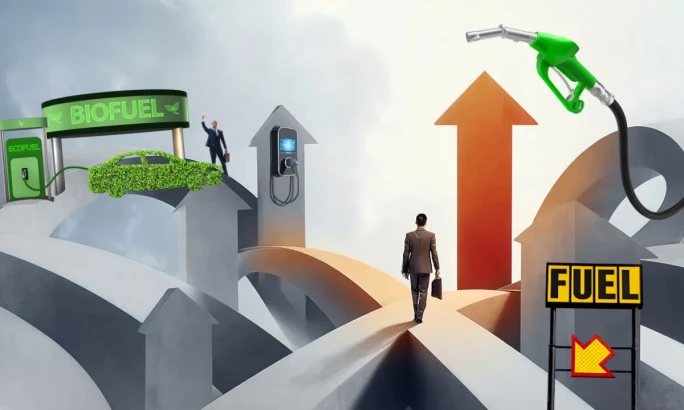
Fuel strategy in 2026 is less about picking one “winner” and more about building resilience across EVs, hybrids, and alternative fuels as costs and reliability pressures rise.
Credit:
Work Truck
Powertrain Strategy Gets More Realistic And More Resilient
If you’ve been watching the EV conversation evolve, you’ve probably noticed something: it’s getting more grounded.
In 2026, fleets aren’t necessarily abandoning electrification, but they’re getting strategic. EVs are being deployed where they fit best, especially in predictable routes and depot-based operations. Hybrid stays relevant. Alternative fuels hold their ground. And energy reliability becomes part of fleet planning.
That last part is a big shift. Uptime isn’t just mechanical anymore. It’s also about whether the energy powering your vehicles is reliable when you need it.
The fleets that win won’t be the ones chasing a single powertrain “winner.” They’ll be the ones building resilience into their entire fuel and infrastructure strategy.
What Fleet Managers Should Be Asking
Where do EVs truly fit our duty cycles today?
Are we planning around grid reliability, charging constraints, and downtime risk?
Do we have an energy strategy, or just a vehicle strategy?
Yard Operations Becomes A Competitive Advantage
If last year was about realizing yard operations matter, 2026 is about acting on that conviction. We’re seeing major momentum around yard electrification, network standardization, yard operating systems that direct work (not just observe it), and outsourcing to specialists who bring integrated labor, equipment, and technology.
The bigger story is that yards are becoming measurable, manageable, and scalable. That matters because the yard is often where uptime is won or lost. If yard operations are chaotic, transportation suffers. Warehousing suffers. Trailer turns suffer. Everything suffers.
In 2026, the yard becomes a strategic lever, not a background function.
What Fleet Managers Should Be Asking
Are yard workflows standardized across sites, or dependent on local workarounds?
Are we measuring yard performance the same way we measure fleet performance?
Can we modernize yard operations without disrupting the entire network?
2026 is coming in hot for work truck fleets, with higher costs, tighter expectations, and less room for reactive decision-making.
Credit:
Work Truck
What Does All of This Mean for the Future of Work Truck Fleets?
Zoom out, and this forecast series points to something bigger than individual trends: It points to a future where fleets are expected to operate like high-performance systems, not just collections of vehicles.
That means:
More integration across data, maintenance, safety, and procurement
More accountability tied to measurable outcomes
More pressure to reduce downtime because the business impact is immediate
More strategic decision-making around powertrains and energy resilience
More reliance on partners who can deliver expertise and consistency, especially as labor gaps grow
It also means the fleet manager role continues to evolve. It’s not just “keep trucks on the road.” It’s risk management, cost strategy, technology planning, workforce planning, and operational resilience, all wrapped into one job.
No pressure, right?
But here’s the good news: this shift creates opportunity. Fleets that build smart, flexible systems now will adapt faster, operate more efficiently, and weather volatility better than the rest.
That’s exactly what this forecast series is designed to support.
Ready To Dive In?
If you’re planning your 2026 fleet budget, evaluating fleet technology, rethinking safety programs, or trying to figure out what your powertrain mix should look like, this series is built to help you make decisions with clarity.
Because the forces shaping 2026 won’t hit fleets one at a time. They’ll hit all at once.
Read the full Work Truck forecast series for more insights on how fleets can plan smarter and stay ahead.
Top Questions about 2026 Work Truck Fleet Forecasts
We pulled the most common “okay but what does this mean for me?” questions into one quick cheat sheet:
What Are The Biggest Fleet Trends For 2026?
The biggest trends include tighter fleet budgets, tariff and insurance pressure, more integrated fleet technology, AI-driven operations, targeted EV adoption, and yard operations becoming a strategic focus.
How Should Fleet Managers Prepare For 2026 Cost Increases?
Fleets can prepare by modeling total cost of ownership, building flexibility into replacement cycles, rightsizing vehicles, investing in safety to reduce claims costs, and prioritizing purchases that protect uptime.
What Role Will AI Play In Fleet Operations In 2026?
AI is expected to move beyond alerts and reporting to automate processes, improve decision-making, and help fleets optimize safety, uptime, and cost. Fleets will also demand responsible AI with transparency and human oversight.
Will Fleets Still Adopt Electric Vehicles In 2026?
Yes, but adoption will be more strategic. EVs will be deployed where they fit best, especially for predictable routes, while many fleets continue using hybrid, diesel, or alternative fuels depending on infrastructure and cost.
Why Are Integrated Fleet Platforms Becoming More Important?
Fleets are tired of managing disconnected tools. Integrated platforms reduce administrative workload, improve data visibility, support faster decision-making, and help connect safety, maintenance, and operations in one workflow.
Why Are Yard Operations A Big Focus For 2026?
Yards are becoming measurable and scalable through electrification, standardization, yard operating systems, and specialized partners. Better yard performance improves uptime, dock flow, and network efficiency.
How Is Safety Strategy Changing For Fleets In 2026?
Safety is becoming embedded in daily operations through integrated telematics, coaching, and prevention. Fleets are also expanding how they define risk, including hazards like roadwork, pedestrians, and speed-related conditions.
The automotive industry talks constantly about its workforce shortage. But before we can recruit the next generation, we may need to do a better job giving kids a reason to care about automotive in the first place.
From oil changes to procurement decisions, fleet work is often underestimated by the very people who depend on it most. Bob Stanton makes the case for why communication, not just technical expertise, is one of the most important leadership skills in fleet.
New tools always change the process. They do not replace the instinct. From portrait painters adapting to photography to creators navigating AI, the people who matter most are still the ones who know how to see.
What are the key benefits of tire pressure monitoring systems (TPMS), and how can they not only increase fleet safety but also drive efficiency and cost savings?
Winter may be winding down, but the breakdown patterns don’t disappear with the snow. Here’s what fleets keep seeing, and what to fix now before next season.
Discover how 250 years of American progress shaped the evolution of work trucks, fleet operations, and the commercial vehicles powering today’s workforce.