




From Firefighting Roots to Designing Life-Saving Fleet Solutions
Discover how firefighter-turned-innovator David Ronsen built Acela’s life-saving fleet vehicles, from fire trucks to mobile command centers.

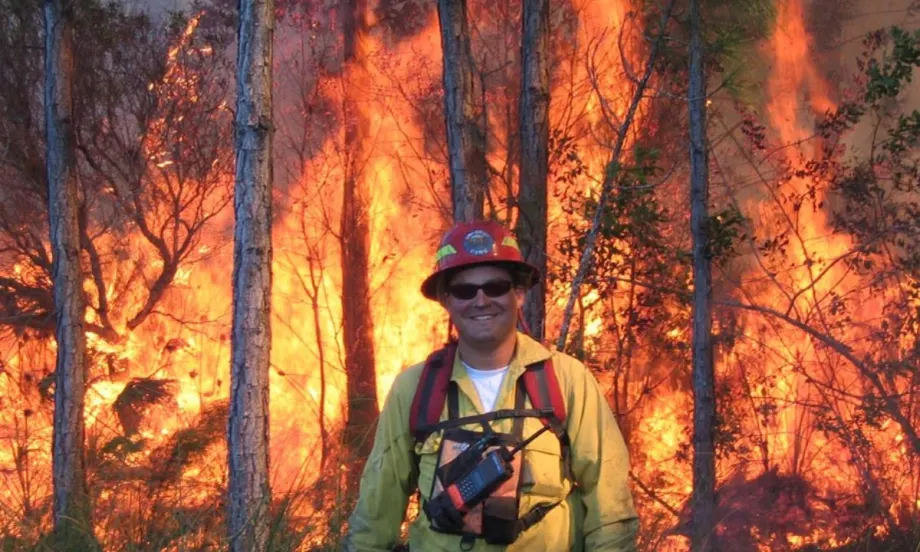
David Ronsen began his career battling wildfires, an experience that shaped his mission to design vehicles that save lives.
Photo: David Ronsen
Some leaders find their careers in the boardroom. For David Ronsen, president of Acela, Inc., the path started on the fire line. With nearly two decades in emergency response and more than 30 years designing custom vehicles, Ronsen has carved out a unique space where innovation meets service.
His work has led to the development of high-water rescue trucks, mobile command centers, and even mobile morgues, all with one goal in mind: making sure first responders have the tools they need when disaster strikes.
A Firefighter Turned Innovator
Ronsen’s journey began in California in the late 1980s.
“I started my career in the late 80s with CAL FIRE as a firefighter, moved on and became a private contractor to the Forest Service and the Department of Interior. So, my firefighting career spanned about 17 years. During that time, I started building custom trucks. We cut our teeth building custom brush trucks or wildland fire trucks. I’ve been at that now for over 30 years and have been involved in some really, cool projects building everything from fire trucks to mobile command centers, mobile medical clinics, bookmobiles, buses, and other custom vehicles as well,” Ronsen said.
The blend of firsthand firefighting experience and mechanical creativity became the DNA of Acela. And while much of his work involves heavy-duty emergency response vehicles, one project still makes him smile.
“Bookmobiles were some of my favorite,” he admitted with a laugh. “Fire trucks and then bookmobiles.”
Responding When the World Changes
Years of front-line service gave Ronsen a unique perspective on how communities react when disaster strikes.
“You know, when I was a firefighter, it was a much more forgiving time,” he recalled. “I think people had more patience. People were much more appreciative of the response or the level of response that they got. Resources are very, very limited.”
But today, he’s seen expectations shift.
“They expect that somewhere behind some hidden curtains are tens of thousands of responders that can just be there the next morning,” Ronsen explained. “And so, some of the biggest challenges that I faced in my career were being one of the earlier responders or even being one of the first responders to a very, very large-scale event and then just waiting for reinforcements to show up and being able to get a handle on the incident and start making some significant progress.”
Those realities shaped his approach to designing vehicles that can bridge the gap when resources are stretched too thin.
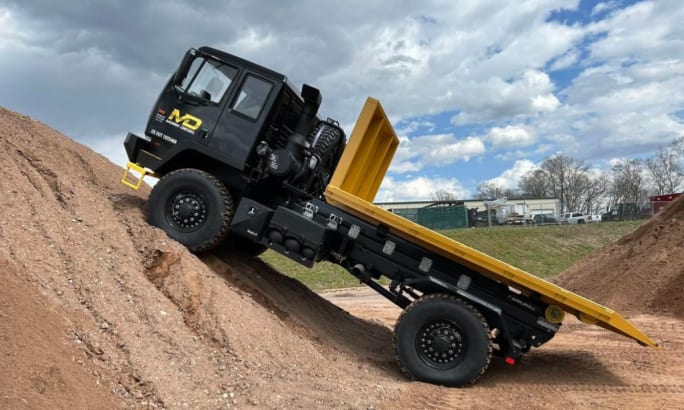
Acela’s rugged vehicles are designed to perform in the toughest conditions, from steep terrain to natural disasters.
Photo: Acela Truck
Innovation Born from Necessity
Sometimes, the best ideas come out of the toughest situations. When COVID-19 hit in March 2020, Acela’s production line was at risk as vendors shut down and parts became scarce. Then came an unusual request from a long-term client: the Veterans Administration’s Office of Emergency Management.
“The VA wanted us to build 56 morgue trailers,” Ronsen recalled. “We put together a bid spec for them. We bid and were awarded the job. And we delivered. We delivered 45 of the trailers within 35 days after we were given the contract.”
That whirlwind project became the foundation for Paladin, Acela’s division focused on mortuary surge response.
“We grew the Paladin Division over the years… to one of the country’s only medical grade morgue trailer and morgue storage solution manufacturers. So, it’s still a very, very strong business for us,” he added.
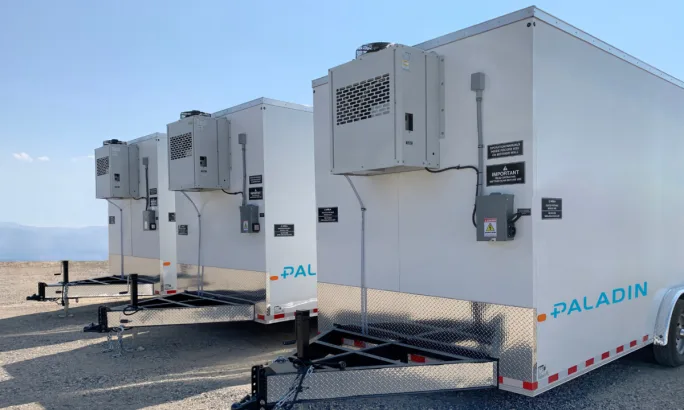
Acela’s Paladin Division was born during the COVID-19 pandemic, building morgue trailers to meet urgent national demand.
Photo: Acela Truck
The Power of Simple, Collaborative Design
For Ronsen, innovation doesn’t mean over-engineering. It’s about solving the right problem in the simplest way possible.
“I employ the KISS method. Keep it simple. Where I’ve succeeded the most is finding a need and finding the simplest solution to resolve the requirements,” he explained.
That philosophy proved especially valuable when Acela developed mobile command centers after 9/11. Many agencies were investing in high-tech, multimillion-dollar trucks that required specialized training to operate.
“The biggest complaint we heard… was if someone was on vacation, nobody knew how to use any of their stuff,” Ronsen said.
By simplifying the design and involving end users in the process, Acela delivered cost-effective units that firefighters and police could operate on day one. Collaboration, he emphasized, is just as critical.
“Collaboration is absolutely paramount,” he said. “I invite people that I trust to poke holes in any idea and any product that we’re developing or wanting to bring to market.”
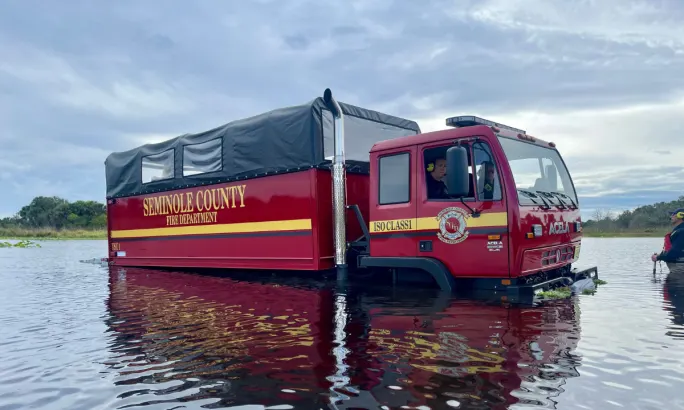
Acela’s high-water rescue trucks help fire departments like Seminole County respond when flooding strikes.
Photo: Acela Truck
Preparing for a New Era of Disasters
When Acela first introduced its high-water rescue trucks, many didn’t see the need.
“Three quarters of the firefighters that walk the trade shows we were at would laugh,” Ronsen said. “They just couldn’t figure out why somebody would need a truck like that. That sentiment has changed 180 degrees. We literally are having trouble keeping up with orders.”
As climate-driven events become more common, Ronsen has seen demand for his vehicles grow.
“We have communities getting 100-year floods every single year. And in some cases, we’ve got one client in Texas who is experiencing 100 and 500-year floods two or three times a year now,” he noted.
His advice for fleets is straightforward:
“You don’t have to call it climate change, right? Just call it flooding or hurricanes or earthquakes or snowstorms or whatever the case may be,” he explained. “And there’s no question they’re getting more severe. So, if anything, just prepare.”
A Career Driven by Passion
Even with a client base that spans industries from mining to utilities, Ronsen said his purpose is rooted in one thing: supporting the people on the frontlines.
“My passion is supporting first responders first and foremost,” he said. “Designing tools and improving tools for first responders is definitely my passion and I think that passion has really spread through our organization.”
From fire trucks and flood rescue vehicles to mobile morgues and yes, even bookmobiles, Ronsen’s career is proof that when innovation is grounded in simplicity and collaboration, it can truly change lives.
More Safety

Volvo Trucks Releases New Safety Recommendations for Traveling with Pets
One of the most important recommendations for professional drivers traveling with pets is to ensure pets are properly restrained while the truck is moving. Other tips are available in the new guide from Volvo Trucks North America and Center for Pet Safety.
Read More →
API Issues Refueling Safety Guidelines
The American Petroleum Institute offers a list of safe vehicle refueling guidelines, including ways to avoid potential problems with static electricity discharges in fall, winter, and early spring.
Read More →
Winter Fleet Prep: Expert Tips to Keep Vehicles Running Smoothly
Cold weather can expose weak batteries, tires, fuel systems, and maintenance gaps fast. Use this winter fleet checklist to prepare trucks and drivers before temperatures drop.
Read More →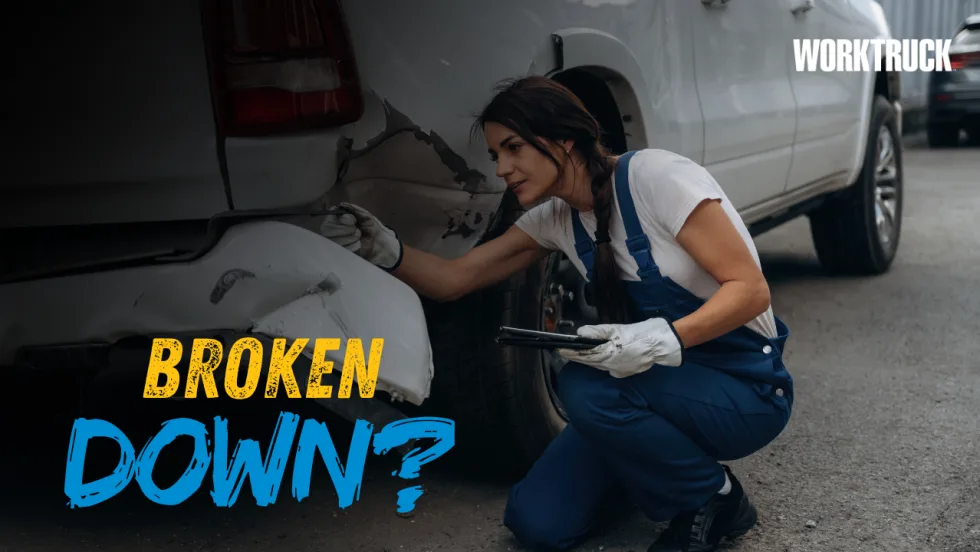
When a Work Truck Breaks Down, the Job Can Stop, Too
A work truck breakdown can stop more than the vehicle. Discover how payloads, jobsites, and specialty equipment change the roadside response.
Read More →
What Stronger Long-Term Fleet Service Partnerships Actually Require
Fleet service partnerships rarely fall apart all at once. Learn the three warning signs that trust is eroding and what fleets and providers can do before downtime, frustration, and lost revenue follow.
Read More →
Applause & TRUCE Software Partner to Improve Driver Safety Through AI-Powered Telematics & Employee Performance Management
Applause has integrated TRUCE driving metrics directly into its employee-first performance and safety platform that transforms mobile devices into AI-powered telematics.
Read More →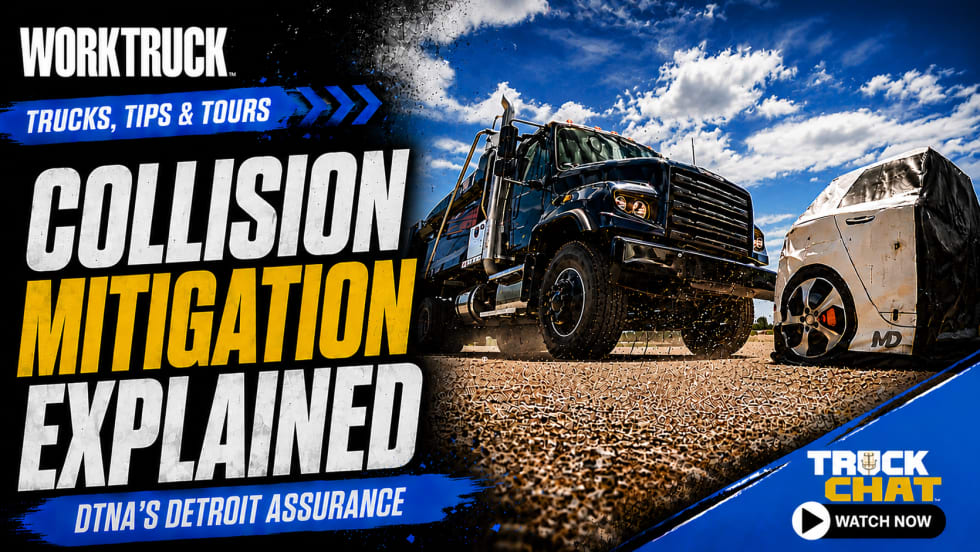
How Detroit Assurance with Active Brake Assist Works
Do you want to see what it is like to experience Detroit Assurance’s Active Brake Assist? In this video, Work Truck will put you in the cab to see how it all works and then hear more details from DTNA’s Mike Young.
Read More →
Get Left of Loss: A 5-Step Workplace Violence Prevention Framework for Fleet Operators
Violence risks do not stop at the driver’s door. Learn five practical steps fleets can take to spot threats early and protect workers before loss occurs.
Read More →
How Better Visibility Cut Speeding Violations by 48%
Fleet leaders don't need more data, they need clearer visibility into what the data is saying. This case study explores how one utility replaced speeding-event counts with a single metric — miles driven in violation — to strengthen safety and significantly reduce speeding violations.
Read More →
13 Safe Driving Tips for Commercial Vehicle Drivers
Make sure you are spending time on the road safely with these important tips.
Read More →