




Dig Deeper: Fuel Management Tips for Mixed Fleets
How Mixed-Energy Fleets Are Shaping the Future of Fleet Management
Explore how mixed-energy fleets are reshaping commercial transportation with insights from WEX's latest survey and expert strategies for seamless integration.
by Carlos Carriedo, WEX
May 20, 2025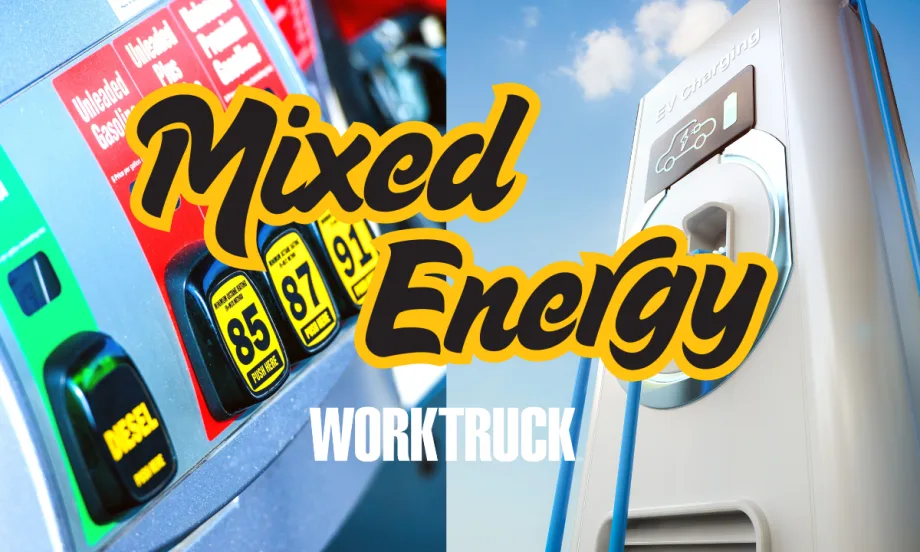
Fleet transformation often involves combining a variety of vehicle types, including gasoline, diesel, EVs, and hybrids.
Photo: Work Truck
5 min to read
Change is always present in the fleet world, and moving towards mixed-energy fleets is one of the more impactful shifts in recent memory.
The transition to electric vehicles (EVs) is not a question of when, but how best to integrate them. Just as the combustion engine overtook the horse-drawn carriage and digital cameras replaced film, better technology always prevails. EVs are no longer an experiment but a global movement driven by undeniable economic, environmental, and technological advantages.
Fleet transformation often involves combining a variety of vehicle types, including gasoline, diesel, EVs, and hybrids. This approach allows businesses to leverage each technology's strengths and create more flexible operations, but understanding the complexities and opportunities of mixed-use fleets is crucial for long-term success.
Late last year, fleet management solutions provider WEX commissioned market research firm Frost & Sullivan to survey 500 organizations with commercial vehicles across the U.S., Europe, and Asia Pacific. The survey's results, “The Commercial EV Transition: Global Insights on a Mixed-Energy Fleet Future,” showed that 80% of fleet operators surveyed intend for at least 25% of their fleets to be EVs by 2030.
External Forces are Driving EV Interest
Several factors, including sustainability goals, regulatory pressures, and operational efficiency, drive the move to embrace EVs. Together, they are reshaping how businesses manage their assets as a mixed-energy fleet model.
One of the biggest factors, decarbonization, plays an important role, with the Frost & Sullivan survey revealing that 70% of respondents point to decarbonization as either an “important” or “cornerstone” component of their business strategy. Overall, nearly two-thirds (63%) of fleet managers specifically noted they had a low-carbon goal they needed to achieve by or before 2030.
Of course, the bottom line will always be a force for change, and reducing operational expenses is an attractive proposition in a challenging business environment. When surveyed, respondents said cost savings ranked third as the top 10 drivers for fleet adoption of EVs, behind reducing carbon emissions and decarbonization goals. Larger fleets ranked cost savings as the most important driver above carbon-related categories.
“The big differential between diesel and electricity cost is a huge opportunity for fleets,” said Dr. Jose Serras-Pereira, Director of Mobility Advisory for Frost & Sullivan, during a recent WEX-hosted LinkedIn Live panel discussion. “The electricity costs can be 10 to 20% of the cost of diesel. This is a huge component of reducing the total cost of operation when building a mixed-energy fleet.”
The Challenges of Mixed-Energy Fleet Integration
The transition to mixed-energy fleets is not without its obstacles. One of the most significant hurdles is the increased complexity of fleet management. Managing different energy sources, optimizing routes, and ensuring vehicle uptime requires a sophisticated approach. Fleet managers must balance EV charging with traditional refueling while maintaining efficiency and meeting service-level expectations.
This requires robust data management and advanced analytics to track vehicle performance, energy consumption, and charging patterns. Many fleet managers still rely on legacy systems that struggle to integrate EV-specific data, leading to data fragmentation and hindering optimization efforts.
Infrastructure gaps also pose a significant challenge. Public charging infrastructure remains inconsistent, particularly for long-haul and rural operations. While the number of charging points is increasing, the pace is often insufficient to meet the growing demand. This is particularly true for commercial fleets that require reliable and fast charging options.
Solutions to Simplify the Journey
To overcome these challenges, businesses must adopt innovative solutions. Smart energy and route planning, leveraging advanced telematics and real-time analytics, can optimize energy use and reduce downtime. Predictive tools can help plan routes based on charging availability and energy efficiency.
Expanding charging access through a mix of depot, home, and en-route charging solutions is also essential. Collaboration with governments and private sector players can accelerate infrastructure deployment.
Extracting the cost benefits of adding EVs to a fleet through data analysis also plays a part in optimization. That data will be an important proof point when fleet managers want to come back to the business and share how EVs are saving the company money.
The benefits of mixed-energy fleets appear to outweigh any issues. Key insights from Frost & Sullivan’s research reveal that businesses are lowering maintenance and operational costs while leveraging advanced tools and technologies to overcome integration challenges. EVs are connected, data-driven assets, enabling continuous over-the-air upgrades, predictive analytics, and deeper fleet insights, capabilities that ICE vehicles cannot match.
A comprehensive approach can help to ease the transition to EVs, including these vital steps:
Assess & Plan: Leverage data and expertise to assess the most cost-effective and practical construct for a mixed-energy fleet, including which vehicles are best to transition, for what purpose, and when.
Operate: Streamline operations with a single card or mobile app to pay for charging and fueling, and use integrated reporting and invoicing. Enable drivers to access low-cost energy at private depot sites or homes, where drivers can be reimbursed for their home energy usage.
Track Performance & Maintain: Measure vehicle emissions, gain insights to maximize savings, generate automated monthly compliance reports, track progress to meet business performance and sustainability goals, and continue to optimize the mixed-energy fleet.
“Fleets run on tight margins and run complex operations,” said Serras-Pereira during the WEX LinkedIn Live EV panel last March. “Any big transition like adopting EVs will create some doubts and concerns. Mixed-energy fleets will exist for many years for many fleets, and the question of how to optimize their operations, data, and technology will be the key to this transition."
Subscribe to Our Newsletter
More Fuel

Precision Under Pressure: Why Modern Diesels Demand a New Fuel Maintenance Playbook
Modern diesel fuel systems leave little room for contamination, deposits, or old maintenance habits. See why today’s HPCR engines demand a more proactive approach to fuel quality, injector health, and DPF protection.
Read More →
Peterbilt Trucks Equipped with Paccar TX-18 Pro Boost Efficiency for Maryland Fleet
Patuxent Companies is replacing aging trucks with the Peterbilt Model 567 and Model 589, specified with the Paccar TX-18 Pro 18-speed automated transmissions, and is reporting an 8% to 10% improvement in fuel economy.
Read More →
The Smart Way to Build a Mixed-Energy Fleet Isn’t About Picking a Side
Mixed-energy fleets aren’t about picking a winning fuel. Sarah Booth of WEX explains how vehicle data, duty cycles, charging strategy, and real-world costs can help fleets choose the right energy source for each job.
Read More →



Ignoring This Dashboard Warning Could Cost Your Fleet Thousands in Fuel
New research suggests neglected diesel aftertreatment systems could waste up to $30 in fuel per vehicle each day. Here's why vocational fleets should pay attention.
Read More →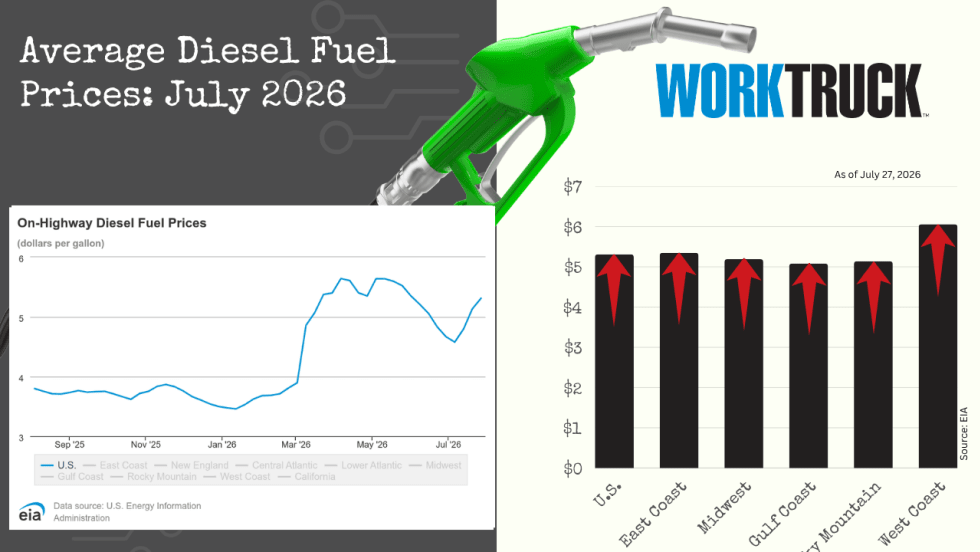
July Diesel Trends Update
The average price of a gallon of diesel increased again this week, and the EIA reported a new national average of $5.31 at the start of the week.
Read More →
WEX Brings Standard Fleet's Connected Vehicle Platform to Fleet Customers
This week’s product launch with Standard Fleet’s connected vehicle platform reflects WEX Venture Capital's strategy of turning startup innovation into customer solutions. Standard Fleet is now available to WEX fleet customers.
Read More →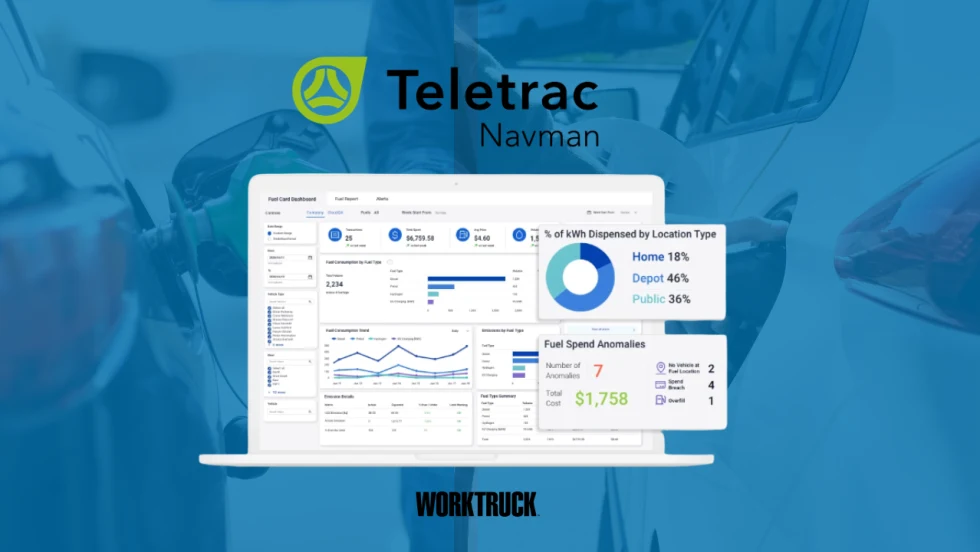
Teletrac Navman Adds Mixed-Energy Fleet Tools to TN360
The new Energy Hub combines fuel transactions, EV charging data, vehicle range, and energy costs in one dashboard for fleets operating multiple vehicle and energy types.
Read More →
WEX DriverDash adds CITGO, Expands Nationwide Access for Fleets
The DriverDash mobile payment app, by WEX, has been integrated into the CITGO merchant network, which means WEX has expanded its U.S. station footprint with the addition of approximately 4,000 CITGO locations.
Read More →
Mixed Energy Fleet Tips for Balancing EVs, Gas and Diesel Vehicles
Mixed energy fleets are becoming the new normal. Learn how fleet managers are balancing EVs, gas and diesel vehicles while controlling costs and planning for the future.
Read More →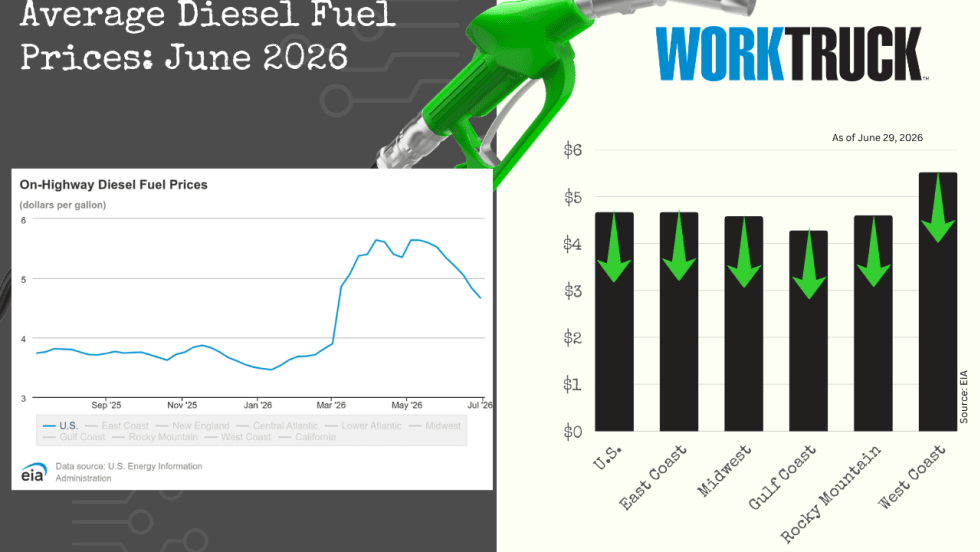
June Diesel Trends Update
The national average price of a gallon of diesel has dropped again, this week by more than 16 cents. All five regions reported lower average prices, ranging from almost 13 cents to more than 28 cents cheaper than a week ago.
Read More →