




UPS Deploys 25 Hybrids in Houston
HOUSTON - UPS announced its fleet of alternative-fuel vehicles has expanded with the deployment of 25 next-generation hybrid electric delivery trucks to Houston.
HOUSTON- UPS announced its fleet of alternative-fuel vehicles has expanded with the deployment of 25 next-generation hybrid electric delivery trucks to Houston.
At the UPS facility in Stafford, Texas, Governor Rick Perry was on hand to welcome the new vehicles to Houston. He was joined by state Sen. Tommy Williams and state Rep. Elect Ron Reynolds.
Currently, 50 UPS hybrid electric vehicles (HEVs) operate in Atlanta, Dallas, Houston, and Phoenix. The 25 trucks deployed here are part of 200 new HEVs deployed recently to eight U.S. cities. The 200 new trucks will operate in Austin, Houston, Philadelphia, Chicago, Washington, D.C., Long Island, Minneapolis and Louisville.
"This technology, where properly used, can yield a 35-percent fuel savings, the equivalent of 100 conventional UPS delivery vehicles," said Bob Stoffel, UPS senior vice president of Supply Chain Strategy, Engineering, and Sustainability.
The 200 new HEV package cars are expected to reduce fuel consumption by roughly 176,000 gallons over the course of a year compared to an equivalent number of traditional diesel trucks. The hybrids also should reduce by 1,786 metric tons the amount of CO2 gases released annually into the atmosphere.
The new hybrid power system utilizes a conventional diesel engine combined with a battery pack, saving fuel and reducing pollution-causing emissions. The small diesel is used to recharge the battery pack and to add power when necessary.
The HEV fleet features a chassis from Freightliner Custom Chassis Corporation and a hybrid power system from Eaton Corporation. The external truck bodies are identical to UPS's other signature brown trucks, although they feature additional labeling identifying them as hybrid electrics. The trucks use lithium ion batteries, which offer a faster re-charging capability and last longer than previous generation HEV batteries. Additionally, these vehicles are much quieter than conventional UPS trucks.
The UPS alternative-fuel fleet is comprised of multiple technologies, including compressed natural gas, liquefied natural gas, propane, electricity, and hydraulic hybrid technology. Since 2000, the alternative-fuel fleet has traveled more than 165 million miles.
"The wide variety of technologies in our green fleet is indicative of UPS's 'rolling laboratory' philosophy to energy efficiency and reduced fuel consumption," Stoffel said. "Our goal is to reduce dependence on fossil fuels, but there is no silver bullet technology to achieve this. This dependence will rely on a multi-modal approach."
Originally posted on Automotive Fleet
More Fuel

The Smart Way to Build a Mixed-Energy Fleet Isn’t About Picking a Side
Mixed-energy fleets aren’t about picking a winning fuel. Sarah Booth of WEX explains how vehicle data, duty cycles, charging strategy, and real-world costs can help fleets choose the right energy source for each job.
Read More →
Ignoring This Dashboard Warning Could Cost Your Fleet Thousands in Fuel
New research suggests neglected diesel aftertreatment systems could waste up to $30 in fuel per vehicle each day. Here's why vocational fleets should pay attention.
Read More →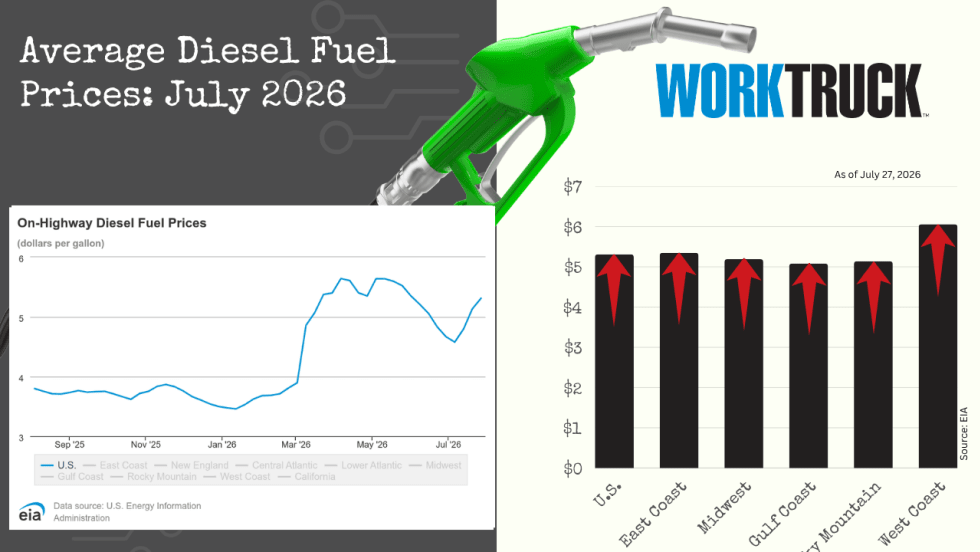
July Diesel Trends Update
The average price of a gallon of diesel increased again this week, and the EIA reported a new national average of $5.31 at the start of the week.
Read More →

WEX Brings Standard Fleet's Connected Vehicle Platform to Fleet Customers
This week’s product launch with Standard Fleet’s connected vehicle platform reflects WEX Venture Capital's strategy of turning startup innovation into customer solutions. Standard Fleet is now available to WEX fleet customers.
Read More →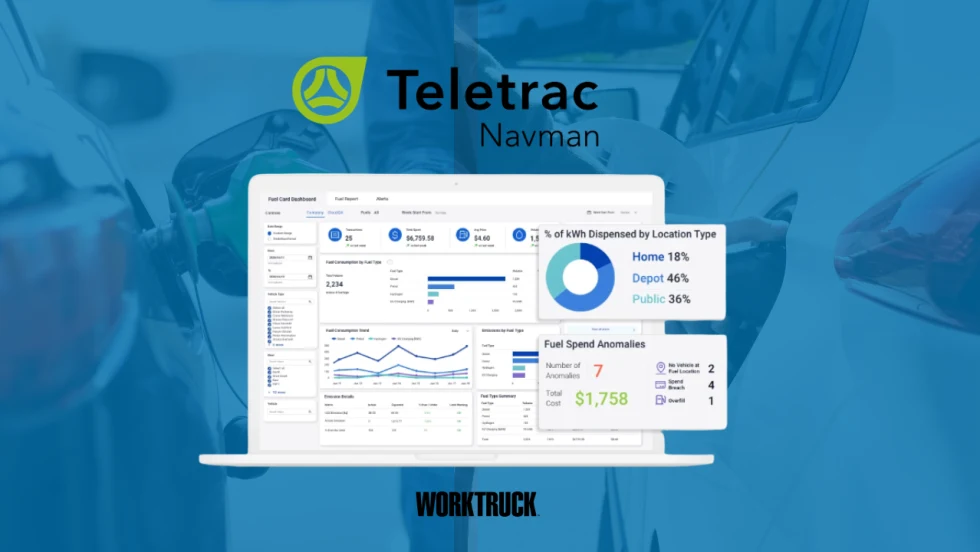
Teletrac Navman Adds Mixed-Energy Fleet Tools to TN360
The new Energy Hub combines fuel transactions, EV charging data, vehicle range, and energy costs in one dashboard for fleets operating multiple vehicle and energy types.
Read More →
WEX DriverDash adds CITGO, Expands Nationwide Access for Fleets
The DriverDash mobile payment app, by WEX, has been integrated into the CITGO merchant network, which means WEX has expanded its U.S. station footprint with the addition of approximately 4,000 CITGO locations.
Read More →
Mixed Energy Fleet Tips for Balancing EVs, Gas and Diesel Vehicles
Mixed energy fleets are becoming the new normal. Learn how fleet managers are balancing EVs, gas and diesel vehicles while controlling costs and planning for the future.
Read More →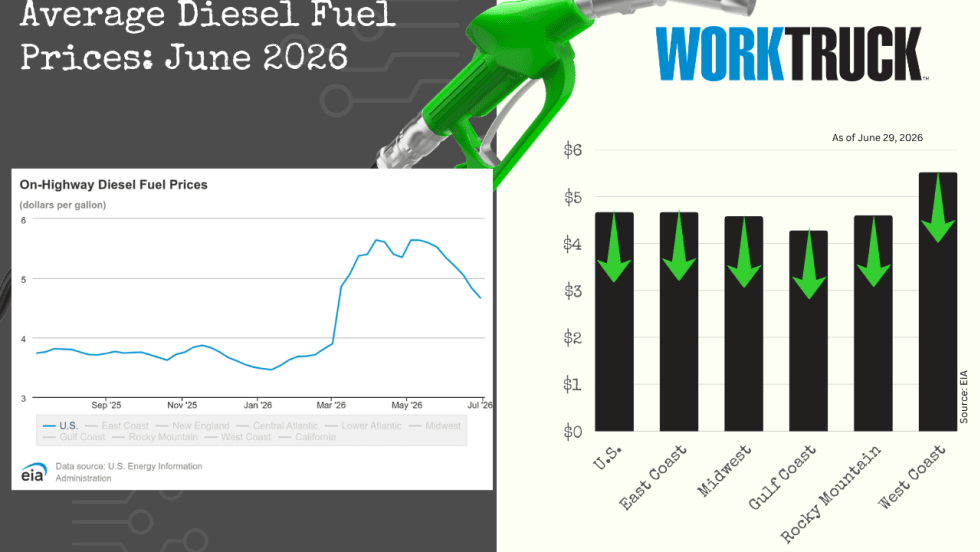
June Diesel Trends Update
The national average price of a gallon of diesel has dropped again, this week by more than 16 cents. All five regions reported lower average prices, ranging from almost 13 cents to more than 28 cents cheaper than a week ago.
Read More →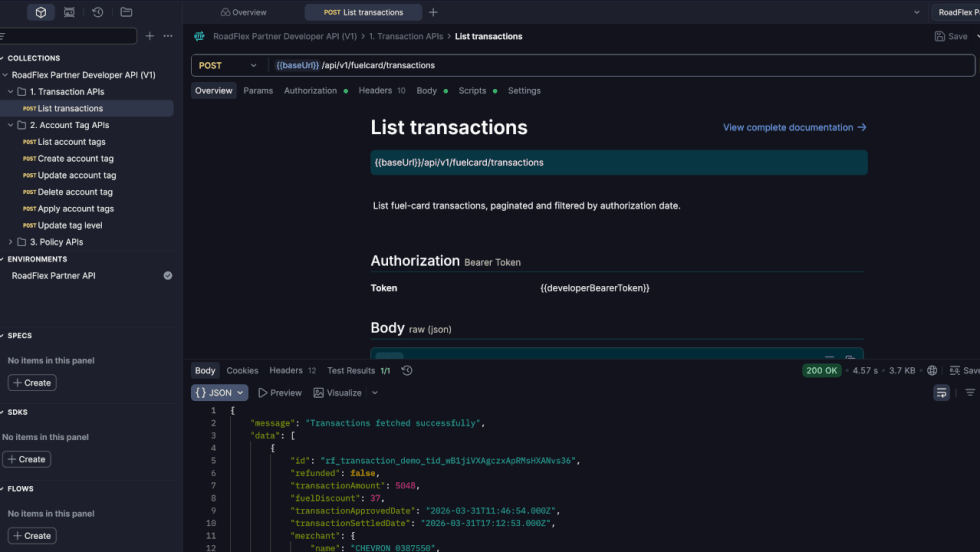
RoadFlex Launches RoadFlex Direct Open API Platform
RoadFlex Direct connects fuel cards, controls, and data to the telematics and fleet management systems fleets already run, from Geotab and Samsara to Fleetio and RTA, with no separate dashboard or double data entry.
Read More →
The Key to Fuel Efficiency Sits in the Cab
Learn how driver behavior, telematics, coaching, and fuel data can help fleets improve fuel efficiency, lower costs, and reduce emissions.
Read More →