




Keep Learning: Smith System Launches Trainer Center to Bring Consistency and Proof to Trainer-Led Safety Programs
Smith System Wants Work Truck Fleets to Look Beyond the Driver Alert
Smith System’s new Driver Risk Management program is built to help mixed work truck fleets turn telematics alerts and observations into specific behaviors, coaching actions, and measurable follow-up.
September 9, 2026
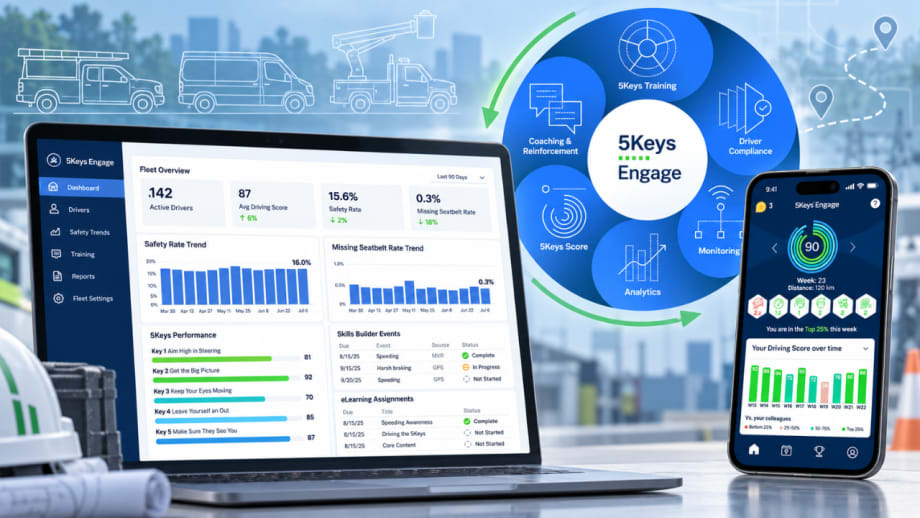
Smith System’s Driver Risk Management program brings driver data, training, coaching, and analytics into one system. For mixed work truck fleets, the approach focuses on common driver behaviors even as vehicles, routes, and operating environments change.
Credit:
Smith System | Work Truck
5 min to read
A driver can spend one day in a pickup running between job sites and another behind the wheel of a heavier vocational truck in a crowded work zone. Then the vehicle changes, the route changes, the load changes, and the traffic environment changes.
However, the behaviors fleets should manage do not change, according to Smith System CEO Derek Dunaway. That idea is at the center of the company’s new Driver Risk Management program, a fully managed safety program that connects driver training, monitoring, coaching, corrective actions, and analytics through the Smith5Keys behavioral framework.
Dunaway told Work Truck that fleets with a wide mix of pickups, vans, and vocational trucks should separate what changes in the job from what remains consistent behind the wheel.
“A driver who reads the road far enough ahead, keeps a space cushion, and maintains eye movement is managing risk the same way in a half-ton pickup on a rural two-lane as in a bucket truck in a downtown work zone,” Dunaway said.
That is why he recommends defining safety risk around driver behavior rather than vehicle class or route type.
Different Trucks Can Still Share a Safety Language
For work truck fleets, comparing driver performance can be difficult when one employee is driving a service van, another is operating a pickup, and another is working from a vocational truck. Dunaway said behavior can provide the common denominator.
When managers look at consistent behaviors across the fleet, they can compare risk even when drivers are doing very different jobs. That common framework is also intended to help fleets make better use of the growing amount of driver data coming from telematics, cameras, scorecards, instructors, and other sources.
The problem, according to Dunaway, is often not that fleets have too much data. “The volume problem is usually a framework problem,” Dunaway told Work Truck.
He said fleets may be collecting large amounts of information without having a structure that tells managers what each alert means or what should happen next.
Look for Patterns Before Reacting to Alerts
Dunaway recommends two filters for separating useful driver-risk information from noise. The first is determining whether the fleet is looking at a pattern or an isolated incident. Individual events can be noisy, he said. Managers should instead look at rates over time, account for miles driven, and identify where risk is becoming concentrated.
The company’s 5Keys Score is designed to normalize telematics signals for exposure and driving environment and group them into five behavioral areas. That reduces the manager’s view from a long list of individual alert types to a smaller set of behavioral trend lines.
Instead of reviewing every harsh brake, speeding event, or other trigger individually, a manager can identify which drivers and which behaviors are contributing most heavily to fleet risk.
Ask Whether the Alert Leads Somewhere
Dunaway’s second filter is more straightforward: Can the fleet name both the behavior and the intervention?
“If an alert does not resolve to a specific, teachable behavior with a specific coaching response, it is not actionable data. It is a notification,” Dunaway said.
The Smith5Keys framework maps events back to five observable behaviors that a driver controls and a supervisor can coach. For example, Dunaway told Work Truck that a harsh-braking event can point to a driver not looking far enough ahead to recognize a developing stop and slow gradually. Speeding may connect to maintaining a proper space cushion, while distraction can be tied to eye movement.
The point is not simply to label the event. Once the behavior is identified, the fleet can direct coaching toward the reason the event occurred rather than assigning the driver a generic safety refresher. That also gives the driver, supervisor, and safety manager a shared vocabulary for describing the same issue.
Effective Follow-Up Happens in Days Not Quarters
Identifying a behavior is only part of the process. Dunaway told Work Truck that effective follow-up has four elements. It should be timely, specific, include a defined assignment, and be measured again afterward.
“Timely means days, not quarters,” Dunaway said.
The coaching conversation should also focus on the behavior instead of simply repeating the alert. For example, telling a driver that their following distance is compressing in stop-and-go traffic gives them something more specific to correct than telling them they were flagged for a hard-braking event on a particular day.
Smith System’s program uses the 5Keys framework to connect the event with a named behavior and provide supervisors with coaching language tied to that behavior. The driver can then be assigned a targeted corrective action with a defined completion window.
Re-Measure at 30, 60, and 90 Days
The final step is determining whether the intervention actually changed how the driver operates the vehicle. Dunaway told Work Truck fleets should return to the driving data after coaching and look at whether the specific behavior improved and remained improved over 30, 60, and 90 days.
“The re-measurement part is what separates a program from a paper trail,” Dunaway said.
If a driver was coached on one particular Smith5Keys behavior, the fleet can review that portion of the driver’s score afterward rather than relying only on a composite score. If the behavior improves, the intervention appears to be working.
If it does not, Dunaway said that should trigger another response, such as behind-the-wheel training, a different coaching approach, or a closer look at whether something about the fleet’s operation is working against the training.
That last piece may be particularly important in work truck operations, where schedules, workloads, routing, or jobsite requirements can influence what happens behind the wheel.
Connecting Training Data and Coaching
Smith System’s DRM program starts with experiential behind-the-wheel training to establish a behavioral baseline. Monitoring can then capture risk signals from virtually any source, including telematics, speeding violations, harsh-braking events, or instructor observations.
Those signals are translated through the 5Keys framework, targeted reinforcement is assigned, corrective actions are tracked, and analytics are used to identify where the fleet should focus next.
“Technology observes behavior. It doesn’t change it,” Dunaway said. “Devices flag events; people coach behavior. The fleets that win aren’t replacing training with dashboards. They’re building a system where data, coaching, and training all speak the same language, and that’s what the 5Keys make possible.”
In one enterprise deployment involving more than 2,000 drivers across 22 distribution centers, Smith System reported that its 5Keys-based approach reduced preventable accidents by 38% over two years. The company said the Driver Risk Management program is available now to fleets of all sizes.
More Technology
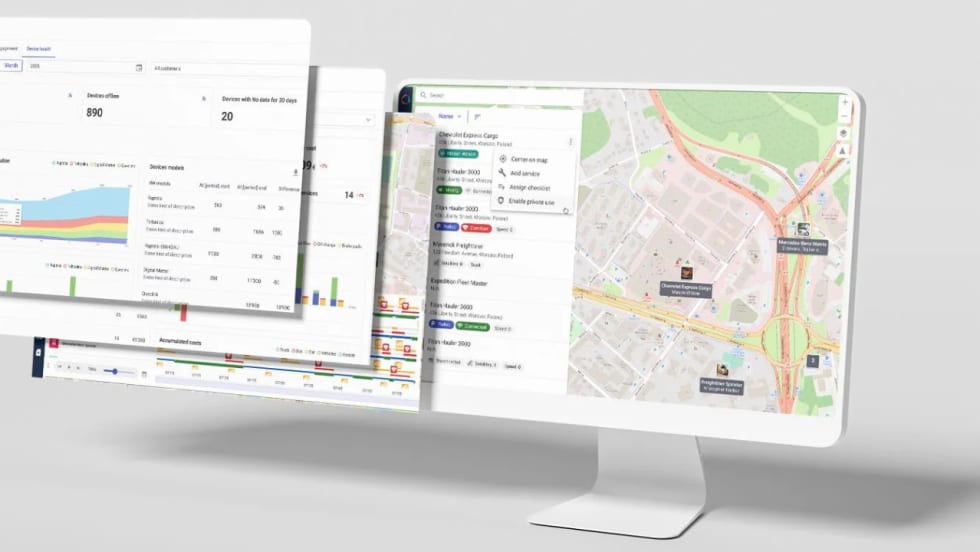
Wialon Unlocks OEM Data to Give Fleet Owners Data Ownership & Operational Clarity
Wialon has introduced hardware-free OEM integration as the EU Data Act accelerates the shift in vehicle data access across the fleet industry in many countries.
Read More →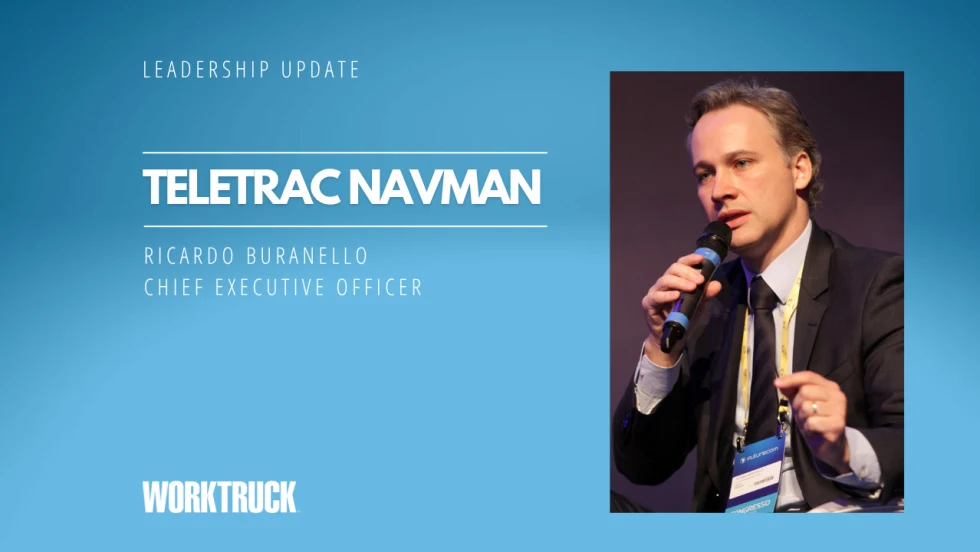
Teletrac Navman Promotes New CEO from Within
Teletrac Navman’s next CEO, Ricardo Buranello, has served as the company’s chief financial and operating officer. He brings deep financial and operational expertise, a strong strategic orientation, and an intimate knowledge of the business to his new role.
Read More →
Ford Pro Software Updates: August 26
Check out the latest Ford Pro software updates, including Google Maps integration, Remote Vehicle Alarm integration, Motor Pool for easier management of shared pool vehicles, and more.
Read More →
Where AI Is Actually Saving Fleet Managers Time
AI is moving past the buzzword stage and into the daily fleet workflow. Fleetio’s Brianna Perry Lane breaks down where fleets are seeing real time savings, from maintenance and data entry to repair decisions, safety, and compliance
Read More →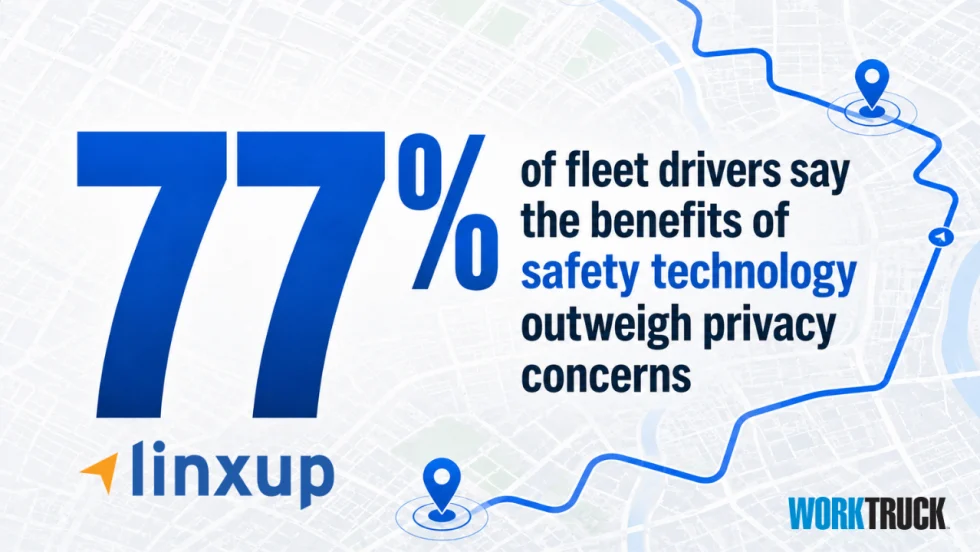
Are Work Truck Drivers Warming Up to Dash Cams and GPS Tracking?
A new survey finds field-service drivers may be more comfortable with dash cams and GPS tracking than fleet managers think, especially when the technology helps protect them after a crash.
Read More →
What's Next for Commercial Mobility?
Fleets don't necessarily need more data; they need better insights. Brian Fournier, of WEX, discusses how AI, automation, evolving payment technology, and vehicle-generated data could reshape commercial mobility over the next five years.
Read More →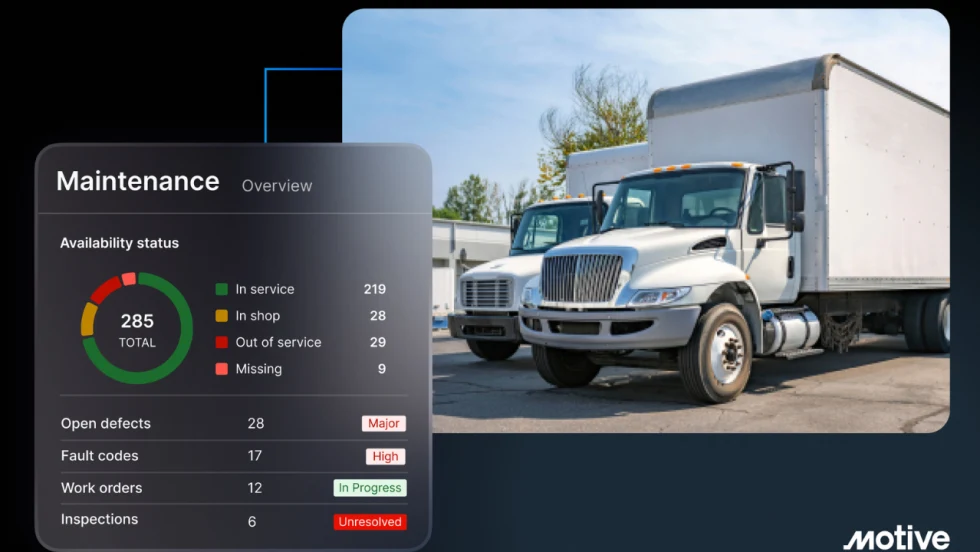
Motive Launches AI-Powered Maintenance within Motive Platform
Built into the Motive platform, Motive Maintenance connects fault codes, inspections, maintenance workflows, and spend data in a single system, so teams can catch issues earlier, keep more vehicles and assets on the road, and reduce emergency repair costs.
Read More →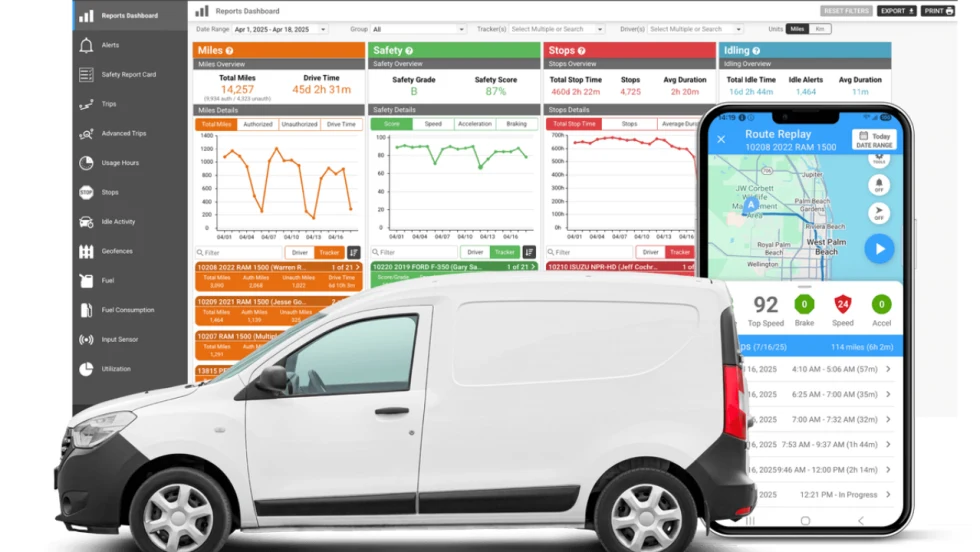
Linxup Partners with LEEO to Enable Fleets to Meet Telematics Standards for Commercial Auto Coverage
A new integration between Linxup and LEEO connects fleet operators to required GPS tracking, dash cam equipment as part of the LEEO insurance purchase process.
Read More →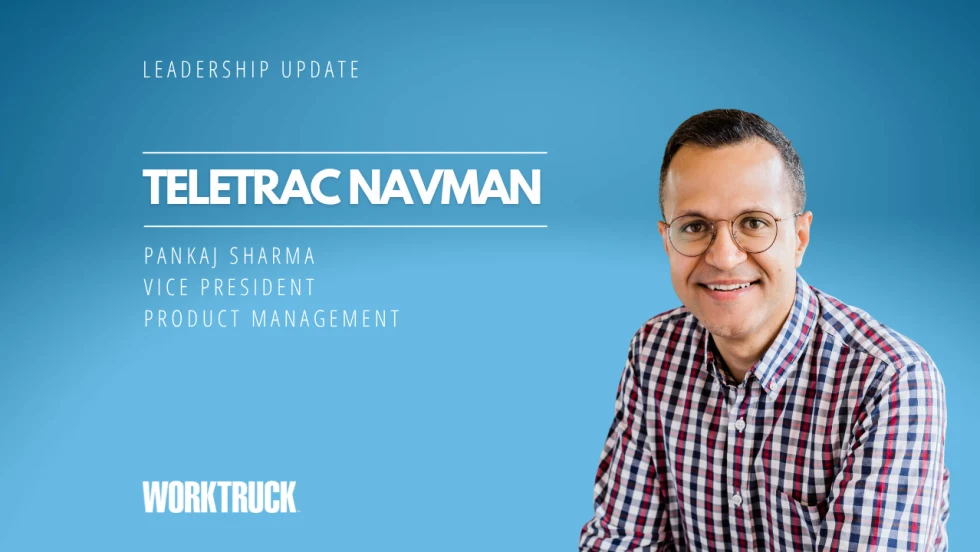
Teletrac Navman Appoints New Vice President of Product Management
Teletrac Navman has chosen an industry veteran to lead product strategy as the company accelerates AI-driven innovation for fleet customers. Pankaj Sharma is the new vice president of product management.
Read More →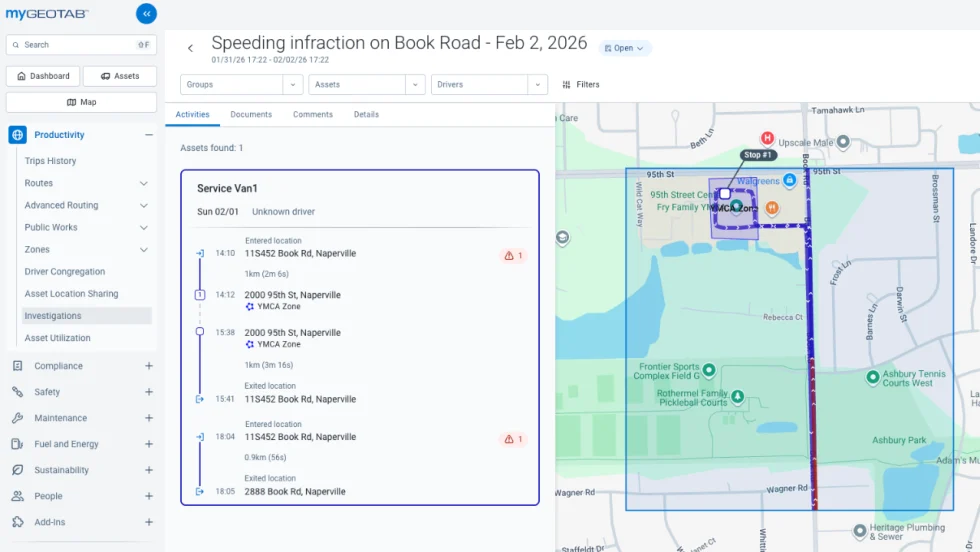
Geotab Brings Fleet Data Together for Faster Incident Investigations
Geotab Investigations combines telematics data, incident timelines, and supporting evidence in one workflow to help commercial fleets reconstruct collisions, complaints, property damage, and other events.
Read More →