




Smith System Launches Trainer Center to Bring Consistency and Proof to Trainer-Led Safety Programs
Smith System’s new Trainer Center platform helps fleets run trainer-led safety programs with less admin, more consistency, and clearer proof of impact.
January 27, 2026

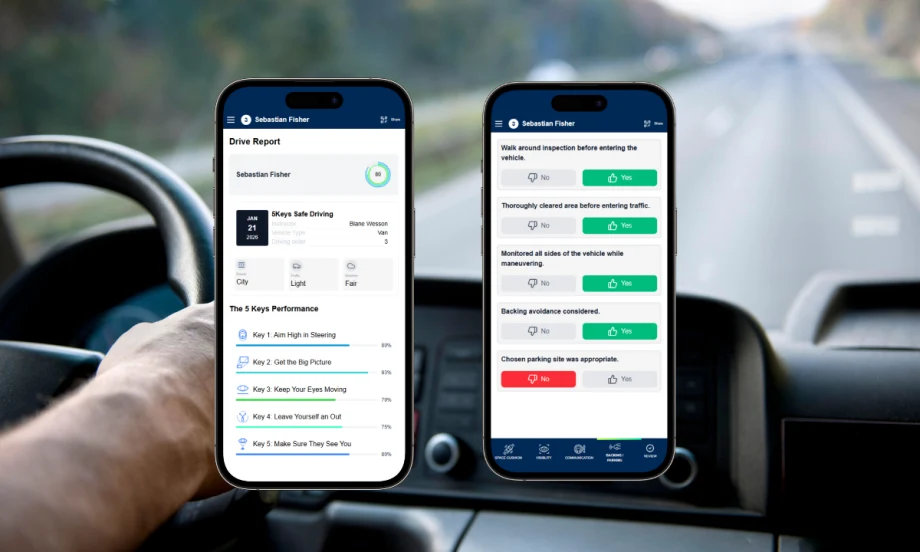
Trainer Center digitizes behind-the-wheel assessments so trainers can capture scores and coaching notes in real time, syncing results directly to driver records for ongoing behavior-based risk management.
Photo: Work Truck | Smith System
4 min to read
Trainer-led driver safety programs are nothing new for fleets. But consistently managing them, proving they work, and keeping trainers focused on coaching rather than paperwork has long been a challenge.
Smith System is aiming to close that gap with the launch of Trainer Center, a new digital platform designed to modernize how fleets operate, scale, and measure their Certified Trainer Programs. The platform brings behind-the-wheel assessments, Smith5Keys driver scorecards, scheduling, documentation, and analytics into a single system, turning what is often a fragmented process into a connected, trackable program.
For fleets that already believe in behavior-based safety, Trainer Center isn’t about changing philosophy. It’s about execution.
“Most fleets don’t fail at training,” said Derek Dunaway, CEO of Smith System. “They’re challenged with managing training as a consistent program. The breakdowns are operational, not philosophical.”
Trainer Center was built to address those breakdowns head-on, while supporting Smith System’s broader evolution into a full driver risk management platform.
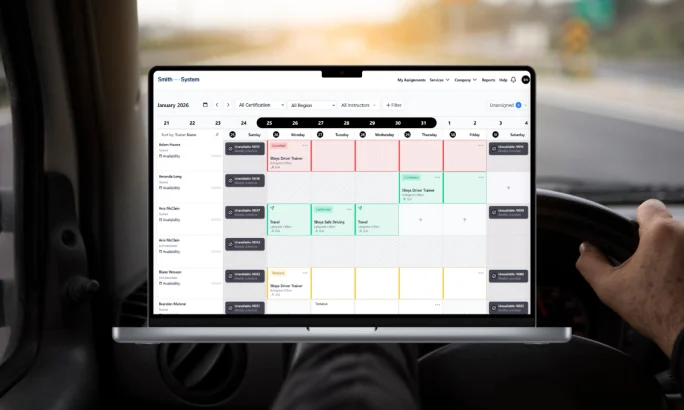
With centralized scheduling and trainer management tools, Trainer Center is designed to standardize execution across locations while making program activity easier to track, measure, and report.
Photo: Work Truck | Smith System
Where Trainer-Led Programs Break Down and How Trainer Center Fixes It
According to Dunaway, one of the most common pain points that fleets face is administrative overload. Trainers often juggle paper assessments, spreadsheets, manual scheduling, and data entry, leaving less time for actual coaching.
Trainer Center replaces those manual steps with mobile, real-time digital assessments completed in the vehicle. Scores, comments, and attendance automatically sync to driver records, while centralized scheduling and trainer management tools keep logistics in one place.
“This removes manual steps and lets trainers focus on coaching behaviors, not chasing paperwork,” Dunaway said.
Another major challenge is follow-through. Training happens, but fleets struggle to see whether behavior actually improves or to justify continued investment to leadership.
Trainer Center addresses this with persistent Smith5Keys driver scorecards, visibility into coaching and retraining activity, and dashboards that show trends over time rather than one-off events.
“That turns training into an ongoing driver risk management loop, not a series of isolated classes,” Dunaway explained.
Consistency is the third breakdown point, especially for fleets operating across multiple locations. Trainers may teach the same Smith5Keys concepts differently, assessments can vary, and safety leaders are left unable to compare performance across sites.
Trainer Center standardizes execution with unified digital scorecards and centralized access to official Smith System materials, ensuring the methodology remains consistent everywhere, even as programs scale.
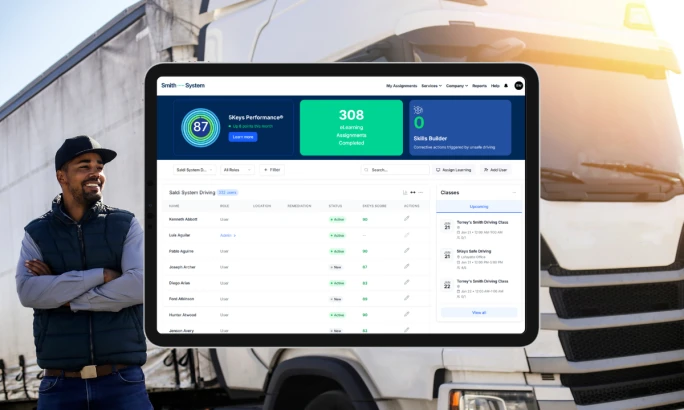
Smith System’s new Trainer Center platform brings Smith5Keys scorecards, eLearning progress, documentation, and program analytics into one connected view to help fleets run Certified Trainer Programs with less admin drag.
Photo: Work Truck | Smith System
Turning Training Activity into Proof of Impact
Rather than waiting for lagging indicators like crash counts, Trainer Center focuses on leading indicators of risk reduction that safety leaders can act on immediately.
At launch, fleets can track assessment trends, Smith5Keys behavior scores by driver, trainer, or location, coaching and retraining activity, and program execution metrics such as training cadence, trainer utilization, and compliance readiness. The platform also surfaces behavior-based risk patterns tied directly to crash-prevention behaviors.
“These are the metrics safety leaders can act on before crashes occur,” Dunaway said.
Smith System expects fleets to see value quickly. Within the first 60 days, visibility improves, administrative time drops, and consistency issues become clear. By 60 to 90 days, fleets typically see measurable improvements in Smith5Keys behavior scores and more targeted coaching. Within three to six months, many fleets can begin correlating improved behaviors with reduced incidents or claims.
“Trainer Center shortens time-to-value by making progress visible early, even before claims data catches up,” Dunaway noted.
Supporting Smith System’s Broader Driver Risk Management Strategy
Trainer Center serves as the execution layer for Smith System’s Driver Risk Management approach, integrating training, coaching, and analytics in a single environment.
At launch, the platform includes digital behind-the-wheel assessments, unified Smith5Keys driver scorecards, centralized scheduling and trainer management, digital class materials, and a manager portal with analytics and oversight.
It also integrates with Smith eLearning and Skills Builder content to trigger reinforcement based on observed behaviors, as well as the 5Keys Engage mobile app for behavior alignment, telematics, and a driver rewards program.
On the roadmap are deeper analytics and benchmarking, broader data ingestion, including MVRs and external risk signals, and expanded integrations with camera and telematics providers. Smith System notes the platform is data-agnostic and designed to ingest customer data even from providers not currently partnered with Smith.
“The Certified Trainer Program plus Trainer Center is the system that allows trainer-led programs to scale and prove impact,” Dunaway said. “It uses the Smith5Keys as the common language across training, coaching, and risk reduction.”
For fleets looking to move beyond one-time training events and toward measurable, behavior-based risk management, Trainer Center is designed to make that shift practical, scalable, and visible.
More Safety

Volvo Trucks Releases New Safety Recommendations for Traveling with Pets
One of the most important recommendations for professional drivers traveling with pets is to ensure pets are properly restrained while the truck is moving. Other tips are available in the new guide from Volvo Trucks North America and Center for Pet Safety.
Read More →
API Issues Refueling Safety Guidelines
The American Petroleum Institute offers a list of safe vehicle refueling guidelines, including ways to avoid potential problems with static electricity discharges in fall, winter, and early spring.
Read More →
Winter Fleet Prep: Expert Tips to Keep Vehicles Running Smoothly
Cold weather can expose weak batteries, tires, fuel systems, and maintenance gaps fast. Use this winter fleet checklist to prepare trucks and drivers before temperatures drop.
Read More →
When a Work Truck Breaks Down, the Job Can Stop, Too
A work truck breakdown can stop more than the vehicle. Discover how payloads, jobsites, and specialty equipment change the roadside response.
Read More →
What Stronger Long-Term Fleet Service Partnerships Actually Require
Fleet service partnerships rarely fall apart all at once. Learn the three warning signs that trust is eroding and what fleets and providers can do before downtime, frustration, and lost revenue follow.
Read More →
Applause & TRUCE Software Partner to Improve Driver Safety Through AI-Powered Telematics & Employee Performance Management
Applause has integrated TRUCE driving metrics directly into its employee-first performance and safety platform that transforms mobile devices into AI-powered telematics.
Read More →
How Detroit Assurance with Active Brake Assist Works
Do you want to see what it is like to experience Detroit Assurance’s Active Brake Assist? In this video, Work Truck will put you in the cab to see how it all works and then hear more details from DTNA’s Mike Young.
Read More →
Get Left of Loss: A 5-Step Workplace Violence Prevention Framework for Fleet Operators
Violence risks do not stop at the driver’s door. Learn five practical steps fleets can take to spot threats early and protect workers before loss occurs.
Read More →
Sponsored•July 17, 2026
How Better Visibility Cut Speeding Violations by 48%
Fleet leaders don't need more data, they need clearer visibility into what the data is saying. This case study explores how one utility replaced speeding-event counts with a single metric — miles driven in violation — to strengthen safety and significantly reduce speeding violations.
Read More →
13 Safe Driving Tips for Commercial Vehicle Drivers
Make sure you are spending time on the road safely with these important tips.
Read More →