




Production of New Isuzu Truck Models Begins
ANAHEIM, CA - Isuzu Commercial Truck of America, Inc., distributor of America's best-selling low-cab-forward trucks, announced that production has begun of its 2013 NPR-HD, NQR, and NRR models, as well as the 2012 NPR ECO-MAX.
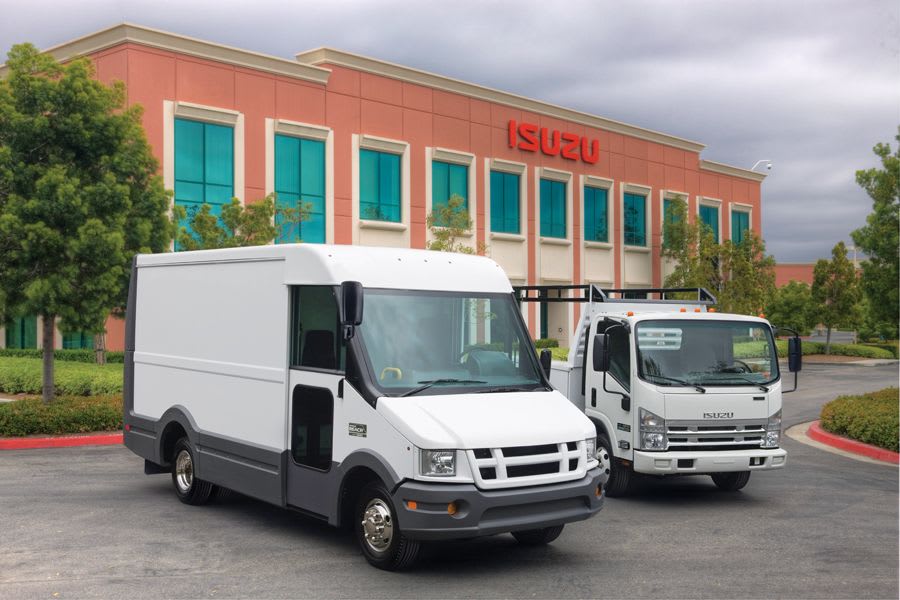
(L-R) Isuzu Reach and Isuzu ECOMAX.
ANAHEIM, CA - Isuzu Commercial Truck of America, Inc., distributor of America's best-selling low-cab-forward trucks, announced that production has begun of its 2013 NPR-HD, NQR, and NRR models, as well as the 2012 NPR ECO-MAX. Powered by durable, economical Isuzu turbocharged diesel engines, these models join the 2012 NPR and NPR-HD gasoline-powered trucks and 2012 Reach commercial van already in production.
"With the introduction of our latest models, Isuzu dealers will continue to offer the widest array of low-cab-forward trucks in the industry," said Shaun Skinner, executive vice president and general manager of Isuzu Commercial Truck of America. "We're confident that, with this model line-up, Isuzu will be the best-selling line of low-cab-forward trucks in the U.S. for the 27th year in a row."
2013 NPR-HD, NQR, NRR
The NPR-HD is available in Standard Cab and Crew Cab models, both powered by the Isuzu 4HK1-TC 5.2-liter turbocharged diesel engine and both posting GVWRs of 14,500 lbs.
The NQR, also available in both Standard Cab and Crew Cab models, features the 4HK1 engine as well but boasts an increased GVWR of 17,950 lbs.
The NRR available in Standard Cab, also features the 4HK1 engine and a GVWR of 19,500 lbs.
Isuzu's overhead cam, turbocharged 4H engine is equipped with an electronic high-pressure common-rail direct injection system and a water-cooled exhaust gas recirculation system to achieve unprecedented levels of performance-215 horsepower for trucks equipped with the automatic transmission, and 195 horsepower for manual-transmission models.
The 4H engine's air-to-air intercooler and high-efficiency compressor wheel help provide power while they decrease fuel consumption. Overall, 2013 Isuzu N-Series Trucks equipped with the 4H engine will achieve approximately 8% better fuel economy than the NPR-HD, NQR and NRR models with the previous-generation 4H engine.
In addition, the 4H engine can run up to 10,000 miles between oil changes-minimizing downtime for maintenance-and boasts an astonishing B10 durability rating of 310,000 miles-meaning that 90% of 4H engines will reach that mileage before requiring an overhaul.
Like all Isuzu N-Series trucks since the 2011 model year, the 2013 models meet EPA 2010 and California Air Resources Board HD-OBD emissions standards, and are clean-idle certified-the first medium-duty trucks in the world to meet all of these stringent standards. Isuzu N-Series trucks are the first in their class to offer Selective Catalytic Reduction (SCR) technology with Diesel Exhaust Fluid (DEF) injection to reduce NOx emissions by 85 percent.
2012 NPR ECO-MAX
Production of the 2012 Isuzu NPR ECO-MAX began in December 2011.
The NPR ECO-MAX is a 12,000-lb. GVWR Standard Cab truck featuring the Isuzu 4JJ1-TV 3.0-liter turbocharged diesel engine produces 150 horsepower-and achieves up to 20 percent better fuel economy than the previous-generation 12,000-lb. GVWR NPR.
New for 2012 is a power take-off (PTO) option for the NPR ECO-MAX's standard Aisin six-speed automatic transmission. Under specifically determined engine conditions, when PTO mode is selected, the torque converter will lock up automatically to eliminate slip and deliver more power and better control when optimum off-the-line acceleration is needed.
Like all 2012 and 2013 Isuzu trucks, the NPR ECO-MAX-which meets EPA 2010 and CARB emissions standards, and is clean-idle certified-can be driven up to 10,000 miles between oil changes and has a class-leading B10 durability rating of 310,000 miles.
2012 N-Gas
Assembly of gasoline-powered N-Series trucks began in April 2011 at the Spartan Motors, Inc., facility in Charlotte, Mich.
The 2012 N-Gas models are powered by the General Motors Gen IV Vortec 6.0-liter V8 engine producing 297 horsepower. The powerplant is mated to a six-speed automatic transmission with double overdrive and lock-up torque converter for enhanced fuel economy and performance.
A full range of gasoline-powered models is available, including the 12,000-lb. GVWR NPR and the 14,500-lb. GVWR NPR-HD. Both are available in Standard Cab and Crew Cab configurations with wheelbases stretching from 109 to 176 inches in length.
Production of the 2013 model year N-Gas models will begin in July 2012.
2012 Reach Commercial Walk-in Van
Production began in October 2011 of the revolutionary Reach commercial walk-in van at Utilimaster Corporation's assembly facility in Wakarusa, Indiana.
The Reach, with a body designed by Utilimaster atop a rugged Isuzu NPR chassis and powered by Isuzu's 4J 3.0-liter diesel engine, achieves 35 percent better fuel economy than a traditional commercial van while offering the functionality of a custom-built work truck along with the styling and ergonomics of a cargo van. The Reach offers best-in-class mileage and meets the latest EPA emissions standards, yet still provides true commercial truck capability and delivers a dramatically lower cost of ownership than traditional walk-in vans.
The Reach is offered with a 151-inch wheelbase with either a 12- or 14-foot body. With an interior up to 27 inches higher than a conventional van, the cargo area can offer 540 or 630 cubic feet of storage.
More Operations
Family Ties Inside the Fleet Families Building Careers Across Generations
Three fleet families share what it really takes to work together, learn across generations, and keep business from following them home.
Read More →
Shades of Fleet Call for Voices: Fleet's Hidden Heroes
Fleet’s hidden heroes are often the ones keeping everything moving behind the scenes. September’s Shades of Fleet is looking for dispatchers, coordinators, parts specialists, and other support pros to share their stories.
Read More →
Truck Centers, Inc. Celebrates National Truck Driver Appreciation Week with $1,000 Fuel Card Giveaways
During National Truck Driver Appreciation Week, Truck Centers, Inc. is offering customers a chance to fuel up for free. Customers at all Truck Centers locations can enter to win one of four $1,000 fuel cards from Sept. 14 - 18.
Read More →
Fleet Guides, AI Time-Savers, Truck Tariffs & Fuel Strategy Lead the News
This week’s Truck Chat Cheat Sheet covers new fleet vehicle guides, practical AI use cases, U.S.-Canada truck production, mixed-energy strategy, and more.
Read More →
What Fleet Employers Are Missing When Hiring Veterans
What if some of the strongest candidates for fleet are already out there, but their experience is written in a language our industry does not always recognize?
Read More →
Automotive Fleet Opens 2026 Personal Use Survey for Commercial Fleet Managers
Less than two weeks left! Commercial and corporate fleet managers are invited to share how their organizations handle company vehicle personal-use policies, charges, and driver eligibility.
Read More →
What Resilient Fleets Do Differently When Conditions Change
Fleet resilience is about more than reacting to disruption. Lauren Fletcher talks with AP Fleet’s Alex Coveney about flexibility, planning, scaling, and what helps fleets adapt when business conditions shift.
Read More →
If We Want the Next Generation in Automotive, We Have to Give Them a Reason to Care
The automotive industry talks constantly about its workforce shortage. But before we can recruit the next generation, we may need to do a better job giving kids a reason to care about automotive in the first place.
Read More →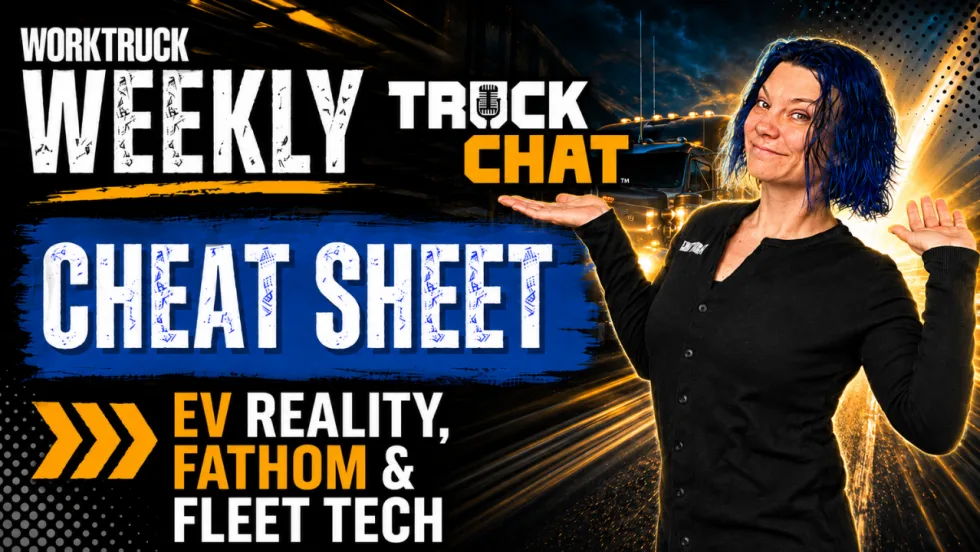
Ram ProMaster City Under $40K, Truck Tariffs, and AI Maintenance Lead the News
A sub-$40K commercial van, tariff questions, AI-powered maintenance, and a new EV production strategy headline this week’s Truck Chat Cheat Sheet.
Read More →
Bob Adamsky Shares the Fleet Lessons You Usually Learn the Hard Way
After more than 30 years in fleet, Arrow International’s Bob Adamsky has learned that the job is about far more than vehicles. He shares the lessons he wishes every fleet manager could learn a little earlier.
Read More →