




Nikola Delivers First Nikola Tre Battery-Electric Trucks
The California company Total Transportation Services Inc. has issued a letter of intent to purchase 100 battery-electric vehicles (BEVs) from electric startup Nikola, whose Nilola Tre BEV is designed for local deliveries up to 350 miles.

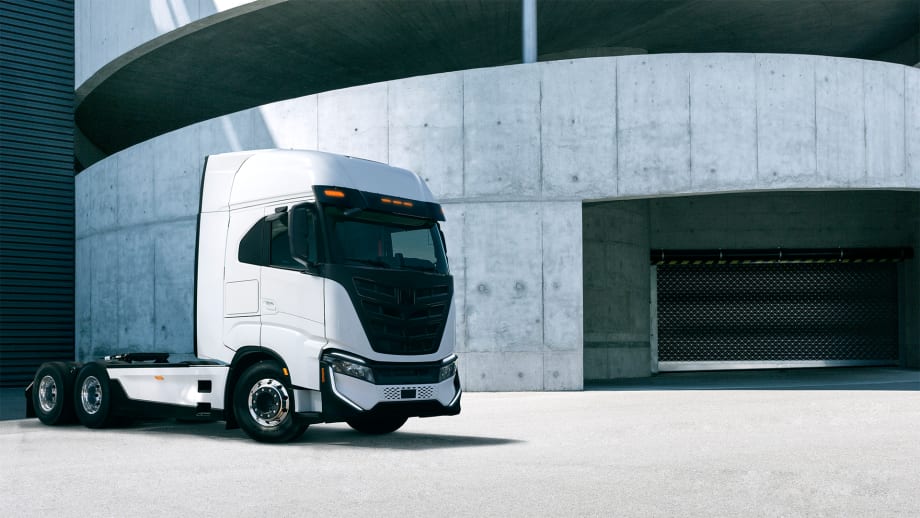
Nikola has delivered several pilot vehicles to one of California's premier port trucking companies.
[EMPTY CREDIT]
The electric startup Nikola Corporation is poised to enter the American battery-electric vehicle (BEV) fleet market with an order of 100 Nikola Tre trucks for TTSI's zero-emissions fleet.
Nikola delivered the first BEV pilot trucks on Dec. 17 to Total Transportation Services Inc. (TTSI), which operates in the port and port areas of Los Angeles and Long Beach and has long had a commitment to reducing emissions.
As President Biden recently committed to an electric future for federal government fleets, several representatives from California were on hand to help take delivery as part of the induction ceremony, including Congresswoman Nanette Diaz Barragán (California's 44th district), state senator Steven Bradford, as well as several leaders from the House of Representatives. California Gov. Gavin Newsom sent a representative from the Office of Business and Economic Development, and several organizations were also present, including representatives from the Port of Los Angeles, South Coast Air Quality Management District, Coalition for Clean Air, and Calstart.
Guests were able to learn about and experience the Nikola Tre firsthand.
“Nikola committed to make its first Tre BEV deliveries in Q4 2021 and it is a big honor to celebrate this milestone with our partner, TTSI, and dignitaries who are committed to advancing zero-emission transportation solutions to reduce truck emissions in port operations,” said Nikola CEO Mark Russell. “TTSI has significant sustainability goals, and we are pleased to help them achieve their vision with our zero-emission trucks.”
As previously reported, TTSI's LOI is for 100 zero-emission trucks and that process begins with a four-vehicle pilot of two BEVs and two FCEVs. Once initial vehicle trials and subject to obtaining some government funding, 30 more BEVs are slated for delivery in 2022, with 70 FCEVs to follow in 2023.
Nikola
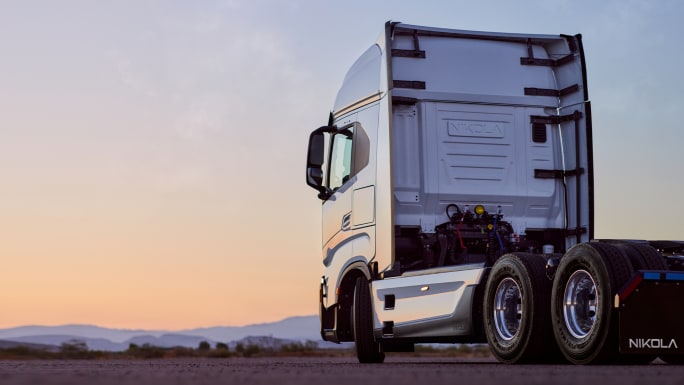
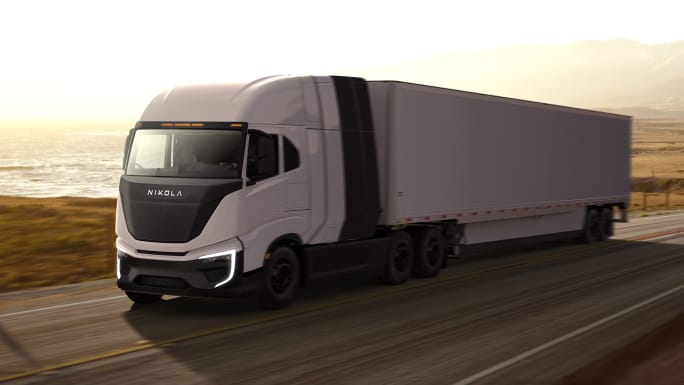
The Nikola Tre is designed for local deliveries up to 350 miles, a higher EPA projection than many new and upcoming EVs. The Nikola Tre FCEV truck is meant for longer distances, stretching the range to 500 miles. The FCEV from Nikola is expected to help bolster the American regional market where additional hauling capacity and/or quick fueling is required by fleet operators.
“This day represents a major step in our continual quest to achieve a zero-emission fleet, which is why TTSI highly values its partnership with Nikola. Production, performance, and maintenance will be the key to our future success, and we are confident Nikola will excel on all three fronts,” said Vic LaRosa, president of TTSI.
Smog and particulate matter are real problems for California's busy ports. According to TTSI, 13,000-14,000 trucks call at the Los Angeles/Long Beach port every month, blasting roughly 2,600 tons of smog-causing nitrogen-oxide emissions. TTSI said in a release that the company is thrilled to be at the vanguard of fighting climate change in southern California and partnering with an American company to reduce emissions and help forge a more sustainable (and breathable) future.
Nikola
Nikola also plans for European ports. In September 2021, Nikola and Iveco signed a deal with the Hamburg Port Authority in Germany to deliver up to 25 Nikola Tre BEVs to that port throughout 2022.
“Reaching a zero-emission transportation future requires bold leadership and collaboration from federal, state, and local partners, along with major investments from the private sector,” Congresswoman Nanette Diaz Barragán said. “This is crucial for the health of people living in the communities near the ports in my district, who suffer higher rates of cancer, asthma, and other respiratory diseases due to all the toxic diesel emissions coming from the equipment and trucks at the ports. I appreciate the commitment TTSI and Nikola have made at the Port of Los Angeles to a cleaner, safer future.”
Originally posted on Automotive Fleet
More Fuel

The Smart Way to Build a Mixed-Energy Fleet Isn’t About Picking a Side
Mixed-energy fleets aren’t about picking a winning fuel. Sarah Booth of WEX explains how vehicle data, duty cycles, charging strategy, and real-world costs can help fleets choose the right energy source for each job.
Read More →
Ignoring This Dashboard Warning Could Cost Your Fleet Thousands in Fuel
New research suggests neglected diesel aftertreatment systems could waste up to $30 in fuel per vehicle each day. Here's why vocational fleets should pay attention.
Read More →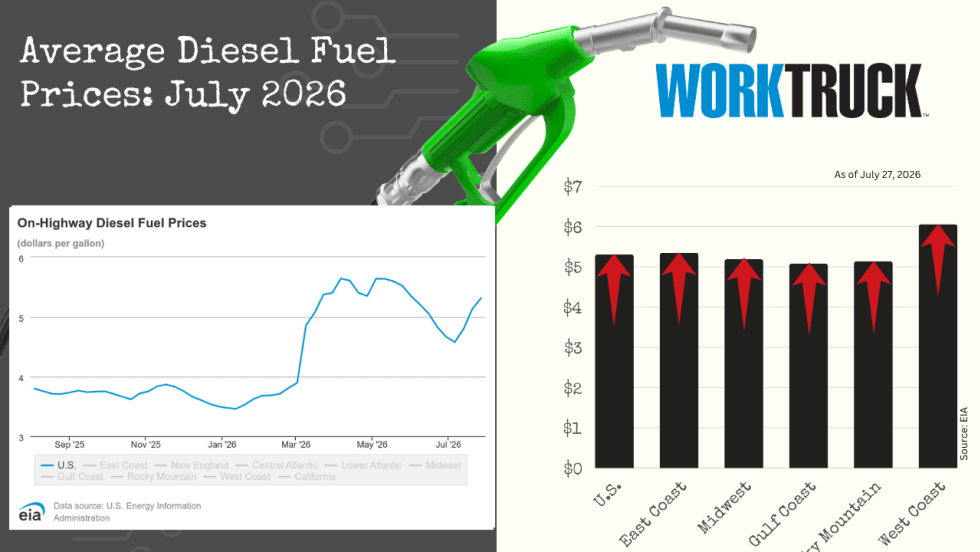
July Diesel Trends Update
The average price of a gallon of diesel increased again this week, and the EIA reported a new national average of $5.31 at the start of the week.
Read More →
WEX Brings Standard Fleet's Connected Vehicle Platform to Fleet Customers
This week’s product launch with Standard Fleet’s connected vehicle platform reflects WEX Venture Capital's strategy of turning startup innovation into customer solutions. Standard Fleet is now available to WEX fleet customers.
Read More →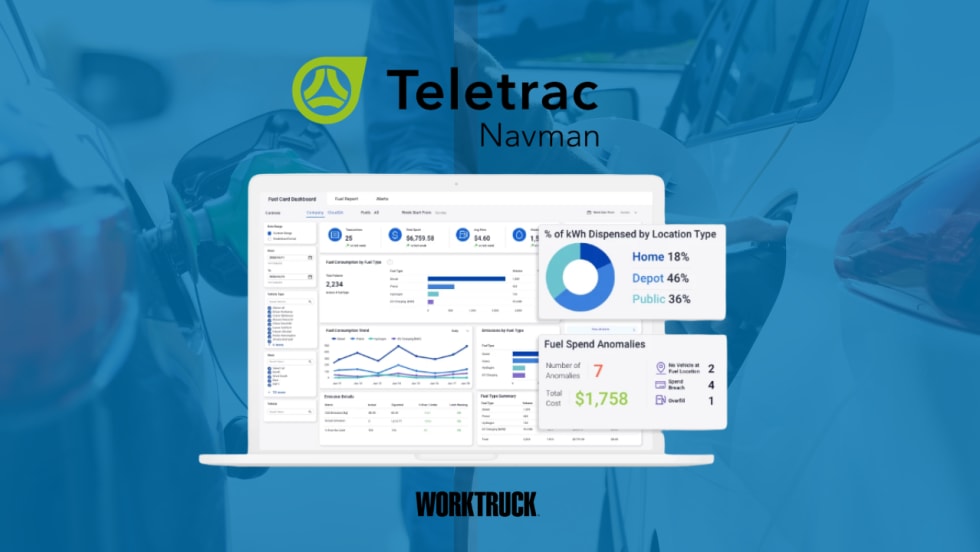
Teletrac Navman Adds Mixed-Energy Fleet Tools to TN360
The new Energy Hub combines fuel transactions, EV charging data, vehicle range, and energy costs in one dashboard for fleets operating multiple vehicle and energy types.
Read More →
WEX DriverDash adds CITGO, Expands Nationwide Access for Fleets
The DriverDash mobile payment app, by WEX, has been integrated into the CITGO merchant network, which means WEX has expanded its U.S. station footprint with the addition of approximately 4,000 CITGO locations.
Read More →
Mixed Energy Fleet Tips for Balancing EVs, Gas and Diesel Vehicles
Mixed energy fleets are becoming the new normal. Learn how fleet managers are balancing EVs, gas and diesel vehicles while controlling costs and planning for the future.
Read More →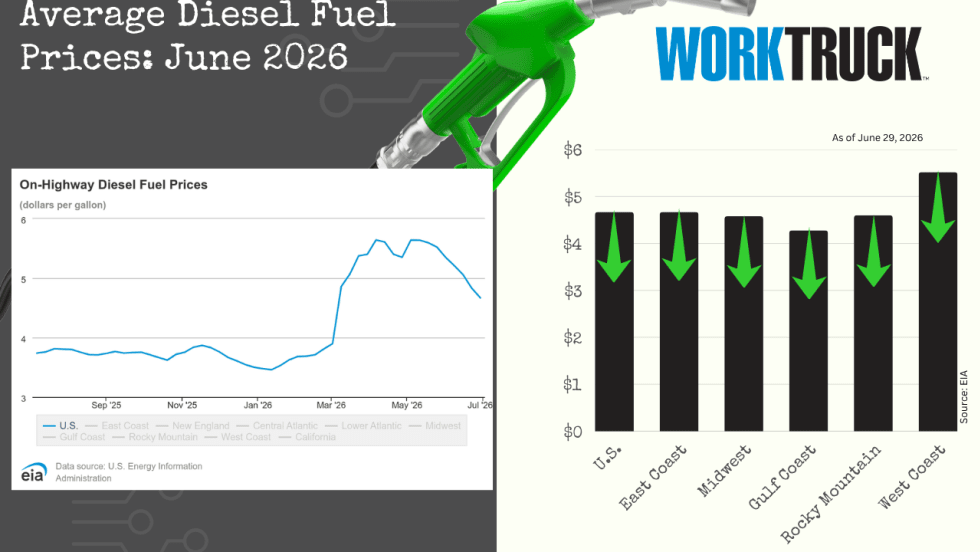
June Diesel Trends Update
The national average price of a gallon of diesel has dropped again, this week by more than 16 cents. All five regions reported lower average prices, ranging from almost 13 cents to more than 28 cents cheaper than a week ago.
Read More →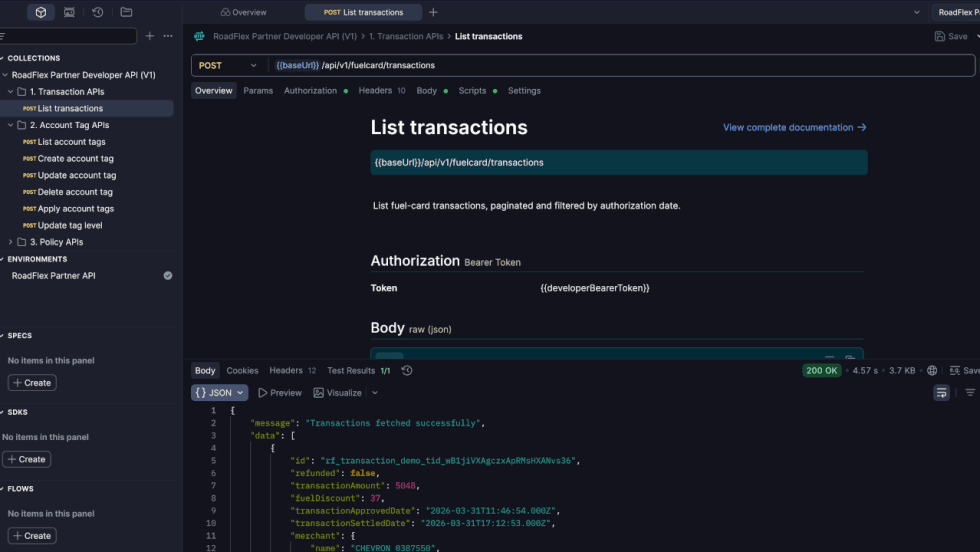
RoadFlex Launches RoadFlex Direct Open API Platform
RoadFlex Direct connects fuel cards, controls, and data to the telematics and fleet management systems fleets already run, from Geotab and Samsara to Fleetio and RTA, with no separate dashboard or double data entry.
Read More →
The Key to Fuel Efficiency Sits in the Cab
Learn how driver behavior, telematics, coaching, and fuel data can help fleets improve fuel efficiency, lower costs, and reduce emissions.
Read More →