





Celebrate Good Times: ASE Hosts 50th Anniversary Celebration
IntelliTrans Celebrates 30 Years in Business
Here are the 30 notable “events” from IntelliTrans' first 30 years in business.
August 12, 2022
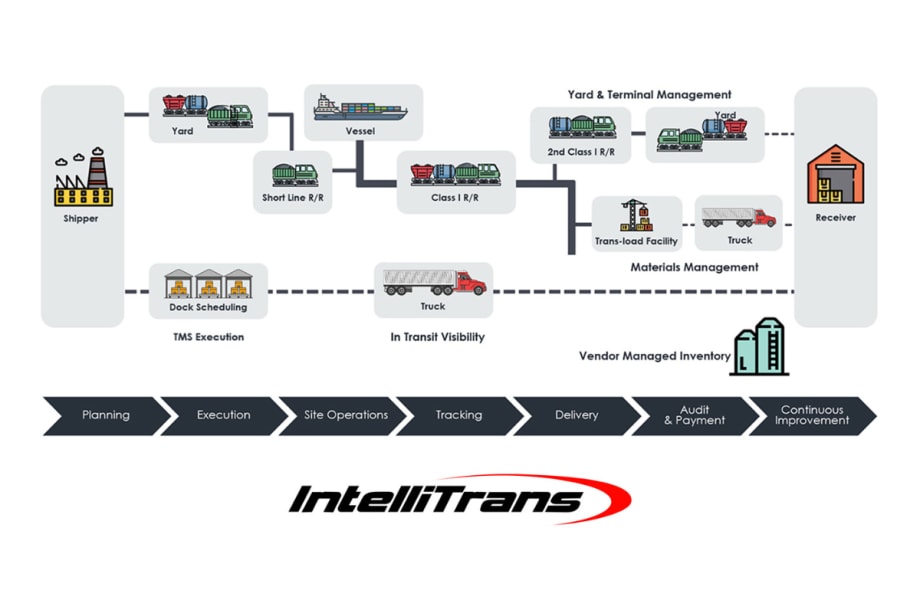
Since its inception, IntelliTrans has expanded its customer base and solutions offerings to capture over 40% of the rail carload business and become the top TMS for specialty equipment in the commodities industry.
Photo: IntelliTrans
6 min to read
IntelliTrans celebrates 30 years in business, helping clients to save costs on transportation spend, improve service to customers, and increase sustainability efforts.
“As we celebrate this milestone and look back on our growth over the years, we also look forward to our growth plans this year and beyond,” said Ken Sherman, president, IntelliTrans.
Below are 30 notable “events” from their first 30 years in business:
1. IntelliTrans was founded in 1992 in San Francisco in a shared office with Southern Pacific Railroad. It began by helping shippers with modal conversion from road to rail to reduce transport costs and road traffic.
2. As one would expect in Supply Chain Logistics, IntelliTrans’ first years were filled with discovering just how many challenges its customers faced. Some of the very first shipments traced were flatbed rail cars with heavy equipment, and these shipments were delayed due to an unprecedented flood in the summer of 1993 in St. Louis. This was one of the first major supply chain disruptions IntelliTrans helped its customers through, but certainly not the last.
3. It wasn't just natural disasters that affected supply chain capabilities; IntelliTrans learned there were other challenges its customers face. In this case, the cargo on those same shipments delayed due to the unprecedented flood was vandalized while idle in that area.
4. Shipment "visibility" isn't as new as it might seem from marketing in recent years. IntelliTrans started tracking shipments and providing visibility in 1993. The first shipments were not tracked automatically – the company collected data, then used Access and Excel for communication, analysis, and decision-making.
5. In 1994, the company moved to Boston to be closer to its customer base and better align with the time zones generating most of the work.
6. In 1996, the company moved its headquarters to Atlanta, GA, where it remains today. IntelliTrans joined numerous other logistics-focused businesses in Atlanta like Norfolk Southern, UPS, and others. In part, this decision was a logistical one - being located near a world-class airport like ATL helped with the increased travel required to serve customers and expand the business. Additionally, the move to Atlanta increased access to talent from leading local universities.
7. A large manufacturer of lumber and paper-based products was IntelliTrans’ first customer (and still is). Brian Cupp, IntelliTrans’ Director of Operations, got his start with IntelliTrans working with the company in Crossett, AR, on a modal conversion & rail transportation visibility improvement project. This client example has proven that the technology, services, and “stick-to-itiveness” of IntelliTrans are valuable to customers.
8. With growing expertise in moving forest products, IntelliTrans acquired a business in the UK that provided a port & warehouse operating system for facilities specializing in forest products. Through that relationship, IntelliTrans reached out to Stora Enso, a paper manufacturer in the EU. Through that relationship, IntelliTrans established a truly multi-modal shipment management platform to address the EU market. This also established IntelliTrans' European presence.
9. In 1998, IntelliTrans expanded its capabilities with short sea shipping visibility and execution in Europe and expanded work on its early SaaS software model.
10. In 1999, GE Rail exited its strategic rail management business; GE still wanted to provide additional services to its rail leasing customers, so it invested in IntelliTrans. This investment was one of the key drivers for fueling accelerated growth.
11. In early 2000, IntelliTrans continued looking for expansion opportunities. This would lead them to execute several strategic acquisitions for future growth. IntelliTrans acquired five businesses: RoadRunner rail tracking; RADSS for tracking/tracing rail cars, analytics, and equipment management; Bridgepoint from CSX for rail tracking; August Design for software development; and VMI from GE.
12. The VMI acquisition led to additional opportunities. In December 2002, IntelliTrans acquired Global VMI from GE Plastics due to the synergies between their solutions, including a solution for collaborative planning, forecasting, and replenishment.
13. In 2003, IntelliTrans invested in expanding its software and services offering. This resulted in the development of its first ocean visibility module and the beginnings of the intervention and operations support model.
14. IntelliTrans began expanding relationships with key industry players. One of these critical relationships was with Norfolk Southern. This resulted in working on several key projects relating to multi-modal shipment and inventory visibility.
15. This expansion of crucial industry relationships continued when the company added Warehouse Management for CN transload. Over time, this expanded as other railroads and transload operators have implemented Materials Management Systems (M2S) to manage their transload facilities.
16. In 2004, IntelliTrans expanded its multi-modal visibility offering to a new mode, barge.
17. In 2005, IntelliTrans decided to open a transportation services office in Conway, Arkansas, a growing technology and supply chain-focused community near Little Rock, to enable the company to support growth in its expanding supply chain services offering.
18. The University of Central Arkansas (UCA) served as the proving ground for this transportation services location concept. In a conference room at UCA, six people began providing transportation services to our customers – 17 years and three moves to larger offices later, it has grown to almost 100 people and continues to grow.
19. An unrelated acquisition by Roper Technologies would set up a new path for IntelliTrans's future as Roper Technologies acquired TransCore in 2004.
20. IntelliTrans continued to look at ways to serve its customers better. They began exploring the market for acquiring a truck TMS application to expand its services to the helping its customers with expanded truck needs. This search led IntelliTrans to an application called CarrierPoint, but the company was too late - TransCore had recently acquired Carrierpoint.
21. However, this disappointing discovery led to a significant event for IntelliTrans. Through the conversation with TransCore, Roper Technologies began looking at IntelliTrans as a potential acquisition.
22. In April 2006, IntelliTrans was acquired by Roper Technologies.
23. With Roper’s backing, IntelliTrans’ technologies (VMI, M2S, rail and analytics, fleet and yard management, and the CarrierPoint TMS) were integrated under the IntelliTrans brand.
24. In 2008, the IntelliTrans Global Visibility Platform was introduced.
25. In 2009, IntelliTrans opened an office in Gothenburg.
26. In 2012, predictive analytics was introduced to the IntelliTrans technology stack.
27. In 2017, IntelliTrans added machine-learning technology.
28. In 2019, the Supply Chain Control Tower was introduced with deep operational control of all modes for all parties.
29. In 2021, IntelliTrans was recognized in the 2021 GartnerÒ Magic QuadrantÔfor Real-Time Transportation Visibility Platforms under the niche category.
30. In 2022, IntelliTrans
Introduces the Open Message Systems Interface (OMSI) makes ERP integration easy across Ocean, Rail, Barge, Truck, and Intermodal Shipments
Recognized in 2022 Gartner Magic Quadrant for Real-Time Transportation Visibility Platforms for the second time.
Wins Inbound Logistics Top 100 Logistics IT Award
Offers IntelliVision, a live interactive Q&A webinar about the state of the transportation industry. The first episode covered: the great resignation, rail performance, and how shippers can be most successful after the pandemic.
Since its inception, IntelliTrans has expanded its customer base and solutions offerings to capture over 40% of the rail carload business and become the top TMS for specialty equipment in the commodities industry.
"Clients recognize we save them money on their transportation spend, improve the satisfaction of customers, and reduce greenhouse gas emissions in transport," said Sherman. "Besides the value we deliver to customers and their supply chains, we believe in our people – and they believe in the company. Many employees, including top-level management, have been here for twenty-plus years."
More Operations
Family Ties Inside the Fleet Families Building Careers Across Generations
Three fleet families share what it really takes to work together, learn across generations, and keep business from following them home.
Read More →
Shades of Fleet Call for Voices: Fleet's Hidden Heroes
Fleet’s hidden heroes are often the ones keeping everything moving behind the scenes. September’s Shades of Fleet is looking for dispatchers, coordinators, parts specialists, and other support pros to share their stories.
Read More →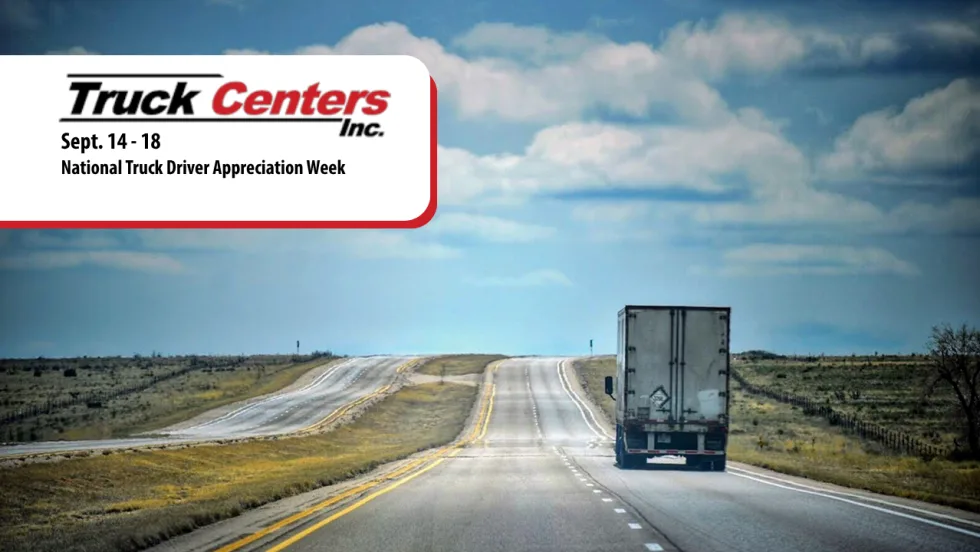
Truck Centers, Inc. Celebrates National Truck Driver Appreciation Week with $1,000 Fuel Card Giveaways
During National Truck Driver Appreciation Week, Truck Centers, Inc. is offering customers a chance to fuel up for free. Customers at all Truck Centers locations can enter to win one of four $1,000 fuel cards from Sept. 14 - 18.
Read More →
Fleet Guides, AI Time-Savers, Truck Tariffs & Fuel Strategy Lead the News
This week’s Truck Chat Cheat Sheet covers new fleet vehicle guides, practical AI use cases, U.S.-Canada truck production, mixed-energy strategy, and more.
Read More →
What Fleet Employers Are Missing When Hiring Veterans
What if some of the strongest candidates for fleet are already out there, but their experience is written in a language our industry does not always recognize?
Read More →
Automotive Fleet Opens 2026 Personal Use Survey for Commercial Fleet Managers
Less than two weeks left! Commercial and corporate fleet managers are invited to share how their organizations handle company vehicle personal-use policies, charges, and driver eligibility.
Read More →
What Resilient Fleets Do Differently When Conditions Change
Fleet resilience is about more than reacting to disruption. Lauren Fletcher talks with AP Fleet’s Alex Coveney about flexibility, planning, scaling, and what helps fleets adapt when business conditions shift.
Read More →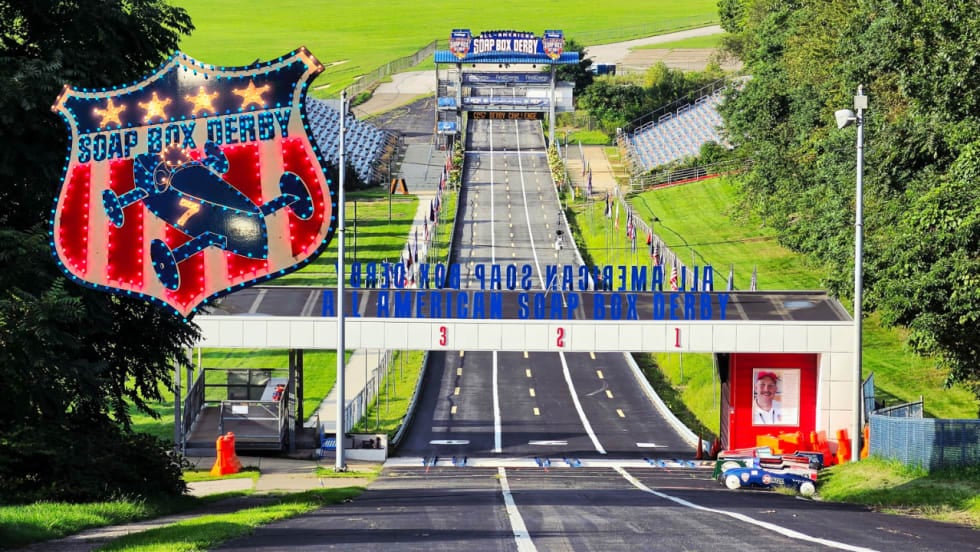
If We Want the Next Generation in Automotive, We Have to Give Them a Reason to Care
The automotive industry talks constantly about its workforce shortage. But before we can recruit the next generation, we may need to do a better job giving kids a reason to care about automotive in the first place.
Read More →
Ram ProMaster City Under $40K, Truck Tariffs, and AI Maintenance Lead the News
A sub-$40K commercial van, tariff questions, AI-powered maintenance, and a new EV production strategy headline this week’s Truck Chat Cheat Sheet.
Read More →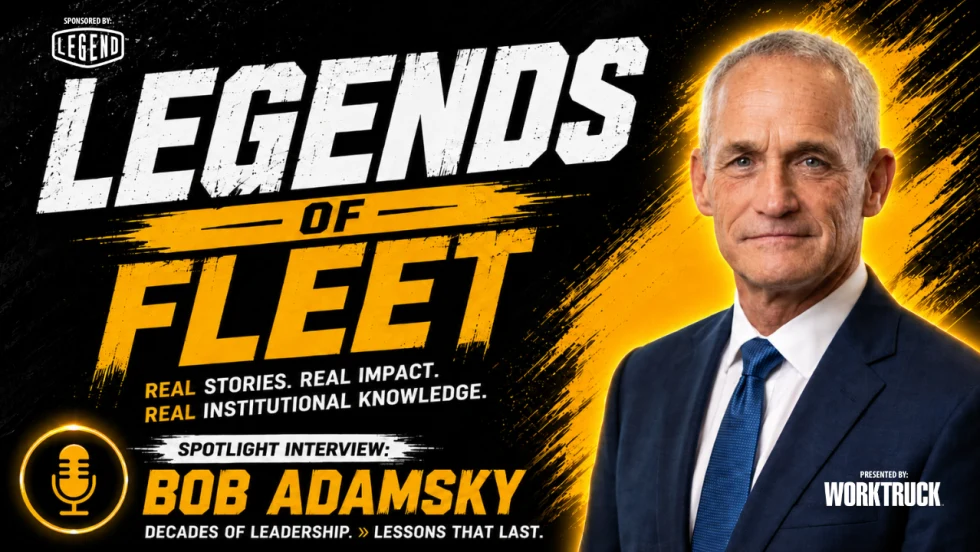
Bob Adamsky Shares the Fleet Lessons You Usually Learn the Hard Way
After more than 30 years in fleet, Arrow International’s Bob Adamsky has learned that the job is about far more than vehicles. He shares the lessons he wishes every fleet manager could learn a little earlier.
Read More →