




Half of Ford's Class 3-5 Chassis Cab Buyers Choose Gasoline
Commercial buyers of Ford Super Duty trucks now opt for a gasoline-powered Class 3-5 truck as often as they choose a diesel-powered model to avoid higher up-front costs and increased maintenance work, Ford told WorkTruckOnline.com.

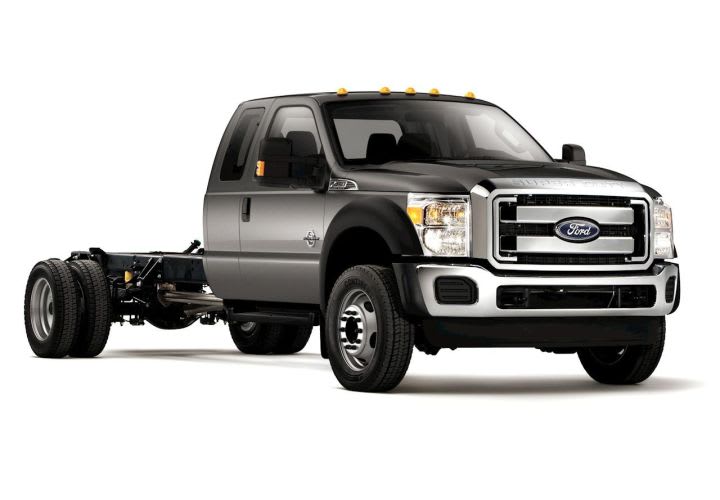
Photo courtesy of Ford.
Commercial buyers of Ford Super Duty trucks now opt for a gasoline-powered Class 3-5 truck as often as they choose a diesel-powered model to avoid higher up-front costs and increased maintenance work, Ford told WorkTruckOnline.com.
The increase in gasoline engines is due to the closely aligned price point between gasoline and diesel fuel, higher up-front cost for a diesel engine, and additional maintenance intervals brought on by diesel particulate filters (DPF), according to our earlier report.
Ford is seeing increases in gasoline-engine buying across its lineup of Class 3-7 vehicles, according to Mark Lowrey, Ford's marketing manager for F-Series trucks.
"Where appropriate, we are seeing a migration to gasoline powertrains due to perceived higher costs for diesel powertrains such as initial cost, maintenance, diesel emission fluid and fuel costs," Lowrey said.
Among its F-350, F-450, and F-550 Chassis Cabs, Ford sold 48 percent of these trucks in 2013 with either the 6.2L V-8 or 6.8L V-10 gasoline engine. Ford sold 9-percent more gasoline trucks in this segment compared to 2012. Ford pairs its V-8 with a 6-speed transmission and its V-10 with a 5-speed transmission. The V-8 is standard with the F-350, while F-450 and F-550 offer the V-10 as standard equipment. The non-gasoline buyers opted for the 6.7L Power Stroke V-8 turbo diesel.
For its entire Super Duty Chassis Cab lineup, including the F-650 and F-750, Ford increased its gasoline mix to 44 percent in 2013, which reached its highest level in more than a decade, Lowrey said. So far in 2014, sales of gasoline F-650s and F-750s account for 20 percent of total volume. The 2016-MY F-750 will be offered with a 6.8L V-10 gasoline engine for the first time.
Diesel medium-duty trucks now serve applications that require PTO, consistent idling, towing, or heavy payloads, said Mike Wenberg, fleet truck manager for Piemonte National Fleet, a Chicago-area truck dealer. Gasoline engines appeal to fleets that send the truck less than 30 miles from headquarters, he added.
A diesel medium-duty truck is "not a long trip vehicle," Wenberg said. "There's a small fuel economy difference. It's negated for short trips."
Alternative-fuel engines available as a gaseous prep option from the factory make up a smaller slice of Ford's medium-duty pie, Lowrey said.
By Paul Clinton
More Fuel

The Smart Way to Build a Mixed-Energy Fleet Isn’t About Picking a Side
Mixed-energy fleets aren’t about picking a winning fuel. Sarah Booth of WEX explains how vehicle data, duty cycles, charging strategy, and real-world costs can help fleets choose the right energy source for each job.
Read More →
Ignoring This Dashboard Warning Could Cost Your Fleet Thousands in Fuel
New research suggests neglected diesel aftertreatment systems could waste up to $30 in fuel per vehicle each day. Here's why vocational fleets should pay attention.
Read More →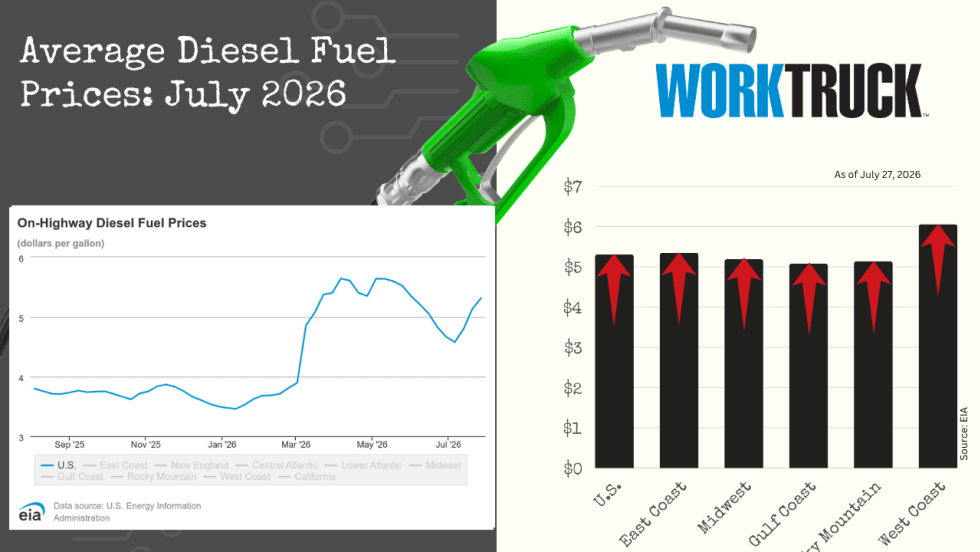
July Diesel Trends Update
The average price of a gallon of diesel increased again this week, and the EIA reported a new national average of $5.31 at the start of the week.
Read More →
WEX Brings Standard Fleet's Connected Vehicle Platform to Fleet Customers
This week’s product launch with Standard Fleet’s connected vehicle platform reflects WEX Venture Capital's strategy of turning startup innovation into customer solutions. Standard Fleet is now available to WEX fleet customers.
Read More →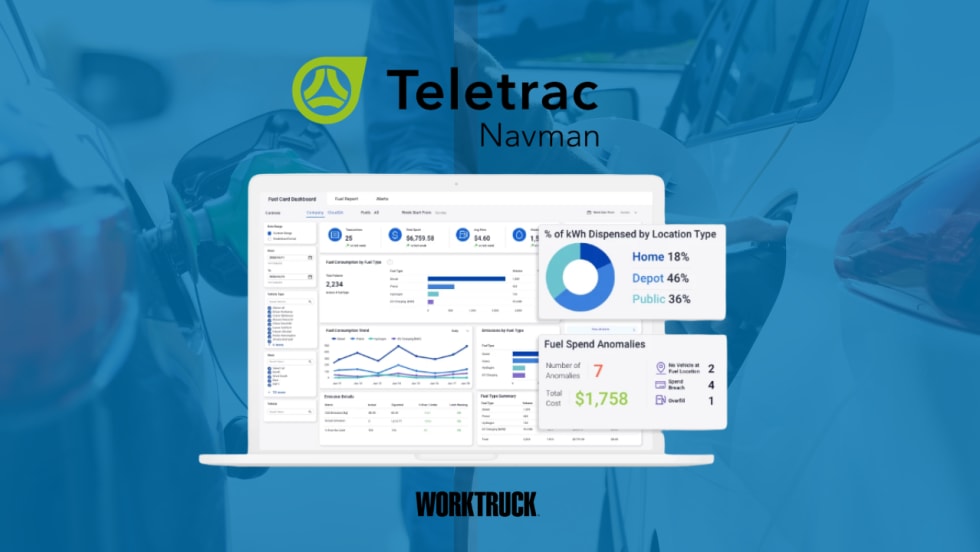
Teletrac Navman Adds Mixed-Energy Fleet Tools to TN360
The new Energy Hub combines fuel transactions, EV charging data, vehicle range, and energy costs in one dashboard for fleets operating multiple vehicle and energy types.
Read More →
WEX DriverDash adds CITGO, Expands Nationwide Access for Fleets
The DriverDash mobile payment app, by WEX, has been integrated into the CITGO merchant network, which means WEX has expanded its U.S. station footprint with the addition of approximately 4,000 CITGO locations.
Read More →
Mixed Energy Fleet Tips for Balancing EVs, Gas and Diesel Vehicles
Mixed energy fleets are becoming the new normal. Learn how fleet managers are balancing EVs, gas and diesel vehicles while controlling costs and planning for the future.
Read More →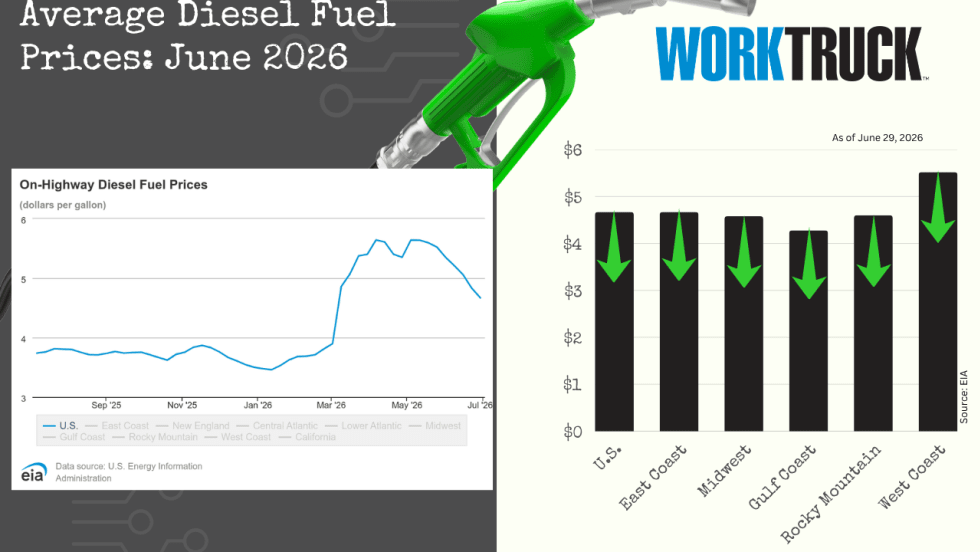
June Diesel Trends Update
The national average price of a gallon of diesel has dropped again, this week by more than 16 cents. All five regions reported lower average prices, ranging from almost 13 cents to more than 28 cents cheaper than a week ago.
Read More →
RoadFlex Launches RoadFlex Direct Open API Platform
RoadFlex Direct connects fuel cards, controls, and data to the telematics and fleet management systems fleets already run, from Geotab and Samsara to Fleetio and RTA, with no separate dashboard or double data entry.
Read More →
The Key to Fuel Efficiency Sits in the Cab
Learn how driver behavior, telematics, coaching, and fuel data can help fleets improve fuel efficiency, lower costs, and reduce emissions.
Read More →