





In 2026, Safety Will Stop Being a Program and Become How Fleets Operate
Female Crash Test Dummy Approved After NHTSA Study Reports Women are at Higher Risk of Injury in a Crash
USDOT has streamlined efforts to approve the first-of-its-kind female crash test dummy after NHTSA released new research proving that women are at higher risk of injury than men during vehicular crashes.
January 23, 2026
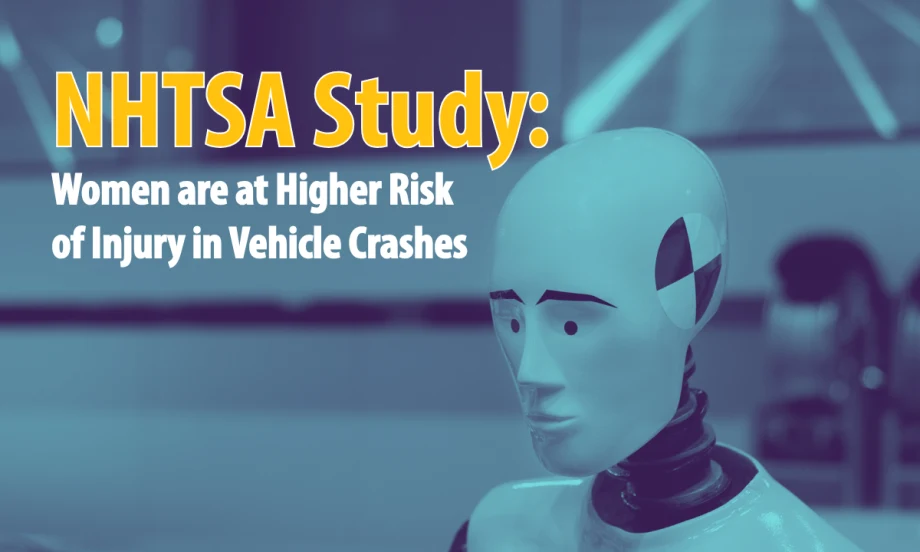
A recent NHTSA report reiterated that women are at higher risk of injury during vehicular crashes.
Credit: Work Truck
3 min to read
The National Highway Traffic Safety Administration (NHTSA) released new research proving that women are at higher risk of injury than men during vehicular crashes. This study underscores the importance of launching the first-of-its-kind advanced female crash test dummy.
Higher Risk of Injury
According to the study, women have a statistically significantly higher risk of injury than men in 26% of the 150 crash injury models, and women have a higher risk more frequently for moderate injuries.
“Under President Trump and Secretary Duffy’s leadership, USDOT streamlined efforts to approve the first-of-its-kind female crash test dummy. The Administration did this because acknowledging the biological differences between men and women can save lives,” said NHTSA Administrator Jonathan Morrison. “This study reaffirms the importance of the THOR and will help the Department further build on the progress its already made in lowering traffic fatalities.”
Crash Types Studied by NHTSA
NHTSA studied six crash types for this report:
Frontal crashes
Near-side crashes
Far-side crashes
One combining all four of those crash types
Rollover crashes
Unlike other recent studies, NHTSA’s study covered a broader range of crash types, occupant restraint conditions, and seating positions.
Report Discovers Increased Injury Risk
Findings related to moderate and higher injuries include:
46% higher injury risk in frontal crashes.
55% higher injury risk in rollover crashes.
62% higher risk for lower extremity injuries in frontal crashes (including knee, thigh, hip, leg, foot, and ankle).
128% higher risk of injuries to the foot and ankle in frontal crashes.
Injury Risk Increases with Age
This new injury report’s results suggest that, for both men and women, injury risk increases with a person’s age.
Compared with the youngest age group (13 to 24-year-olds), each subsequent age group (25-34, 35-44, 45-54, 55-64, and 65 and up) had higher moderate-to-severe and fatal injury risk in all but rollover crashes.
Higher BMI Increases Injury Risk
Having a body mass index of 30 or higher was frequently associated with significantly higher injury risk, especially in frontal crashes.
Occupant height was not significantly associated with injury risk in 86% of injuries studied.
Newer Vehicles Reduce Fatality Risk
A previous NHTSA report assessed the difference in fatality risk between men and women, finding that this difference was reduced significantly in newer vehicles. The report found that the newer the vehicle, the smaller the disparity. The overall fatality gap between women and men drops from 18% to 6.3% for 2010-2020 vehicles and to 2.9% for 2015-20 vehicles.
Crash Data Taken from Police Reports
The study used data from NHTSA’s National Automotive Sampling System-Crashworthiness Data System from 2000-2015 and the Crash Investigation Sampling System from 2017-2022. These systems are nationally representative surveys of police-reported passenger vehicle crashes.
Reporting Female Crash Risk to Congress
NHTSA also published its latest Report to Congress detailing its progress on the THOR-05F and WorldSID-05F 5th percentile female crash test dummies.
The report includes a discussion of NHTSA’s broader female crash-safety research efforts in field data analysis, advanced dummies and experimental biomechanics, human body modeling, and fleet testing and countermeasures.
More Safety
When Work Trucks Under 26,001 Pounds Need IRP Registration
Think trucks under 26,001 pounds are automatically in the clear when it comes to IRP? Not always. Learn where lighter vehicles can still run into trip permit, apportioned registration, and IFTA compliance requirements when crossing state or provincial lines.
Read More →
Volvo Trucks Releases New Safety Recommendations for Traveling with Pets
One of the most important recommendations for professional drivers traveling with pets is to ensure pets are properly restrained while the truck is moving. Other tips are available in the new guide from Volvo Trucks North America and Center for Pet Safety.
Read More →
API Issues Refueling Safety Guidelines
The American Petroleum Institute offers a list of safe vehicle refueling guidelines, including ways to avoid potential problems with static electricity discharges in fall, winter, and early spring.
Read More →
Winter Fleet Prep: Expert Tips to Keep Vehicles Running Smoothly
Cold weather can expose weak batteries, tires, fuel systems, and maintenance gaps fast. Use this winter fleet checklist to prepare trucks and drivers before temperatures drop.
Read More →
When a Work Truck Breaks Down, the Job Can Stop, Too
A work truck breakdown can stop more than the vehicle. Discover how payloads, jobsites, and specialty equipment change the roadside response.
Read More →
What Stronger Long-Term Fleet Service Partnerships Actually Require
Fleet service partnerships rarely fall apart all at once. Learn the three warning signs that trust is eroding and what fleets and providers can do before downtime, frustration, and lost revenue follow.
Read More →
Applause & TRUCE Software Partner to Improve Driver Safety Through AI-Powered Telematics & Employee Performance Management
Applause has integrated TRUCE driving metrics directly into its employee-first performance and safety platform that transforms mobile devices into AI-powered telematics.
Read More →
How Detroit Assurance with Active Brake Assist Works
Do you want to see what it is like to experience Detroit Assurance’s Active Brake Assist? In this video, Work Truck will put you in the cab to see how it all works and then hear more details from DTNA’s Mike Young.
Read More →
Get Left of Loss: A 5-Step Workplace Violence Prevention Framework for Fleet Operators
Violence risks do not stop at the driver’s door. Learn five practical steps fleets can take to spot threats early and protect workers before loss occurs.
Read More →
Sponsored•July 17, 2026
How Better Visibility Cut Speeding Violations by 48%
Fleet leaders don't need more data, they need clearer visibility into what the data is saying. This case study explores how one utility replaced speeding-event counts with a single metric — miles driven in violation — to strengthen safety and significantly reduce speeding violations.
Read More →