




Commercial Truck Industry Opposes Legislation That Would Shift Authority to Set Fuel Economy Rules
WASHINGTON - Important segments of the commercial truck industry-dealers and drivers, in a letter to U.S. Transportation Secretary Ray LaHood, voiced their strong opposition today to a Senate bill that would nullify fuel economy rules established by Congress under the Energy Independence and Security Act (EISA) in 2007.
WASHINGTON - Important segments of the commercial truck industry-dealers and drivers, in a letter to U.S. Transportation Secretary Ray LaHood, voiced their strong opposition today to a Senate bill that would nullify fuel economy rules established by Congress under the Energy Independence and Security Act (EISA) in 2007.
Legislation currently before the Senate (S. 1733, "Clean Energy Jobs and American Power Act") would transfer the authority of the Department of Transportation (DOT) to the Environmental Protection Agency (EPA) when determining fuel economy rules for medium- and heavy-duty trucks.
The American Truck Dealers, a division of the National Automobile Dealers Association, and the Owner-Operator Independent Drivers Association are opposed to the Senate legislation because the EPA would be granted the authority to set fuel economy standards without considering the impact on the economy and other factors. Under current law, the DOT is required to take these considerations into account when issuing fuel economy rules.
[PAGEBREAK]
"There are important reasons why the DOT should oppose a de facto repeal of the CAFE program for heavy duty trucks in favor of an EPA regulation," the trade groups stated in the letter. "Under EISA, fuel economy standards must be economically practicable, meaning that the Secretary must consider such important factors as job loss, consumer choice ... and the health of the U.S. truck industry," the trade groups stated. "Congress mandated that the Secretary take these important considerations into account because it would not serve the nation's interests to set fuel economy standards that ignore these critical economic factors."
ATD Chairman Kyle Treadway, the dealer-owner of Kenworth Sales Company in Salt Lake City, Utah says there is no reason why the regulation of truck fuel economy should be transferred from the DOT to the EPA.
"DOT has been regulating fuel economy for more than three decades. EPA has been regulating fuel economy literally since last week," says Treadway, who operates 19 dealership locations in Utah, Idaho, Nevada, Wyoming, Montana, Washington and Oregon. "It makes no sense to throw away all of DOT's expertise at a time when the trucking industry can least afford it. If the legislation passed, the result could be unaffordable fuel economy standards for truck buyers."
More Fuel

The Smart Way to Build a Mixed-Energy Fleet Isn’t About Picking a Side
Mixed-energy fleets aren’t about picking a winning fuel. Sarah Booth of WEX explains how vehicle data, duty cycles, charging strategy, and real-world costs can help fleets choose the right energy source for each job.
Read More →
Ignoring This Dashboard Warning Could Cost Your Fleet Thousands in Fuel
New research suggests neglected diesel aftertreatment systems could waste up to $30 in fuel per vehicle each day. Here's why vocational fleets should pay attention.
Read More →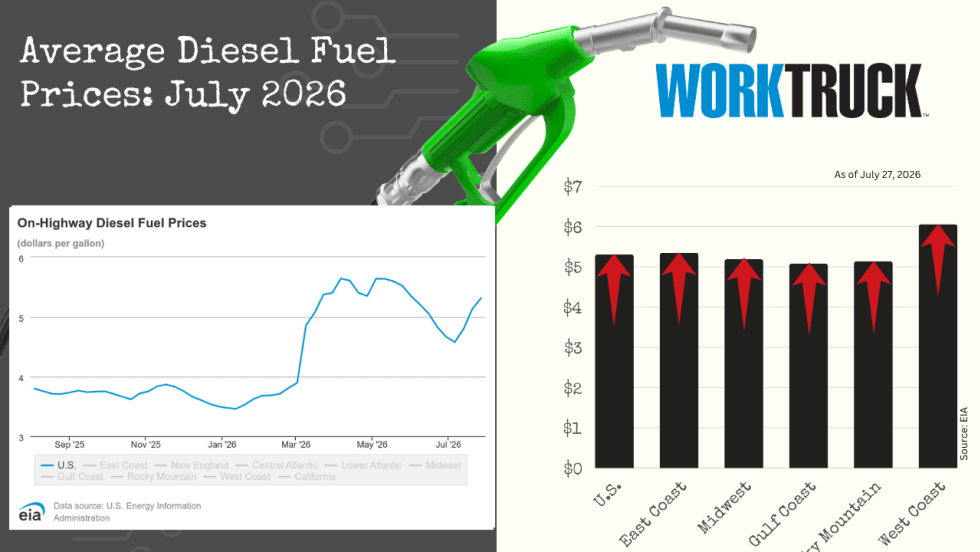
July Diesel Trends Update
The average price of a gallon of diesel increased again this week, and the EIA reported a new national average of $5.31 at the start of the week.
Read More →
WEX Brings Standard Fleet's Connected Vehicle Platform to Fleet Customers
This week’s product launch with Standard Fleet’s connected vehicle platform reflects WEX Venture Capital's strategy of turning startup innovation into customer solutions. Standard Fleet is now available to WEX fleet customers.
Read More →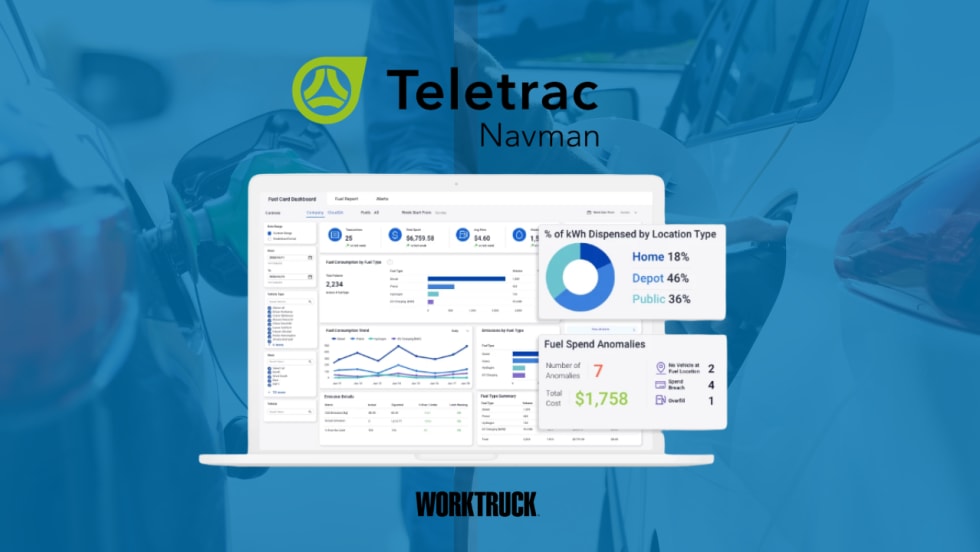
Teletrac Navman Adds Mixed-Energy Fleet Tools to TN360
The new Energy Hub combines fuel transactions, EV charging data, vehicle range, and energy costs in one dashboard for fleets operating multiple vehicle and energy types.
Read More →
WEX DriverDash adds CITGO, Expands Nationwide Access for Fleets
The DriverDash mobile payment app, by WEX, has been integrated into the CITGO merchant network, which means WEX has expanded its U.S. station footprint with the addition of approximately 4,000 CITGO locations.
Read More →
Mixed Energy Fleet Tips for Balancing EVs, Gas and Diesel Vehicles
Mixed energy fleets are becoming the new normal. Learn how fleet managers are balancing EVs, gas and diesel vehicles while controlling costs and planning for the future.
Read More →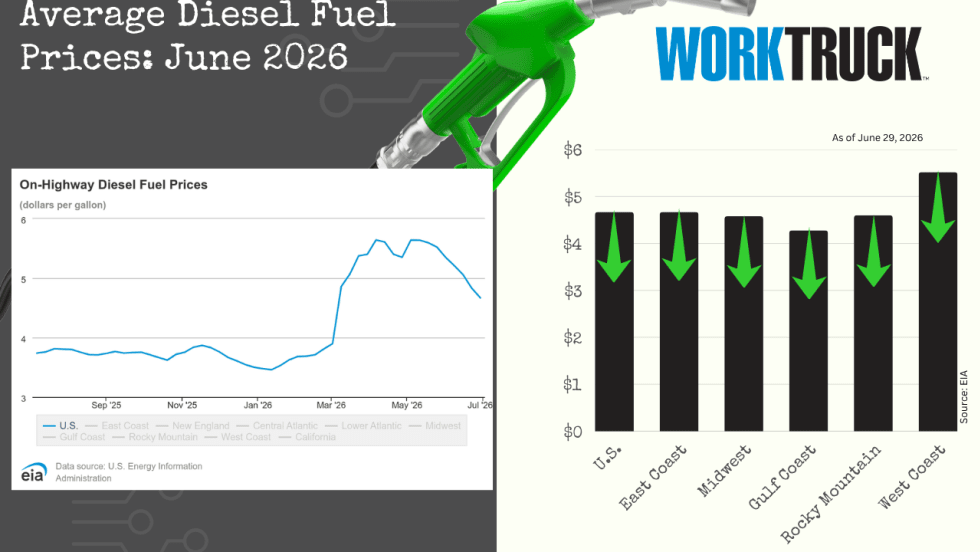
June Diesel Trends Update
The national average price of a gallon of diesel has dropped again, this week by more than 16 cents. All five regions reported lower average prices, ranging from almost 13 cents to more than 28 cents cheaper than a week ago.
Read More →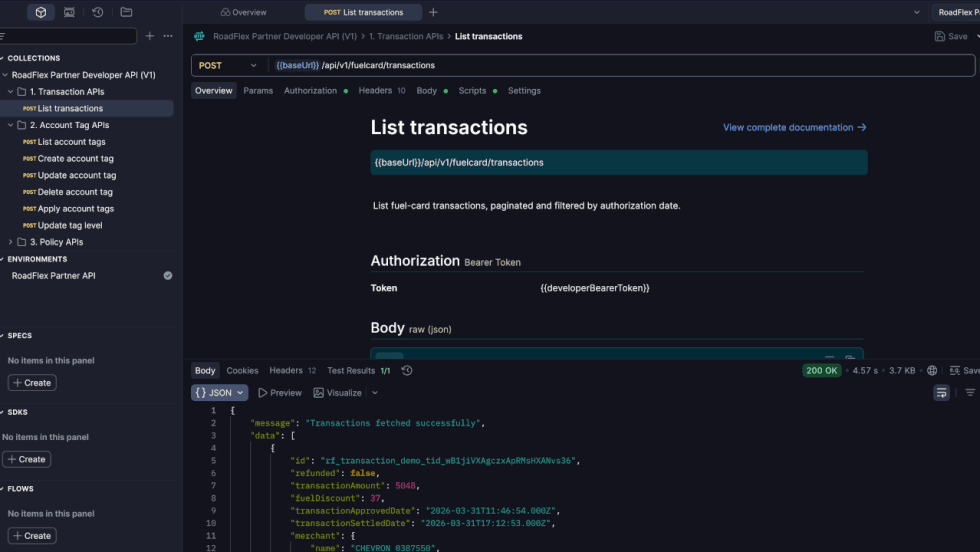
RoadFlex Launches RoadFlex Direct Open API Platform
RoadFlex Direct connects fuel cards, controls, and data to the telematics and fleet management systems fleets already run, from Geotab and Samsara to Fleetio and RTA, with no separate dashboard or double data entry.
Read More →
The Key to Fuel Efficiency Sits in the Cab
Learn how driver behavior, telematics, coaching, and fuel data can help fleets improve fuel efficiency, lower costs, and reduce emissions.
Read More →