




2017 Ford Super Duty Pickups to Use F-150 Aluminum Cabs
The change to high-volume F-150 cabins cuts costs and weight, and adds interior room for SuperCab and SuperCrew buyers.

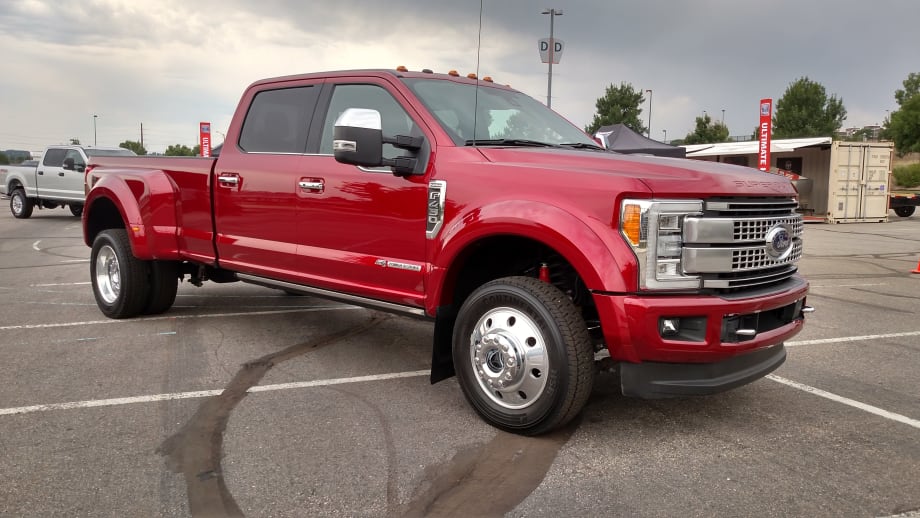
Like all new SuperDuty pickups, this F-450 SuperCrew has an aluminum cab, front fenders, hood and cargo bed. Photos by Tom Berg.
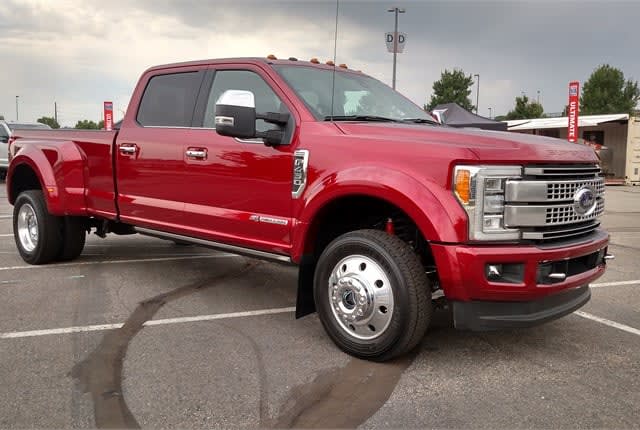
Like all new SuperDuty pickups, this F-450 SuperCrew has an aluminum cab, front fenders, hood and cargo bed. Photos by Tom Berg.
Ford's 2017 SuperDuty pickups and chassis-cab models will come with more engine power and torque and advanced electronic features, as previously reported, but they'll also share their cabins with the popular F-150 pickup – something not done for more than 20 years.
At a launch event in Denver on Tuesday, Ford executives said that combining the cabs yields economies of scale, because the F-150 is one of the most popular vehicles of any kind in the United States and its three cab types are produced in great volume.
The change also provides more interior room for Super Duty models, because F-150 cabs were enlarged and updated with aluminum construction several years ago. By adopting those cabs, the ’17-model F-250 through 550 SuperCabs and SuperCrews will be several inches longer than now. Also like the F-150, cargo beds, front fenders and hoods will also be aluminum.
Since the mid 1990s, SuperDuty trucks have had bodies separate from the F-150, executives explained. At first SuperDuties kept the old cabs originally used in the 1970s; then about seven years later they got new, slightly larger cabs – in steel as they’d always been – and used those through the current 2016 model year.
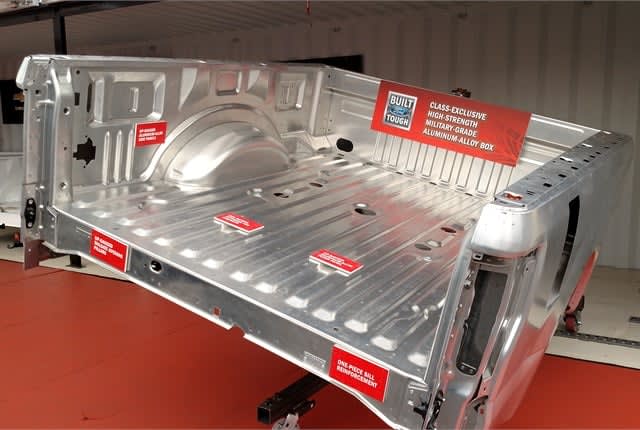
Aluminum cargo bed is stronger and lighter than steel, Ford says. Photo by Tom Berg.
Going to aluminum saves as much as 750 pounds for the largest F-150, but weight savings for a SuperDuty will be 350 pounds at most compared to current models, executives said. Light-weighting could’ve been greater, but engineers added beef to the new SuperDuty frames, which are made of mild and high-strength steel.
Among other changes, each of the heavier frames got at least three extra crossmembers, and with fully boxed main rails a SuperDuty frame is now 24 times stiffer.
The Ford event continues on Wednesday, and a more complete report on features and driving impressions will appear later on Truckinginfo.com.
Originally posted on Automotive Fleet
More Operations
Family Ties Inside the Fleet Families Building Careers Across Generations
Three fleet families share what it really takes to work together, learn across generations, and keep business from following them home.
Read More →
Shades of Fleet Call for Voices: Fleet's Hidden Heroes
Fleet’s hidden heroes are often the ones keeping everything moving behind the scenes. September’s Shades of Fleet is looking for dispatchers, coordinators, parts specialists, and other support pros to share their stories.
Read More →
Truck Centers, Inc. Celebrates National Truck Driver Appreciation Week with $1,000 Fuel Card Giveaways
During National Truck Driver Appreciation Week, Truck Centers, Inc. is offering customers a chance to fuel up for free. Customers at all Truck Centers locations can enter to win one of four $1,000 fuel cards from Sept. 14 - 18.
Read More →
Fleet Guides, AI Time-Savers, Truck Tariffs & Fuel Strategy Lead the News
This week’s Truck Chat Cheat Sheet covers new fleet vehicle guides, practical AI use cases, U.S.-Canada truck production, mixed-energy strategy, and more.
Read More →
What Fleet Employers Are Missing When Hiring Veterans
What if some of the strongest candidates for fleet are already out there, but their experience is written in a language our industry does not always recognize?
Read More →
Automotive Fleet Opens 2026 Personal Use Survey for Commercial Fleet Managers
Less than two weeks left! Commercial and corporate fleet managers are invited to share how their organizations handle company vehicle personal-use policies, charges, and driver eligibility.
Read More →
What Resilient Fleets Do Differently When Conditions Change
Fleet resilience is about more than reacting to disruption. Lauren Fletcher talks with AP Fleet’s Alex Coveney about flexibility, planning, scaling, and what helps fleets adapt when business conditions shift.
Read More →
If We Want the Next Generation in Automotive, We Have to Give Them a Reason to Care
The automotive industry talks constantly about its workforce shortage. But before we can recruit the next generation, we may need to do a better job giving kids a reason to care about automotive in the first place.
Read More →
Ram ProMaster City Under $40K, Truck Tariffs, and AI Maintenance Lead the News
A sub-$40K commercial van, tariff questions, AI-powered maintenance, and a new EV production strategy headline this week’s Truck Chat Cheat Sheet.
Read More →
Bob Adamsky Shares the Fleet Lessons You Usually Learn the Hard Way
After more than 30 years in fleet, Arrow International’s Bob Adamsky has learned that the job is about far more than vehicles. He shares the lessons he wishes every fleet manager could learn a little earlier.
Read More →