




5 Current Trends in Upfitting
Varying lead times, a continued focus on safety and green transportation, and concern over aesthetics are just a few trends occurring with vocational truck and van upfits right now.

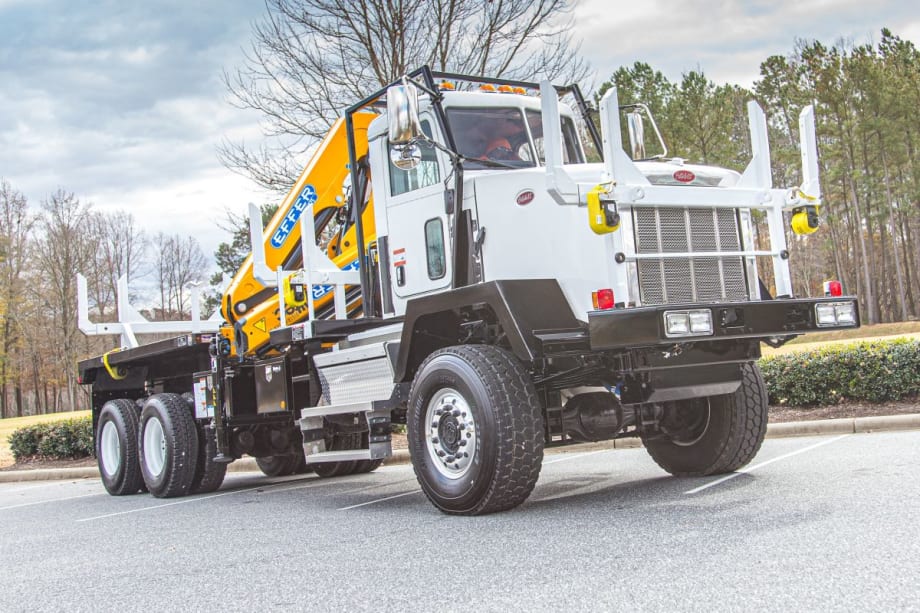
Fleet managers can benefit from paying attention to current trends related to truck and van upfits in 2020.
Photo: Fontaine Modification
Vocational work truck and van fleets often use traditional trucks or vans, upfit with a variety of specialized equipment to help them accomplish their tasks safely. Trends related to these upfit products and the upfit process can have a significant impact on new and replacement fleet orders.
Trend 1: Varying Lead Times
Varying lead times and ship-thru dates are trends that have made a more substantial appearance in the past year.
“With what is currently going on in the world, longer lead times have been greatly affected by the lack of chassis availability. OEM ship-thru lead times continue to be a big sticking point for customers. This is often referred to as a ‘black hole’ when it comes to finding out when you will get your vehicle once it leaves the upfitter,” said Chris Rolsen, national business development manager at Knapheide.
Another trend closely monitored is the time for bodies and components.
“For the most part, manufacturers have done a tremendous job of creating efficiencies in their production processes. Many of the industry’s top manufacturers have expanded their production and now have dedicated production lines for their most popular bodies and components. They’re being much more strategic about their processes to meet demand better and should be commended for these efforts,” said Kelly Klemisch, regional engineering manager, Holman Enterprises.
Nate Eichinger, director of operations, Light Duty Truck and EV Solutions for Fontaine Modification, noted that, in general, lead times from OEMs had decreased dramatically over the past 12 months.
“2019 was a wild year, with record orders and builds; however, even before the COVID-19 outbreak, orders have reigned into more reasonable time frames. The global pandemic has impacted everyone, both on a personal and business level,” Eichinger added.
A final impact on overall OTD is directly connected to the fleet itself.
“Many companies, while they do plan for purchases, tend to procrastinate on making those purchases. Because of a compressed timeline, everything ends up being based on availability. Fleets are looking for speed to market in the delivery process. This leads to the pressure being on the upfitter now, and they’re becoming more incentivized to be fast. There’s a significant amount of pressure that goes onto the suppliers because everyone is now on an adjusted-time delivery market. The manufacturer doesn’t want to bring excess inventory in, the assembly or the upfitter doesn’t have room or the working capital to tie up in products sitting around waiting on a vehicle, changing everything to a model that is very speed-to-market driven,” said Craig Bonham, vice president of commercial vehicle at Safe Fleet.
Trend 2: A Focus on Safety
We all know that driver and worker safety is top of mind for fleets.
“The fleet needs to be part of the safety solution. It’s a fact that service vehicle fleets are the No. 1 type of fleet for injuries. Fleet managers need to factor driver/worker safety into their upfits. The vehicles continue to provide additional safety equipment. Well, so do upfits,” said Jeff Haag, VP of fleet sales for DECKED.
Trend 3: Increased Green Transportation
There is a greater push for ‘green’ transportation with full battery-electric and hybrid systems gaining a lot of attention. “Fontaine created a new division, Light Truck and EV Solutions, in January 2020 to focus directly on these emerging technologies and understand their place in the commercial trucking landscape,” said Eichinger of Fontaine Modification.
Trend 4: Shift in Vehicle Preferences
There has also been a noticeable shift in preference toward commercial vans in vocational applications.
“There are certainly many scenarios where a fleet stands to benefit by allowing their service technicians to work in a covered area. Today’s van offerings can accommodate a limitless number of upfit configurations that help to increase productivity. And, the economics involved means there’s virtually no change in initial capital outlay or pricing structure, ensuring fleet operators have the ideal unit for the job with minimal, if any, cost ramifications,” said Klemisch of Holman Enterprises.
Trend 5: Lightweight and Eye Pleasing
Finally, Mathew Marcussen, director of customer relations for BrandFX, said, “We are seeing the push for a quality product that is durable, lightweight, and aesthetically pleasing.”
What trends are you seeing related to upfits? Did I miss anything? E-mail me, let’s chat!
More Blog Posts

4 Ways to Keep Fleet Nightmares Off Your Halloween Schedule
Don't let the fear of vehicle mishaps spook you! Check out these four tips to ensure your work truck fleet stays on the road, safe and sound, during this hair-raising season.
Read More →
Short Drivers Need to Be Part of the Work Truck Spec, Too
The average truck driver may be around 5'9" for men and 5'4" for women, but fleets aren't spec'ing trucks for averages. Here's what shorter drivers need fleets to consider, from seat height and visibility to 360 cameras, seat belts, and cab access.
Read More →
Does Your Fleet Policy Cover In-Vehicle Gaming?
As in-vehicle gaming, streaming, and connected entertainment expand, fleet policies may need an update. Here’s what fleet managers should be thinking about now.
Read More →
You Can't Tariff an Aluminum Smelter Into Existence
The U.S. wants to rebuild domestic aluminum production, but work truck manufacturers still need material today. What happens to costs and supply in the meantime?
Read More →
Can America Replace Canadian Truck Production Without Hurting U.S. Fleets?
U.S. tariffs are targeting Canadian truck production, but Ford and GM show why moving that manufacturing south isn’t so simple. After 60 years of building one North American supply chain, what could fleets lose by pulling it apart?
Read More →
The Fleet Skills We Keep Missing on Veterans’ Resumes
What if some of the strongest candidates are already out there, but we are overlooking them because their experience is written in a language our industry does not always recognize?
Read More →
Technicians Are Doing More Than Turning Wrenches
Technicians do far more than repair vehicles. Six professionals reveal the problem-solving, pressure, and pride behind keeping fleets moving.
Read More →
WWCD? What Would Coach Do?
A personal reflection on Ed "Coach" Bobit, the mentor who shaped my career, and why I still ask myself one question 12 years later: WWCD?
Read More →
What the Fleet Industry Still Gets Wrong About Talent
What can the fleet industry learn from the women helping shape its future? A look at talent, leadership, sponsorship, and why new perspectives drive progress.
Read More →
AI Isn’t Killing Content, but Lazy Expertise Is
Thought leadership loses value when AI does the thinking. Here’s why authentic industry voices still matter most.
Read More →