





Understanding Insurance Premiums and Avoiding Nuclear Verdicts
Why Fleet Drivers Need to Take Post-Collision Photographs
Commercial drivers need to take ample photos after they have been involved in a crash or collision, says attorney Doug Marcello, who has represented trucking firms in lawsuits in 35 states. There is even a checklist of what photos are to be taken.
June 12, 2024
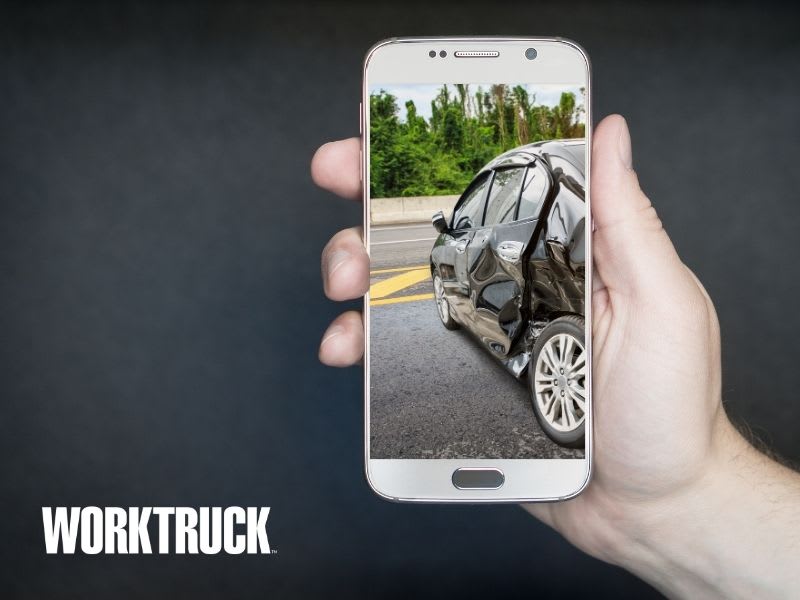
With the prevalence of smartphones, every fleet driver should take photos to document an abundance of possible evidence following a collision.
Photo: Canva/WT Illustration
9 min to read
When one of your drivers is in a collision, the first concern is whether they or others are injured. But after that, when your company’s name is on a vehicle, you should consider that the other motorist might file a lawsuit. What is the immediate course of action? Have your driver take photos as soon as possible.
Doug Marcello, an attorney at Saxton & Stump and the chief legal officer at Bluewire LLC, is a trucking defense attorney with a CDL who has handled cases in 35 states. While a large part of the legal defense has ties to planning, policies, and procedures before any crash, he always stresses the value of photographs of the collision scene.
He explained the basis of any analysis of an accident, as he terms it, is only as good as the facts you can get, and the best facts are gathered immediately after the incident. Photographs provide invaluable documentary evidence.
“The key thing, in general, is the more promptly you're there, post-accident, and take the photographs, the better the foundation you're going to have to reconstruct the accident,” Marcello said.
While the driver should always photograph the accident scene, Marcello pointed out the prevalence of cameras in the world today and the likelihood that in some areas there may be intersection cameras, Ring doorbells, or other surveillance or security cameras that might also have valuable photo or video evidence. In one case, Marcello even found a crash video from a passing Uber driver in downtown Manhattan.
“You never know where or how you're going to get it in today's YouTube society,” the attorney said. “Powerful information, everybody expects to see it.”
What Should Drivers Do Immediately After a Collision?
Marcello has a checklist, which he provides to fleets, of what a driver should photograph immediately following a collision. He suggests someone at the terminal or office should walk a driver through that checklist since he or she may be experiencing emotions or trauma following such an event.
But, there are a few steps ahead of the priority to get photos as soon as possible.
The driver should check for people who are injured.
The driver should secure his or her vehicle and make it visible by turning flashers on, placing truck triangles or flares, and checking for any hazardous material.
Then call 911 to notify the police and other emergency services.
Immediately after contacting the authorities, the driver should take photos.
There is a good reason why Marcello thinks drivers should start taking photos immediately after making the 911 call. He said sometimes he will ask a driver involved in a collision whether they took any photos, and the driver will say “No.”
So, he digs a little deeper and asks why, only to be told by the driver that the police would not allow it.
“I’ll say, ‘Wow, that’s great. The police were there and saw it right away,’ only to hear from the driver, “No, they weren’t there for 5 or 10 minutes’,” Marcello explained.
The driver did not do what was expected and there is no photo or video documentation of the scene.
“Once you have secured basic things, then it's a question of getting out, if safe, and taking photographs from a safe location,” Marcello said. “You want to get it as soon as possible.”
Trucking Defense Attorney Shares His ‘Ultimate Example’
Marcello recalled a case more than 25 years ago in Pennsylvania in which the plaintiff demanded more than $1 million after colliding with a truck. He called it the ultimate example of why a driver should take photos of the crash scene as soon as possible.
The truck pulled out from a dirt lot and made a left turn. A mother and daughter were coming from the opposite direction. Marcell said her car came out of a dip in the road 735 feet north of where the truck was turning left. Despite the distance, she continued forward and struck the truck’s rear tandem wheels, knocking them off.
She filed a lawsuit against the trucking company and when it went to trial the plaintiff’s expert said the truck driver said he came straight across before turning left. Yet, that attorney said that was not true and the driver entered the road at an angle, and because of that the oncoming woman could not see the reflective tape because it was angled.
Photos proved the plaintiff's attorney wrong.
The significant factor was that the driver took photos immediately after the collision.
“He took pictures of the dirt tire marks across the road to show that he came straight across and cut it up the road. By the time emergency vehicles came, had he not done it, then it probably would have been wiped out if not washed out by that point in time,” Marcello said. “So that’s the ultimate example that I use in presentations in terms of how vital it is.”
The defense for the trucking firm won the case.
What Do You Need to Photograph the Crash Scene?
“The most important photograph is the one you didn't take, inevitably. I don't know that you can get too many,” Marcello said.
The only thing Marcello tells drivers, out of the same respect they would want for their own families, is do not photograph injured people.
Through the years, drivers have not taken enough photos. Marcello looks back at the days when drivers carried disposable cameras with pre-loaded film. Those cameras, like the ones that were sometimes placed on tables at wedding receptions, most often had 24 or 36 frames.
Well, drivers never used that many.
“They would always take four. I don't know if they got together to discuss it, but they would always take four. And it's like, “Guys, you’ve got a whole roll there. They would never take enough,” Marcello said.
But in today’s digital world, it is far easier for anyone to take photos on smartphones, so Marcello said to “Let it fly” and take as many as possible, again avoiding photographing injured people.
Photos Help in Defending Against Injury & Damage Claims
Marcello said with the growth of what he calls “billboard attorneys” there are times when a person will leave a scene uninjured and then somehow recall their injuries later.
Photos of damage can help with defense against that in court.
“We take those photos, document the damage or lack of damage, and then we're able to, again worst case scenario, provide that to a biomechanical expert, somebody who will take a look at what the damage is and what force would be required on that vehicle to cause the damage and then say if that force enough to cause the injuries are claiming,” Marcello explained.
The defense attorney said drivers should photograph the vehicles at a distance and from multiple close-up viewpoints, even if there is no damage. Even that undamaged area can help an accident reconstructionist piece together what truly happened.
Marcello once had a case involving a lane-change collision and the plaintiff’s attorney claimed it happened because the truck’s mirrors were out of adjustment. The plaintiff’s attorney claimed that was why the mirrors were not shown in any photos.
“That’s why I say make sure you can shoot everything,” Marcello said.
Shoot wide, shoot narrow, and even look down. Marcello said there was a case where a driver claimed to have been sideswiped by a truck. The plaintiff’s attorney alleged the truck’s rear tandems had made contact with the car.
The other car was red, yet there was no paint transfer onto the rims of the tandems. Again, photos saved the driver.
Make Sure You Can Find Crash Scene Photos Later
Ample photos from a collision scene can be valuable to a legal defense. If a fleet safety professional has the photos in hand following a crash that’s great, but it is more important that they know where to find those images later if a lawsuit is filed.
Marcello pointed out how sometimes fleet safety managers cannot find the photos when a lawsuit is filed — maybe a system crashed, computers were replaced, or three employees later nobody knows where the digital files documenting the crash scene were stored.
“You've got to be you got to be careful to preserve it in those instances as well,” Marcello said.
The length of time a fleet should keep the photos should be at least until the statute of limitations runs out, plus several extra months, Marcello recommended. But remember that different states will have differing statutes of limitations.
Don’t Be Hesitant in Taking Photos After a Crash
A driver may feel awkward following a collision getting out, walking around the crash scene, and taking photos. That is something that fleets need to consider and explain to the drivers the significance of photographing the scene and the involved vehicles.
Marcello commonly joins monthly driver meetings and addresses such concerns.
“One of the things I tell them is you're protecting not just yourself, but your family, your livelihood, your living, and you’ve got to suck it up like you would in any other situation for your family and do what you have to do and take those photographs,” Marcello said.
The driver, not just the company, is typically named in the lawsuit. According to Marcello, that happens probably 95 to 98% of the time. So truly, those photos do protect the drivers and not just the company.
But sometimes plaintiff attorneys may not name the driver in the suit. That is a strategic move by some attorneys out of concern the driver becomes a personification that will create sympathy or empathy by the jurors, Marcello said.
Additional Ways the Safety Department Can Assist After a Crash
The safety department, or safety manager, should be in close contact with a driver after a collision.
A member of the safety team responding to the crash site to aid the driver is good, if possible. As Marcello points out, a driver may have to continue to a terminal once done with police or may need to go in for drug or alcohol screening. In either case, the fleet safety professional can take additional photos.
Also, a fleet safety team may want to give the driver access to dashcam video while he or she is still at the scene and talking to police during the crash investigation.
Equip Drivers with a Photo Checklist
Saxton & Stump, Marcello’s firm, provides a Trucking and Commercial Transportation Photo Checklist. Marcello commonly shares that with fleet safety professionals and said it is a good guide for drivers to reference following a collision when they take photos.
That photo checklist suggests taking photos of:
Point of impact (close)
Point of impact (full vehicles)
Driver side
Front
Passenger side
Rear
Claimant license plate (close)
Witnesses – (license plate if driving)
Road – toward claimant direction
Road – from our direction
Intersection (intersection accident)
Road marks – claimant
Road mark – commercial vehicle
Fluids and debris from vehicles (intersection/lane issues)
Traffic control signs (intersection/turn issues)
Last speed sign in each direction (seed/turn issue)
Back of speed signs (speed/turn issue)
Lack of vehicle damage (i.e. intact light lenses)
Lane markings and signs (lane/turn cases)
Construction signage (construction zone accident)
Truck illumination/reflective tape (night accident)
Subscribe to Our Newsletter
More Safety

Volvo Trucks Releases New Safety Recommendations for Traveling with Pets
One of the most important recommendations for professional drivers traveling with pets is to ensure pets are properly restrained while the truck is moving. Other tips are available in the new guide from Volvo Trucks North America and Center for Pet Safety.
Read More →
API Issues Refueling Safety Guidelines
The American Petroleum Institute offers a list of safe vehicle refueling guidelines, including ways to avoid potential problems with static electricity discharges in fall, winter, and early spring.
Read More →
Winter Fleet Prep: Expert Tips to Keep Vehicles Running Smoothly
Cold weather can expose weak batteries, tires, fuel systems, and maintenance gaps fast. Use this winter fleet checklist to prepare trucks and drivers before temperatures drop.
Read More →
When a Work Truck Breaks Down, the Job Can Stop, Too
A work truck breakdown can stop more than the vehicle. Discover how payloads, jobsites, and specialty equipment change the roadside response.
Read More →
What Stronger Long-Term Fleet Service Partnerships Actually Require
Fleet service partnerships rarely fall apart all at once. Learn the three warning signs that trust is eroding and what fleets and providers can do before downtime, frustration, and lost revenue follow.
Read More →
Applause & TRUCE Software Partner to Improve Driver Safety Through AI-Powered Telematics & Employee Performance Management
Applause has integrated TRUCE driving metrics directly into its employee-first performance and safety platform that transforms mobile devices into AI-powered telematics.
Read More →
How Detroit Assurance with Active Brake Assist Works
Do you want to see what it is like to experience Detroit Assurance’s Active Brake Assist? In this video, Work Truck will put you in the cab to see how it all works and then hear more details from DTNA’s Mike Young.
Read More →
Get Left of Loss: A 5-Step Workplace Violence Prevention Framework for Fleet Operators
Violence risks do not stop at the driver’s door. Learn five practical steps fleets can take to spot threats early and protect workers before loss occurs.
Read More →
Sponsored•July 17, 2026
How Better Visibility Cut Speeding Violations by 48%
Fleet leaders don't need more data, they need clearer visibility into what the data is saying. This case study explores how one utility replaced speeding-event counts with a single metric — miles driven in violation — to strengthen safety and significantly reduce speeding violations.
Read More →
13 Safe Driving Tips for Commercial Vehicle Drivers
Make sure you are spending time on the road safely with these important tips.
Read More →