




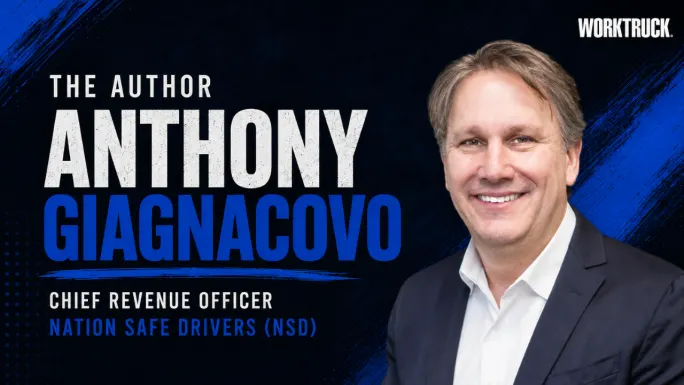
About the Author: Anthony Giagnacovo is the Chief Revenue Officer at Nation Safe Drivers (NSD), responsible for market expansion, strategic alliances, and the commercial velocity that fuels Nation Safe Drivers' $800M+ ecosystem. At NSD, his mission centers on building scalable enterprise pipelines, aligning sales and product strategy, and delivering quantifiable ROI to B2B partners nationwide. For more information, visit www.gonsd.com.
What Stronger Long-Term Fleet Service Partnerships Actually Require
Fleet service partnerships rarely fall apart all at once. Learn the three warning signs that trust is eroding and what fleets and providers can do before downtime, frustration, and lost revenue follow.
by Anthony Giagnacovo, Nation Safe Drivers (NSD)
August 18, 2026
Trust between fleets and service providers rarely disappears after one bad experience. It weakens through repeated inconsistencies in communication, claims decisions, training, and day-to-day service.
Credit:
This image was generated by OpenAI. Please refer to our terms of use.
6 min to read
- Initial strong communication and alignment are crucial for successful fleet service partnerships.
- Over time, small inconsistencies like delayed response times and communication issues can escalate into significant operational challenges.
- Addressing these issues proactively can prevent them from manifesting as visible problems in operational metrics or during contract renewals.
*Summarized by AI
Every fleet operations manager knows the story. A new service provider relationship often begins with strong communication, responsive support, and clearly aligned expectations. Over time, however, operational consistency can become more difficult to maintain without ongoing alignment and accountability. Response times may become less consistent, claims workflows may require additional review, and communication between teams can become less proactive than it was during the initial rollout.
For a fleet manager, those seemingly small inconsistencies can quickly become operational problems. A vehicle waiting a few extra hours for assistance is not simply an inconvenience; it can mean a missed delivery, a delayed service call, or an asset sitting idle when it should be generating revenue. By the time these issues become visible in operational metrics or renewal discussions, the underlying challenges may have been developing for some time.
This pattern is not unique to any single provider or fleet segment. It is a significant problem in how the vehicle services industry manages vendor relationships over time. In many cases, the progression follows familiar operational patterns that the industry is increasingly working to address more proactively.
One of the more surprising realities is that many organizations with transportation fleets, even large fleets, still coordinate roadside events internally, relying on dispatchers or fleet managers to locate service providers when breakdowns occur. While that approach may seem cost-effective, it often creates inconsistent response times, additional administrative burden, and unnecessary downtime when drivers are stranded. As fleets face growing pressure to maximize vehicle utilization with leaner teams and aging assets, long-term partnerships increasingly hinge on providers that can deliver consistent execution and not just emergency response.
Three Moments When Trust Quietly Breaks
Trust in fleet service partnerships does not collapse suddenly. It erodes at three specific pressure points, none of which announce themselves clearly at the time.
The first is claims adjudication inconsistency.For fleet operators, particularly in the rental segment, the economics of a disabled vehicle are stark: every day a unit sits out of rotation is direct revenue loss. When a roadside or recovery claim gets denied, delayed, or adjudicated differently than a nearly identical claim from three weeks prior, the fleet operator absorbs the consequence without understanding the cause.
Consider something as routine as a flat tire on a work truck operating hundreds of miles from its home terminal. If one incident is handled immediately while another experiences delays because approval processes or service expectations differ, the operational disruption extends well beyond the roadside event itself. Dispatch schedules shift, technicians wait, customer commitments are affected, and confidence in the partnership begins to erode. There is no feedback loop. Over time, small inconsistencies can accumulate into broader concerns around predictability and operational confidence.
The second is training drift.Initial onboarding for fleet service programs is almost always done well. Providers invest real energy into launch. But without ongoing accountability structures, dispatchers, account managers, and field coordinators revert to prior habits within months. Processes established during onboarding, performance review, and coaching frontline teams' implementation may evolve over time as operational demands and workflows change.
Across the fleet services industry, it is common to see well-designed onboarding gradually lose consistency unless providers continuously reinforce it. Fleet operators may not always see these internal operational shifts directly, but they often experience the downstream effects through variability in service performance.
The third is deprioritization driven by margin pressure. Fleet contracts are typically won on competitive cost. That is the nature of a business running on thin margins where vehicle utilization rates and days outstanding are the metrics that determine profitability. Service providers face many of those same pressures. Maintaining nationwide service networks, investing in training, expanding digital capabilities, and ensuring consistent response times all require ongoing investment.
When pricing discussions become the sole focus of the relationship, both fleets and providers can unintentionally create an environment where long-term investment becomes more difficult. The strongest partnerships recognize that affordability and service quality are not competing priorities; they depend on one another over time.
None of these three moments generate a complaint call or a formal grievance. They accumulate quietly until the damage is structural.
What Stronger Long-Term Partnerships Actually Require
If trust weakens through inconsistency, stronger partnerships are built through three equally practical commitments: transparency, accountability, and mutual investment.
Transparency in claims decision-making.
Fleet operators benefit most from claims processes that are transparent, well-documented, and supported by clear communication. Providers that explain the criteria driving adjudication decisions, share data on claim patterns, and proactively flag anomalies build a fundamentally different kind of relationship than those who simply process claims and move on.
One of the most consistent observations I've seen throughout my career is that fleet managers rarely expect perfection. They expect consistency. Even difficult decisions become easier to accept when the process is transparent and predictable. Transparency is less about claim volume and more about creating consistency, visibility, and confidence in the process.
Accountability structures that outlast onboarding.
A kickoff training event is not an accountability structure. A quarterly performance review with shared metrics is closer. A continuous feedback loop between service delivery data and frontline staff behavior is better still. The fleet sector is increasingly data-driven in how it evaluates operational performance.
Leading providers already measure these areas extensively, from response times and arrival performance to customer satisfaction and service quality. The greatest value comes when those metrics are reviewed collaboratively with fleet customers and used to continuously improve operations rather than simply report historical performance.
A financial relationship that reflects genuine investment.
This is the uncomfortable conversation. When fleet contracts are negotiated purely on margin extraction, both parties end up in a transactional dynamic that produces transactional behavior.
Long-term service quality is often strongest when both parties are aligned around operational performance, responsiveness, and mutual investment in the relationship. Fleet operators that continuously squeeze provider margins create conditions where deprioritization is rational. The goal is not simply cost reduction, but building a structure that supports reliability, responsiveness, and operational continuity over time
The Question Worth Asking Now
The fleet vehicle services industry is in a period of real pressure. Fleet operators are contending with rising maintenance costs, tighter utilization targets, and heightened customer experience expectations simultaneously. Many are also operating vehicles longer than they did just a few years ago, increasing the importance of dependable service partners that can minimize downtime and keep drivers productive. In that environment, vendor relationships are not a secondary concern. They are a core operational variable.
The automotive services companies that will still be standing in a decade are not the ones who wait for a contract renewal conversation to go badly before examining how their vendor relationships actually function. They are the ones that continually invest in transparency, accountability, and mutual success throughout the life of the partnership. They are the ones asking right now: Where are the inconsistencies in how we adjudicate claims? Where has our training investment faded without anyone noticing? Where have we allowed the financial structure of a partnership to reduce loyalty to something purely transactional?
Over the course of my career, I've found that the strongest fleet relationships are rarely defined by a single contract or service event. They’re built through hundreds of day-to-day interactions where providers consistently communicate, solve problems quickly, and demonstrate that they're invested in their customers' long-term operational success; not just the next renewal.
Trust erosion in fleet service partnerships is predictable. That means it is also preventable. The industry has the tools. What it has lacked is the habit of looking for the warning signs before the damage shows up in the utilization report. For fleet operators evaluating existing partners, or providers looking to strengthen customer relationships, the opportunity isn't simply to improve service levels. It's to build partnerships grounded in transparency, accountability, and mutual investment that can withstand the operational pressures both sides face every day.
Credit:
Nation Safe Drivers | Work Truck
Quick Answers
Over time, the initial strong communication and aligned expectations can deteriorate, making it harder to maintain consistency without ongoing alignment and accountability.
*Summarized by AI
Subscribe to Our Newsletter
More Leasing & Management

Buyers Products Awarded Sourcewell Cooperative Purchasing Contract for Snow & Ice Equipment
Buyers Products has been awarded a Sourcewell contract for a wide range of winter maintenance equipment and accessories, including snowplows, municipal plow systems, wing plows, spreaders, and more.
Read More →
Wheels Names Matthew Cole President to Advance Fleet Technology and Growth
Matthew Cole brings more than 30 years of automotive and technology leadership to Wheels, including experience with connected and software-defined vehicle technologies.
Read More →
Why Fleets Need More Flexibility in Financing and Asset Strategy
Vehicle costs, resale values, and demand keep shifting. See how fleets can balance leasing, financing, ownership, and rentals without adding unnecessary complexity.
Read More →

What Mike Albert Fleet Solutions’ New CEO Says Will Change for Fleets
Martin Kuhn explains why investments in technology and people are coming, but access to personal customer service must remain the same for fleets of every size.
Read More →
Inside AP Fleet Management’s Move From Financing to Fleet Services
AP Fleet Management President Alex Coveney explains how the company grew from equipment financing into fleet services and what shaped its customer-first approach.
Read More →
Kooner Fleet Management Solutions Named Fleetio Premier Partner
Fleetio has named Kooner Fleet Management Solutions as a Premier Partner within Fleetio’s Maintenance Shop Network. As a Fleetio Premier Partner, Kooner's designation reflects its commitment to delivering reliable maintenance services and supporting fleets through high-quality service.
Read More →
Why Vocational Fleets Need Payment Infrastructure That Scales
Fleet downtime isn't the only cost. Discover why scalable payment and invoicing infrastructure is becoming essential for vocational fleet efficiency and loyalty.
Read More →
Mike Albert CEO Marty Kuhn Sees Technology and Upfitting Driving Fleet Success
New CEO Marty Kuhn highlights work-ready upfitting, fleet technology, and AI-powered insights as key parts of Mike Albert's strategy.
Read More →
Flexible Standardization: How Modern Fleets Are Rethinking Consistency to Stay Operational
Fleet standardization is evolving. Learn how flexible vehicle specs help large fleets reduce delays, improve uptime, and adapt to disruptions.
Read More →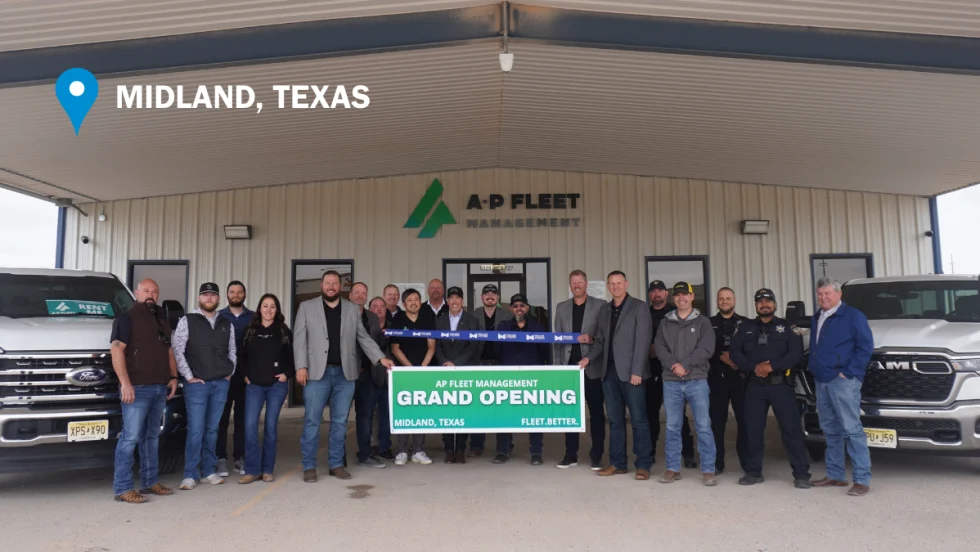
AP Fleet Management Opens Midland Hub to Expand Access to Upfitted Work Trucks in Texas
AP Fleet Management’s new Midland location expands access to bucket trucks, crane trucks, vans, and faster upfitting services for Texas fleets.
Read More →