




Tiremakers Go Green with SmartWay
EPA fuel efficiency designation is the hot thing in truck tires. While SmartWay-verified tires are mandated on heavy trucks, medium-duty fleets can also benefit from more fuel-efficient tires.
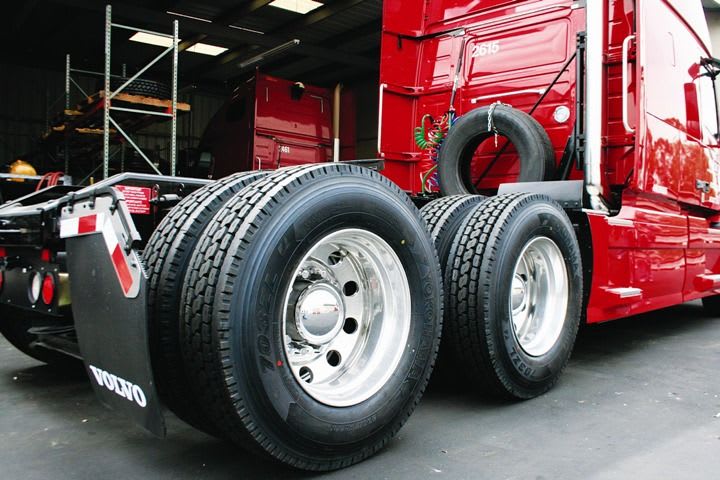
Yokohoma’s 703ZL tires are included on the Environmental Protection Agency’s list of SmartWay-verified technologies.
Photo: Yokohama
It's no secret that fuel efficiency has been a top concern among trucking fleets for many years. However, up until recently, any effort by fleets to reduce fuel consumption and, in turn, their trucks' greenhouse gas emissions, by running low rolling resistance tires on trucks and trailers was strictly voluntary.
That all changed in January 2010 when regulations designed to reduce truck emissions went into effect in California.
The rule, mandated by the California Air Resources Board (CARB), requires all 2011 model-year and newer day cab tractors that pull 53-foot or longer box-type trailers in the Golden State to run on low rolling resistance tires that have been verified by the U.S. Environmental Protection Agency's (EPA) list of SmartWay-verified technologies.
It also mandates that 2011 model-year and newer trailers operating in California must be either SmartWay-certified or equipped with low rolling resistance tires and retrofitted with SmartWay-approved aerodynamic technologies.
Created in 2004, the SmartWay label identifies products and services that reduce transportation-related emissions. It has become perhaps the most sought-after designation in the commercial truck tire market. No fewer than eight truck tire manufacturers have placed products on the EPA SmartWay list, with more companies submitting products for consideration.
Setting an Industry Benchmark
The CARB rule applies to all tractors traveling on California highways, regardless of their home base or point of origin. That means fleets from other parts of North America sending trucks into California must equip those vehicles with SmartWay-approved tires to comply with the regulation.
The CARB rule has pushed the SmartWay program into the spotlight, say truck tire manufacturers.
"It's important to understand how the CARB program is affecting line-haul fleets in other parts of the country," said Brian Sheehey, director of Hankook Tire America Corp.'s Commercial Tire Group.
To qualify for SmartWay certification, truck tires must meet EPA-mandated test criteria. Two testing methods are available to tire manufacturers, which may perform their own testing. Several companies also have used third-party labs to evaluate their products.
"The first is a method in which you run a comparison test on a test track against a reference set of tires," said Don Baldwin, product marketing manager, Michelin Americas Truck Tires. The goal is to demonstrate a 3-percent fuel savings benefit.
"The second method is a straightforward measurement of rolling resistance to a prescribed procedure. You run your tires on your own (testing) equipment," Baldwin said.
This method is designed to yield a rolling resistance value at or below target values for specific tire models.
A third method had been available, but the EPA dropped it several months ago. The method was meant to be more inclusive than the first two, but as such, was the least stringent of the three, said John Cooney, director of commercial sales for Yokohama Tire Corp.
"There was no benchmark to measure against. All you had to say was, 'This tire is X percent more fuel-efficient than another tire we sell,' " Cooney said.
Certification according to universal standards is critical because it provides manufacturers "with a tangible goal to achieve through the improvement of features like carcass design and innovations in treads and compounding," Sheehey said. "Before, manufacturers would come out with fuel-efficient tires according to whatever standards we deemed appropriate. This provides a single standard for all of us to achieve."
For dealers and end users, it also "takes the guesswork out of the equation. What's fuel-efficient? What's compliant? Claims from marketing and sales departments now can be verified. Depending on the manufacturer, we may agree or disagree on what the standard should be. But there is one. It provides a goal ... and we can confirm that our tires meet a standard," Sheehey said.
Program Under Construction
Twelve tire manufacturers currently have products on the SmartWay list:
Bridgestone Americas Tire Operations LLC.
Continental Tire the Americas LLC.
Cooper Tire & Rubber Co.
Double Coin Holdings Ltd.
Falken Tire Corp.
GITI U.S.A.
Goodyear Tire & Rubber Co.
Hankook Tire America Corp.
Kumho Tire U.S.A. Inc.
Michelin North America Inc.
Toyo Tire U.S.A. Corp.
Yokohama Tire Corp.
Double Coin is the only Chinese company to earn the SmartWay label - a breakthrough achievement for the firm, according to Aaron Murphy, vice president of Double Coin's U.S. subsidiary, China Manufacturers Alliance LLC. The Double Coin FT105, a trailer axle tire, was certified via third-party testing, said Murphy.
"We focused on the trailer position because there is significant demand (for trailer tires) from OEMs. We know that as SmartWay-certified fleets grow, we will need products to meet that demand," Murphy explained.
Tire manufacturers that are not working toward SmartWay certification "are going to have problems in the future," Sheehey of Hankook said.
While California is the only state that currently requires trucks to run on SmartWay-approved tires, other states may adopt similar regulations, he explained.
SmartWay test requirements are not expected to remain static either, according to Kyle Jensen, manager of industry and government relations for Bridgestone Bandag Tire Solutions, which has 12 tires on the SmartWay list.
"I would think the EPA would take it to another level," Jensen said. "They've already talked about having kind of an 'elite status' within the program. We don't know when, but we think it's going to happen."
According to Yokohama's Cooney, "We believe there will be some significant changes" to the program. Tougher test requirements would make it more difficult to join the SmartWay club.
As for tires that already made the grade, "we anticipate there will be a 'grandfathering period' for (fleets) that have already made buying decisions," he said. "We would expect that tires that are already certified would be grandfathered for their lifecycle. If you bought a tire that was SmartWay-certified today and the regulation changed tomorrow, we don't expect the EPA to say, 'You have to change those tires now.' "
Cooney believes "there probably will be some type of grace period from the time they announce new regulations until the tires that are currently on the list will be scrutinized" to see if they meet or exceed revised standards.
Prior to the advent of CARB regulations, participation in SmartWay was voluntary.
"There weren't a lot of checks and balances," Cooney said, "but they're coming. We believe there will be some significant changes."
This could include rating tires according to their respective rolling resistance levels, said Michelin's Baldwin. "Right now you can't look at the list and tell what a tire's relative rolling resistance is. The tire is either on the list or not."
Dealers Reap Benefits
Clif Armstrong, director of marketing, Commercial Vehicle Tires, the Americas, for Continental Tire the Americas LLC, said the SmartWay program nicely dovetails into his company's efforts to educate fleets about the fuel-saving benefits of low rolling resistance tires.
Continental, which has five of its flagship brand tires on the SmartWay list, is applying the technology it developed to gain SmartWay certification to "decreasing the rolling resistance of several of our General brand products," according to Armstrong. Four General brand truck tires were recently added to the SmartWay list.
Continental has submitted several other tires for SmartWay approval, as well.
Promoting SmartWay to fleets makes perfect sense, according to Jensen of Bridgestone. "The big thing is that it helps promote discussions about fuel efficiency. That's probably the biggest benefit."
Baldwin of Michelin agrees. "We've done extensive training with our sales force and we've given information to dealers," he said. "We're also answering questions from fleets. The point I always make is while you need to be on SmartWay tires in order to operate in California, you need to look even deeper and choose the best tire for overall fuel efficiency. We tell our dealers that the value of selling low rolling resistance is that when you get down to it, what the fleet's interested in is reducing its cost."
Cooney said having tires on the SmartWay list has helped Yokohama maintain its current sales to fleets "that have a need for a verified product. You need to have it if you want to continue to do business with customers who do business in California."
Discussing anticipated enhancements to SmartWay tire testing, Cooney noted, "I think it's somewhat of an honor, particularly in the future, to have a standard by which all manufacturers and products will be held."
Astute dealers can also use SmartWay as a marketing tool, said Sheehey of Hankook. "A lot of independent commercial tire dealers are tasked with providing complete tire maintenance programs. If you're a dealer and a large fleet has outsourced all of its tire work to you, you are responsible for making sure that fleet is compliant. Before it was just about the right applications and the right air pressure for the appropriate load, and making sure duals were matched."
Now, even if a fleet has a good tire maintenance program, "not having the appropriate SmartWay-verified tire could cost that fleet dearly. There are fines that are going to be attached to non-compliance. Plus, any program that assists in improving fuel economy is just good business," Sheehey said.
More Green Fleet

Fleet Forward Conference Introduces One-Day Passes for 2026
New one-day registration gives fleet professionals the flexibility to attend Tuesday, Wednesday, or Thursday, with passes available for $199 through Sept. 18.
Read More →
CALSTART Rebrands as Catalyst Mobility, Will Combine with Forth in 2027
CALSTART has rebranded as Catalyst Mobility and will combine with Forth at the start of 2027. The new organization said it is poised to become one of the world's largest, strongest, and most impactful clean transportation nonprofits.
Read More →
Electric Truck and Charging Programs to Boost Sustainability at NY & NJ Ports
Together, the Port Authority of New York and New Jersey and CALSTART will electrify drayage and terminal operations serving the East Coast’s busiest container port. A pair of incentive programs totaling $45 million has launched to accelerate adoption of zero-emission drayage trucks and terminal tractors.
Read More →
Xos Hub Surpasses One Gigawatt-Hour of Energy Delivered in the Field
A single Xos Hub has surpassed one gigawatt-hour of energy across more than 33,600 charging sessions in the field, demonstrating performance that supports Xos' expansion across new products and markets.
Read More →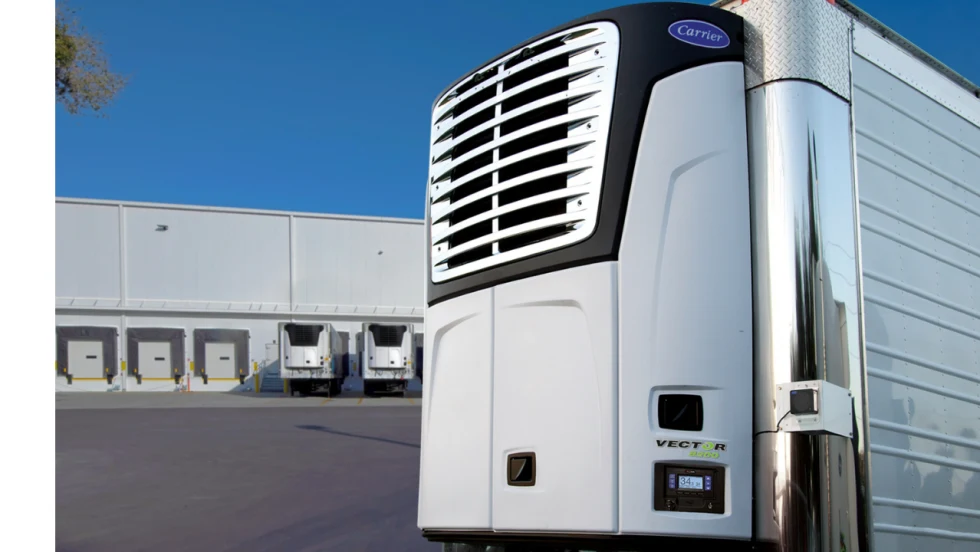
Carrier Transicold Launches All-Electric Vector 8200 TRU for Diesel-Free On-Site Cold Storage
Carrier Transicold’s first engineless multi-temperature TRU helps fresh- and frozen-food fleets add supplemental cold storage capacity during seasonal peaks.
Read More →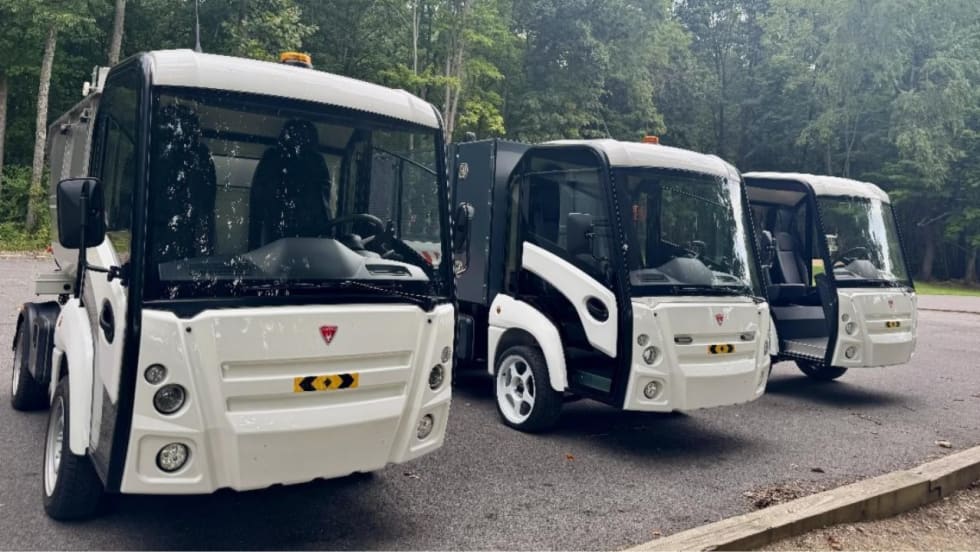
Narro Trucks Introduces Electric Utility Vehicle
Narro Trucks officially launched its operations on Aug. 20 and hosted a ride and drive to showcase its electric truck, which will be produced in Virginia.
Read More →
Samsung SDI Takes Full Control of GM Battery JV as Indiana Plant Pivots to Energy Storage
Samsung SDI is taking full control of its Indiana battery plant with GM, marking a major shift from the EV-focused joint venture Charged Fleet first covered in 2023.
Read More →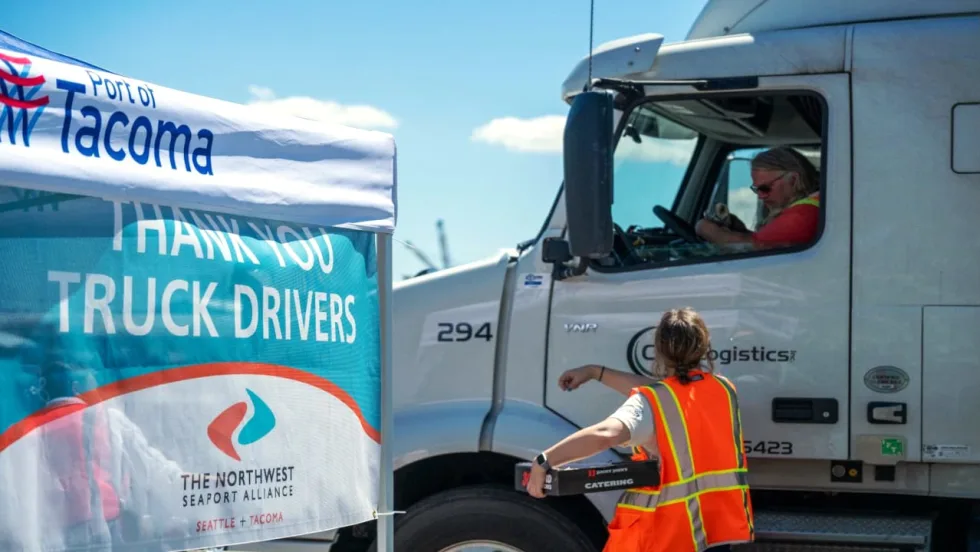
NWSA Taps CALSTART to Administer Zero-Emission Drayage Assistance Program
CALSTART will provide free technical assistance services to drayage fleets serving the Ports of Seattle and Tacoma and looking to transition to cleaner technologies and help decarbonize freight hubs.
Read More →
EV Fleet Reality Check: What Operators Wish They Knew Before Electrifying Their Work Vans
Electric work truck upfits bring new compatibility questions. Learn how parts availability, OEM guidance, power demands, and route planning can affect fleet performance.
Read More →
Peterbilt Expands Sourcewell Partnership with Electric Vehicle Lineup
Peterbilt Motors Company’s cooperative purchasing agreement with Sourcewell and its Canadian partner, Canoe Procurement Group, now includes including Peterbilt's battery-electric vehicle lineup.
Read More →