





Related: Will Future Trucks Be Powered by Batteries or Fuel Cells?
The Challenge of Migrating from Diesel to Electric
Thinking of going electric? There's more to worry about than the price of the trucks and the weight of the batteries.
October 9, 2019
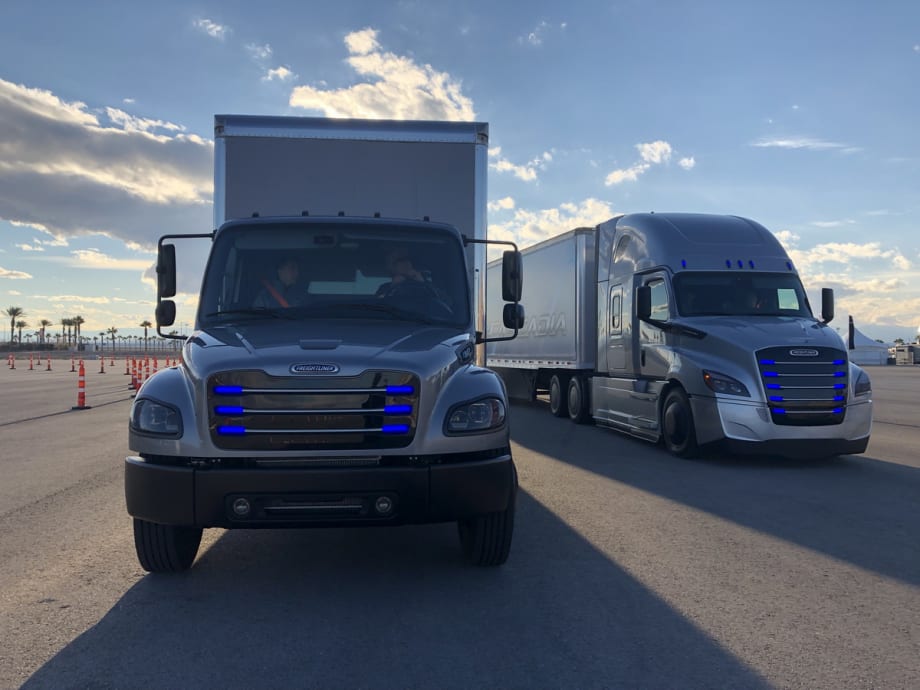
Migrating from diesel to electric or adding electric trucks to your fleet is not as simple as flipping a switch.
Photos: Jim Park
7 min to read
At this stage of the battery electric vehicle revolution, you can't just walk into a dealer and buy a battery-electric truck. That day's not that far off though, so you might now be thinking about such a move. There's a great deal more to think about with BEVs than you may be expecting compared to buying a diesel, including dealing with the utility companies, site planners, planning the probable expansion of your BEV fleet.
Several early adopter fleets are already running electric trucks in field trials and limited service, and they have begun the necessary upgrades to their terminal facilities. NFI is one such fleet. It operates a fleet of trucks between Chino, California and the ports of Los Angeles and Long Beach. The fleet currently has 45 tractors, including several natural-gas powered trucks, but so far only one electric Class 8.
"A typical run to the ports and back is about 108 miles," says Bill Bliem, senior vice president of fleet services at NFI. "Most of the diesel trucks make two or three trips a day, but the electric truck doesn't have the range to get to Chino and back. It's running locally around the ports."
Those range issues had surfaced previously when NFI first dipped its toe into the natural gas pond. They were successfully overcome then and Bliem expects a similar outcome with electric trucks but admits it will take some time. Getting the trucks into service is relatively easy, keeping them working and optimizing utilization is proving a little more challenging, he told an audience at the ATA's Technology & Maintenance Council's annual meeting earlier this year in Atlanta.
"With electric vehicles, there's lots of headwinds and also lots of tailwinds," he said. "California is offering lots of incentives toward BEV adoption to help meet its clean air action plan of zero emissions by the end of 2020. The costs are coming down as the technology develops but there are still lots of unknowns; like the true total cost of ownership, for example. If anybody tells you that total cost of ownership is going to be less than a diesel, it's only an assumption. Nobody knows yet. It has not yet been proven."
Bliem is learning as he goes, and he says there has been a lot to get his head around, such as how much energy his trucks will be drawing off the grid.
According to the U.S. Energy Information Administration, the average U.S. residential customer uses approximately 909 kWh of electricity per month. "Based on the estimation that we'll need 2.3 kilowatt-hours per mile to run a Class-8 electric tractor, we'll get one day of work out of one month’s energy consumption for a typical household," he told the audience. "When you multiply that by 15 tractors, which we hope to have by the end of the year, we’ll need to have fifteen household's worth of energy every day."
There will be some areas where that amount of power just isn't available, due either to local demand or infrastructure constraints.
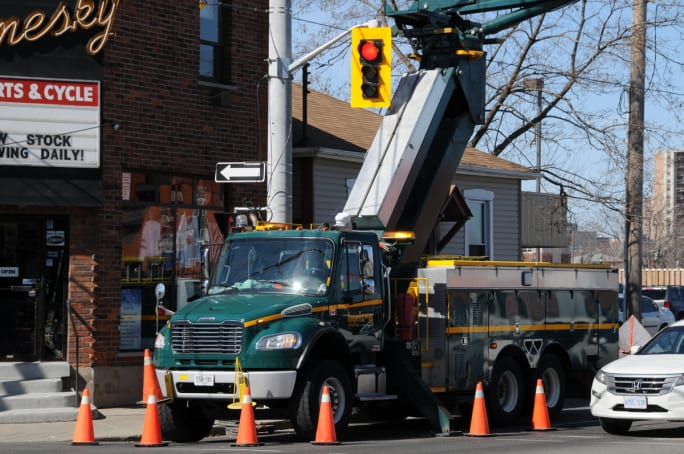
Utility companies may have to make changes to the local grid, including adding transmissions lines, upgrading transformers, etc. Sometimes the electric fleet has to pay for these upgrades.
Energy Availability
Ryder System Inc. discovered these constraint problems during advance planning work for electrical infrastructure at some if its locations in California. Chris Nordh, senior director of advanced vehicle technology and energy products told HDT in January during the CES show in Las Vegas that after about 25 installations, it became obvious that some of Ryder's older locations did not have enough spare capacity for more than six or seven light-duty electric vehicles.
"There are a number of things that'll help increase the number of vehicles that you can have at a single site, but at some point you will reach a threshold, and yes, that is an issue," Nordh says. "Most of our customers don't have the kind of density that, for example, a FedEx or a UPS has with hundreds of vehicles at the same site. Most of our customers are 5 or 10 trucks and so they will have an easier time adopting electric vehicles than some larger operations.
"Interestingly, you have an almost inverse relationship when it comes to electric vehicles. The first vehicle that you get is quite easy to deal with," Nordh says.
The building probably already has 220-volt service and it's easy to install a 220-volt, level-2 charger. For the most part, the vehicles that are available today, especially smaller, shorter-range vehicles don't need fast charging capabilities and they are used only 10 hours a day so they can be charged conveniently and cheaply overnight. But it can get complicated when you start getting into larger and larger implementation projects.
"In our experience with our buildings, it starts getting rocky right around 10 vehicles, maybe a little bit more, and in a few cases, a little less," he says.

Fleets bring one or two electric truck into service will find it fairly easy. It's gets a bit rocky with 10 or more trucks.
In NFI's case, with its higher demand Class 8 trucks, Bliem is guarding against scenarios that would result in higher demand charges -- upcharges utilities require you to pay when your use power at times of the day when there is peak demand for electricity.
"Electricity costs, unlike diesel, can vary with the time of day," Bliem noted. "It will often cost you more to charge at three o’clock in the afternoon than it does at 1:00 AM, so you need to be aware of the utility's demand charges.
"We had to look closely at when our trucks were finished their daily runs and could be charged compared to when we were actually charging," said Bliem. "We are installing 550-kilowatt chargers in one location to charge 10 trucks, but we don’t want to be charging even five trucks at the same time because that drives demand charges up. If that happens, we’ll be paying more for power for the entire month because of that high peak demand. To control these charges, we'll need to align the charging schedules with the drive cycles in such a way as to minimize peak demand."
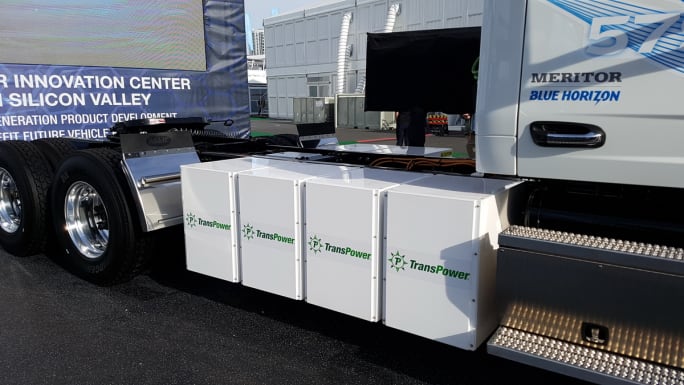
An electric Class 8 truck consumes about 2 kWh per mile, so a full day's work at today's ranges requires about three times as much energy as the average American household.
Site Management
The infrastructure is another matter altogether. Upfitting an existing site with the appropriate electrical service takes time, and depending on the proposed installation, it can involve discussions with utility companies as well as landlords if the property is leased.
"The first question is whether the utility company can even get enough electric power to the site," Bliem said. "They may need to upgrade the transformers, and if so, is there funding available to do it? Obviously, we don’t want to make a million-dollar investment in a site we're leasing."
Cities will sometimes pay part of the cost of the infrastructure, but then the utility may have partial ownership of that infrastructure. Negotiations of that nature can significantly increase the lead time on the project. On top of that, fleets will need to involve an engineering firm, as well as the utility, from the beginning.
Fleets considering electrification will need to work with an installation partner that can assess the facility and energy usage and provide some guidance in reducing electrical loads in the building itself, such as lighting retrofits or solar solutions. Other options such as smart charging can be used to balance electricity demand, and on-site battery systems can be charged at off-peak times in order to charge the vehicles during peak times if necessary.
Few fleets will have the inhouse expertise to pull this off alone, so Nordh suggests working closely with the utilities to take full advantage of their expertise and experience.

Medium duty fleets, including lighter Class 4-7 vehicle will need less energy and therefore less electrical infrastructure.
Photo: Jim Park
"As an example, some utility companies in California are reworking their rate structures right now in order to move away from the peak demand charges and instead create a sort of subscription basis for how many kilowatts the customer will use," Nordh said. "If you have five vehicles, you have one type of subscription; if you have twenty, you have a different type of subscription. We're seeing good progress in California and I'm starting to talk to a few other utilities that are thinking the same way."
One thing Bliem has learned from his experience so far is that there is no one-size-fits all approach to the infrastructure needed to supply that power.
"There will be different approaches for every scenario," he says. "And, purchasing electricity as a fuel is a completely new experience. We’re trying to negotiate with utility companies, and the good thing is that those companies are looking at this as a major sale, so they are interested in talking with us."
In NFI's case, they are building infrastructure for their own trucks. In Ryder's case, Nordh is looking at charging solutions for the Ryder depots where electric vehicles are based, as well as customer locations who have long-term leases on electric vehicles.
"The transition from ICE to BEV is proving to be anything but seamless and we are finding that we have to play a larger role in helping our customers adopt this new technology," Nordh remarked. "There is a need for education across the customer base right now. The skill set they have for managing a diesel fleet doesn't always translate to the electric vehicle side."
Topics:Diesel EnginesInfrastructureHeavy-Duty TrucksNFIEquipmentElectric VehiclesElectric TrucksGreen FleetUtility Fleet
Originally posted on Charged Fleet
Subscribe to Our Newsletter
More Green Fleet

Fleet Forward Conference Introduces One-Day Passes for 2026
New one-day registration gives fleet professionals the flexibility to attend Tuesday, Wednesday, or Thursday, with passes available for $199 through Sept. 18.
Read More →
CALSTART Rebrands as Catalyst Mobility, Will Combine with Forth in 2027
CALSTART has rebranded as Catalyst Mobility and will combine with Forth at the start of 2027. The new organization said it is poised to become one of the world's largest, strongest, and most impactful clean transportation nonprofits.
Read More →
Electric Truck and Charging Programs to Boost Sustainability at NY & NJ Ports
Together, the Port Authority of New York and New Jersey and CALSTART will electrify drayage and terminal operations serving the East Coast’s busiest container port. A pair of incentive programs totaling $45 million has launched to accelerate adoption of zero-emission drayage trucks and terminal tractors.
Read More →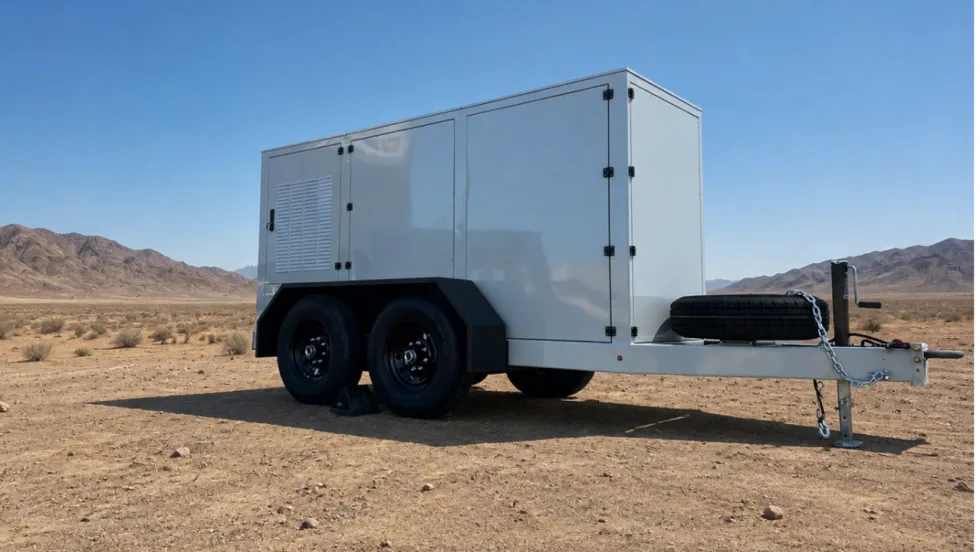
Xos Hub Surpasses One Gigawatt-Hour of Energy Delivered in the Field
A single Xos Hub has surpassed one gigawatt-hour of energy across more than 33,600 charging sessions in the field, demonstrating performance that supports Xos' expansion across new products and markets.
Read More →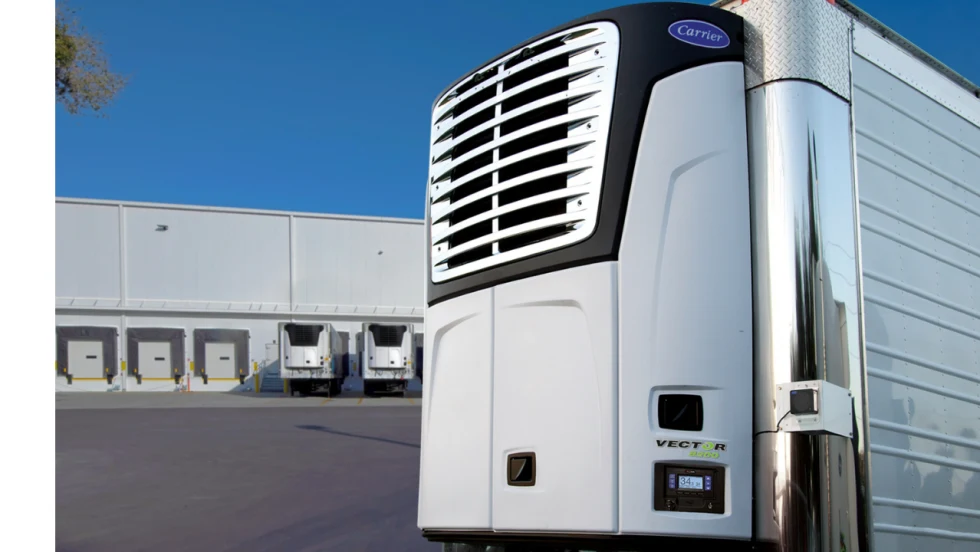
Carrier Transicold Launches All-Electric Vector 8200 TRU for Diesel-Free On-Site Cold Storage
Carrier Transicold’s first engineless multi-temperature TRU helps fresh- and frozen-food fleets add supplemental cold storage capacity during seasonal peaks.
Read More →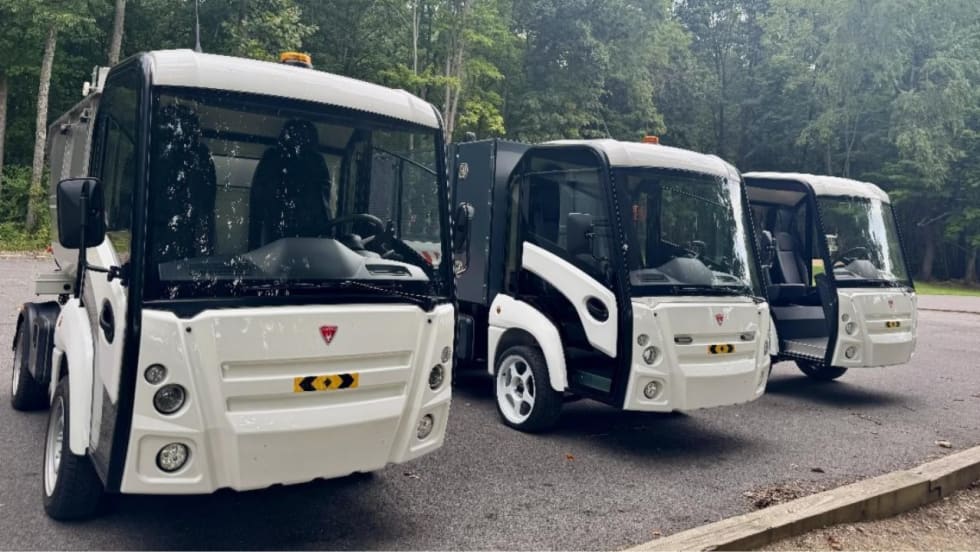
Narro Trucks Introduces Electric Utility Vehicle
Narro Trucks officially launched its operations on Aug. 20 and hosted a ride and drive to showcase its electric truck, which will be produced in Virginia.
Read More →
Samsung SDI Takes Full Control of GM Battery JV as Indiana Plant Pivots to Energy Storage
Samsung SDI is taking full control of its Indiana battery plant with GM, marking a major shift from the EV-focused joint venture Charged Fleet first covered in 2023.
Read More →
NWSA Taps CALSTART to Administer Zero-Emission Drayage Assistance Program
CALSTART will provide free technical assistance services to drayage fleets serving the Ports of Seattle and Tacoma and looking to transition to cleaner technologies and help decarbonize freight hubs.
Read More →
EV Fleet Reality Check: What Operators Wish They Knew Before Electrifying Their Work Vans
Electric work truck upfits bring new compatibility questions. Learn how parts availability, OEM guidance, power demands, and route planning can affect fleet performance.
Read More →
Peterbilt Expands Sourcewell Partnership with Electric Vehicle Lineup
Peterbilt Motors Company’s cooperative purchasing agreement with Sourcewell and its Canadian partner, Canoe Procurement Group, now includes including Peterbilt's battery-electric vehicle lineup.
Read More →