




Learn More: The Changing World of Fuel Management
Strategies for Dealing with Fuel Challenges
Fuel costs are a top concern nationwide, and more so for fleets whose operations require the use of larger, more fuel-consuming vehicles and equipment. Truck fleet managers share their strategies for dealing with escalating fuel costs.
by Grace L. Suizo & Thi Dao
May 2, 2011
A cost comparison of diesel and gasoline prices show that in late 2008, diesel cost almost $1 more per gallon than gasoline (94.1 cents in November 2008). As of March, the disparity hovered just under 40 cents per gallon.
Photo: Canva
8 min to read
Oil prices are all over the radar, especially as unrest in oil-producing countries has contributed significantly to increased fuel costs. While an average commuter can complain about a hike in fuel prices, fleets purchasing fuel for hundreds or thousands of vehicles have more to be concerned about. In a recent survey of commercial fleet managers, the rapid escalation of fuel prices was cited as one of the top challenges facing fleets in 2011.
Retail gasoline prices were up to a nationwide average of $3.69 per gallon as of April 5, while diesel was at $3.99, according to OPIS (Oil Price Information Service), a provider of petroleum pricing and news information. Compare this to $3.07 gasoline prices at the beginning of this year ($3.32 diesel), and many fleets have reason to be concerned prices may rise even higher.
FACTORS AFFECTING OIL PRICES
According to Denton Cinquegrana, senior markets editor, west coast, for OPIS, the three factors affecting fuel prices are geopolitics, equities, and the value of the dollar. Supply is not so much the issue - while the oil market has already considered that some countries won't be exporting oil, it doesn't like uncertainty in MENA (the oil-producing countries of the Middle East and North Africa). "The unrest in the oil-producing countries really has this market on edge," Cinquegrana said.
In addition, oil prices are in tune with equities and inversely related to the dollar - if the dollar weakens, oil prices will most likely go up, he said.
The high cost of diesel is a top concern for truck fleet managers, and the price difference between oil and gas seems to be rising. Cinquegrana doesn't think the early-April 30-cent fuel price difference is going away any time soon.
"I think the disparities are going to stay pretty wide," he said. While the U.S. is more gas-centric, "a lot of other nations around the world, particularly developing nations, are more diesel-centric, so diesel is more in tune to economic factors around the globe," he explained. Cinquegrana believes this is why diesel has been more expensive than gasoline over the past couple of years.
RIGHTSIZING & IDLE REDUCTION
With rising fuel prices significantly impacting fleet budgets, many fleet managers have done their part to prepare as best as possible. Several of Automotive Fleet's 2010 Top 100 Truck Fleets shared strategies for dealing with fuel over the past year.
Joy Global, the parent company of P&H Mining and Joy Mining Machinery, operates a global fleet of 1,400 work trucks, 700 of which are in the U.S. and Canada. These include Ford Escapes, F-150 and F-250 pickups, some F-550s, heavier service trucks, and semis. Smaller vehicles operate on gasoline (about 75 percent of the fleet), and the rest are diesel-powered.
According to Mike Butsch, director of global fleet operations for Joy Global, having learned from fuel price hikes in the past, the company began "an aggressive program of rightsizing." The company began moving from F-150s to Escapes and Fusions for its sales positions beginning in 2007. All applicable vehicles will be switched out by MY-2012, and lifecycle savings on the approximately 150 rightsized vehicles is expected to total $1.5 million. Switching smaller vehicles (F-550 and smaller) to run on gasoline has also resulted in decreased fuel spend.
In addition, since deploying fleet management software and satellite-based GPS tracking, the fleet has reduced the idle time by about 75 percent, further reducing fuel use, he said.
With these measures already in place, Joy Global is not as affected by fuel prices as it could be. "We've effected enough of a decrease in use to make up for the increase in cost," Butsch said.
As for budgeting for fuel prices, "We always budget a little more than what we think we're going to use to allow for some fluctuation," he said. In fact, Butsch, forecasting rising costs this year, budgeted $4 per gallon, but also budgeted for reduced consumption.
National auto and home insurance provider State Farm has also switched to smaller, more fuel-efficient models.
"Rising fuel costs have had quite an impact on our operating costs," according to Dick Malcom, fleet manager for State Farm. "These vehicles are necessary for us to take care of our customers and our facilities."
State Farm's total fleet numbers nearly 13,000 vehicles, with close to 3,000 vans (2,815) and 160 trucks that run on gasoline, flex-fuel, and diesel. In the fall of 2010, State Farm began moving its Claim representatives out of full-size vans into four- cylinder Ford Transit Connect models.
"The Transit [Connect] provides much better fuel economy, and yet has the space necessary to allow us to install our upfit package," Malcom said.
MONITORING & CONTROLLING COSTS
Fleets are working with drivers to monitor and control fuel use as well as re-evaluating their budgets.
Mike Lahr, director of Logistics for LKQ Corporation, said rising fuel costs have substantially affected his fleet's operating budget. LKQ is a national provider of aftermarket collision replacement, recycled OEM parts, and refurbished OEM collision replacement products. The LKQ fleet totals 3,700 vehicles, comprised of 1,400 trucks (80-percent diesel and 20-percent gasoline); 2,175 vans (98-percent gasoline and 2-percent diesel); and 125 tractors running on 100-percent diesel.
"We will probably have to revise our budget to account for the offset in rising fuel prices. We are not sure where or when it will stop or if it will reverse this trend and head back down again," Lahr said.
Close monitoring of costs is key to helping LKQ ensure no abuse/fraud is taking place. Fuel for vehicles is purchased using an assigned fuel card, and drivers are assigned a PIN that allows them to drive any truck. "We are working on 100-percent compliance to this fuel card, as we can control the gallon maximum per day per fill and limit the number of fill-ups per day," Lahr explained, noting the hours of use of each card can also be limited.
A listing of drivers who are no longer employed with the company is provided on a daily basis to ensure their PINs are deactivated and no unauthorized charges are incurred.
In addition, drivers must enter the odometer total, which enables mpg to be tracked so discrepancies can be easily identified if they are not correct to the type of vehicle driven. "This also enables us to monitor mpg by vehicle type for future specs and track fuel gallons purchased to make sure it matches the size of the fuel tank on the vehicle this driver is using," Lahr said.
Weekend and after-hours fuel use is also tracked with exception reports that provide the time, date, gallons, amount of fuel purchased, type of fuel, and station location.
All fuel cards are put into a lock box at night, along with the keys to the trucks. Lahr said both card and key stay together on the same keychain.
Erin Gilchrist, fleet manager for Safelite AutoGlass, said fuel prices have challenged her fleet as well. Safelite AutoGlass, a national auto glass repair and replacement service provider, operates nearly 6,000 vehicles: 4,400 vans, 90 gasoline trucks, 190 diesel trucks, 150 pickup trucks, and 1,100 cars. One of the ways the company has dealt with escalating fuel prices is fuel hedging, to "[give] us some reprieve," Gilchrist said.
For many years, Safelite AutoGlass has also managed its "Turn it off, idling gets you nowhere" anti-idling campaign. The program was recently revamped with new "green" signage and goals, as well as enhanced mileage and exception reporting and field training to support Safelite AutoGlass' overall 2011 fuel initiative to reduce consumption by 10 percent.
In the fleet's efforts to achieve this goal, Gilchrist worked with Safelite AutoGlass' fuel card provider to develop a Web seminar focusing on the key components necessary to maximize overall fuel economy, such as idling reduction, new preventive maintenance alerts, and driver behavior. With the help of its risk management solutions company, new "green" driver training modules and policies have been added to ensure all individuals understand their role in maximizing fleet fuel efficiency. The training is conducted at pre-hire and after an accident. Gilchrist estimated these initiatives will help reduce CO2 emissions by 9,000 metric tons.
Other recent Safelite AutoGlass fuel initiatives include more fuel-efficient vehicle selectors, exploring alternative-fuel programs, and utilizing lighter-weight interior upfit components.
NOT $5 PER GALLON ANY TIME SOON
What are the fuel price predictions for the near future? Most of the commercial fleet managers surveyed by AF said they foresee fuel price volatility continuing for the balance of 2011 and extending into calendar-year 2012.
Former President of Shell Oil John Hofmeister in December 2010 predicted a possible $5 per gallon of gasoline at the pumps due to growing global demand for oil, tighter supplies, and inadequate responses by the U.S. government.
However, Cinquegrana of OPIS doesn't think prices will go that high. "I don't see it," he said. "The talk of $5 I think is a little ridiculous, and it's a little bit of fear-mongering."
Fleet managers may be relieved at his prediction for the next few months: "We'll probably peak out somewhere not far from where we are now [in early April], probably in the $4 area nationally," he said. This is considering patterns continue as they have been and there are no unforeseeable events that drive prices upward.
Of course, California, Hawaii, Alaska, and other more expensive markets will see higher fuel prices, and a few stations may show the $5 sign, but "it's going to be certainly more the exception than the rule," Cinquegrana said.
Subscribe to Our Newsletter
More Fuel

The Smart Way to Build a Mixed-Energy Fleet Isn’t About Picking a Side
Mixed-energy fleets aren’t about picking a winning fuel. Sarah Booth of WEX explains how vehicle data, duty cycles, charging strategy, and real-world costs can help fleets choose the right energy source for each job.
Read More →
Ignoring This Dashboard Warning Could Cost Your Fleet Thousands in Fuel
New research suggests neglected diesel aftertreatment systems could waste up to $30 in fuel per vehicle each day. Here's why vocational fleets should pay attention.
Read More →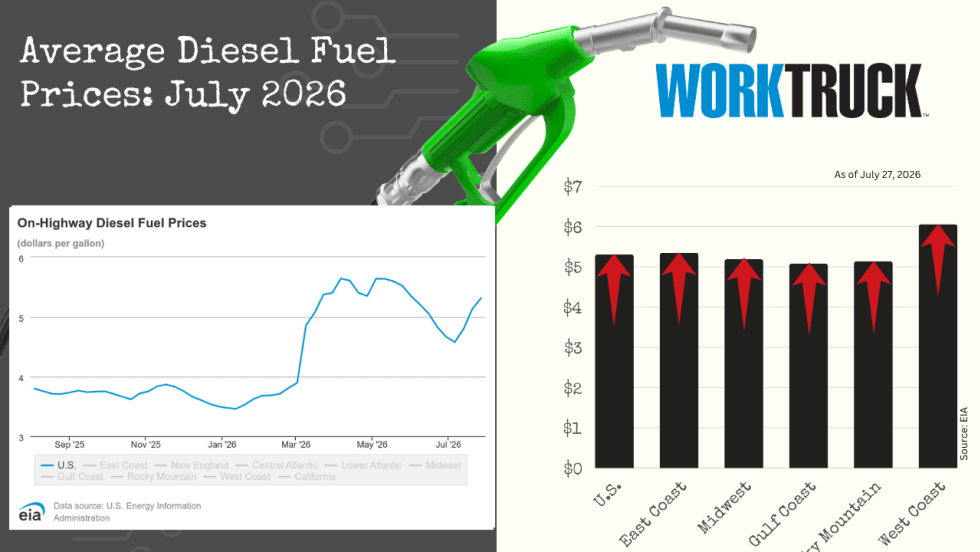
July Diesel Trends Update
The average price of a gallon of diesel increased again this week, and the EIA reported a new national average of $5.31 at the start of the week.
Read More →

WEX Brings Standard Fleet's Connected Vehicle Platform to Fleet Customers
This week’s product launch with Standard Fleet’s connected vehicle platform reflects WEX Venture Capital's strategy of turning startup innovation into customer solutions. Standard Fleet is now available to WEX fleet customers.
Read More →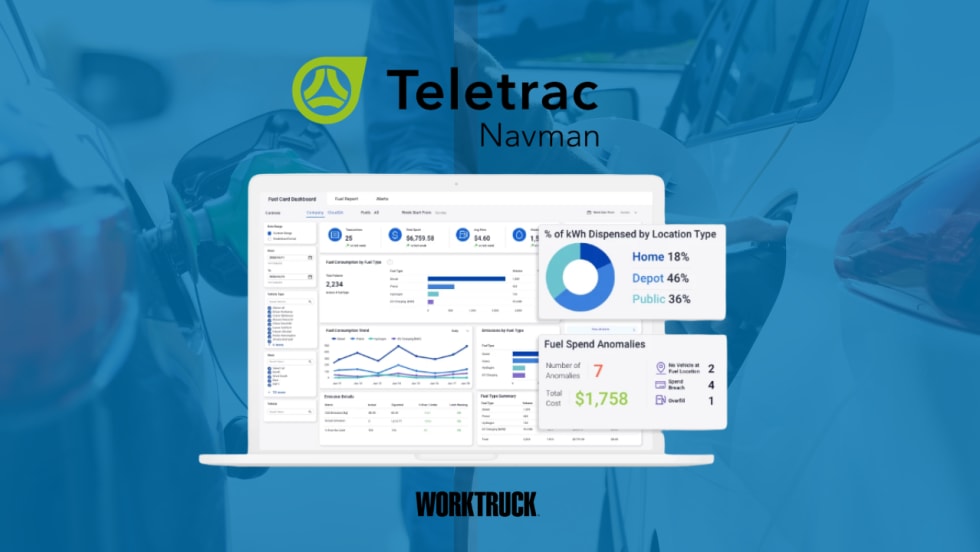
Teletrac Navman Adds Mixed-Energy Fleet Tools to TN360
The new Energy Hub combines fuel transactions, EV charging data, vehicle range, and energy costs in one dashboard for fleets operating multiple vehicle and energy types.
Read More →
WEX DriverDash adds CITGO, Expands Nationwide Access for Fleets
The DriverDash mobile payment app, by WEX, has been integrated into the CITGO merchant network, which means WEX has expanded its U.S. station footprint with the addition of approximately 4,000 CITGO locations.
Read More →
Mixed Energy Fleet Tips for Balancing EVs, Gas and Diesel Vehicles
Mixed energy fleets are becoming the new normal. Learn how fleet managers are balancing EVs, gas and diesel vehicles while controlling costs and planning for the future.
Read More →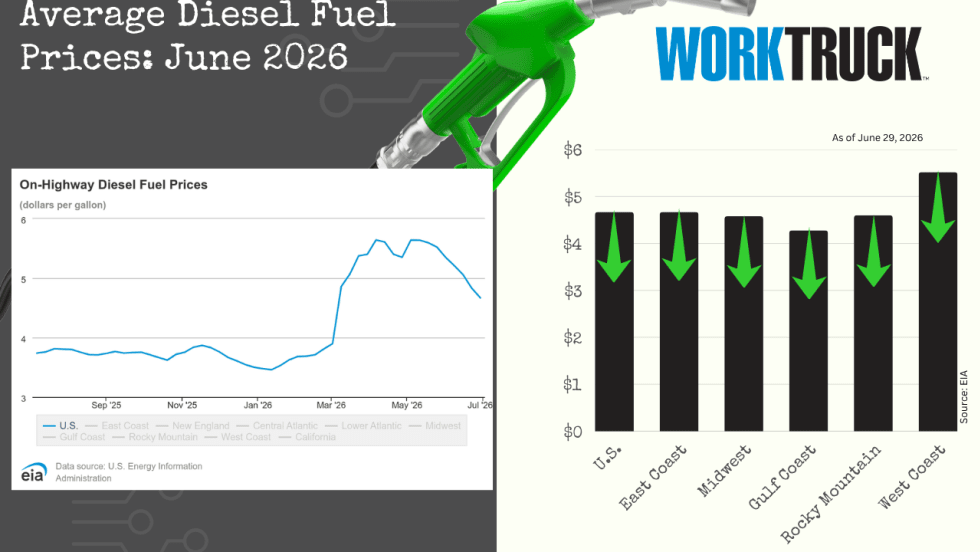
June Diesel Trends Update
The national average price of a gallon of diesel has dropped again, this week by more than 16 cents. All five regions reported lower average prices, ranging from almost 13 cents to more than 28 cents cheaper than a week ago.
Read More →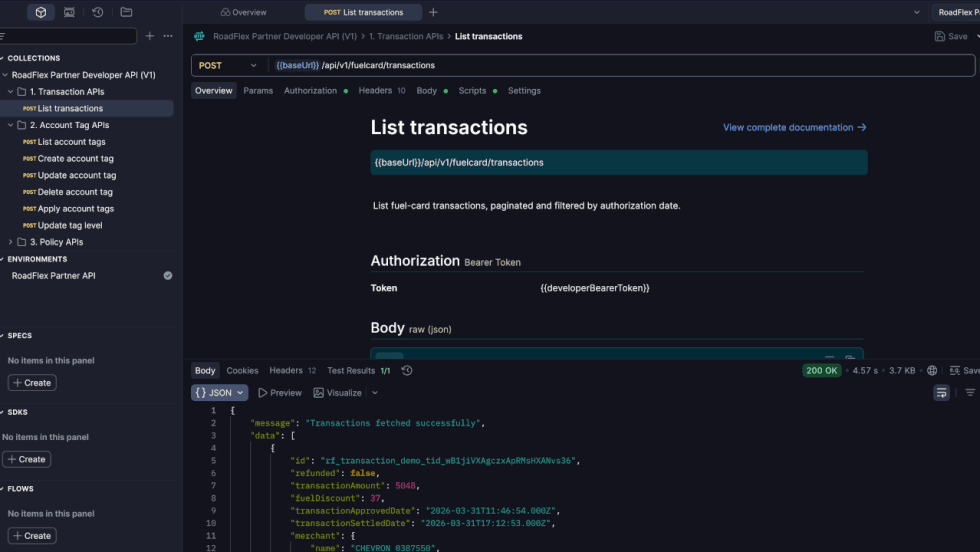
RoadFlex Launches RoadFlex Direct Open API Platform
RoadFlex Direct connects fuel cards, controls, and data to the telematics and fleet management systems fleets already run, from Geotab and Samsara to Fleetio and RTA, with no separate dashboard or double data entry.
Read More →
The Key to Fuel Efficiency Sits in the Cab
Learn how driver behavior, telematics, coaching, and fuel data can help fleets improve fuel efficiency, lower costs, and reduce emissions.
Read More →