




Overt & Hidden Costs of Extending Truck Replacement
Extending truck replacement cycling parameters beyond stated fleet policy is typically a short-term tactic used by senior management to solve a budgetary constraint; however, there are long-term fleet consequences to this strategy.


Vocational fleets require reliable vehicles capable of handling highly specific jobs, where downtime results in the lost productivity of a revenue generator. (photo: getty images/dead and living)
Vehicle replacement policy is one of the most critical aspects of fleet management. Nearly all fleet-related expenses, both fixed and variable, are influenced when a vehicle is replaced.
Since medium-duty trucks encompass a broad spectrum of fleet applications, there are consequently different techniques that can be used to calculate replacement cycles, with advantages and disadvantages associated with each.
An Art and a Science
Establishing replacement cycles for medium-duty trucks is both an art and science. It involves judgment, forecasts, and assumptions on one hand, and analysis of available data on the other. When financial resources are limited, the effort will focus more on prioritizing which one of many vehicle candidates should be replaced.
Keeping trucks in fleet service for extended periods has been a long-standing and somewhat widespread phenomenon. Typically, the more expensive the asset, the longer it will be kept in service, especially units upfitted with expensive auxiliary equipment. For example, service and utility fleets often have the highest capitalized costs, primarily due to upfitting, and tend to be those companies that keep their vehicles in service the longest.
Economic pressures, exerted by management, to realize short-term cost savings is the most common reason why truck replacements are deferred and cycling parameters are extended. For example, longer truck replacement cycles are more common for companies that self-fund vehicles, since deferring vehicle replacement is an easy way to stretch dollars when capital budgets are constrained. Similarly, in cyclical business segments, such as the construction industry, a number of companies look to cut costs during economic slowdowns by extending replacement cycles so cash flow can be diverted to other expenditures.
However, as study after study shows, extended truck replacement cycles for short-term capital expenditure savings often have the unintended consequence of resulting in greater long-term expenses, degradation in worker productivity, reduced resale values, and higher operating costs. In addition, long-in-the-tooth trucks typically need more repairs that require longer turnaround times and are more expensive to return to service.
An important soft cost to consider is the cost of downtime. Companies dependent on truck assets to run their business will tell you it runs thousands of dollars per hour for unexpected truck downtime. Basically, if you extend replacement cycles you need to plan for unexpected repairs and the subsequent vehicle downtime.
When unexpected downtime occurs there are direct costs, such as lost revenue and penalties or fees on missed appointments, towing, temporary rentals, over time, and also indirect costs such as lower employee morale that need to factor in your risk analysis.
Critical component failures, which tend to occur more often with older assets, result in higher downtime costs per incident due to the complexity of the repair and longer turnaround time.
Opinions vary as to the total financial impact of extended vehicle replacement cycling, but there is one certainty, which no one disputes; maintenance expenses will go up. If they didn’t, the OEMs would not limit new-vehicle warranties by years and miles. The unknown is how much maintenance costs will rise as replacements are deferred. The magnitude of these additional maintenance costs to service aging assets is directly influenced by a company’s preventive maintenance program during the service life of the truck.
Sometimes a company will spend more money repairing a vehicle than it is worth. Essentially, they are substituting operating funds for capital expenditure funds. In some cases, fleets may have no choice if the capital budget is significantly constrained or reduced.
The biggest risk is not the cost of the repair so much as it is the downtime of a truck, especially when there is no replacement or backup unit available because of budget constraints that are driving the extended replacement cycle in the first place.
If budget constraints prompt replacement deferral, in some cases, older trucks can be substituted with long-term rentals, at least until the next year’s budget allows replacement. While a rental truck can function as a short-term bridge to next year’s budget and a form of insurance against unscheduled repair cost, it will still incur the additional expense of rental costs. Likewise, a rental truck may not be available in your local market that can perform the same work and specific task as that of the out-of-service truck.
Another operating cost impacted by longer service lives is fuel consumption. As a truck ages, the performance of the vehicle deteriorates, degrading fuel economy. Industry research suggests older trucks can lower fuel economy by 1% or more per year. Similarly, a longer service life will impact resale value.
Remarketing efforts are more difficult for higher-mileage, tired trucks, which typically result in lower resale prices.
For the first 35,000 to 45,000 miles, operating costs are generally limited to preventive maintenance, such as oil changes, wheel alignments, tire rotation, etc. Operating expenses spike upward when wear items, such as tires and brakes, need to be replaced.
These operating expense events are predictable and usually occur between 30,000 and 45,000 miles. Upon replacing these wear items, operating costs decline, but not back to the previous level. This upward “ratchet” effect continues throughout the life of a vehicle. Operating expenses remain at this new level until the second round of tires and brakes are needed, which occurs in the 60,000 to 80,000 mile range.
Actual maintenance and repair expenses are not so predictable and sometimes fall outside these forecasted increments as tires go flat, hoses breach, belts fray, or windshields need replacement as a result of being damaged by road debris.
In addition, a vehicle’s utilization should be evaluated and taken into account to determine whether to replace the unit at all. If the vehicle has consumed less than 500 gallons of fuel or been used fewer than 2,500 miles during the past 12 months, its utilization should be evaluated as to whether it still is needed.
Impact on Acquisition Budget
Budgeting for vehicle replacement varies according to whether fleet assets are leased or owned.
Under ownership, most companies must establish a capital budget for acquiring assets. The capital budget is for the total acquisition cost of the vehicles planned for replacement. Thus, a critical step in preparing the budget is accurately forecasting the number of vehicles requiring replacement. Once the budget is in place, acquisitions are made using a capital expense authorization request. Because of the nature of the budgeting process under ownership, oftentimes vehicle acquisitions are made at a less-than-optimal time of year, for fear of losing the capital budget later that year.
In companies that own vehicles, deferring replacement to save money on the capital budget is easy. For that reason, oftentimes poor replacement practices are seen in which short-term capital expenditure savings are sacrificed for longer-term expenses and productivity impacts.
Acquisition budgeting for leased vehicles is a bit easier. Generally speaking, one lease payment is traded for another, plus any impacts from new-vehicle price changes and factory incentives. With leasing, the critical factors become optimizing the TCO in the following cost categories such as depreciation, maintenance, fuel, driver downtime, etc., all of which must be factored into the replacement decision.
Impact on Vocational Fleets
Budgeting for vocational vehicle replacements can be challenging in a soft economy. To keep the fleet within a manageable age, a consistent replacement budget must be continually maintained. Vocational fleets require reliable vehicles capable of handling highly specific jobs, where downtime results in the lost productivity of a revenue generator.
As budgets for replacement vocational vehicles are cut, any capital savings achieved is generally shifted to the expense column of the operating budget. This is due to the increased total cost of ownership for an aging fleet.
Preventive maintenance is critical for vocational vehicles. As vehicles age, maintenance costs can increase significantly. In the case of upfit vehicles, these costs include the maintenance of ancillary equipment as well.
There are few benefits to extending replacement cycles unless an organization makes moderate adjustments to policy and manages the program very tightly. Small shifts in policy may be acceptable; preventive maintenance expenditures may not increase and the probability of catastrophic failure is not significantly increased. However, it is critical to establish and adhere to a policy that avoids additional sets of tires and brakes. Thus, if cycling parameters are extended to slightly below the next tire/brake/preventive maintenance interval, increased maintenance expense may be minimized and overall cost of ownership may be reduced.
As vehicles age, the probability of more expensive and potentially catastrophic repairs increases. Without adhering to a comprehensive preventive maintenance schedule, the timing of the unscheduled repairs becomes even more unpredictable.
When fleets extend replacement cycles, consideration should also be given to the impact on residual resale values; the potential costs and impacts of vehicle downtime and loss of productivity; and the increased probability of safety-related issues.
More Operations
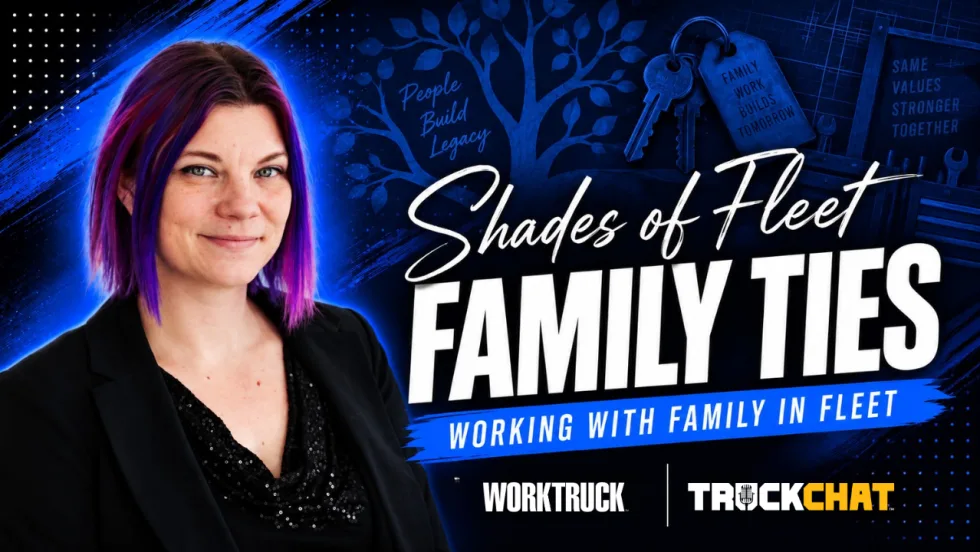
Family Ties Inside the Fleet Families Building Careers Across Generations
Three fleet families share what it really takes to work together, learn across generations, and keep business from following them home.
Read More →
Shades of Fleet Call for Voices: Fleet's Hidden Heroes
Fleet’s hidden heroes are often the ones keeping everything moving behind the scenes. September’s Shades of Fleet is looking for dispatchers, coordinators, parts specialists, and other support pros to share their stories.
Read More →
Truck Centers, Inc. Celebrates National Truck Driver Appreciation Week with $1,000 Fuel Card Giveaways
During National Truck Driver Appreciation Week, Truck Centers, Inc. is offering customers a chance to fuel up for free. Customers at all Truck Centers locations can enter to win one of four $1,000 fuel cards from Sept. 14 - 18.
Read More →
Fleet Guides, AI Time-Savers, Truck Tariffs & Fuel Strategy Lead the News
This week’s Truck Chat Cheat Sheet covers new fleet vehicle guides, practical AI use cases, U.S.-Canada truck production, mixed-energy strategy, and more.
Read More →
What Fleet Employers Are Missing When Hiring Veterans
What if some of the strongest candidates for fleet are already out there, but their experience is written in a language our industry does not always recognize?
Read More →
Automotive Fleet Opens 2026 Personal Use Survey for Commercial Fleet Managers
Less than two weeks left! Commercial and corporate fleet managers are invited to share how their organizations handle company vehicle personal-use policies, charges, and driver eligibility.
Read More →
What Resilient Fleets Do Differently When Conditions Change
Fleet resilience is about more than reacting to disruption. Lauren Fletcher talks with AP Fleet’s Alex Coveney about flexibility, planning, scaling, and what helps fleets adapt when business conditions shift.
Read More →
If We Want the Next Generation in Automotive, We Have to Give Them a Reason to Care
The automotive industry talks constantly about its workforce shortage. But before we can recruit the next generation, we may need to do a better job giving kids a reason to care about automotive in the first place.
Read More →
Ram ProMaster City Under $40K, Truck Tariffs, and AI Maintenance Lead the News
A sub-$40K commercial van, tariff questions, AI-powered maintenance, and a new EV production strategy headline this week’s Truck Chat Cheat Sheet.
Read More →
Bob Adamsky Shares the Fleet Lessons You Usually Learn the Hard Way
After more than 30 years in fleet, Arrow International’s Bob Adamsky has learned that the job is about far more than vehicles. He shares the lessons he wishes every fleet manager could learn a little earlier.
Read More →