




Learn More: Hawaii Gas Provides Smooth Transportation of Clean Fuel
McAbee Trucking: An Alt-Fuel Evangelist
The Blacksburg, South Carolina, based company extols the safety and money-saving virtues of propane autogas.

Lexi Tucker・Former Senior Editor

Lisa McAbee, VP of McAbee Trucking, seen here with Derek Whaley, Business Development Manager at Roush Cleantech, has invested in propane autogas because she believes it’s better for the environment, her customers, and her pocketbook.
Photo: McAbee Trucking
5 min to read
When it comes to delivering the mail, time is always of the essence. You never know how important the packages you are carrying could be to those expecting their timely transport. Lisa McAbee, VP of McAbee Trucking, has invested in propane autogas because she believes it’s better for the environment, her customers, and her pocketbook.
A Cleaner Family Fleet
McAbee Trucking was founded in 1971 by Lisa’s father-in-law, Marvin McAbee Sr., out of Blacksburg, South Carolina. Lisa’s husband left the construction industry and joined the company that same year. In 1979, Marvin Sr. senior passed away and Lisa’s husband took over the family business. It became a corporation in 1998, and Lisa’s step-daughter came to work with the family in 2003. The company is celebrating its 50th year of being a contractor for the United States Postal Service (USPS) in 2021.
The business currently runs a fleet of 60 trucks, six of which are ROUSH CleanTech Ford F-750s powered by propane autogas. The company is currently in the process of ordering 20 more propane autogas trucks to replace diesel trucks originally purchased for McAbee Trucking’s postal route. Lisa hopes by March or April 2022 she will be running a fully propane autogas powered fleet.
The range the vehicles travel in any given day can vary from 100 to 400 miles. They travel throughout the Charlotte metro area and into some areas of South Carolina as well.
Safely Spec’ed
As a contractor for the USPS, McAbee Trucking is required to run 26-foot box trucks with liftgates on its routes. Thankfully, switching to propane autogas power has enhanced the safety of these vehicles. They run quieter than diesel trucks, so drivers don’t have an extra distraction to worry about. Drivers also don’t have to stand around when fueling and risk getting hit trying to get to a diesel pump; the company has its own infrastructure where trucks can be refueled.
Propane itself is very safe, according to Lisa. On her first propane autogas truck’s maiden voyage, the driver got caught in a sticky situation. He came across a boulder in the middle of the road, and there was a car in front of him he couldn’t avoid so he swerved and hit the boulder. The accident broke the drive shaft, and he went across four lanes of traffic, down a huge embankment, and cut a tree in half. In the end, the driver only had three scratches on his hand. The engine was destroyed, but the box, propane tank, and liftgate were intact.
“I’m extremely thankful he was safe, and hey, we did get to finally deliver the mail!” she said.
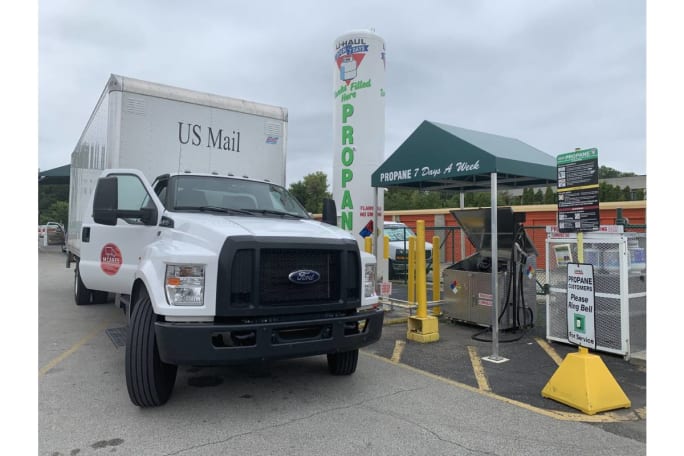
A timely benefit of propane is it’s a hack-proof fueling system. When the Colonial Pipeline was down, Lisa didn’t have to worry – she had a propane station.
Photo: McAbee Trucking
The Challenges of Going Greener
Lisa said trying to convert her entire fleet to alternative fuel trucks has been a challenge, but worth it. Finding grant funding for the area her company is located in has been tough, so she had to do her research to find an affordable option. She decided to demo the ROUSH CleanTech F-750, and, during the trial period, collected a lot of data for comparison purposes.
“It didn’t hurt that my driver had a smile on his face every day he came back from his route. When I figured out the cost of the vehicles, I didn’t even have to apply for a grant for my first seven because it was so cost effective. Now we also have our own fueling infrastructure, so no one has to pull out their phone to search for a place to fuel up,” she explained.
Looking at the Benefits of Non-Traditional Fuel
For Lisa, the maintenance on propane autogas trucks has been easier than diesel because she doesn’t have to worry about regeneration – the process by which diesel vehicles self‐clean soot build-up inside the diesel particulate filter (DPF). With that process, after a certain mileage, regen stops. It can cost anywhere from $6,000 to $10,000 to fix that system, according to Lisa.
“I’m also proud of the fuel price I negotiated. I’m probably saving over 60 to 70% of the cost of diesel versus propane. Saving that money gives me the opportunity to be able to set aside more to purchase more alternative fuel vehicles, which helps me increase my profit even more,” she said.
A timely benefit of propane is it’s a hack-proof fueling system. When the Colonial Pipeline was down, Lisa didn’t have to worry – she had a propane station.
“If I didn’t already have the propane station here, I would have had a propane autogas truck come and bring some to me. I wasn’t worried when they were saying ‘we’re out of gas/diesel,’ because we were still trucking,” she explained.
She views her investment in propane autogas trucks as future-proofing her fleet. Anything that will enhance her company’s ability to be on time if something like this hack were to happen again was at the forefront of her mind.
“Any interruption to your business can hurt your contract and on-time delivery rate. We have time-sensitive contracts and designated routes we have to fulfil. We don’t want our customer to not be proud of the service we provide them with,” she stated.
Looking into the future with everything that’s going on with government environmental regulations, Lisa is relieved she has a propane system that already meets upcoming requirements.
“These other 20 trucks I’m waiting on to be delivered are already foolproof to 2027. I have the technology now so I don’t have to rush to find it later.”
Subscribe to Our Newsletter
More Fuel

The Smart Way to Build a Mixed-Energy Fleet Isn’t About Picking a Side
Mixed-energy fleets aren’t about picking a winning fuel. Sarah Booth of WEX explains how vehicle data, duty cycles, charging strategy, and real-world costs can help fleets choose the right energy source for each job.
Read More →
Ignoring This Dashboard Warning Could Cost Your Fleet Thousands in Fuel
New research suggests neglected diesel aftertreatment systems could waste up to $30 in fuel per vehicle each day. Here's why vocational fleets should pay attention.
Read More →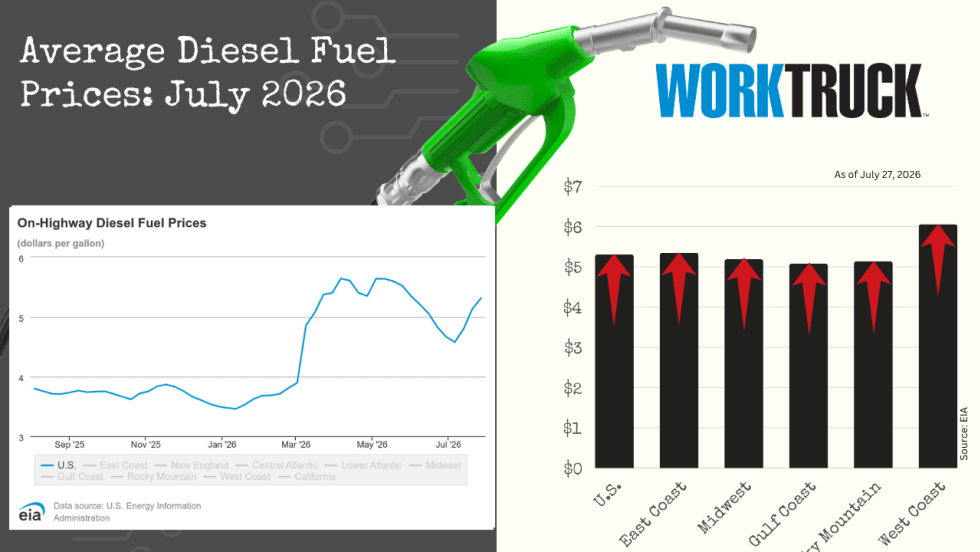
July Diesel Trends Update
The average price of a gallon of diesel increased again this week, and the EIA reported a new national average of $5.31 at the start of the week.
Read More →
WEX Brings Standard Fleet's Connected Vehicle Platform to Fleet Customers
This week’s product launch with Standard Fleet’s connected vehicle platform reflects WEX Venture Capital's strategy of turning startup innovation into customer solutions. Standard Fleet is now available to WEX fleet customers.
Read More →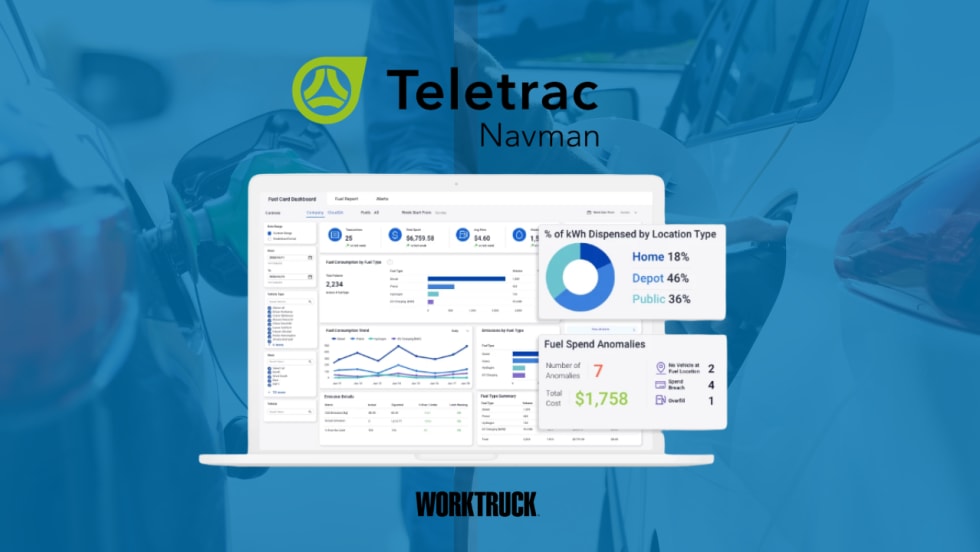
Teletrac Navman Adds Mixed-Energy Fleet Tools to TN360
The new Energy Hub combines fuel transactions, EV charging data, vehicle range, and energy costs in one dashboard for fleets operating multiple vehicle and energy types.
Read More →
WEX DriverDash adds CITGO, Expands Nationwide Access for Fleets
The DriverDash mobile payment app, by WEX, has been integrated into the CITGO merchant network, which means WEX has expanded its U.S. station footprint with the addition of approximately 4,000 CITGO locations.
Read More →
Mixed Energy Fleet Tips for Balancing EVs, Gas and Diesel Vehicles
Mixed energy fleets are becoming the new normal. Learn how fleet managers are balancing EVs, gas and diesel vehicles while controlling costs and planning for the future.
Read More →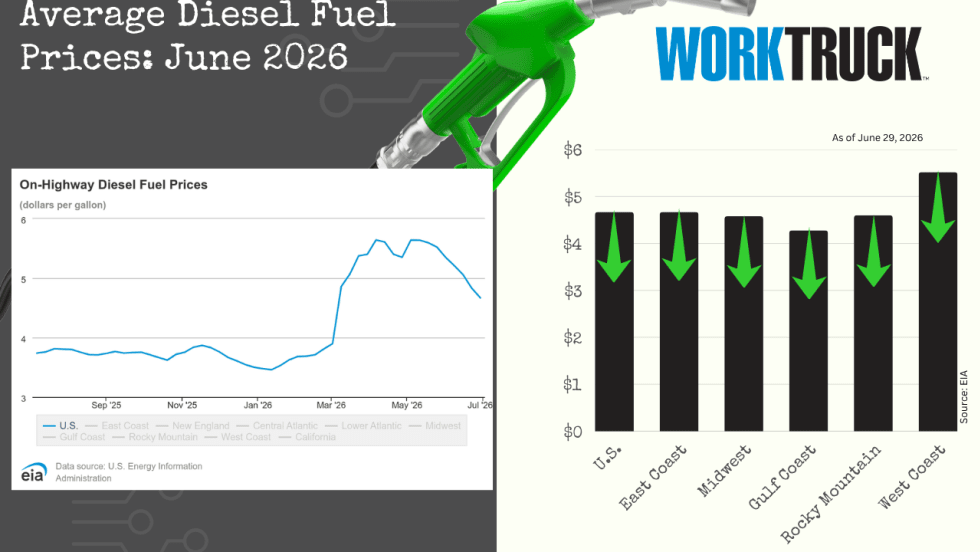
June Diesel Trends Update
The national average price of a gallon of diesel has dropped again, this week by more than 16 cents. All five regions reported lower average prices, ranging from almost 13 cents to more than 28 cents cheaper than a week ago.
Read More →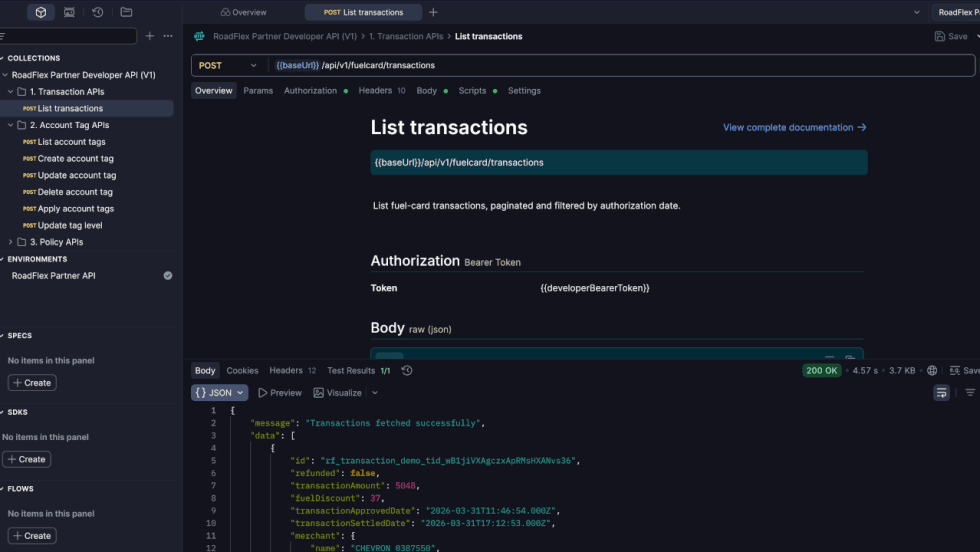
RoadFlex Launches RoadFlex Direct Open API Platform
RoadFlex Direct connects fuel cards, controls, and data to the telematics and fleet management systems fleets already run, from Geotab and Samsara to Fleetio and RTA, with no separate dashboard or double data entry.
Read More →
The Key to Fuel Efficiency Sits in the Cab
Learn how driver behavior, telematics, coaching, and fuel data can help fleets improve fuel efficiency, lower costs, and reduce emissions.
Read More →