




Managing and Reducing Accidents in 2019
One place fleet managers are looking for help in reducing incident rates: advanced technology. But safety policies should not be ignored.

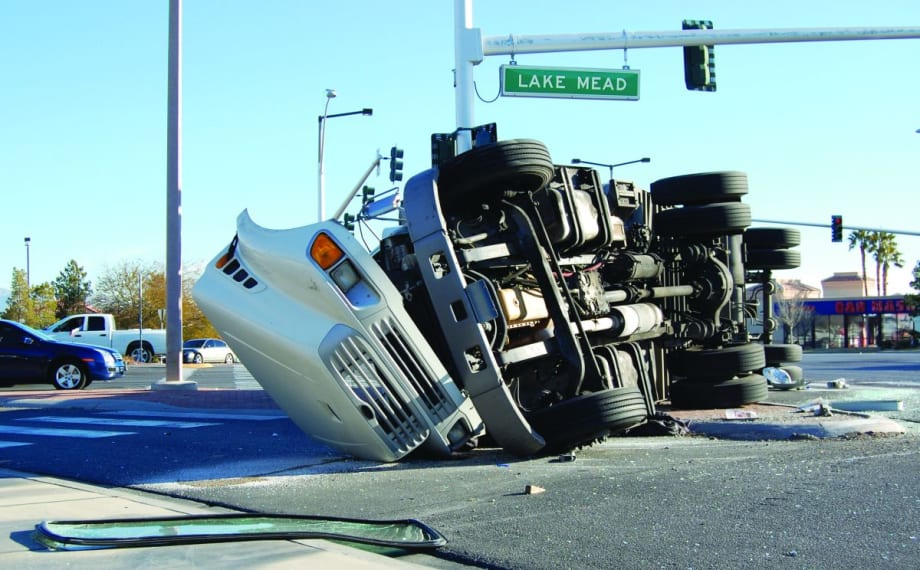
Several factors impact truck accident management efforts, including longer routes, newer drivers, and in-vehicle distractions such as phones and tablets. But experts agree, a solid fleety safety policy and program is the No. 1 way to reduce incidents.
Photo: Gettyimages.com/PeteMuller
Overall across all truck classes, some fleets are seeing an increase in accidents.
“For the clients we serve, we saw an increase in accidents for many truck fleets. Some fleets had very moderate increases, while a few had significant increases,” noted Bob Martines, CEO of Corporate Claims Management (CCM). “We believe the minor increases for these clients, 5% or less, were related mostly to internal changes.”
According to Martines, “clients with increases of greater than 25% in total reported claims had many determining factors, including their business segment such as package delivery or transportation where excess mileage and time of vehicle use become key factors.”
Extended routes, where drivers need to cover more territory in the same daily time frame, is a contributing factor.
“Driver quotas add undue pressures, which can create an unstable environment for the driver and make them rush from one appointment to another. Upper management being less tolerant of working or road conditions also does not help,” Martines added. “Also, excessive employee turnover has caused havoc for some clients, which equates to newer, unskilled drivers added to the mix.”
Specifically, medium-duty truck accident frequency rose slightly, with Enterprise Fleet Management noting that severity increased more significantly.
“The biggest factor was the strong economy and consistency in gas prices, which created more jobs and longer trips, and required more vehicles to be on the road. With more time spent behind the wheel, the possibility of drivers feeling fatigued or distracted is higher,” said Connie Brinkmann, assistant vice president of risk management for Enterprise Fleet Management. “Additionally, the need for more drivers increased, which resulted in a driver shortage and more drivers with less experience being behind the wheel.”
As a growing number of fleet operators embrace telematics technology, driver performance is improving as a result.
“Many vocational fleets were among the early adopters of telematics technology; therefore, their programs are more mature, influencing their approach to safety and driver behavior management. These organizations typically place a greater emphasis on driver safety, and as a result, they experience fewer incidents of high-risk behavior such as speeding, fast acceleration, harsh braking, etc.,” said Ken Costello, manager, Fleet Management Analytics for ARI.
CEI also sees the impact of safety technologies on accident rates.
“In our experience, truck fleets are early adopters of safety technologies and driver safety initiatives. The consistency in collision numbers for trucks reflects CEI customers’ continuing focus on promoting driver safety and policy adherence among their drivers,” said Ken Latzko, VP of sales and marketing for The CEI Group.
One trend that unfortunately gained momentum in 2019 was the number of claims related to vehicle and component theft, Costello noted.
“When reviewing this year’s data, there was a noticeable uptick in vehicle thefts and incidents of stolen components such as catalytic converters and diesel particulate filters (DPFs). The best advice I can offer fleet operators is to educate their drivers on this emerging trend, stressing the importance of remaining vigilant of their surroundings,” Costello said.
But, one silver lining: Fleet Response noted that accidents that occur on the roadway are decreasing.
“Drivers are more attentive. They are slowing down and pulling off to the side of the roadway when looking at their GPS or finding their next job location,” said Mike Irey, senior claims adjustor for Fleet Response.
Preventable Accidents Flat
Preventable accidents are the bane of most fleet manager safety efforts. These are accidents that could have been prevented in some way, but often some distraction comes into play.
But there is good news here: For 2019, the accident management experts noted that, while a decrease would be preferred, there was no noticeable change in the number of preventable accidents.
“The percentages continue to stay the same year-over-year related to preventability. In 2018, the preventable percentage was at 43%, and in 2019 it went down to 41%,” noted Scott Brinker, senior manager, accident prevention and repair for Wheels.
One reason a decrease may be a challenge right now? An uptick in the number of newer, inexperienced drivers. The pool of qualified drivers has significantly diminished over the past several years, leaving more unskilled workers to fill slots.
“The number of preventable accidents in the more mature fleets was relatively flat. However, the inexperienced fleet drivers are involved in many more incidents, sometimes as much as three times the rate of mature fleet drivers,” noted Martines of CCM.
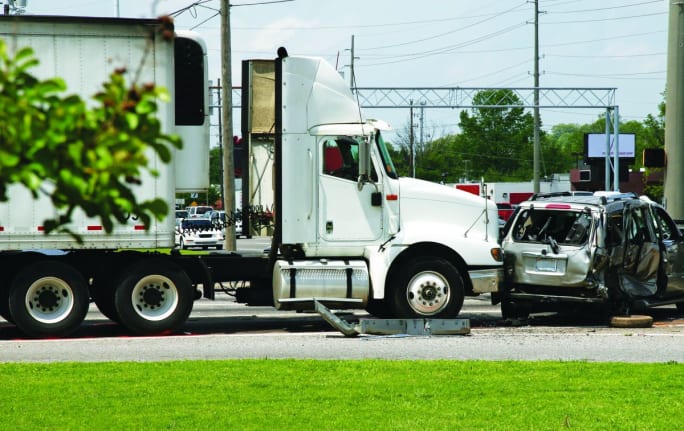
Technology is helping fleets focus more on safety and develop actionable plans based on real data specific to their operations. These plans are essential in reducing collisions.
Photo: Gettyimages.com/c_sorvillo
Impact of Technology on Safety
Technology is helping fleets focus more on safety and develop actionable plans based on real data specific to their operations.
“The fleet management space is abuzz with a variety of new technologies, but for most vocational fleet operators, a comprehensive telematics program is still the best option to help improve driver safety and, in turn, reduce accidents,” said Rich Radi, director, product development for ARI.
Telematics technology essentially puts you inside the vehicle with your drivers, allowing you to monitor performance and quickly identify high-risk behaviors such as harsh braking, rapid acceleration, and speeding.
“When you integrate this telematics data into an advanced analytics platform, you can easily benchmark driving performance across your entire organization to pinpoint high-risk drivers and highlight opportunities to prescribe corrective training. By proactively identifying and training these high-risk drivers, you’re able to improve safety, prevent potential collisions, and better control accident costs,” Radi added.
Telematics continues to help a growing number of companies the ability to monitor and measure driver behavior.
“Telematics can also contribute to predicting high-risk drivers,” said Latzko of The CEI Group. “Medium-duty truck adoption of collision-avoidance systems is growing and becoming a standard feature from some manufacturers.”
Latzko noted a study published in September 2017 by the AAA Foundation for Traffic Safety, authored by the Virginia Tech Transportation Institute.
“The 2017 study estimated that installing automatic emergency braking systems on all existing and new trucks with gross vehicle weights of more than 10,000 pounds would prevent 5,294 crashes, 2,753 injuries, and 55 deaths annually,” Latzko said. “But, a 2016 NHTSA Field Study of Heavy-Vehicle Crash Avoidance Systems found drivers did not change their driving behavior in meaningful ways when using a collision-avoidance system. That finding reinforces the need for an integrated safety program to reduce preventable accidents, including driver profiling, training, and in-vehicle technologies.”
New technology can be distracting. “Today’s training needs to include the proper use of these new technologies that are part of the spec of the truck, for example, collision avoidance systems, dash camera systems, rear-view camera systems, anti-lock braking, roll-over stability controls, collision warning systems, radar-sensing adaptive cruise control, and active braking systems,” Latzko added.
More advanced telematics are being applied to fleets, allowing for visibility into the impact of driver performance.
“Other technologies include automatic high beams, blind-spot monitoring, lane keep assist, rear parking sensors, forward collision warning with pedestrian detection and automatic braking, which are aiding in curbing the increase of claims. Rear-view cameras and cameras for trailers that help with towing applications are also making a difference,” noted Brinkmann of Enterprise Fleet Management.
Several of these advanced safety technologies, if not equipped on the vehicle, can be purchased as a stand-alone aftermarket product.
“There are specialty vendors that provide vision-based solutions for fleet accounts that may seem more expensive than other solutions, but have greater value in loss prevention or mitigation,” Brinkmann said.
These aftermarket systems are becoming more common in this space.
“I am starting to see aftermarket crash avoidance systems installed on medium-duty trucks. These systems warn the driver when getting to close to the vehicle in front of them,” said Irey of Fleet Response.
OEM, factory-installed options are also growing in the medium-duty market.
“Kenworth offers the Bendix Wingman Advanced system on the T270 and T370. This radar-based collision mitigation system delivers adaptive cruise control with braking, along with autonomous emergency braking technology to help mitigate rear-end collisions. Many other OEMs are offering safety technologies such as brake assist, adaptive cruise control, lane departure warning, roll stability control, and trailer sway control. These are all controlled by the on-board computer system and can help mitigate accidents,” said Richard Zambroski, senior truck consultant for Wheels.
After the excitement of these new tech solutions wears off; however, drivers can become complacent. It’s essential to revisit solutions often and come up with new ways to keep drivers engaged.
“Like with most new improvements, the new safety tech becomes the norm, and drivers either ignore the warnings or become oblivious to them. As an example, drivers get used to depending on a back-up camera. But, if it does not work or is dirty, there is a greater chance for a backing incident,” said Martines of CCM.
Tips for Reducing Accidents
When numbers are flat or stable, it’s an ideal time to work on making reductions.
The top tip to reduce accident rates: a concise, full-range, ongoing safety program.
“Every time a driver gets behind the wheel, your organization is vulnerable to repercussions that go far beyond just repairing a vehicle if you’re not addressing safety and driver behavior. When you implement a comprehensive driver safety program that proactively identifies and trains your high-risk drivers, you have the potential to reduce your crash rates by 40-60% or more,” said Radi of ARI.
This full-range safety program should “encompass a strong driver policy, motor vehicle records (MVRs), driver risk assessment and profiling, telematics data, management leadership and intervention, and an effective remediation program,” explained Latzko of The CEI Group.
To help maximize driver engagement, personalize training to driver needs.
“For new hires, this training personalization means first assessing their skills and then providing targeted training to improve skills needing development. For tenured employees, this means monitoring their driving performance and providing immediate, personalized training to address high-risk behaviors,” said Radi of ARI.
One best practice to help ensure a robust safety program and ongoing quality monitoring is making sure to have an in-house team or fleet management company that reviews vehicle specs before ordering or purchasing.
“Having a team to review specs ensures the vehicle can safely handle the work it’s expected to do. While this extra step may add costs, doing so ensures that the vehicle can operate safely and prevents the vehicle from becoming a hazard on the road or responding incorrectly in a collision situation,” said Brinkmann of Enterprise Fleet Management.
Companies determined to have accident reductions have extensive and ongoing training to let the drivers know that the company is serious about driver safety.
“Drivers who violate the policy, whether speeding, using a cell phone, etc., are given a warning on the very first offense. The reprimands continue until the third offense, which then equates to immediate termination. While I am not a proponent of the termination, the results cannot be argued with as the accident rate is less than 10%,” noted Martines of CCM.
To counter terminations, some discussions and retraining can help keep the individual employed.
“Many companies resort to the old, proven methods of giving drivers rewards for safe driving, publishing their name in a company newsletter, or treating them to lunch with an executive as further incentives to hold down accidents,” Martines added.
Once your safety program is well-established, you can also incorporate a scorecard to encourage friendly competition among drivers and reward your safest employees, suggested Radi of ARI.
Additionally, the National Transportation Safety Board (NTSB) cites the implementation of collision avoidance systems and elimination of distracted driving as the top two items on its 2019-20 ‘Most Wanted List of Transportation Safety.’
“Truck drivers are not immune to the negative impact of distracted driving, and a Travelers’ Risk Index report found that 43% of U.S. workers say they engage in work-related communications while driving — not just phone calls, but e-mails and texts,” Latzko added.
Fleets are also looking at the use of aftermarket or salvaged parts for help in accident reduction.
“Like, kind, and quality (LKQ) are parts off salvage units and are being used more due to OEM part costs. Trucks are also being upfitted with cameras in the cabs to monitor drivers,” said Irey of Fleet Response.
Zambroski of Wheels added that telematics and outward- and inward-facing camera systems are being used to capture events to aid in educating drivers in ways to be safer.
Another best practice is making sure that medium-duty truck drivers have the experience and licensing needed to handle the vehicle correctly.
“Ensuring driver experience and proper licensing is an important practice that often requires working with a qualified company that specializes in driver and regulatory compliance. For a normal fleet of private passenger or light-duty vehicles, this could be as simple as making sure each driver has an acceptable driving record for a certain number of years. However, with medium-duty vehicles, it’s often more complex and requires confirming that drivers have the right license and experience, background and compliance screening, and audits,” Brinkmann said.
More Safety
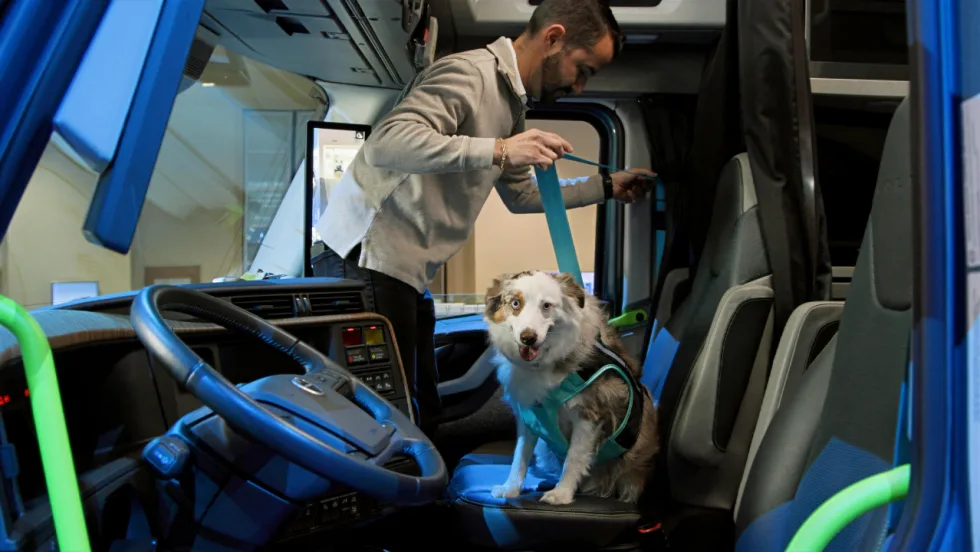
Volvo Trucks Releases New Safety Recommendations for Traveling with Pets
One of the most important recommendations for professional drivers traveling with pets is to ensure pets are properly restrained while the truck is moving. Other tips are available in the new guide from Volvo Trucks North America and Center for Pet Safety.
Read More →
API Issues Refueling Safety Guidelines
The American Petroleum Institute offers a list of safe vehicle refueling guidelines, including ways to avoid potential problems with static electricity discharges in fall, winter, and early spring.
Read More →
Winter Fleet Prep: Expert Tips to Keep Vehicles Running Smoothly
Cold weather can expose weak batteries, tires, fuel systems, and maintenance gaps fast. Use this winter fleet checklist to prepare trucks and drivers before temperatures drop.
Read More →
When a Work Truck Breaks Down, the Job Can Stop, Too
A work truck breakdown can stop more than the vehicle. Discover how payloads, jobsites, and specialty equipment change the roadside response.
Read More →
What Stronger Long-Term Fleet Service Partnerships Actually Require
Fleet service partnerships rarely fall apart all at once. Learn the three warning signs that trust is eroding and what fleets and providers can do before downtime, frustration, and lost revenue follow.
Read More →
Applause & TRUCE Software Partner to Improve Driver Safety Through AI-Powered Telematics & Employee Performance Management
Applause has integrated TRUCE driving metrics directly into its employee-first performance and safety platform that transforms mobile devices into AI-powered telematics.
Read More →
How Detroit Assurance with Active Brake Assist Works
Do you want to see what it is like to experience Detroit Assurance’s Active Brake Assist? In this video, Work Truck will put you in the cab to see how it all works and then hear more details from DTNA’s Mike Young.
Read More →
Get Left of Loss: A 5-Step Workplace Violence Prevention Framework for Fleet Operators
Violence risks do not stop at the driver’s door. Learn five practical steps fleets can take to spot threats early and protect workers before loss occurs.
Read More →
How Better Visibility Cut Speeding Violations by 48%
Fleet leaders don't need more data, they need clearer visibility into what the data is saying. This case study explores how one utility replaced speeding-event counts with a single metric — miles driven in violation — to strengthen safety and significantly reduce speeding violations.
Read More →
13 Safe Driving Tips for Commercial Vehicle Drivers
Make sure you are spending time on the road safely with these important tips.
Read More →