Another 1,000 injuries occur per day in accidents that reportedly involve a distracted driver, according to the (NHTSA). And, according to trends tracted by the Center for Disease Control, after a steady decrease between 2016 and 2018, those numbers shot up again in 2019.
Ad Loading...
The Increasing Cost of Distracted Driving
These injuries or deaths cost organizations a pretty penny. On average, a single-vehicle crash can cost employers about $16,500, noted The Occupational Safety and Health Administration (OHSA). And, if the accident results in injuries, that amount skyrockets to more than $74,000. In the worst-case scenario, costs of a fatal crash can start at $500,000.
Every 12 minutes some dies in a motor vehicle crash, every 10 seconds an injury occurs, and every 5 seconds a crash occurs, stated the CDC. Employers bear the cost.
These eye-popping stats illuminate the importance of implementing a top-notch driver distraction program in work truck fleets large and small. And, as mobile technology continues to proliferate, driver distractions grow as well.
8% of fatal crashes in 2021 were reported as distraction-affected crashes, NHTSA reported.
Over the last 10 years, the prevalence of drivers using hand-held cell phones at any given daylight moment has decreased from 5.2% of drivers in 2012 to 2.5% in 2021.
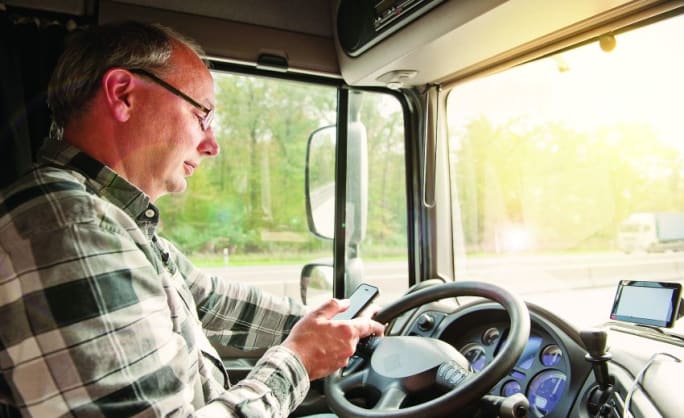
Distracted driving behaviors include answering the phone or making a call, reading or sending text messages, surfing the internet, posting to social media, and even participating in a video chat — all while driving. A NSC survey of more than 3,400 adult drivers across the U.S. back in 2016 revealed that drivers engaged in distracting behaviors often or occasionally:
19% made or answered phone calls with handheld devices.
51% made or answered calls hands-free with headsets, speakerphones, and in-vehicle systems.
32% reviewed or sent text messages.
23% reviewed or sent an e-mail.
23% glanced at, read, or posted social media messages.
21% surfed the internet.
19% looked at, took, or posted photos or videos.
14% watched TV or a movie on the phone.
14% participated in a video chat.
Plus, distracted drivers are more likely than all other drivers to have a near collision, fail to stop at an intersection, and exceed the speed limit, according to a SmartDrive Systems study.
Cell phone users are 5.36 times more likely to get into an accident than undistracted drivers. (Source: University of Utah)
The costs of distracted driving accidents can permanently hurt an organization. Beyond increased insurance premiums, possible litigation expenses, Workers’ Comp claims, lower vehicle value, and lost productivity, companies experiencing vehicle accidents sometimes suffer from negative publicity, permanent damage to their corporate image, and a decrease in employee morale.
In fact, when factoring in everything, the actual cost of an accident is three to five-times higher than the direct costs.
Ad Loading...
Minimize Distracted Driving
What can fleets do to minimize distracted driving? We compiled a list of best practices from fleet management and safety companies that will help drivers eliminate unnecessary driver distractions. Here are a few tips on how to prevent distracted driving:
Don’t Multi-Task. Drivers should only do one thing while on the road: Drive! They should never multi-task while driving. This includes not texting, video chatting, and social media posting while driving.
Don’t Eat/Drink While Driving. Eating or drinking while driving can be a big distraction. Therefore, drivers should eat before or after their trips. If necessary, they should pull off the road in a safe place to eat.
Avoid Complicated Tasks. Using technology, such as voice-activated systems or handless devices, may seem safe. However, these systems still distract a driver’s attention away from the road.
Never Use a Phone While Driving. If a driver must make a phone call, they should pull over to a safe place and make the call. Even using a hands-free phone while driving could result in an accident. Drivers can remain distracted for 27 seconds after making a call, even if they use a hands-free device, according to The American Automobile Association (AAA).
Store Gear Properly. Drivers should store loose gear in the proper compartments so that they don’t roll around the truck. Reaching for loose items could be catastrophic.
Make All Adjustments Before Hitting the Road. Drivers should set GPS, climate control, and sound systems, as well as adjust mirrors and seats, before setting out on the road.
Get Organized. Driving with clutter all over a vehicle is a recipe for distraction. Drivers should organize paperwork and properly store electronic devices before heading out.
Keep Eyes on the Road. Drivers should always keep their eyes on the road and avoid looking at things like cool-looking buildings or eye-catching billboards. It’s recommended that drivers move their eyes every two seconds and scan mirrors every five to eight seconds.
Groom at Home. Drivers should never dress or groom while driving. They should do so at home prior to heading out on the road.
Never Drive Drowsy. Drowsy driving is a factor in more than 100,000 crashes each year, according to NHTSA. And drowsy driving can hurt driving execution as much as or more so than alcohol, according to the National Sleep Foundation. Drowsy drivers should immediately pull off the road and find a safe place to rest.
A multi-faceted approach is important when addressing distracted driving. Educate drivers on the dangers of distracted driving at every opportunity.
Photo: Getty Images
A Multi-Faceted Approach to Minimize Distracted Driving
Most fleet management and safety companies recommend a multi-faceted approach to minimize distracted driving as follows: Educate about distracted driving solutions and implement policy; define penalties for non-compliance, and monitor driver behavior.
Educate and implement. Almost 80% of adult drivers think they can easily manage to text while driving, according to a survey by the Virginia Tech Transportation Institute. It’s this type of mindset that fleet managers must change by educating drivers about distracted driving and implementing a strict distracted driving avoidance program. Showing drivers how one text or one phone call while driving can change lives forever goes a long way toward gaining driver buy-in on your distracted driving fleet policy.
Define penalties for noncompliance. Once you’ve educated drivers on the facts and outlined and communicated a strict distracted driver avoidance program, let drivers know the penalties for not following established protocol. This will go a long way toward proper policy enforcement.
Monitor driver behavior. Many fleets now use telematics, driver monitoring programs, and collision-avoidance programs to help minimize bad driving habits. For instance, hard braking may indicate distracted driving, which a monitoring program would detect. Fleets can now also take advantage of apps that help minimize distracted driving. These apps stop drivers from using their phone while driving.
Remember to follow up this three-pronged approach to minimizing distracted driving with ongoing driver training. A one-time driver-training session won’t do the trick.
Ad Loading...
About 9 people are killed each day and more than 1,000 injured per day in crashes that are reported to involve a distracted driver. (Source: NHTSA)
Implementing a Fleet Distracted Driving Program
Ivey Mechanical Co., based in Kosciusko, Miss., saw its vehicle accidents rising. The company’s fleet of more than 400 vehicles includes ½- and ¾-ton pickups, ¾-ton service vans, and passenger vehicles. Because of the increase in accidents, the company’s CEO asked the IT department to find a way to minimize distracted driving.
To solve the problem, the IT department educated its drivers on the dangers of distracted driving by updating its electronic use policy to include wording specific to device use while driving, including the perils of using a phone or other device while driving, as well as anything else that would require them to take their eyes off the road. It then implemented a distracted driving program.
“As a tool to discourage the use of a phone other than on Bluetooth using voice commands, we use a distracted driving program, LifeSaver, to monitor compliance of our distracted driving policy,” said Luther Burrell, vice president of Administration and IT at Ivey Mechanical.
IT went office by office, installed the app, and educated its safety officers in each office on how to use the software portal and reporting for monitoring violations. The company’s safety officers get daily and weekly activity reports of violators for the previous day and week. These reports are used to identify repeat offenders, as well as determine disciplinary action.
Following the implementation of the program, not only did the behavior and attitudes of the drivers change, the number of at-fault accidents in the fleet decreased significantly, according to Burrell.
Ad Loading...
“As a result of fewer at-fault accidents, this past year we were rewarded for our efforts in a reduction of our driving liability rates,” he stated.
The program’s success was directly tied to obtaining management’s buy-in. “When implementing a distracted driving initiative, it is imperative to have the support and backing of all levels of management within the organization,” Burrell said. “Without it, the program is doomed for failure.”
At the end of the day, don't forget the importance of distracted driving safety talks.
How to Lower Mobile Phone Use & Insurance Claims
Todd Hargest, director of safety and transportation at Virginia Eagle Distributing Co., a beverage distribution business headquartered in Charlottesville, Va., helped dramatically minimize distracted driving in the company’s self-insured fleet of 95 trucks, which includes 53 medium-duty side-load vehicles.
“Five years ago, we wanted to minimize the number and severity of accidents,” Hargest said. “So we looked at different systems and ways to do so.”
Ad Loading...
After extensive research, Hargest selected the SmartDrive video-based safety program, which fully managed the service, an important criterion for Virginia Eagle’s busy service managers. The program reviews and scores triggered events and delivers a “3-steps to Coach” workflow. The managers at each of the company’s seven locations spend only five to 10 minutes daily addressing the most significant incidents.
The fleet has used the program for three years with significant results. The company has:
Reduced mobile phone use more than 90%. It has a zero-tolerance cell phone use policy.
Seen a 96% reduction in seatbelt infractions.
Lowered the number of insurance claims by 18%.
Reduced the severity of claims within the first six months by 35%.
While a few drivers pushed back on the new program initially, Hargest pointed out that the “good drivers” immediately saw the benefit of minimizing distracted driving. “These systems are there to protect the driver, and good drivers will appreciate a system like this,” he said.
Sometimes, it is not in a fleet’s best interests to have a vehicle at a given GVWR. Changing the GVWR to a special value can be done, but the process is complicated.
A stolen work truck can take more than a vehicle off the road. From tools and access cards to crew downtime, here’s how fleets can prepare for theft before it disrupts the entire workday.
Volvo Trucks North America will serve as the exclusive sponsor of the American Trucking Associations' America's Road Team, marking 25 years of Volvo sponsorship. The group of professional drivers promotes safety and the industry as they travel the country.
Streamlight’s Portable Scene Light III (PSL III) won the 2026 Occupational Health & Safety (OH&S) New Product of the Year Award in the Lighting category.
Geofencing is a familiar fleet tool today, but its early adoption marked a major shift in vehicle tracking, route monitoring, and the debate over employee privacy.
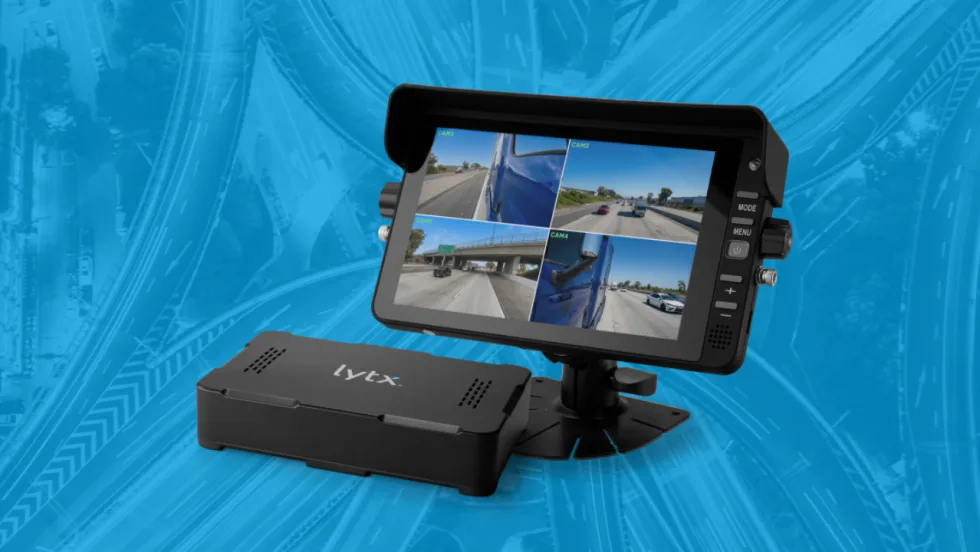
Lytx’s new AI-ready gateway and HD auxiliary camera ecosystem, the Lytx 360 Hub Kit, extends visibility across side, rear, cargo, and blind-zone views to help fleets see more and respond faster.