





Ram ProMaster City Fleet Guide Specs Cargo Capacity and 2027 Updates
How Machine Lifts Drive Safety & Efficiency for Fleets
What is a machine lift, what fleets need them, and how do they improve safety and drive efficiency? What advantages do they have over ramps and liftgates?
October 5, 2026
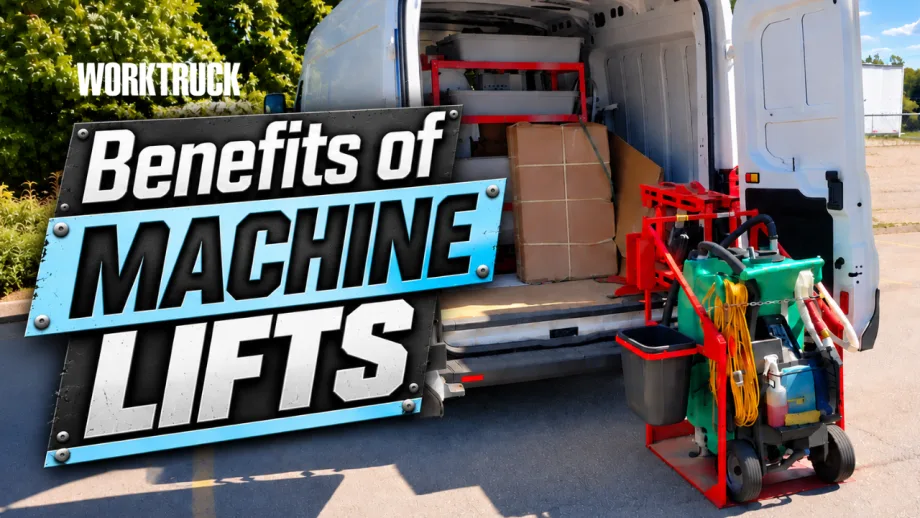
Machine lifts, like the Link Manufacturing CL400 mount inside the van just in front of the rear doors, use a cage, or gondola, that holds equipment or other cargo that fits the unit’s cargo-carrying profile.
Credit:
Work Truck | Madina Upfit | Edited with OpenAI
5 min to read
- Machine lifts are essential tools for various fleets, enhancing operational safety and efficiency by facilitating the easy movement of heavy goods.
- These lifts offer significant advantages over traditional ramps and liftgates, such as improved stability and reduced risk of injury during loading and unloading.
- By streamlining operations, machine lifts contribute to quicker turnaround times and reduced labor costs, making them a valuable investment for fleet management.
*Summarized by AI
For work van fleets, an effective upfit is about more than maximizing cargo space. It also means considering how employees load, unload, organize, and access equipment throughout the workday. For some fleets, a machine lift offers the proper solution.
Work Truck spoke with Tigh Shaffer, general manager of Madina Upfit, a finalist in Work Truck’s 2026 Upfit Package of the Year in the van category, about how machine lifts differ from traditional liftgates and ramps, which fleets can benefit from them, and what managers should consider when adding one to a van.
Work Truck: What is the difference between a machine lift and a regular truck or van lift used for cargo?
Shaffer: A liftgate is a platform that mounts on the outside of the vehicle and raises a load straight up to floor height. It is built for volume, think pallets and multiple packages, and it lives outside in the weather and road salt for the life of the truck.
A machine lift works differently. A machine lift like the Link Manufacturing CL400 mounts inside the van just in front of the rear doors and uses a cage, or gondola, that can hold one piece of equipment or other types of cargo that fit the unit’s cargo-carrying profile. You place or roll the machine or other cargo, which can also be loaded on a dolly, into the cage, hit a switch, and the lift raises it and swings it into the cargo area in one motion. The closest comparison most people know is the bucket on a bucket truck.
The practical difference is that a machine lift is sized to a specific piece or pieces of cargo, and it holds that load captive the entire time it is moving. Other than an optional ramp and retention chain, there is no separate step to strap it down while it is in the air. It also stores inside the van, so it is not exposed to weather.
Work Truck: What would this lift be used to load and unload, and what is most common?
Shaffer: By far the most common application we see is commercial cleaning. Those customers are moving walk-behind floor-cleaning machines, and they weigh about 120 pounds. Mop buckets and similar equipment go in the same way.
Beyond that, it fits anything heavy that one person has to get in and out of a van repeatedly. Chemical delivery and detail supplies are a good example, where you are lifting drums and containers. We have looked at masonry materials and beverage delivery for the same reason.
The CL400 handles up to 400 pounds, and the basket has a load space of roughly 23.5 by 29.25 inches. If the equipment fits that envelope and falls under that weight, it is a candidate.
Work Truck: What fleets typically use a machine lift?
Shaffer: Commercial cleaning and facility services fleets are the core of it today. The profile that matters more than the industry is this: one operator, one heavy or awkward item, moved in and out several times a day.
Two things tend to trigger the conversation. The first is an injury history. When a company has people getting hurt loading equipment, they come looking for a fix. The second is an internal lifting rule. A lot of fleets now cap what an employee is allowed to lift by hand, often around 50 pounds, and once you have that rule, you need equipment to comply with it.
When a customer calls, I ask how many times a day they will use the lift, where they park when they use it, how many employees are in the van, and what the product weighs. If an upfitter is not asking those questions, it is very hard to define what lift a customer actually needs.
Work Truck: Is there a safety element? Does a machine lift keep workers safer than a ramp?
Shaffer: Safety is the biggest reason customers buy it. Lowering a heavy machine down a ramp means somebody is controlling that weight on an incline, and that is where you get trips, slips, and equipment getting away from people. The lift pretty much eliminates that. You hit a button, and it does the work.
We have one customer who told us their disability claims dropped by half after they went to the lifts.
There is a second safety angle that gets overlooked, which is footprint. With a ramp you need eight to 10 feet of clear space behind the vehicle just to fold it out and walk down it. With the lift you need about five feet, six to be safe. On a city street or a tight lot, that difference decides whether the crew is working in traffic or not.
I will add that ramps are still the right answer for plenty of jobs. A manual ramp is about a quarter of the price, it adds less weight to the vehicle, and there is very little that can go wrong with it. The lift earns its keep when the load is heavy, the space is tight, or the customer has a safety problem to solve.
Work Truck: Can you explain the upfit. Permanent or removable? Is a no-drill version available?
Shaffer: It is a permanent bolt-in installation, and it does require drilling into the floor. The base plate bolts through the van floor, and the number of holes depends on the platform. A Sprinter with the factory in-floor cargo track takes three. A Sprinter with a standard floor takes five. A Nissan NV takes six, and a Transit or ProMaster takes seven. The unit also gets wired to the vehicle battery with an inline fuse, since it runs on 12 volts.
The lift ships fully assembled on a predrilled base plate, which keeps our install time down.
Because it is bolted rather than welded, it can be unbolted and moved to another vehicle. Two caveats. The base mount kits are platform-specific, so going from a Sprinter to a Transit means a different kit. And the floor penetrations have to be properly plugged and sealed before the vehicle is remarketed.
One more note for anyone spec’ing this on an electric van: Link requires professional installation by a trained technician, because drilling near high-voltage batteries and cables must be done with caution.
Subscribe to Our Newsletter
More Upfitting
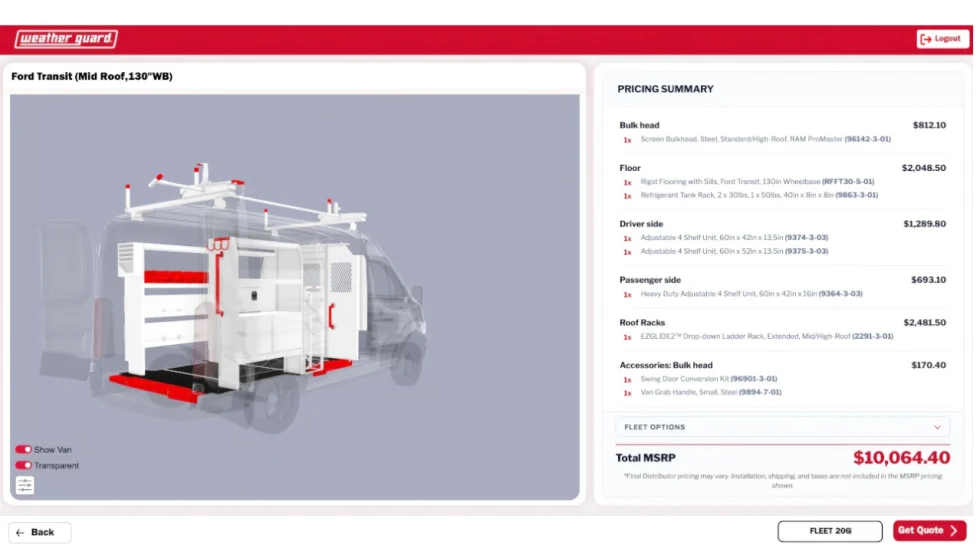
New Weather Guard Configurator Simplifies Planning and Design of Van Upfits
The Weather Guard Configurator combines vehicle-specific product compatibility with real-time 3D visualization to streamline design, quoting, and ordering for fleet managers, upfitters, and professional users. The latest version is now available for vans, with truck upfitting being added in early 2027.
Read More →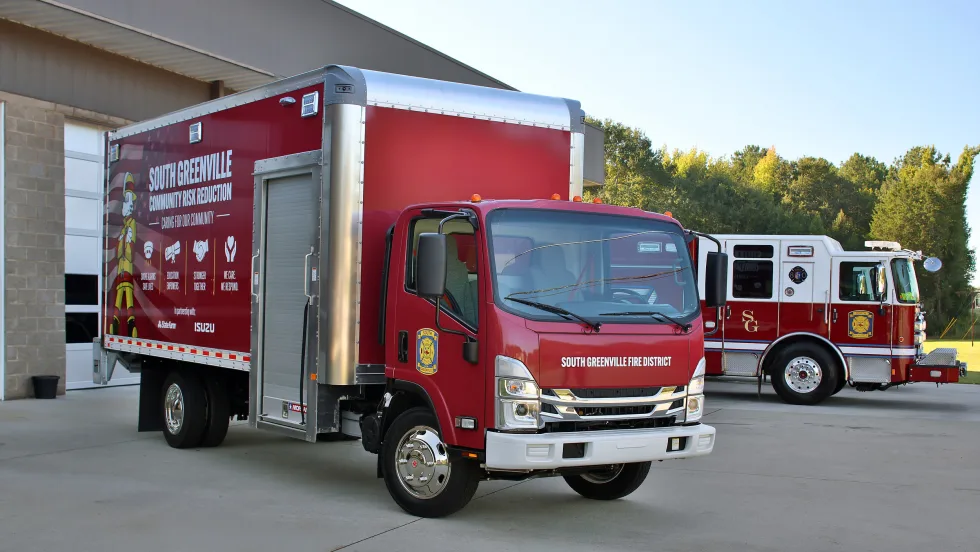
Isuzu Donates New N-Series NRR Truck to South Greenville Fire District to Support Community Outreach
Isuzu North America Corporation donated a new Isuzu N-Series NRR, equipped with a Morgan truck body and a Palfinger liftgate, to support fire safety education, community engagement, and outreach programs throughout Southern Greenville County, South Carolina.
Read More →
M.H. Eby Announces Bostick Truck Center as Michigan Distributor
Bostick Truck Center in Pontiac, Michigan, is now the official distributor for Eby Truck Bodies in Michigan. It will have access to Eby’s Ford, GM, and Ram chassis pool programs.
Read More →

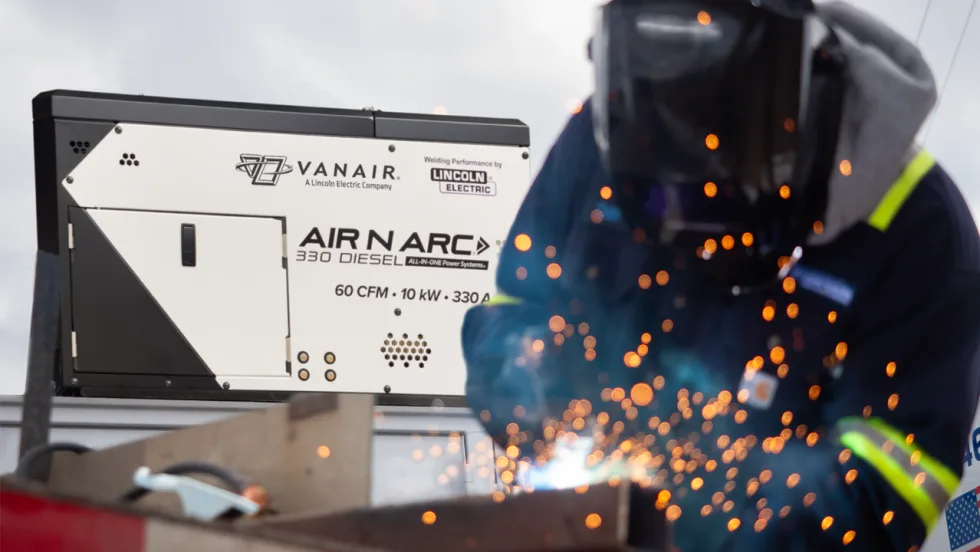
Multitasking: Vanair’s Air N Arc 330 Diesel 60 CFM All-In-One Power System
The Air N Arc 330 Diesel 60 CFM from Vanair consolidates a welder, generator, rotary screw air compressor, battery booster, battery charger, and EV charger into a single 750-pound enclosure driven by one 24.8-horsepower Kubota diesel engine.
Read More →
Buyers Products Awarded Sourcewell Cooperative Purchasing Contract for Snow & Ice Equipment
Buyers Products has been awarded a Sourcewell contract for a wide range of winter maintenance equipment and accessories, including snowplows, municipal plow systems, wing plows, spreaders, and more.
Read More →
Hilltip Introduces the SnowStriker SFT Flex Expandable Box Plow
Hilltip’s new SnowStriker SFT Flex expandable box plow features hydraulically extendable sections that allow operators to adapt the clearing width to changing conditions and applications on the go.
Read More →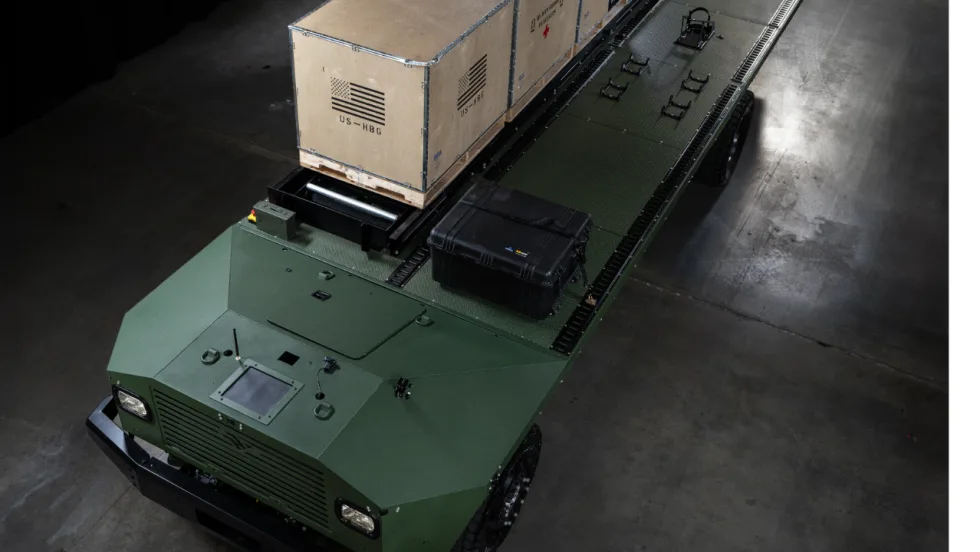
Harbinger Part of Effort to Deliver Autonomous Logistics Capabilities for U.S. Army
American Rheinmetall received an 18-month U.S. Army contract to deliver autonomous, hybrid-powered uncrewed ground vehicles. Harbinger is providing the truck platform for those vehicles.
Read More →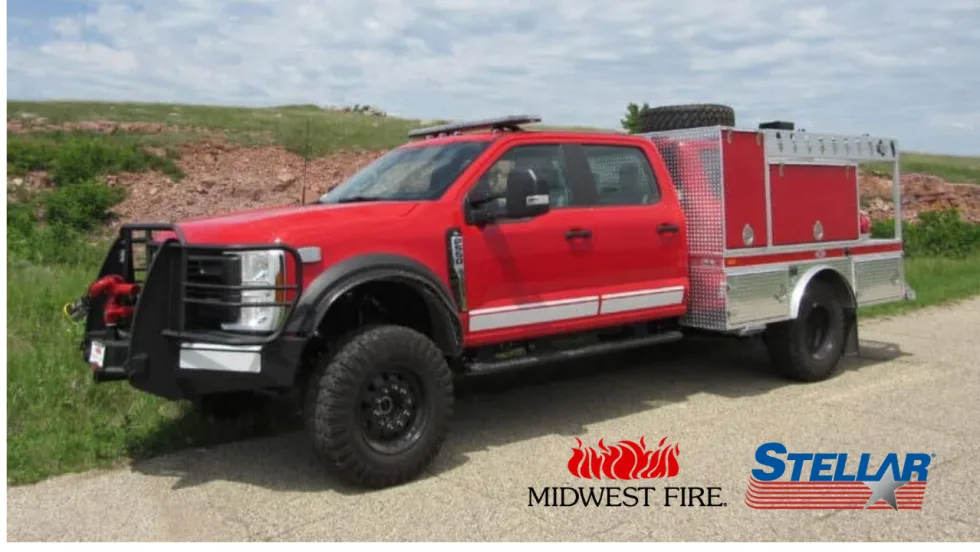
Stellar Expands into Fire Apparatus Market with Acquisition of Midwest Fire
Stellar Industries has acquired Midwest Fire, a custom fire apparatus manufacturer headquartered in Luverne, Minnesota, with nearly four decades of specialized apparatus experience.
Read More →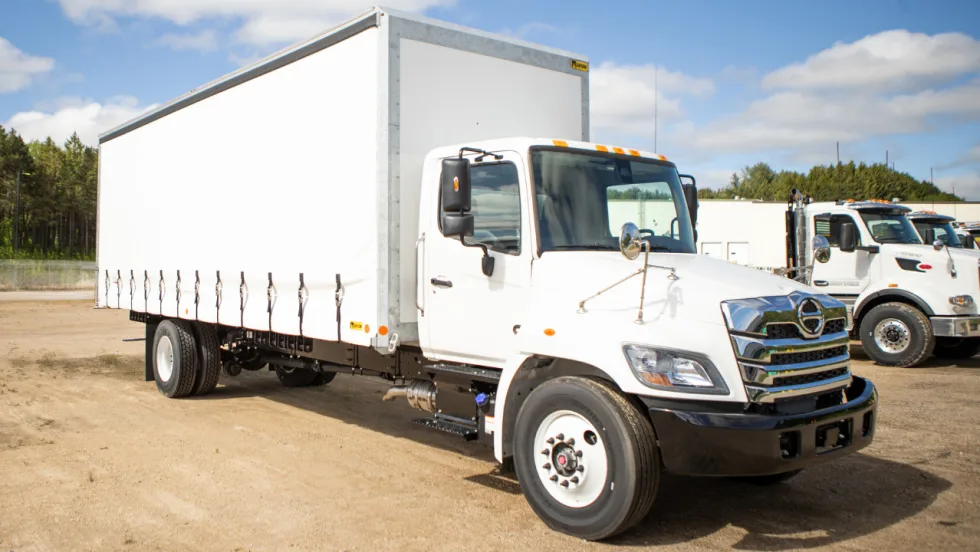
Thinking Outside of the Box: Choosing the Right Truck Body for Your Fleet
Choosing the right truck body can have a major impact on loading efficiency, cargo protection, downtime, and long-term operating costs. Here’s how dry vans, platforms, and curtainsiders compare, plus what fleets should consider before spec’ing their next truck.
Read More →
Fourth Annual Upfit Package of the Year Awards Open for 2027 Entries: One Month Left!
Think your upfit deserves industry recognition? Enter the 2027 Work Truck Upfit Package of the Year Awards before the Oct. 5 deadline.
Read More →