




30 Years Ago Today The Sprinter Van Began to Play
The Mercedes-Benz Sprinter van is turning 30 years old – and is on track to surpass five million units sold by year’s end.

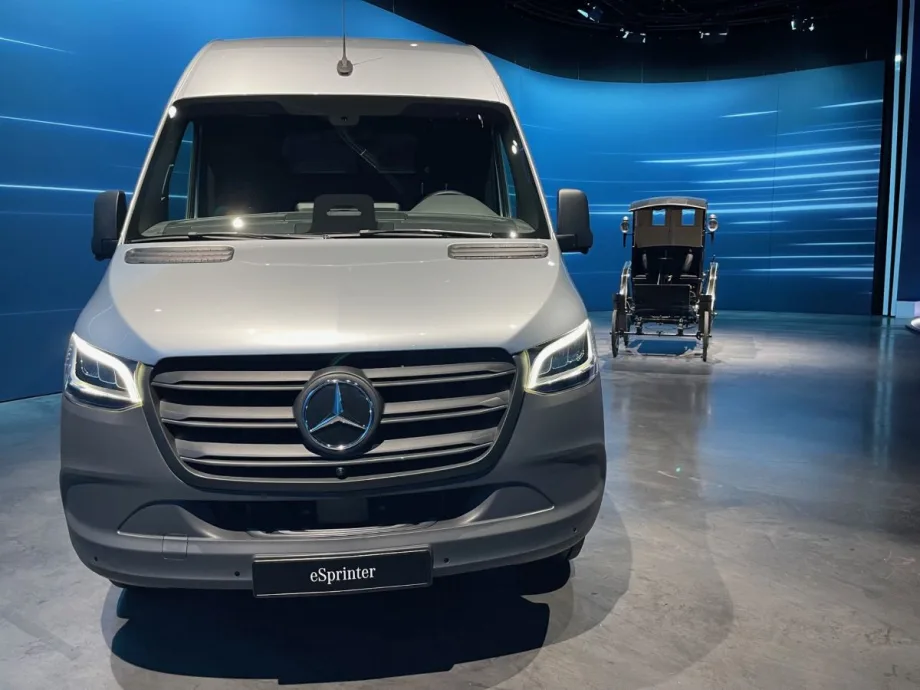
Delivery vans have been a focus for Mercedes-Benz for almost 130 years.
Photo: Jack Roberts
Way back in 1995, the old “Scooby Doo” style van still dominated the North American light commercial vehicle market. But all that changed that year when Mercedes-Benz unveiled a fresh take on what a commercial van could be and how it could do.
Dubbed the “Sprinter,” the new van was a decided departure from the stale, boxy North American vans then in widespread use.
Sprinter was optimized for fast and easy maintenance. It was designed for tight turns and easy maneuverability in constricted urban surroundings. It was a vehicle that could be quickly and easily configured for a wide range of applications and roles. And, more than anything else, it was designed to expedite the movement of cargo and maximize profitability for its owners.
Today, 75% of all Sprinter worldwide are customized for specific industry needs.
And to celebrate this milestone, Mercedes-Benz invited journalists on a whirlwind trip to the OEM’s headquarters in Stuttgart, Germany. There, Mercedes-Benz featured a special display of the first-generation Sprinter as well as the current Sprinter and its battery-electric equivalent, the eSprinter, at the world-renowned Mercedes-Benz Museum in Stuttgart.
An Icon for 30 Years
"With the Mercedes-Benz Sprinter, we have had an iconic van in our portfolio for 30 years now,” noted Klaus Rehkugler, head of sales and marketing, Mercedes-Benz Vans. “During this time, the Sprinter has written an unprecedented success story and has been sold many times worldwide. We expect to crack the five million mark of sold vehicles before the end of this year. For three decades, it has been shaping people's lives and keeping the world running. Whether in emergency services, delivery services, in the trades or on construction sites - the Sprinter has established itself as the perfect business partner. It has also been available as a fully electric vehicle, operating locally CO2 emission-free."
Today, Sprinter is manufactured across three continents – North America, South America, and Europe.
But Sprinter's delivery-centered DNA is deeply ingrained at Mercedes-Benz.

This original 1898 Benz Delivery Van is one of Mercedes-Benz's most prized possessions today.
Photo: Jack Roberts
A centerpiece of the 30th Anniversary display in Stuttgart was one of the OEM's most prized possessions: An original 1898 Mercedes-Benz delivery wagon.
The point, according to Marcel Minter, head of product and business unit strategy, Mercedes-Benz Vans, is that even from its earliest days, Mercedes-Benz was laser-focused on commercial vehicles.
It's striking to see the 1889 delivery wagon next to a modern-day Sprinter van. The little wagon is highly advanced for its day: It features a stout suspension, dual-exhaust, and a heavy-gauge drive-chain.
The little wagon has room for exactly one (smal0) human driver -- who is totally exposed to the elements. All to transport a cargo box that can accommodate a modern-day dishwasher -- provided it's not too big.
Things changed a lot in the years that followed. By 1995, the new Sprinter was a clean-sheet design that focused on a self-supporting body, high-traction rear-wheel drive, modern chassis with independent front suspension, and powerful engines.
The new van was also a major leap forward in safety.
The first Sprinter was equipped with disc brakes all round, an ABS anti-lock braking system, automatic brake differential, height-adjustable three-point seat belts and seat belt buckles attached to the seat as standard. A driver airbag was available as an option.
Mercedes-Benz reinforced its focus on safety with an extensive update in 2000: The driver's airbag was now part of the standard equipment, with an optional front passenger airbag, which protected additional passengers seated in a front row double bench seat.
Window airbags and traction control (ASR) were also available from mid-2000. By 2002, the ESP (Electronic Stability Program) became available, setting a new benchmark for active safety in commercial vans. This innovation reinforced the Sprinter's status as a leader in safety technology within its class.
Technology and Safety Upgrades for the Second Sprinter Generation
The second-generation Sprinter was launched in early 2006 bringing customers additional variances: They could choose between three wheelbases, four vehicle lengths, three roof heights and gross vehicle weight ratings from 6,614 lbs. to 11,023 lbs1. In addition, the ESP® (Electronic Stability Program) was introduced as standard on the closed versions up to 7,716 lbs. GVWR1.
By 2008, this feature was standard on all body variants up to the same weight class.
An optional air suspension system to increase comfort and safety, was added to the range from 2008.
Another milestone followed in 2009 with the introduction of BlueEFFICIENCY: The technology featured a new six-speed manual transmission and automatic start-stop system increased dynamics and noticeably improved fuel efficiency.
In 2013, Mercedes-Benz introduced the Crosswind Assist, a groundbreaking safety system for vans, designed to help drivers maintain stability in strong wind conditions.
Connectivity and Variety at the Center of the Third Sprinter Generation
The third-generation Sprinter was launched in Europe in 2018, not only retaining its existing broad range of variants, but also expanding it with the introduction of front-wheel drive, which enabled the addition of the new traction head variant.

Marcel Minter, head of product and business unit strategy, Mercedes-Benz Vans, speaks to the media in Stuttgart, Germany.
Photo: Jack Roberts
A major highlight of the 2018 Sprinter was its breakthrough in infotainment and connectivity. It became the first commercial vehicle to feature the MBUX (Mercedes-Benz User Experience) multimedia system. Since then, the Sprinter has been responsive to voice commands, enabling seamless interaction with its central fleet, vehicle, driver, and location-based services. In terms of safety, Mercedes-Benz once again elevated the Sprinter to a new level, for example with the introduction of the DISTRONIC Active Distance Assist, enhancing driver convenience and safety by maintaining a set distance from vehicles ahead.
The next milestone came in 2019, when Mercedes-Benz introduced the first production-ready eSprinter cargo van in Europe, offering the possibility of locally CO2-emission-free mobility for trade, logistics, and business operations through its battery-electric drive.
More Versatile Than Ever
Available in its latest form since last year, the eSprinter now features: two body styles and lengths as well as two battery sizes2 and a range of up to 478 kilometers (WLTP)3 (~297 miles).
Since last year, both the eSprinter and Sprinter have received updates in connectivity and safety. Both models benefit from an updated MBUX multimedia system and new Digital Extras.
Safety and assistance systems have been upgraded with additional and, in some cases, new functions that are already on board for the most part in the standard equipment. For example, the standard Active Brake Assist now includes the intersection function and can therefore also warn of vertically crossing or oncoming vehicles.
A New Generation of Sprinter
As part of the celebration surrounding Sprinter’s 30th birthday, Mercedes-Benz showed journalists a prototype of the fourth-generation Sprinter, set to debut next year.
Security was tight ahead of the preview. And photography was obviously not allowed.
Generally speaking, the overall dimensions of the new Sprinter are close to the current model. But, the new design gives the next-generation Sprinter features a profile that looks longer, lower and more broad-shouldered than the current model.

A 1995 Sprinter Van prepares for another test drive during the brand's 30th Birthday celebration in Stuttgart, Germany.
Photo: Jack Roberts
The front end retains the distinctive Mercedes-Benz/Sprinter styling. But the overall look is more in line with traditional North American vehicle design.
It’s funny to look back 30 years and recall what a departure from the norm the Sprinter van was in North America. I clearly remember being flatly told by Mercedes-Benz competitors at the time that the Sprinter would bomb in North America.
“It’s too European looking,” they told me, confidently. “Americans will never buy it.”
Flash-forward to today, and the Sprinter redefined not just the North American van market – but van design all around the world.
The next-generation Sprinter builds on that legacy. But I believe it’s sleeker, bolder – and yes – tougher new styling will resonate with North American buyers in a major way.
A New Era Next Year
Mercedes-Benz designers are obviously thrilled with their new Sprinter design and keen to show it off to the public.
But, for now, they must content themselves with honoring the vehicle that has brought them so far over the past three decades.
From February 4, to March 30, 2026, the Mercedes-Benz Museum in Stuttgart will host a special presentation dedicated to the history of the Sprinter family.
On display will be a first-generation Sprinter as well as the current Sprinter and eSprinter.
As part of the celebration, early visitors will receive a special anniversary gift with their ticket purchase. Additionally, a pop-up corner in the museum shop will offer exclusive Sprinter-themed merchandise, allowing fans to take home a piece of the anniversary.
More Delivery
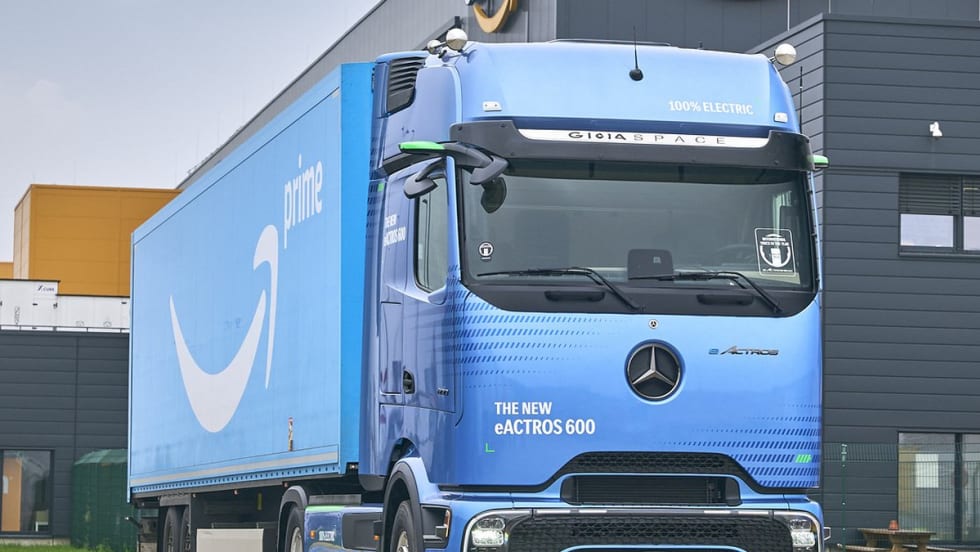
Amazon Places Places Largest eActros Truck Order
Amazon places its largest-ever electric truck order with over 200 eActros 600 vehicles to reduce emissions across its European logistics network.
Read More →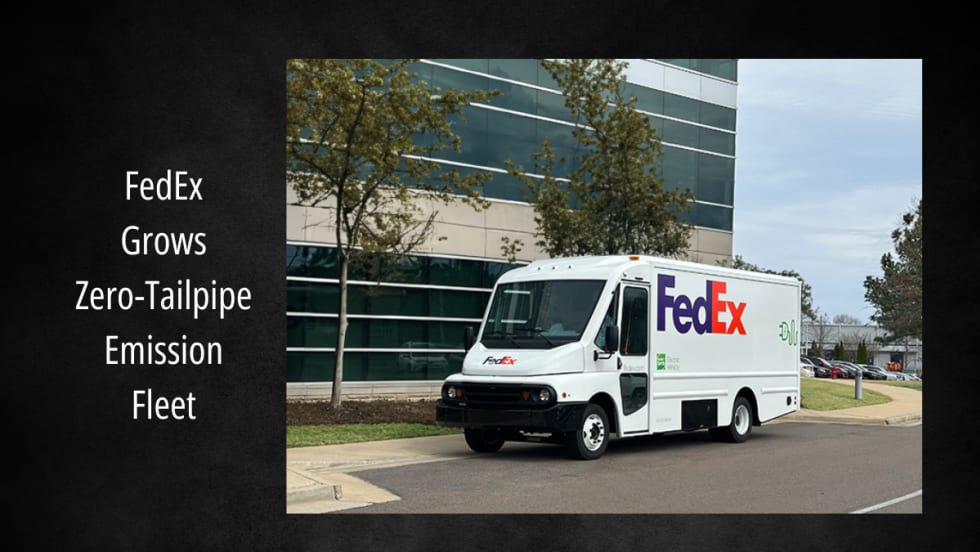
FedEx Orders 15 Workhorse W56 Step Vans
These 15 W56 step vans will support the FedEx goal to achieve carbon-neutral global operations by 2040.
Read More →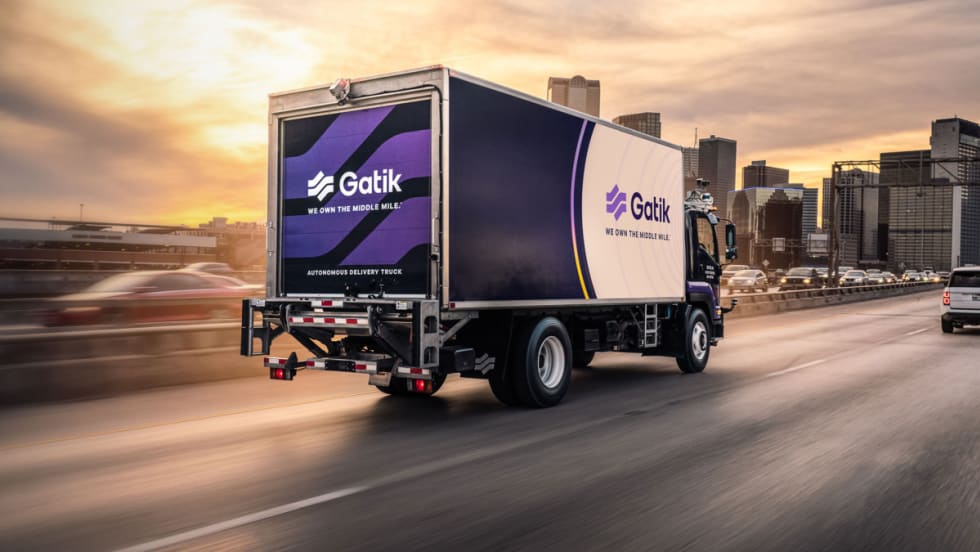
Gatik and ITOCHU Form Strategic Alliance for Middle-Mile Logistics
The collaboration with ITOCHU is part of Gatik's strategy to revolutionize the North American logistics landscape by deploying Freight-Only at scale.
Read More →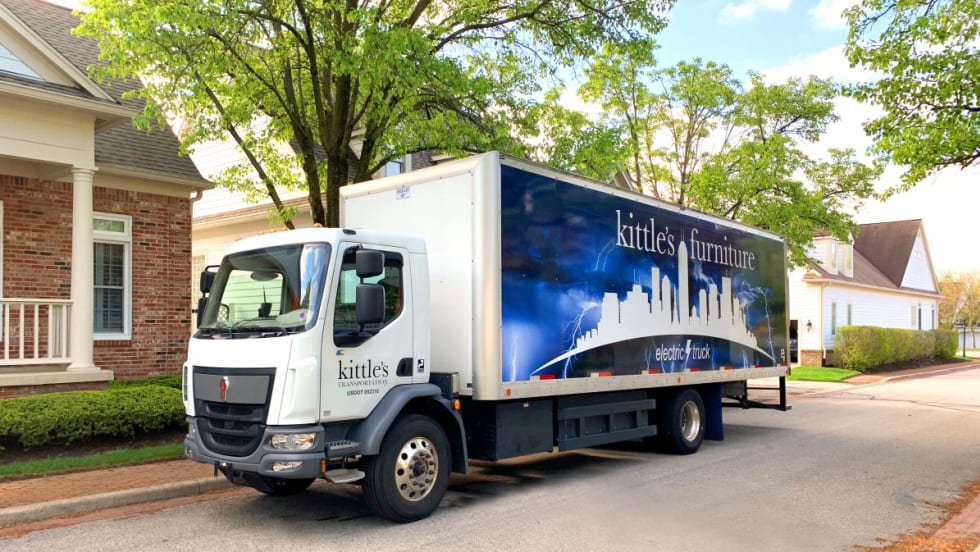
Kittle's Furniture Saves $10,000 a Year in Fuel Costs with Kenworth K270E
With six retail locations in Indiana, Kittle's Furniture uses a Kenworth K270E medium-duty electric truck to deliver furniture to customers in the Indianapolis metro area from its distribution center in Fishers.
Read More →
Bosch Launches RevX to Find the Best Load Every Time
The new cloud-based service from Bosch aggregates search results across multiple brokers and load boards based on a specific criterion, calculates profits, and helps with data-driven decision making to eliminate empty miles.
Read More →
Last-Mile Logistics: Optimizing Efficiency in Urban Deliveries
To make last-mile deliveries go smoothly, delivery companies can use strategies such as solving for demand fluctuations, using data and technology to plan better, and considering the technology offered to customers.
Read More →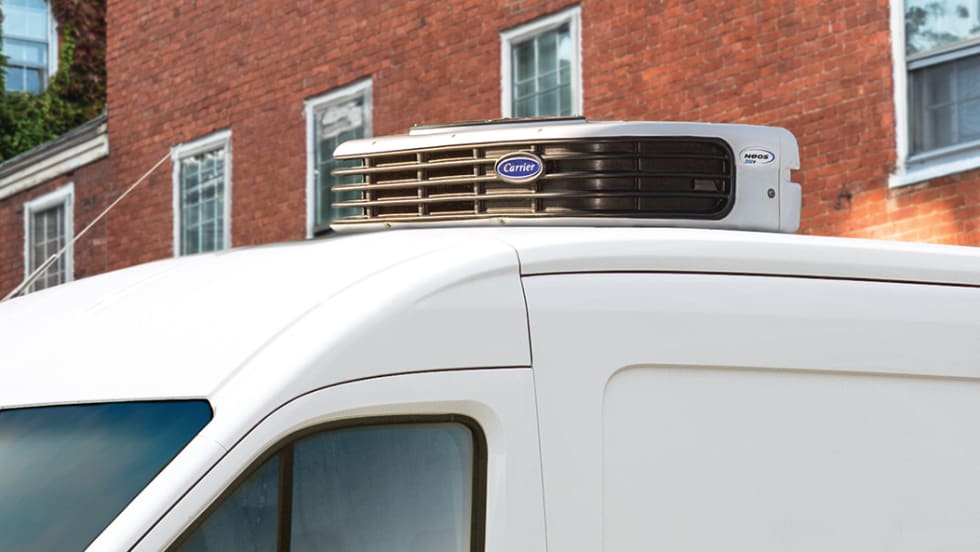
Carrier Transicold Offers Refrigeration for Small Delivery Vehicles
The engineless Neos 200e unit is part of Carrier Transicold’s growing family of eCool all-electric refrigeration systems.
Read More →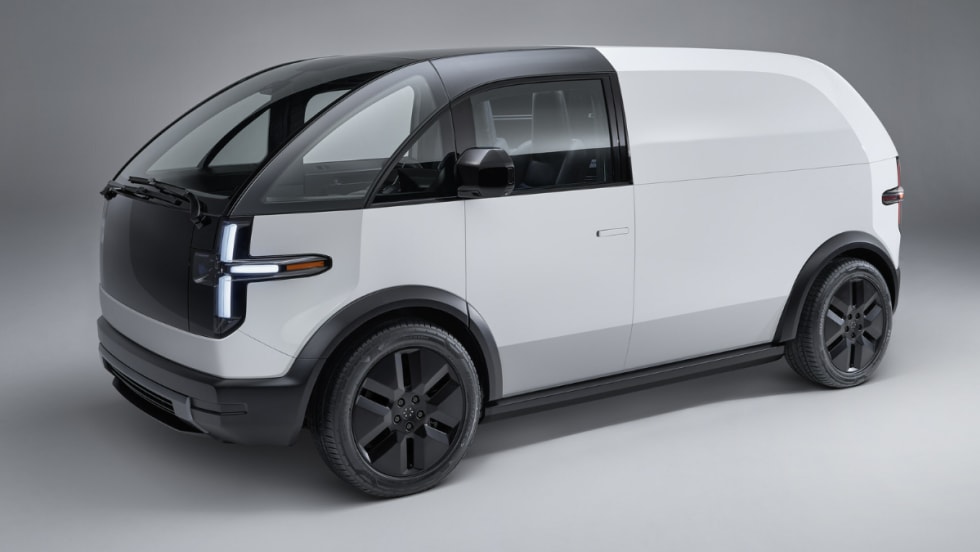
Canoo Set to Increase Vehicle Assembly Capacity
Canoo purchased manufacturing assets to reduce prices to scale production and made its first shipment to Oklahoma.
Read More →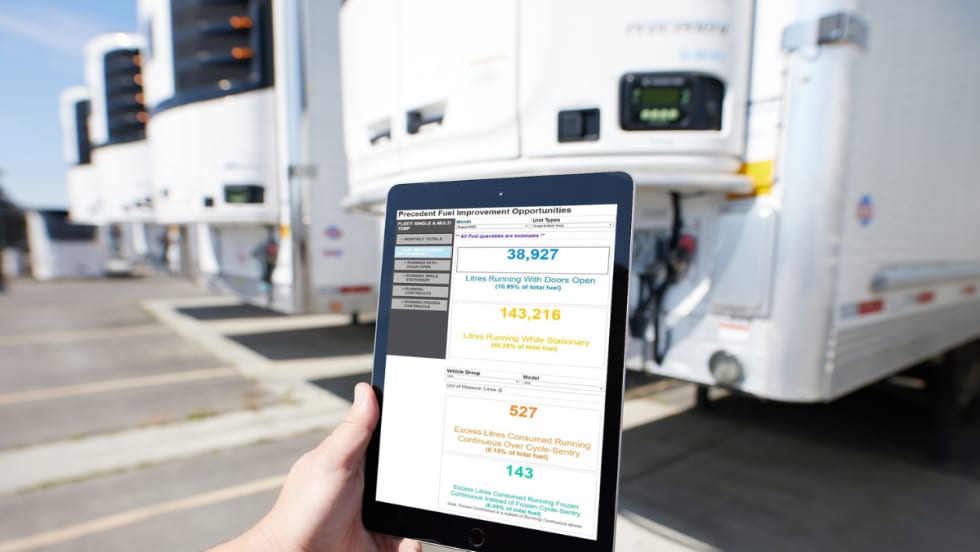
Thermo King & Trane Technologies Advances Cold Chain Decarbonization
New digital solutions offer Thermo King customers insights into unit status, performance, maintenance needs and more.
Read More →
Amazon Becomes the Biggest U.S. Delivery Business
Amazon surpasses UPS and FedEx in packages delivered this year already.
Read More →