





Ford Transit Delivers Two Years Straight as Top Commercial Van
5 Things to Know When Buying a Cargo Van Upfit Package
Choosing the right upfit for your work van can increase both safety and efficiency. But what do you need to keep in mind when spec'ing a van upfit? Here are five things to consider.
May 29, 2025

What do you need to consider when you are spec'ing a van upfit?
Photo: American Van/Work Truck
7 min to read
While some may think of pickup trucks as the traditional work truck platform, with the proper upfit, cargo vans can offer even more advantages, such as a large amount of storage and a way to secure tools and gear.
Basically, a commercial cargo van is a shell, a blank palette. It is up to the fleet manager to know what upfit is needed. Typically, van upfitters can help with the process if needed.
“They need cargo vans because they need the space for all their tools and equipment. Obviously, they can use pickup trucks, or smaller vehicles, but some of these contractors have so much equipment that they just need the storage capacity and organization,” explained Mike McTamney, marketing and product manager, American Van, a Clarience Technologies company.
Creating a Mobile Workspace
Work Truck visited with McTamney to learn a little about why work vans are so important and to further explore the value of van upfits. According to McTamney, the mid-roof Ford Transit is likely the most popular van on the road currently.
What do the Ford Transit and other comparable work vans bring to the table compared to pickup trucks in terms of capabilities?
“It's basically an enclosed mobile workspace,” McTamney answered. “There's so much secure storage. Everything's lockable, and you combine that with a partition and some window screens and some door locks, and nobody's getting in there.”
Is the van market growth taking away from the pickup truck segment?
“Well, it's 50/50. It's really what the user needs in the end. For example, if you're just transporting auto parts, you'll see a lot of smaller vehicles on the road, like the Nissan Kicks. But when you look at an electrician or an HVAC technician, they need that larger storage for all their equipment, air compressors, and tools,” McTamney added. “It is just dependent upon the market. What are your needs? How much space do you need?”
Why Upfit a Van? Efficiency
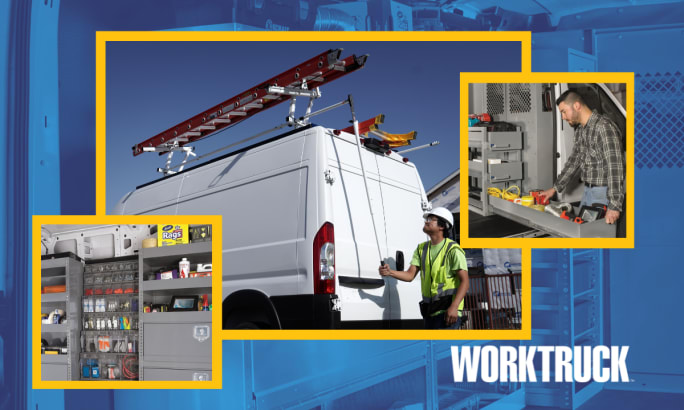
An upfit should provide organization and promote efficiency.
Photo: American Van/Work Truck
The significance of fleets using vans is more than just making deliveries. Think of a properly upfit van as a toolbox. Yet, it can be more than just a toolbox. Supplies needed on the job can also be transported, stored, and on hand quickly when needed.
“It prevents you from having to go to the store. You can just go into the back of your van,” McTamney pointed out.
“Since the van is upfit with all these accessories, drawers, bins, and shelves, they (technicians) know where everything is because they put it in a proper place. It's there, it's in sight, and anything that they need throughout their day should be right there and easily accessible,” McTamney said.
What all that adds up to is simple. Efficiency.
“That's the whole purpose—to maximize efficiency for your workday,” added McTamney.
How do you know what makes an upfit great, or what makes it work for the customer? How does that all come together?
“The upfit needs to be job-specific,” he explained. “It needs to be tailored to your profession.”
For example, an electrician or HVAC technician will have standard shelves and partitions, but they will also have accessories to handle tools and supplies specific to their job. That may be a wire reel holder for an electrician, while an HVAC technician might need tank holders.
“We have specific van packages on our website tailored for these specific jobs, and it makes it easier for these contractors to select their upfit, because we build these for them specifically,” McTamney said. “You just need to select what you need for the job you're doing.”
A van upfit typically begins with a base package, which includes shelves and a partition. From there, specific to the profession’s needs, items such as drawer units, bin storage, literature racks, or any other necessary components can be added. Whatever it takes to turn the van into a mobile workspace is available.
While a fleet manager may think simple shelving will be enough, that’s not the case. If a worker simply places items on a shelf, they can slide around during transit. As McTamney pointed out, this means that items will become mixed together and unorganized, thereby reducing efficiency and safety.
Planning for Van Upfits
How far in advance does a fleet manager start planning van upfits?
McTamney said most fleets have the upfit in mind when they order vehicles. They know how much space they need and what they want in the van.
With most fleets adhering to a replacement cycle, that means that each year a fleet will have new vans to upfit. McTamney said one of American Van’s largest customers is a telecom company, which upfits 150 to 200 vehicles a year. Whether that large fleet or even the smaller fleets that work with McTamney, fleet managers try to standardize the upfit from one year to the next.
“We quote them every year for the same package. They have maybe two or three packages they do, and they don't generally change them ever, just small things here and there,” he explained.
Trying to Get by Without an Upfit
What would you advise a small fleet owner, such as one with only four or five vans, who thinks they can get by without the proper upfit?
“I would ask, ‘How efficient do you want to be?’’
“If you're just going to put tubs and bins and throw everything in them, then you're not going to be organized. You're going to be spending more time looking for your items or what you need than you are working,” McTamney said.
Proper Upfit Can Increase Safety
Proper upfitting can also increase safety. McTamney has heard that firsthand.
He pointed out how a partition can protect both the driver and a passenger if anything shifts forward while driving or even during a collision.
He recalls about two years ago when a customer shared that a partition had saved his life.
That customer sent a message, just four words that were brief and to the point: “You saved my life.”
McTamney said they were bewildered and reached out to the customer. Upon doing so, they learned the details.
About a week after the partition had been installed, the man was transporting windshields in the back of the van. As the story goes, his wife had told him he shouldn’t use the van until he could install a partition. Thankfully, he did.
“He was sitting at a construction site, at a stop, and a drunk driver hit him from behind at 80 mph, and all those windshields shifted into the partition,” McTamney shared. “He walked away with a couple of scratches from hitting his head on the steering wheel, and the partition stayed in place.”
The customer and his wife provided a video testimonial about how the partition from American Van, then operating under the Safe Fleet brand, saved his life.
“Even during transport, the purpose of these upfits is so products are safe and secure and don't shift around, and you're safe driving the vehicle,” McTamney emphasized.
Selecting the Van Upfit Packages
While upfits must be tailored to the specific needs of the worker, driver, and fleet, there are lots of choices. So, where does a fleet manager start building the upfit plan? What do they need to know, or at least have in mind when they start shopping for a van upfit?
McTamney knows the business well and has shared five things that should be considered, which are:
1. Van Make, Model, and Year Compatibility
Van storage systems are not one-size-fits-all for every vehicle. Ensure the package components are designed specifically for your van’s roof height, wheelbase, and mounting points. For example, the Ford Transit vs. the Ram ProMaster.
2. Intended Use and Tools/Equipment Storage Needs
Consider what tools, materials, or products you’ll carry. Choose a setup that matches your profession (e.g., electrician, plumber, HVAC technician, or general contractor), including shelving, drawer units, bin storage, ladder racks, and accessories.
3. Weight and Payload Considerations
Every van has a maximum payload. A heavy-duty steel package might be durable, but it could reduce how much cargo you can carry due to the weight of the package. Aluminum options are available and may be lighter, but can also be more expensive.
4. Ease of Installation
Consider options that are easier to install and will reduce the downtime of the vehicle. For example, pre-assembled shelving and options that require less drilling will save you hours of time and get the vehicle back on the road quicker.
5. Safety and Security Features
Look for systems with secure locking drawers/cabinets, window screens, and compliant bulkhead partitions that protect the driver and passenger from shifting cargo in the event of an abrupt stop or accident.
Subscribe to Our Newsletter
More Upfitting
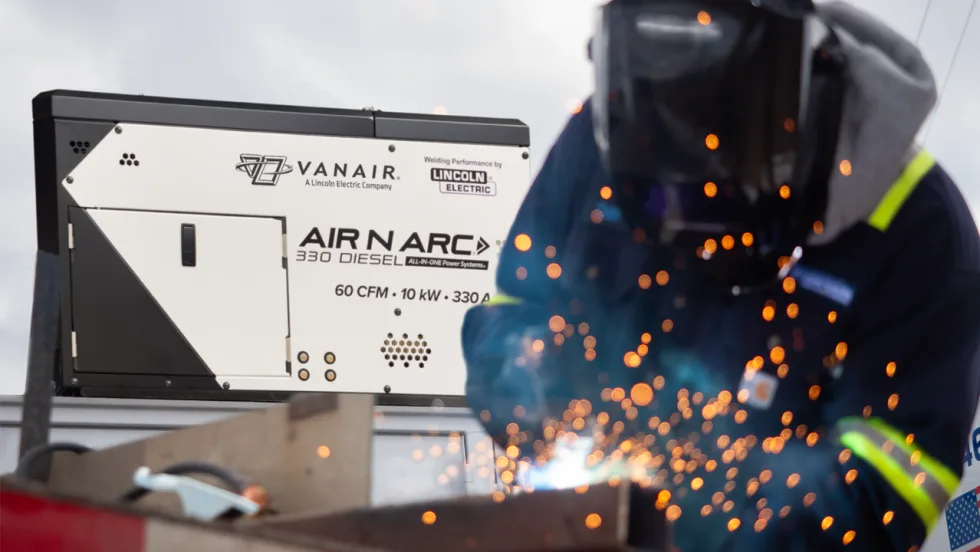
Multitasking: Vanair’s Air N Arc 330 Diesel 60 CFM All-In-One Power System
The Air N Arc 330 Diesel 60 CFM from Vanair consolidates a welder, generator, rotary screw air compressor, battery booster, battery charger, and EV charger into a single 750-pound enclosure driven by one 24.8-horsepower Kubota diesel engine.
Read More →
Buyers Products Awarded Sourcewell Cooperative Purchasing Contract for Snow & Ice Equipment
Buyers Products has been awarded a Sourcewell contract for a wide range of winter maintenance equipment and accessories, including snowplows, municipal plow systems, wing plows, spreaders, and more.
Read More →
Hilltip Introduces the SnowStriker SFT Flex Expandable Box Plow
Hilltip’s new SnowStriker SFT Flex expandable box plow features hydraulically extendable sections that allow operators to adapt the clearing width to changing conditions and applications on the go.
Read More →
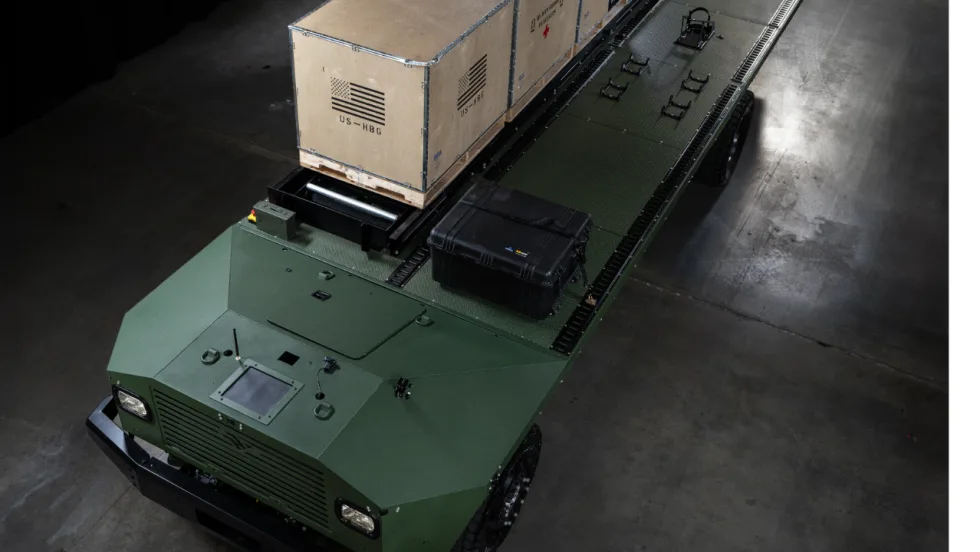
Harbinger Part of Effort to Deliver Autonomous Logistics Capabilities for U.S. Army
American Rheinmetall received an 18-month U.S. Army contract to deliver autonomous, hybrid-powered uncrewed ground vehicles. Harbinger is providing the truck platform for those vehicles.
Read More →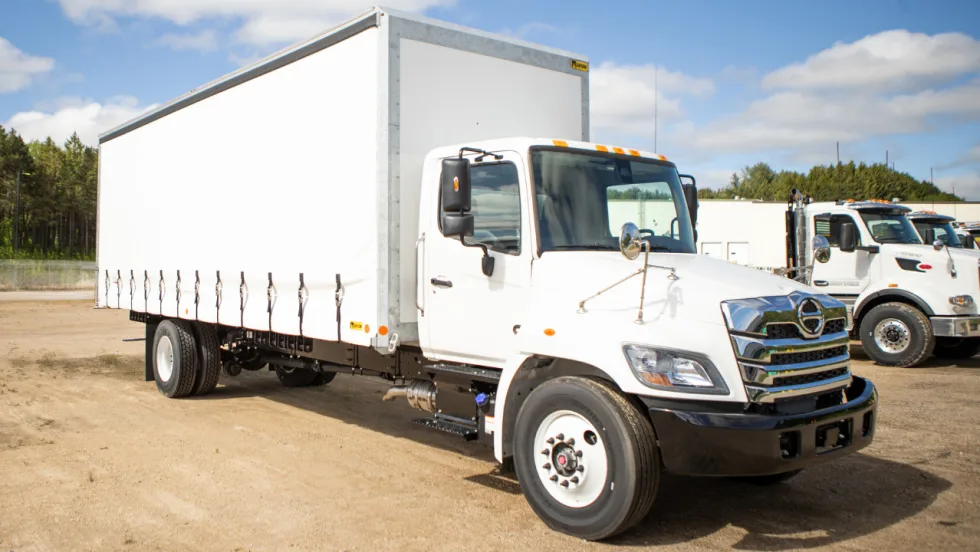
Thinking Outside of the Box: Choosing the Right Truck Body for Your Fleet
Choosing the right truck body can have a major impact on loading efficiency, cargo protection, downtime, and long-term operating costs. Here’s how dry vans, platforms, and curtainsiders compare, plus what fleets should consider before spec’ing their next truck.
Read More →
Fourth Annual Upfit Package of the Year Awards Open for 2027 Entries: One Month Left!
Think your upfit deserves industry recognition? Enter the 2027 Work Truck Upfit Package of the Year Awards before the Sept. 30 deadline. There is less than a month left to get your submissions in!
Read More →
Reading Truck Equipment & Masterack Unite as One of North America's Largest Commercial Vehicle Upfit Networks
Reading Truck Equipment and Masterack have integrated operations to create one of North America's largest and most comprehensive commercial vehicle upfit organizations.
Read More →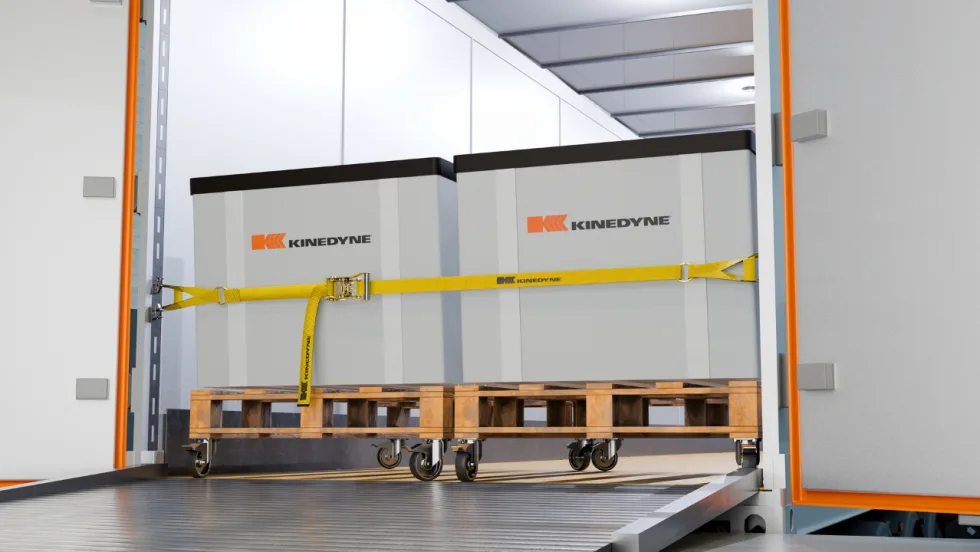
Kinedyne Launches Heavy Duty Logistic Shoring Strap
Kinedyne’s new Heavy Duty Logistic Shoring Strap features a patent-pending four-point design to deliver greater cargo stability, increased strength, and easier handling for rolling and shifting freight.
Read More →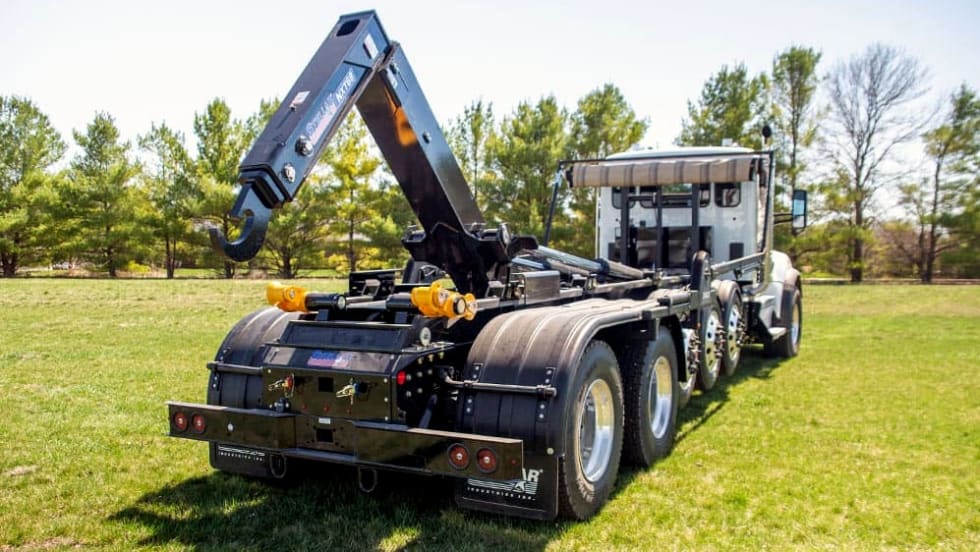
Hooklift Bumper Design from Stellar Showcases Strength & Versatility
Stellar Industries’ new bumper for the NZT Series Hooklifts come in two capacity options: the 20K, designed for Class 3 – 6 chassis with a 20,000-pound pull capacity, and the 90K, built for Class 7 and 8 chassis with a 90,000-pound pull capacity.
Read More →
Maxon Lift Awarded the Wabash Platinum Award for Supply Chain Performance
Maxon Lift, a liftgate manufacturer since 1957, received the Wabash Platinum Award for supply chain performance in 2025. Each year, Wabash presents awards to top suppliers for excellence in supply chain performance.
Read More →