





Dig Deeper: Mobile Fueling for Emissions Reduction
How Does the 2010 EPA Standard Impact Fleet Biodiesel Use?
The EPA’s 2010 standard calls for reductions in nitrogen oxide emissions by 83 percent from the 2007 mandate. Industry experts discuss the new standard’s impact on NOx levels, engine performance, and fuel quality.
May 12, 2010

Ford’s new 2011 F-Series Super Duty features the all-new Ford-designed and Ford-built 6.7L Power Stroke V-8 turbocharged diesel engine that can accommodate up to B-20 blends.
Photo: General Motors
9 min to read
Whether you already use a biodiesel blend in your fleet or are looking into it, you may have concerns about how this alternative fuel, produced from vegetable oils (such as soybeans) or animal fats and “blended” up to a certain percentage with regular diesel, will interact with the new 2010-emissions diesel engines.
Does biodiesel present unique challenges to the latest aftertreatment technologies developed for these engines? Does this alt-fuel negatively affect fuel economy? What do engine manufacturers say? Overall, does the EPA 2010 mandate really make a difference in biodiesel use, compared to the previous standard?
Work Truck magazine contacted representatives at the Engine Manufacturer’s Association (EMA), National Biodiesel Board (NBB), General Motors (GM), and Isuzu Commercial Trucks of America (ICTA) for their insights on the potential impact — short- and long-term — of running biodiesel in new 2010 diesel engines.
OEMs Limit Emissions with SCR TEchnology
The U.S. Environmental Protection Agency (EPA) requires all diesel engines manufactured on or after Jan. 1, 2010, to reduce nitrogen oxide (NOx) emissions by 83 percent from the 2007 standard — from 1.2g/bhp-hr (grams per brake horsepower hour) to 0.2g/bhp-hr.
To meet the new standard, most engine original equipment manufacturers (OEMs) — including GM, Cummins, Detroit Diesel, and ICTA, among others — have employed selective catalytic reduction (SCR) technology. SCR reduces NOx levels by injecting into a catalyst small amounts of urea-based solution called diesel exhaust fluid (DEF), which reacts with the NOx captured in the catalyst to convert the pollutant into harmless nitrogen and water before it’s emitted into the environment.
Why is eliminating NOx relevant to biodiesel use?
Do Biodiesel’s NOx Levels Impact Technologies?
According to an Environmental Protection Agency (EPA) fact sheet, “Clean Alternative Fuels: Biodiesel,” while biodiesel reduces particulate matter and hydrocarbon emissions, it increases nitrogen oxide emissions by 2 percent in B-20 (20-percent biodiesel, 80-percent regular diesel) and 9 percent in B-100 (100-percent biodiesel). An increase in NOx emissions is a concern because the gas contributes significant amounts of ozone to the environment.
If NOx emissions are higher with biodiesel, is the SCR system forced to work harder to break down the pollutants, thus leading to a shorter useful life of the aftertreatment system?
According to Roger Gault, EMA technical director, the difference in NOx levels in B-20 biodiesel blends compared to regular diesel is inconsequential — and so is the impact on the SCR.
“It’s a really small influence,” says Galt. “You’re probably real hard-pressed to identify biodiesel influence on the SCR demands. The SCR is doing so much already that to do a couple percent more is not enough to alter things very much.”
Gary Arvan, chief engineer for General Motor’s Duramax diesel engine, recently approved for biodiesel use up to B-20, agrees. “Higher NOx with biodiesel really is negligible. We just don’t see that effect [on the SCR] in running biodiesel,” says Arvan.
Rob Cadle, ICTA product planning manager, anticipates some impact on DEF depletion.
“Biodiesel wouldn’t necessarily affect the SCR system itself,” says Cadle, “but it may require a little bit higher urea consumption. So your DEF usage might go up, especially if you have more engine-out NOx.”
However, it’s precisely this notion that biodiesel creates higher engine-out NOx that Jennifer Weaver, OEM outreach and education specialist for the NBB, seeks to debunk altogether.
“The studies that generated the original higher NOx rumor were several years old and conducted on vehicles that were tested in a dyno lab, not in real-world applications,” Weaver points out. “And those tests revealed only minimal increased NOx levels when biodiesel blends were used.”
Weaver further explains, “More recent studies, also by the National Renewable Energy Laboratory [NREL] and other research entities, revealed that real-world applications actually show NOx neutrality or, even in some cases, a decreased NOx output with biodiesel blends. It depended very much on the duty-cycle of the engine and how it was being run. So biodiesel is not increasing the NOx output. The SCR systems completely take care of any NOx component in the exhaust. You’re not being penalized in any way by using biodiesel.”
Do Biodiesel Trace Metals Affect SCR Performance?
Aaron Williams, engineer with NREL in Golden, Colo., was quoted in the February 2010 issue of Biodiesel magazine discussing how residual trace metals (such as sodium, potassium, calcium, and magnesium) in biodiesel produced during processing might impact SCR performance and longevity.
“Over time these metals, once they go through the combustion process in the engine, end up in the exhaust, and that ash can attach itself to different aftertreatment devices, including SCR catalysts,” says Williams in the article. “And it can attack those devices. After 435,000 miles, you’ll see a lot of ash from biodiesel — from these metals — and that could foul the catalyst.”
Work Truck magazine asked Weaver, who works directly with engine manufacturers on behalf of the NBB, to respond to the trace metals issue Williams raises.
“In the interest of continuous improvement and to help provide data to those manufacturers who haven’t signed off on B-20 yet, we are investigating whether the specifications for metals should be lowered to help ensure that the metals allowed in the biodiesel do not degrade or affect catalyst life or aftertreatment system effectiveness,” says Weaver. “This is the genesis of the NREL work mentioned in the Biodiesel magazine. If the research shows a need to lower the metals content in the biodiesel spec, then ASTM [American Standard for Testing and Materials] will consider this moving forward.”
OnBoard Diagnostics Now Required
Onboard diagnostics (OBD) is a new requirement for medium-duty trucks over 14,000 lbs. gross vehicle weight rating (GVWR) to meet the EPA’s 2010 diesel emissions requirements. OBD is meant to alert fleet operators to emissions system malfunctions and hold fleets accountable to repair the issue before it leads to greater harm to the truck or the environment.
How does OBD impact biodiesel use?
According to Cadle at ICTA, the new 2010-compliant engines will be highly sensitive to any potential biodiesel fuel quality issues.
“With OBD, any fault in an emissions-sensitive component has to be detected,” says Cadle. “So, if the injectors or fuel pump are not working properly, we have to detect it and trigger a check-engine light. If a poor-quality biodiesel is used and it negatively impacts the performance of the fuel system, we have to detect it, trigger a check-engine light, and send the customer into the dealer. The driver may not even notice the vehicle isn’t performing well, but if the system detects malfunction, it will trigger the light.”
This means costly vehicle downtime. The vehicle must be taken out of service and sent to the dealer — even if the vehicle initially seems to be operating properly. Prior to OBD requirements, drivers may have continued to operate the vehicle until performance issues became apparent. At the same time, the advantage of OBD is alerts are raised to problems caused by fuel quality issues before they cause more pervasive and expensive damage to the engine and fuel system, saving money in the long run.
Fuel Quality Biggest OEM Concern
Across the board, fuel quality seems the biggest OEM concern in accepting biodiesel blends up to B-20 in 2010 diesel engines. Biodiesel that does not meet strict quality standards can diminish engine performance, clog filters and injectors, and cause numerous other costly repairs.
What are the standards?
The American Society of Testing and Materials International is one of several world standard-setting organizations that has adopted approved biodiesel specifications. ASTM D6751, the standard most commonly referenced in the U.S., pertains to pure biodiesel or B-100, prior to being blended with regular diesel. A newer standard, ASTM D7467, specifically covers biodiesel blends from B-6 to B-20. These standards are designed to protect consumers from poor products, reduce cost of buying and selling biodiesel, and streamline the procurement process.
“Our concerns about biodiesel primarily focus on fuel quality,” says Cadle. Isuzu has approved biodiesel use up B-5, but is actively researching B-20 compatibility.
“How can we ensure fuel quality is good?” Cadle asks. “If the fuel has poor quality, the fuel oxidizes, breaking down and forming gummy deposits. That stuff almost looks like a tar, and it can clog up fuel filters and cause damage and wear to injection pumps, injectors, and that type of thing. Also, with us and, I think, most engine manufacturers, fuel rail pressures are going up for the EPA 2010 engines. And as the fuel pressures go up, the fuel system becomes more sensitive to fuel quality. So the testing we’ve done to date shows that a really good high-quality biodiesel is not a big deal for the vehicle. But we also know that poor quality has very bad effects on the fuel system and the vehicle’s drivability.”
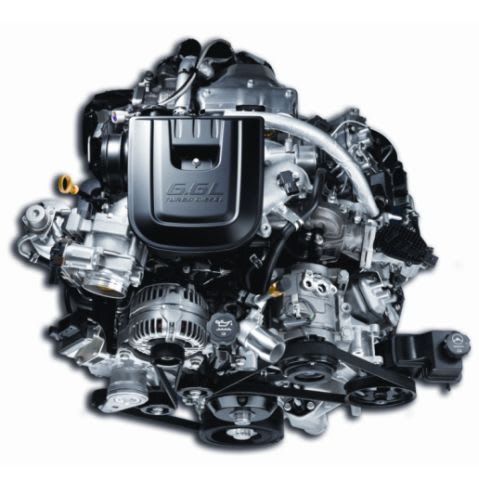
The General Motors 6.6L V-8 turbo diesel engine, offered on 2011 Chevrolet Silverado HD trucks, is ASTM-grade B-20-compatible. NOx emissions are controlled via a selective catalyst reduction aftertreatment system that uses urea-based diesel exhaust fluid.
Photo: General Motors
GM’s Arvan agrees. “We still are reliant on fuel being good biodiesel,” he says. “We want to make sure that it is ASTM specification and not homegrown fuel. We don’t want to run McDonald’s fried grease. The fuel must go through the specification process that removes the glycerins and all those types of things. It has to be good fuel. That’s one of the risks of running biodiesel — that some of the fuel is not good. Customers need to be really aware of that.”
How can you ensure fuel quality? Look for a BQ-9000-certified fuel supplier. The National Biodiesel Accreditation Commission (NBAC) initiated a voluntary program, called BQ-9000 (www.bq-9000.org), for the accreditation of producers and marketers of biodiesel fuel. This program combines the ASTM D6751 standard with a quality systems initiative that promotes best practices for storage, sampling, testing, blending, shipping, distribution, and fuel management practices.
Determining Biodiesel Impact on Fuel Economy
Does using biodiesel blends adversely impact fuel economy in the new diesel engines?
“Multiple studies have shown that biodiesel performs similarly to regular diesel in terms of diesel in fuel economy, torque, engine power,” says Weaver with the NBB. “You really don’t take a hit with biodiesel blends the way you do with, say, ethanol blends in gasoline-powered vehicles. Most common blends that are used are B-20 and lower. There may be more of a [fuel economy] hit if you are using a very high blend, closer to B-100. But multiple fuel economy tests over the years have shown that biodiesel performs comparably to regular diesel in terms of fuel economy.”
No Greater Impact Expected from New EPA Standards
From a long-term perspective, does the EPA 2010 emission standard really present greater or unique challenges to biodiesel use, compared to the previous standard? EMA’s Gault doesn’t see it.
“From my understanding from our members, we’re really not anticipating much of a difference in the 2010 engine in terms of biodiesel interactions compared to the 2007 [standard],” says Gault. “Obviously, it’s pretty early in the 2010 game right now, but I am not aware of any member companies that have expressed concern about the differences in technology for 2010 compared to the 2007, as far as their approval of whatever [biodiesel] blend they approved in the past.”
Guidelines: Using Biodiesel Blends in 2010 Emissions Engines
Tom Read, technology communications, powertrain, for General Motors, offers the following guidelines when using biodiesel blends in fleets:
Understand it is acceptable to use diesel fuel containing up to 20 (+/-2) percent biodiesel (B-20). Blends containing more than 5-percent and up to 20-percent biodiesel must meet the latest version of ASTM specification D7467 (Biodiesel blend, B-6 – B-20). Biodiesel is an emerging product, and its quality can vary widely.
Recognize that raw vegetable oil or other unmodified bio-oils or fats are not biodiesel and must not be used in a fleet vehicle as they can damage the fuel system and engine.
Ensure pumps dispensing more than 5-percent (B-5) and up to 20-percent (B-20) biodiesel blends are labeled with the proper concentration of biodiesel.
Remember biodiesel fuel quality degrades with time and exposure to high temperature much faster than conventional diesel fuel. More frequent refueling provides the best opportunity to ensure supply of fresh fuel.
Subscribe to Our Newsletter
More Green Fleet

Fleet Forward Conference Introduces One-Day Passes for 2026
New one-day registration gives fleet professionals the flexibility to attend Tuesday, Wednesday, or Thursday, with passes available for $199 through Sept. 18.
Read More →
CALSTART Rebrands as Catalyst Mobility, Will Combine with Forth in 2027
CALSTART has rebranded as Catalyst Mobility and will combine with Forth at the start of 2027. The new organization said it is poised to become one of the world's largest, strongest, and most impactful clean transportation nonprofits.
Read More →
Electric Truck and Charging Programs to Boost Sustainability at NY & NJ Ports
Together, the Port Authority of New York and New Jersey and CALSTART will electrify drayage and terminal operations serving the East Coast’s busiest container port. A pair of incentive programs totaling $45 million has launched to accelerate adoption of zero-emission drayage trucks and terminal tractors.
Read More →

The Smart Way to Build a Mixed-Energy Fleet Isn’t About Picking a Side
Mixed-energy fleets aren’t about picking a winning fuel. Sarah Booth of WEX explains how vehicle data, duty cycles, charging strategy, and real-world costs can help fleets choose the right energy source for each job.
Read More →
Xos Hub Surpasses One Gigawatt-Hour of Energy Delivered in the Field
A single Xos Hub has surpassed one gigawatt-hour of energy across more than 33,600 charging sessions in the field, demonstrating performance that supports Xos' expansion across new products and markets.
Read More →
Carrier Transicold Launches All-Electric Vector 8200 TRU for Diesel-Free On-Site Cold Storage
Carrier Transicold’s first engineless multi-temperature TRU helps fresh- and frozen-food fleets add supplemental cold storage capacity during seasonal peaks.
Read More →
Narro Trucks Introduces Electric Utility Vehicle
Narro Trucks officially launched its operations on Aug. 20 and hosted a ride and drive to showcase its electric truck, which will be produced in Virginia.
Read More →
Samsung SDI Takes Full Control of GM Battery JV as Indiana Plant Pivots to Energy Storage
Samsung SDI is taking full control of its Indiana battery plant with GM, marking a major shift from the EV-focused joint venture Charged Fleet first covered in 2023.
Read More →
NWSA Taps CALSTART to Administer Zero-Emission Drayage Assistance Program
CALSTART will provide free technical assistance services to drayage fleets serving the Ports of Seattle and Tacoma and looking to transition to cleaner technologies and help decarbonize freight hubs.
Read More →
EV Fleet Reality Check: What Operators Wish They Knew Before Electrifying Their Work Vans
Electric work truck upfits bring new compatibility questions. Learn how parts availability, OEM guidance, power demands, and route planning can affect fleet performance.
Read More →