





RELATED: What You Need to Know About Cargo
Facts of Cargo Load Securement
A review of federal regulations will help develop cargo/load securement policies to ensure cargo carried in company vehicles is transported safely, efficiently, and free from damage.
February 3, 2009

To proactively deal with cargo load securement cost and liability issues, a company must develop and implement a cargo securement process. Ensure all drivers are adequately trained for the specific class of vehicle they operate. As the old adage advises, "An ounce of prevention is worth a pound of cure."
Photo: Work Truck
7 min to read
Load/cargo securement is a fairly simple safety concept. There is an expectation that items transported in or on your vehicle will stay on the vehicle until ready to be removed. The concept applies to just about anyone who operates a vehicle(s) to conduct business. The first category of vehicles we typically think of are semis, but also included are dump and service trucks, pickups — with or without trailers — and in some cases, sedans.
A company may transport products, parts, tooling, or any number of items in support of customers or its business. Fleet managers and their companies are responsible to ensure those items are transported safely, efficiently and free from damage. Failure to transport properly secured items may result in property damage, injury, or even a fatality. Claims from these incidents cost companies hundreds of millions of dollars annually. However, most of these incidents are preventable.
To provide guidance in reviewing your company’s cargo/load securement program, this article addresses requirements found in parts 392 and 393 of the Federal Motor Carrier Safety Regulations (FMCSR). Though the content includes sections of the federal guidelines, non-regulated fleets will benefit from the information.
Is Cargo Securement Important?
The answer to this question is obviously yes. How many times have you witnessed a service truck, pickup, trailer (small or large), or semi with loose or improperly secured cargo? A piece of loose cargo can easily bounce off the vehicle and present a hazard to other motorists or pedestrians.
Ultimately, as fleet operators, our customers trust us to safeguard the product transported on their behalf. Customers expect a service provider (e.g., plumber, welder, or mechanic) will safely transport tools/materials/parts.
The motoring public expects a company or organization to protect it against the risk of becoming involved in a crash caused by shifting or falling cargo. Safe cargo handling minimizes company liability exposure and helps project a safety-conscious corporate image.
Lastly, senior executives and shareholders expect fleet managers will protect the company from expensive claims whether those claims are cargo or tool/material losses or third-party liability claims.
In addition to strictly monetary costs, other potential costs may arise:
The impact of an injury or fatality.
The effect on customers if the cargo or service is not delivered.
The impact on a company’s third-party insurance rates.
The consequences of a vehicle loss on business operations.
To proactively deal with these cost and liability issues, a company must develop and implement a cargo securement process. Ensure all drivers are adequately trained for the specific class of vehicle they operate. As the old adage advises, "An ounce of prevention is worth a pound of cure."
The Basics of Cargo Securement
Good housekeeping practices for all fleet vehicles are important. A clean, tidy vehicle is the first step in projecting a positive corporate image to customers and the motoring public.
Complete a thorough pre-trip vehicle inspection, including all components and accessories. A good reference for a pre-trip inspection can be found in the FMCSR 392.7 Equipment, Inspection and Use (See sidebar below).
Remove all debris from the vehicle bed or trailer deck. These areas can sustain a certain amount of damage from normal use; make sure they are in good repair.
A critical precaution is securing a vehicle from movement while it is loaded. The parking brake may be adequate on smaller vehicles, while larger vehicles may require parking chalks.
Ensure the vehicle is correctly sized if it hauls large or bulky items.
Cargo Inspection, Securement Devices & Systems
As transporters under FMCSR regulation 392.9, companies and drivers are required to:
Properly distribute and secure cargo.
Secure all vehicle load securement devices (chains, straps, and tarps) and cargo.
Ensure drivers have clear visibility on all sides of the vehicle.
Ensure drivers have free movement of their arms and legs.
Provide driver access to emergency equipment and easy vehicle exit.
Inspect the load and devices to secure the load prior to beginning trip.
Inspect the load within the first 50 miles and adjust securement devices as needed.
Re-examine the load and securement devices during the trip, adjusting as needed.
Re-examination intervals must occur whenever a change-of-duty status occurs and when the vehicle has been in operation more than three hours or driven 150 miles (whichever occurs first).
Under Part FMCRS 393.100, the company and driver must ensure cargo transported on a public road is loaded in a manner that prevents the cargo from leaking, spilling, blowing, or falling from the vehicle. In addition, the load or vehicle contents must be secured to prevent shifting. Further, any load shifting may not negatively affect vehicle stability or maneuverability.
States Regulate Vehicle & Axle Weights
Individual states may have both gross vehicle and per-axle weight restrictions. Furthermore, some states may also have cargo covering requirements. Fleet managers and drivers must be knowledgeable about the regulations and restrictions in each state company vehicles travel.
In summary, a poorly or overloaded loaded vehicle is difficult to operate and can contribute to excessive wear and poor fuel economy. Everyone benefits from a sound cargo securement policy: companies, drivers, customers, and the motoring public.
Cargo Securement Definition of Terms
These definitions relate to cargo securement issues. The complete list can be found in Federal Motor Carrier Safety Regulation 393.5.
Aggregate working load limit. The summation of the working load limits or restraining capacity of all devices used to secure an article of cargo on a vehicle.
Anchor point. Part of the structure, fitting, or attachment on a vehicle or article of cargo to which a tie-down is attached.
Article of cargo. A unit of cargo, other than a liquid, gas, or aggregate lacking physical structure (e.g., grain, gravel, etc.), including articles grouped so that they can be handled as a single unit or unitized by wrapping, strapping, banding, or edge protection device(s).
Blocking. A structure, device, or another substantial article placed against or around an article of cargo to prevent its horizontal movement.
Bracing. A structure, device, or another substantial article placed against an article of cargo to prevent it from tipping and may also prevent it from shifting.
Dunnage. All loose materials used to support and protect cargo.
Edge protector. A device placed on the exposed edge of an article to distribute tie-down forces over a larger area of cargo than the tie-down itself, to protect the tie-down and/or cargo from damage, and allow the tie-down to slide freely when tensioned.
Friction mat. A device placed between the deck of a vehicle and article of cargo, or between articles of cargo, intended to provide greater friction than exists naturally between these surfaces.
Tie-down. A combination of securing devices that forms an assembly attaching articles of cargo to, or restrains articles of cargo on, a vehicle or trailer, and is attached to anchor point(s).
Working load limit (WLL). The maximum load that may be applied to a component of a cargo securement system during normal service, usually assigned by the manufacturer of the component.
FMCSR 392.7 Equipment, Inspection & Use
No commercial motor vehicle shall be driven unless the driver is satisfied the following parts and accessories are in good working order, nor shall any driver fail to use or make use of such parts and accessories when and as needed:
Service brakes, including trailer brake connections.
Parking (hand) brake.
Steering mechanism.
Lighting devices and reflectors.
Tires.
Horn.
Windshield wiper(s).
Rear-vision mirror(s).
Coupling devices.
FMCRS 393.100 Which types of commercial motor vehicles are subject to the cargo securement standards of this subpart, and what general requirements apply?
(a) Applicability. The rules in this subpart are applicable to trucks, truck tractors, semitrailers, full trailers, and pole trailers.
(b) Prevention against loss of load. Each commercial motor vehicle must, when transporting cargo on public roads, be loaded and equipped, and the cargo secured, in accordance with this subpart to prevent the cargo from leaking, spilling, blowing or falling from the motor vehicle.
(c) Prevention against shifting of load. Cargo must be contained, immobilized or secured in accordance with this subpart to prevent shifting upon or within the vehicle to such an extent that the vehicle’s stability or maneuverability is adversely affected.
The Federal Motor Carrier Safety Regulations Parts 393.102-201 provide specific details of cargo securement devices and systems.
About the Author: Mike Butsch is North America/fleet alliance manager for Joy Global, a worldwide machinery and services company.
Subscribe to Our Newsletter
More Safety
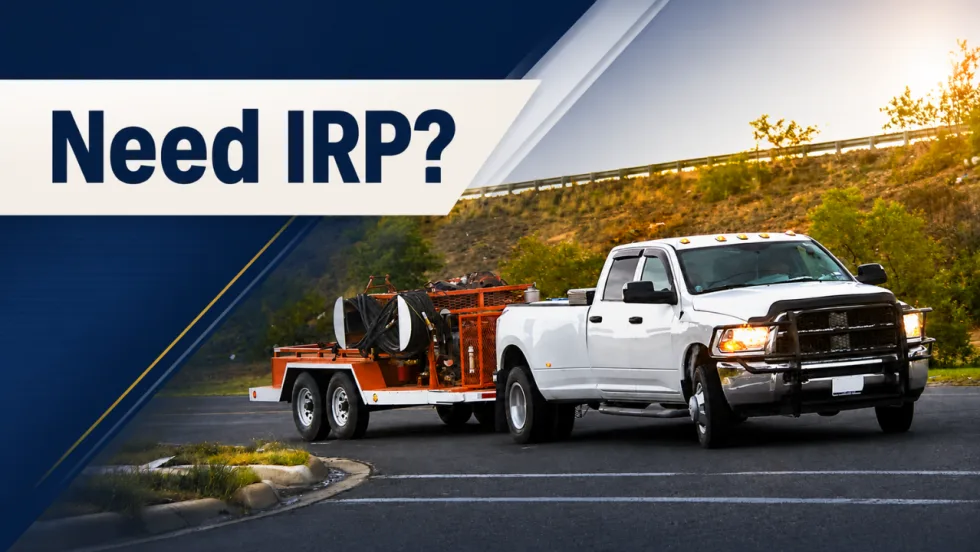
When Work Trucks Under 26,001 Pounds Need IRP Registration
Think trucks under 26,001 pounds are automatically in the clear when it comes to IRP? Not always. Learn where lighter vehicles can still run into trip permit, apportioned registration, and IFTA compliance requirements when crossing state or provincial lines.
Read More →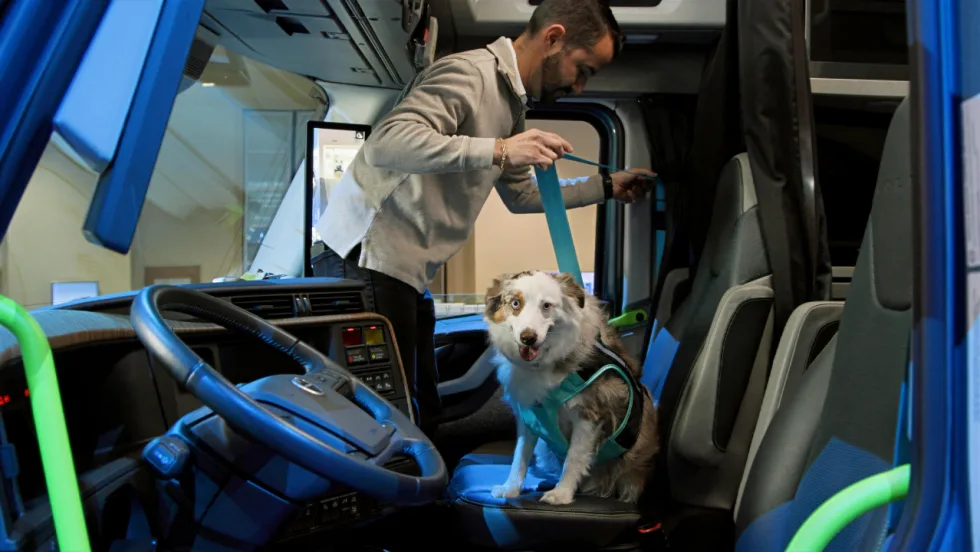
Volvo Trucks Releases New Safety Recommendations for Traveling with Pets
One of the most important recommendations for professional drivers traveling with pets is to ensure pets are properly restrained while the truck is moving. Other tips are available in the new guide from Volvo Trucks North America and Center for Pet Safety.
Read More →
API Issues Refueling Safety Guidelines
The American Petroleum Institute offers a list of safe vehicle refueling guidelines, including ways to avoid potential problems with static electricity discharges in fall, winter, and early spring.
Read More →
Winter Fleet Prep: Expert Tips to Keep Vehicles Running Smoothly
Cold weather can expose weak batteries, tires, fuel systems, and maintenance gaps fast. Use this winter fleet checklist to prepare trucks and drivers before temperatures drop.
Read More →
When a Work Truck Breaks Down, the Job Can Stop, Too
A work truck breakdown can stop more than the vehicle. Discover how payloads, jobsites, and specialty equipment change the roadside response.
Read More →
What Stronger Long-Term Fleet Service Partnerships Actually Require
Fleet service partnerships rarely fall apart all at once. Learn the three warning signs that trust is eroding and what fleets and providers can do before downtime, frustration, and lost revenue follow.
Read More →
Applause & TRUCE Software Partner to Improve Driver Safety Through AI-Powered Telematics & Employee Performance Management
Applause has integrated TRUCE driving metrics directly into its employee-first performance and safety platform that transforms mobile devices into AI-powered telematics.
Read More →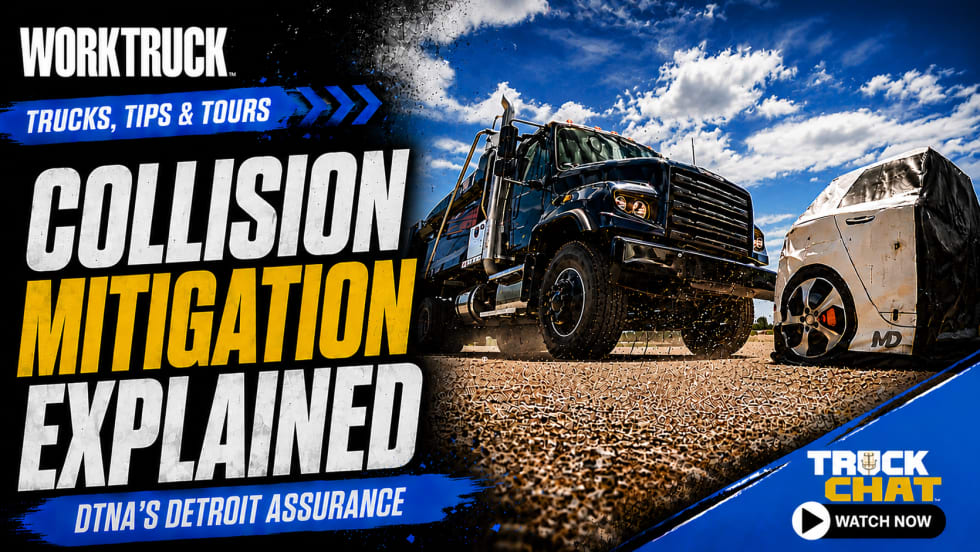
How Detroit Assurance with Active Brake Assist Works
Do you want to see what it is like to experience Detroit Assurance’s Active Brake Assist? In this video, Work Truck will put you in the cab to see how it all works and then hear more details from DTNA’s Mike Young.
Read More →
Get Left of Loss: A 5-Step Workplace Violence Prevention Framework for Fleet Operators
Violence risks do not stop at the driver’s door. Learn five practical steps fleets can take to spot threats early and protect workers before loss occurs.
Read More →
Sponsored•July 17, 2026
How Better Visibility Cut Speeding Violations by 48%
Fleet leaders don't need more data, they need clearer visibility into what the data is saying. This case study explores how one utility replaced speeding-event counts with a single metric — miles driven in violation — to strengthen safety and significantly reduce speeding violations.
Read More →