


Want Even More Info?
Check out our full-length webinar which includes a Q&A session and case study results.
 MENU
MENU SEARCH
From early adopters to long-time users, it’s important to create a plan and partner with those who know how to best support you in your journey to electrification.


From early adopters to long-time users, it’s important to create a plan and partner with those who know how to best support you in your journey to electrification.
Photo: Unsplash/Markus Spiske
Electric vehicles (EVs) aren’t going anywhere. They are far from a fad and are starting to penetrate the medium- and heavy-duty truck segments. In a Hitachi-sponsored webinar titled, “Charging, Infrastructure & The Grid: How to Power a Successful EV Fleet Strategy,” moderator and Work Truck Executive Editor Lauren Fletcher interviewed Sean Ackley, EV and grid edge segment lead for Hitachi Global Social Innovation Business; Daniel Simounet, VP Transportation Sector, Americas for Hitachi Energy; and Emily Graham, director of Sustainability for Holman Enterprises to get their perspectives on how vocational fleets can take action to properly prepare for an EV future.
The transition to EVs will continue to accelerate, according to Simounet. He listed two reasons: Decarbonization efforts around the world due to political policies and incentives, and the return on investment driven by new technology.
“Battery costs have decreased drastically and will continue to based on volume, which will offer wider application. For fleet charging infrastructure, it depends on the transportation segment,” he stated.
Graham chimed in from a fleet management perspective saying there’s a lot of pressure to convert from ICE to EV.
“Whether it's language from a board of directors or a senior leader in your business, they're asking the question of ‘what are we doing? How are we transitioning or transforming our business as this infrastructure and technology becomes more widely available?’,” she explained.
Setting clear expectations and determining whether you are prioritizing the correct factors will have an impact on how quickly your fleet can be transitioned to EVs.
“You need to be able to balance both clear, defined business goals with accessibility to the units you need,” she said.
We are no longer at the beginning of the journey to electrification. Ackley stated the market has matured over the last decade and given birth to an ecosystem of technology developers, providers, research groups, and investors fleet managers can now lean on to learn from.
“Tap into that experience so you can avoid mistakes and jump over a few hurdles that otherwise might have tripped you up,” he recommended.
With any fairly-new technology will always come reservation. Naturally, no one wants to make a heavy investment into something before they can be sure that money will be spent wisely. EV technology is evolving and replacing itself on a rapid scale, and that can be scary.
“You want to create a smart strategy when it comes to buying rolling stock that will stand the test of time. It has to serve your fleet objective. Make sure you're planning not just a capital expenditure, but a technology ecosystem strategy with equipment that works well together,” Ackley said.
Graham stated planning requires being realistic about what's happening around you.
“From a fleet perspective, I'd be remiss if I didn't touch on the supply chain issues we are facing. We hear a lot about having the capital, but not knowing how to get your hands on assets. You can lean on some of your partners to understand what alignments they’ve made and how they’ve cultivated skills in EV competency,” she explained.
If fleet managers are planning on converting a large fleet to electric, it's a completely different story, especially if they don’t have any experience with charging.
“You have to bring power to these garages or warehouses, and you’re now dealing with new players you have to bring into the equation. Bringing megawatts of power into an existing facility is not easy. The real concern is around technology, but also integration into an existing operation,” Simounet stated.
When it comes to fleets, managers are looking for ways to adapt to coming changes. Ackley said there’s a lot of talk around providers becoming ecosystem providers - being able to sell an entire EV solution.
“We want to make sure that when the innovative companies of the world are designing new technologies to offer fleets that they are offering tech paced with aptitudes. As everyone's staff and customer base evolves, you want to make sure it’s easy to familiarize them with it. You need user interfaces developed around the competencies of someone who's managed a traditionally gas-powered fleet,” he explained.
Graham stated she believes the transition to EVs is an evolution rather than a revolution.
“We need to be paced both with the needs of the natural consumer and also what infrastructure can support. It's thinking about the long game. I think in terms of when you put in onsite infrastructure, are you actually digging the ground and scaling appropriately for a 10-year range? I can't imagine the cost it would take to open that ground back up as you continue to scale for your EVs,” she warned.
The future lies in scaling up from pilot programs to large-scale deployment. Simounet noted the two are not the same game. It takes a lot more than just buying a couple of chargers, testing the vehicles’ range, and training your workforce on how to use and maintain EVs. Fleet managers need to be planning for the entire journey, not just the beginning.
“Is your infrastructure modular enough by design so you can adapt as you purchase equipment? It has to be easy to scale up,” he warned.
It’s vital to be aware of the different technologies and architectures in the EV space before investing. Ackley noted the importance of determining how interoperable they are with one another.
“If you're a buyer of both vehicles and charging infrastructure, do they communicate so you can get critical power consumption data through the charger or out of the vehicle telematics system? Talk to your OEMs and suppliers. Don’t just buy dabbles of equipment from 50 different suppliers and hope they will work fine together,” he said.
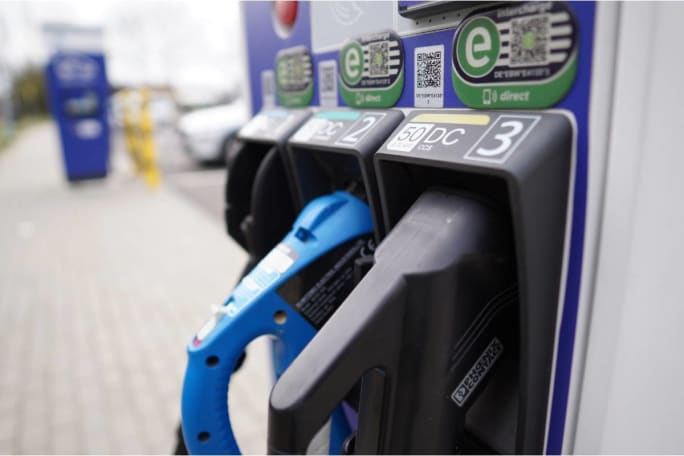
When transitioning to EVs, it can be a bit difficult to adjust from going for a quick top-off at the local gas station to needing a few hours to charge up.
Photo: Unsplash/Sophie Jonas
Simounet stated public charging doesn’t have as big an impact on the grid because it's distributed.
“The big issue we see is with charging hubs where you have trucks and big fleets that will come back to a certain location at the end of the day. All of these trucks will have to be charged overnight. With medium-duty, you’re talking about megawatts. In this case, there is an impact, because you need to bring more power to the site,” he explained.
Depending on the size of your fleet, you might be looking at additional power sources or supply or onsite power generation as an additional way to supplement the grid, according to Ackley.
“With investments from the infrastructure policy put in place by the federal government and investments from utility providers, eventually we’ll see a more robust grid. What I would urge fleet managers to do is ask a lot of detailed electrical questions or hire a consultant or engineering firm that can advise you,” he counseled.
Graham made the observation that typically, fleet managers don’t go to school to become electrical engineers to learn how to throttle electricity up and down or make sure site plans are appropriate for the level of electricity that's needed to substantiate a fleet.
“It would benefit them to lean on tools and software. There are also a lot of driver behaviors that are one layer deeper than, say, the information we're receiving from a charging perspective that's going to change the success of electrification,” she said.
When transitioning to EVs, it can be a bit difficult to adjust from going for a quick top-off at the local gas station to needing a few hours to charge up.
“Traditional fueling is now replaced by considering the amount of time required based on charging capabilities to get that electric fleet ready for its optimal use the following day. It requires a change in driver behavior and there's a bit more to manage in terms of making sure you're also paying for charging at the most optimal cost,” Graham explained.
On top of that, if a company has a take-home fleet, managers will need to think about driver reimbursement if their vehicles are plugged directly into their homes.
“We've talked a lot about data today and knowing the accuracy and believing the vehicle is the best source of truth in terms of how much charge is used and where it’s pulled from but also being able to access charging information regardless of where the charge is happening.”
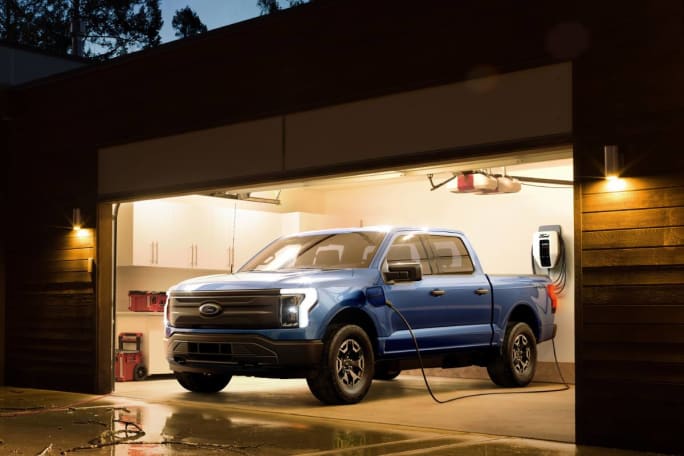
If a company has a take-home fleet, managers will need to think about driver reimbursement if their vehicles are plugged directly into their homes.
Photo: Ford
The journey to electrification is not to be taken lightly, and the path is best traversed with others who have the same objective.
“There's a reason you're looking at this. You have to have a goal. The only way to see it through is to ensure all you invest in is driving your organization towards that goal. Present your plan and share your concerns with the technology supply chains you have available to you. If someone can't speak to that goal, then they're probably not the partner you want,” Ackley warned.
Graham stated it’s important to ask others why they failed to electrify in the past.
“If they haven't failed to this point, they may not be ready to go to the grander scale you're at. Knowing their struggles makes them a bit more credible. If you’re working with a fleet management company, make sure they are aligned to guide you through the process so you're not going it alone,” she said.
Working together and being active on standards committees and associations that are promoting the electrification of transport will help as well, according to Simounet.
“That’s where we define the standards that will be adopted, so we can remove barriers to implementation. That takes all of us, from software companies to consultants to utilities. All of us need to be engaged to support change,” he stated.

New one-day registration gives fleet professionals the flexibility to attend Tuesday, Wednesday, or Thursday, with passes available for $199 through Sept. 18.
Read More →
CALSTART has rebranded as Catalyst Mobility and will combine with Forth at the start of 2027. The new organization said it is poised to become one of the world's largest, strongest, and most impactful clean transportation nonprofits.
Read More →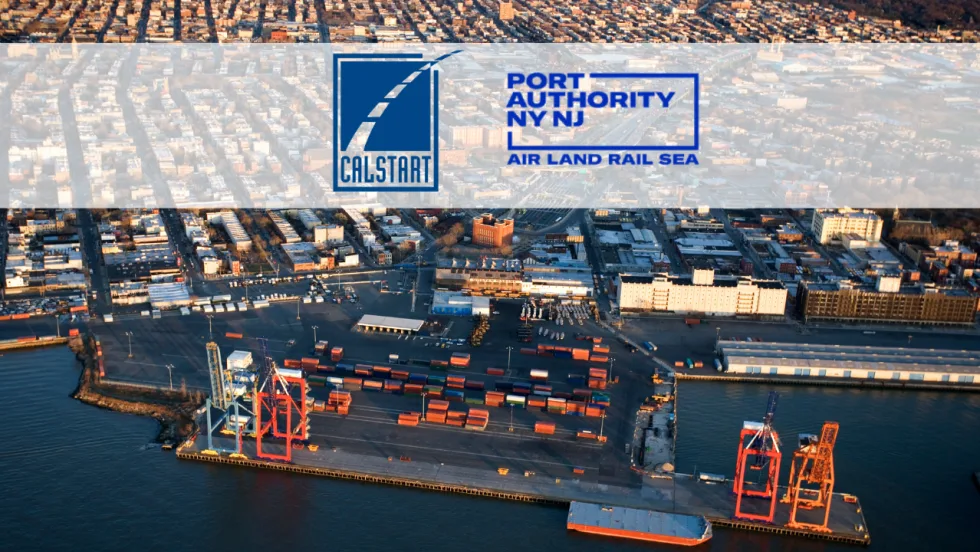
Together, the Port Authority of New York and New Jersey and CALSTART will electrify drayage and terminal operations serving the East Coast’s busiest container port. A pair of incentive programs totaling $45 million has launched to accelerate adoption of zero-emission drayage trucks and terminal tractors.
Read More →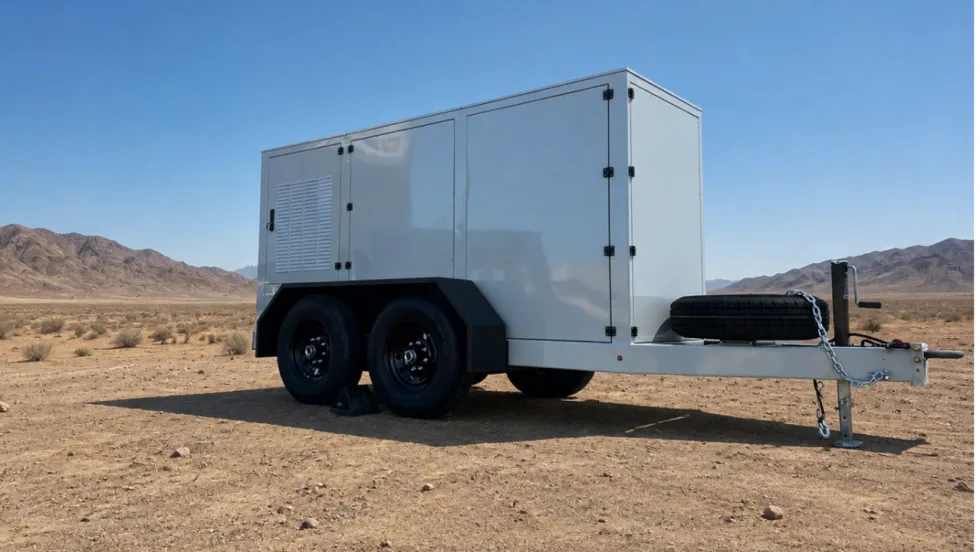
A single Xos Hub has surpassed one gigawatt-hour of energy across more than 33,600 charging sessions in the field, demonstrating performance that supports Xos' expansion across new products and markets.
Read More →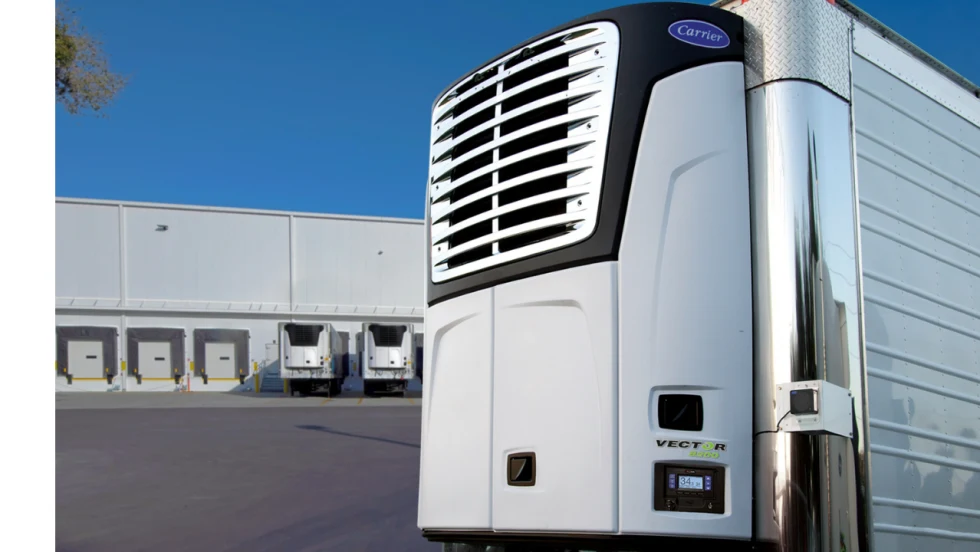
Carrier Transicold’s first engineless multi-temperature TRU helps fresh- and frozen-food fleets add supplemental cold storage capacity during seasonal peaks.
Read More →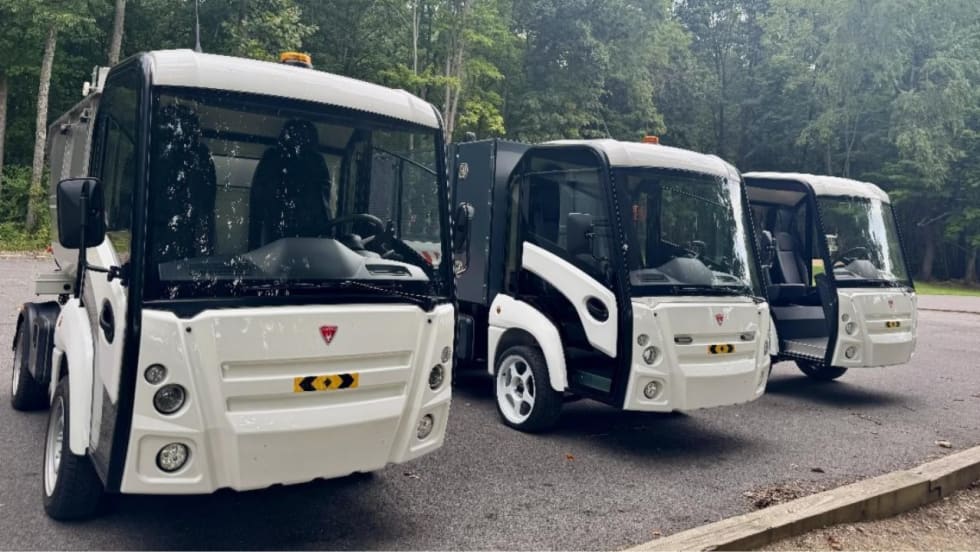
Narro Trucks officially launched its operations on Aug. 20 and hosted a ride and drive to showcase its electric truck, which will be produced in Virginia.
Read More →
Samsung SDI is taking full control of its Indiana battery plant with GM, marking a major shift from the EV-focused joint venture Charged Fleet first covered in 2023.
Read More →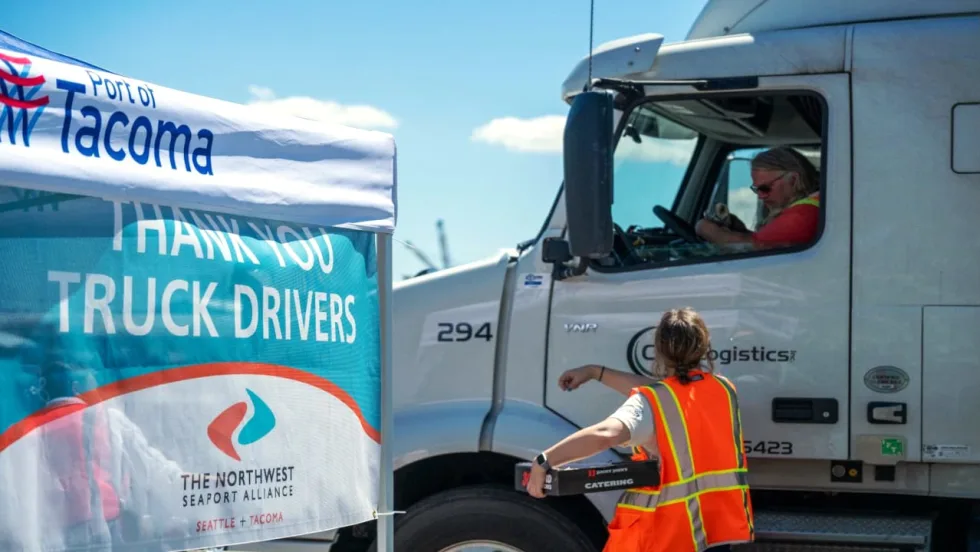
CALSTART will provide free technical assistance services to drayage fleets serving the Ports of Seattle and Tacoma and looking to transition to cleaner technologies and help decarbonize freight hubs.
Read More →
Electric work truck upfits bring new compatibility questions. Learn how parts availability, OEM guidance, power demands, and route planning can affect fleet performance.
Read More →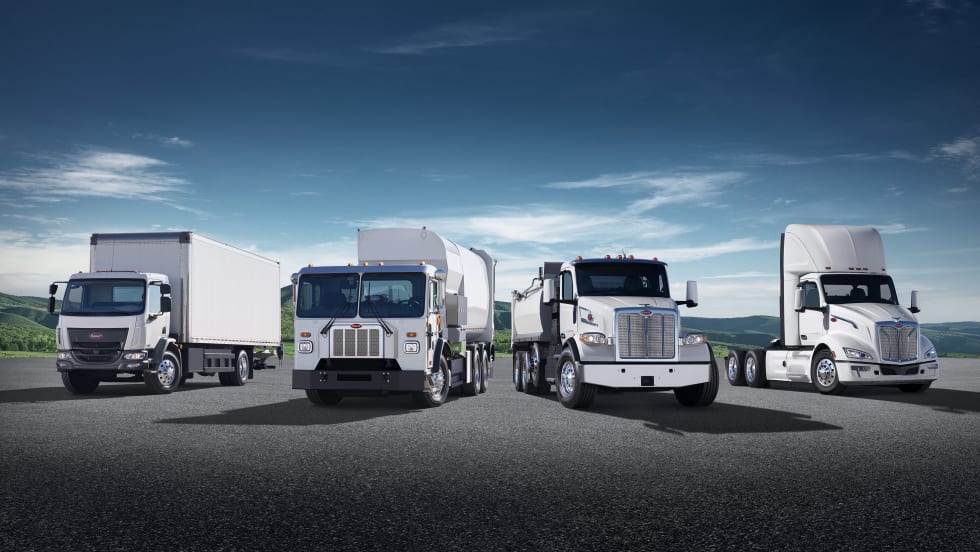
Peterbilt Motors Company’s cooperative purchasing agreement with Sourcewell and its Canadian partner, Canoe Procurement Group, now includes including Peterbilt's battery-electric vehicle lineup.
Read More →