




Related: Instilling a Culture of Safe Drivers
Changing Your Company's Safety Culture
While obstacles to tackle when creating a safety culture abound, fleet managers must address issues such as recognizing the need for change and making it a top company priority.
by Jennifer Stroschein, J.J. Keller
December 18, 2012
8 min to read
The U.S. Department of Labor’s Mine Safety and Health Administration (MHSA) imposed the largest fine in the agency’s history in 2012, following an investigation into a mine explosion that killed 29 workers and injured two others. The investigation found that the root cause of the tragedy was the company’s corporate safety culture, in which the operator of the mine not only promoted, but enforced, practices that valued production over safety in violation of the law. As a result, MSHA imposed a more than $10.8 million fine.
Unfortunately, this is not an isolated case. Developing and implementing an effective safety culture often poses real challenges, particularly at companies where safety policies and procedures have been the same for years. Change is necessary; however, to achieve a culture in which everyone in an organization has shared attitudes, values, goals, and practices that characterize a company’s safety efforts.
Obstacles to Change
What could possibly get in the way of implementing a program that reduces the frequency of injuries and illnesses? What could prevent the implementation of a program that rewards team members for safe behavior? What could stop the implementation of a program in which workers hold themselves accountable for practicing safe behavior?
There are many obstacles to change, but the most common include the following:
Supervisors are viewed as the “safety police,” patrolling the workplace and enforcing rules for reasons seen as sometimes disconnected from concerns about worker safety. Thus, safety is seen in a negative light.
Supervisors and management cut corners and fail to adhere to the same safety policies that they punish workers for not observing.
A lack of trust among workers, due to fear of “whistleblowing” or “Big Brother.”
Safety efforts are reactive and dependent on the occurrence of injuries.
Production is overemphasized and results are achieved at the expense of safety.
Over time, these obstacles become embedded in the attitudes, values, and goals that make up an organization’s culture. The longer these obstacles are present, the more difficult change becomes. Employees find it easier to continue with routines they are familiar with, even if those routines are unsafe.
There is little doubt that changing a company’s safety culture is difficult, but it is not an impossible task.
Implementing Change
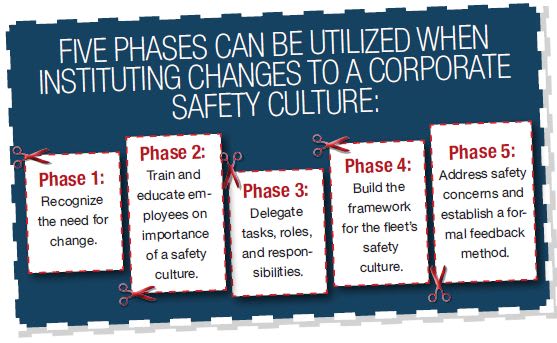
There is perhaps no “simple” way to change a company’s safety culture. There are, however, several phases that can be followed to make the process much easier, and help soften the resistance to culture change.
Phase 1
First and foremost, all levels of the company must recognize the need for change, and it all starts at the top. A fleet manager can promote a certain type of culture in any organization, but if it’s not endorsed, followed, and practiced by top management, it isn’t going to work, no matter how hard it’s hammered into the workforce.
For example, if the company promotes itself as being family-friendly, but, in practice, it is difficult to get time off for parent/teacher conferences or to accommodate flexible work schedules, the message is more than clear — the reality overrides the theoretical. And, it doesn’t take long for employees to figure it out.
If safety isn’t a priority at the top level of a company, don’t expect it to be at the “bottom level” of the organization. If the company or management seems more concerned with the bottom line than safety, employees will follow that lead, despite the danger it might pose. On the other hand, if management makes safety a priority in practice, so will employees.
Phase 2
During Phase 2, all employees must be trained and educated on the underlying elements of a good safety culture and how each affects them, as follows:
All individuals within the organization believe they have a right to a safe and healthy workplace.
Each person accepts personal responsibility for ensuring his or her own safety and health.
Everyone believes he or she has a duty to protect the safety and health of others.
It helps explain why things are being changed to accomplish this task. Most adults are more likely to accept change when they understand the reasons behind it. This is especially powerful if a fleet manager can share details of an accident that might help underscore the importance of safety to both individuals and the organization as a whole.
Phase 3
In this phase, tasks should begin to be delegated and roles and responsibilities should be assigned. This needs to be done for all levels of the organization. Even when management communicates to employees that safety is a priority, employees will not “buy in” until they see the policy in practice. Employees will quickly detect if a strong safety policy has no support, such as training on specific, written procedures or the enforcement of such policies on a daily basis.
Of primary importance, line managers and supervisors need to buy into the safety culture. Employees will quickly pick up on it if their supervisor is not committed to the culture. It will be apparent if supervisors are only following certain procedures because they are “told to,” and not because they really believe in them.
Supervisors are the ones on the front line, who will deal with the majority of the safety issues that come up, and the ones who are most vested with the responsibility of keeping employees safe. Hold them accountable for being involved and setting examples. It may become necessary to use disciplinary measures as a safety enforcement tool to convey that failure to follow safety directives will have consequences, and their support will be key.
Phase 4
The next phase is to build the framework for the fleet’s safety culture. Start with a strong paper program. This alone cannot ensure a strong safety culture, but seldom will you find a strong culture in existence without such a paper trail. Written statements, plans, policies, and other elements of a safety program will provide the fleet manager with a starting point, a measuring stick to judge progress, and specific undisputable goals for the company’s safety program.
If a safety committee does not currently exist, now is the time to establish one. If one has been assembled, evaluate it to determine any ways it can be more effective. Be sure the safety committee has representation from all levels of the organization, so everyone has a voice and shares in the responsibility of safety. To move the safety culture forward, make it a safety committee of action, not just words.
Ensure injuries, first-aid incidents, and near-misses are being reported. Better yet, ensure information is analyzed to see if any action can be taken to bring about improvement. Make sure incidents are being investigated thoroughly and root causes are being found and dealt with.
Finding a root cause must go beyond, “employees should be more careful.” Is it a training issue? Address it. Is safety not being given the priority it deserves? Change that.
Train and retrain employees. Ensuring all employees have the information and tools necessary to safely perform their job duties and that supervisors can effectively supervise safety is critical. Training is vital to sustaining a strong safety culture.
Phase 5
In Phase 5, safety concerns should be addressed. Establish a formal feedback system at every level. This encourages participation, which, in turn, develops a commitment to the company’s safety culture. Employees who feel their ideas are being heard and valued are more likely to continue providing them.
Feedback from supervisors is also valuable, in the chance, that there is a problem the fleet manager may not have thought of when implementing a new procedure.
Measuring Successful Change
Develop ways to measure the progress of the changes implemented. Examine the number of near-misses, lost-time incidents, OSHA recordables, workers’ compensation injury reports, etc. However, this doesn’t necessarily provide a lot of useful safety information that will help prevent future incidences.
Simply knowing the incident rate went up or down is somewhat helpful, but was it just luck? Is it possible to pinpoint any specific actions instituted that made the numbers change? Also, could that all change tomorrow if there was a big incident? In other words, lagging indicators aren’t always representative of the actual state of safety in the workplace.
Therefore, leading indicators must also be the focus. Leading indicators are activities that occur in an attempt to prevent injuries from happening. Common leading indicators include:
Percentage of employees submitting safety suggestions.
Number of safety meetings held and/or the percentage of attendance.
Number of behavior-based observations and/or the percentage of employee participation.
Length of time taken to implement corrective actions or act on safety suggestions.
Percentage of completed employee training.
Management of proactive safety activities.
How else can a fleet manager measure success? A strong safety and health culture is usually the result of:
Positive workplace attitudes — from the president to the newest hire.
Involvement and buy-in of all members of the workforce.
Mutual, meaningful, and measurable safety and health improvement goals.
Policies and procedures that serve as reference tools, rather than obscure rules.
Personnel training at all levels within the organization.
Responsibility and accountability throughout the organization.
When these criteria are consistently and effectively met, a positive safety culture is created.
Building a culture of safety is not an individual effort, but one that spreads throughout the organization with the help of many people working together toward a common goal that underscores the importance of safety at your company. This can be a real challenge. However, in doing so you’ll likely see benefits beyond a better safety culture; it will extend into the company’s overall business culture, which often is a competitive advantage.
Subscribe to Our Newsletter
More Safety
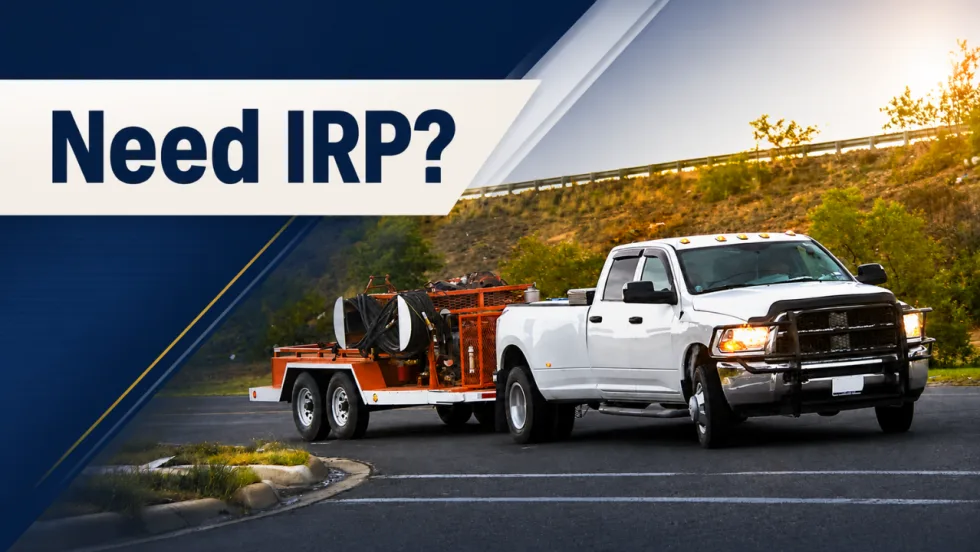
When Work Trucks Under 26,001 Pounds Need IRP Registration
Think trucks under 26,001 pounds are automatically in the clear when it comes to IRP? Not always. Learn where lighter vehicles can still run into trip permit, apportioned registration, and IFTA compliance requirements when crossing state or provincial lines.
Read More →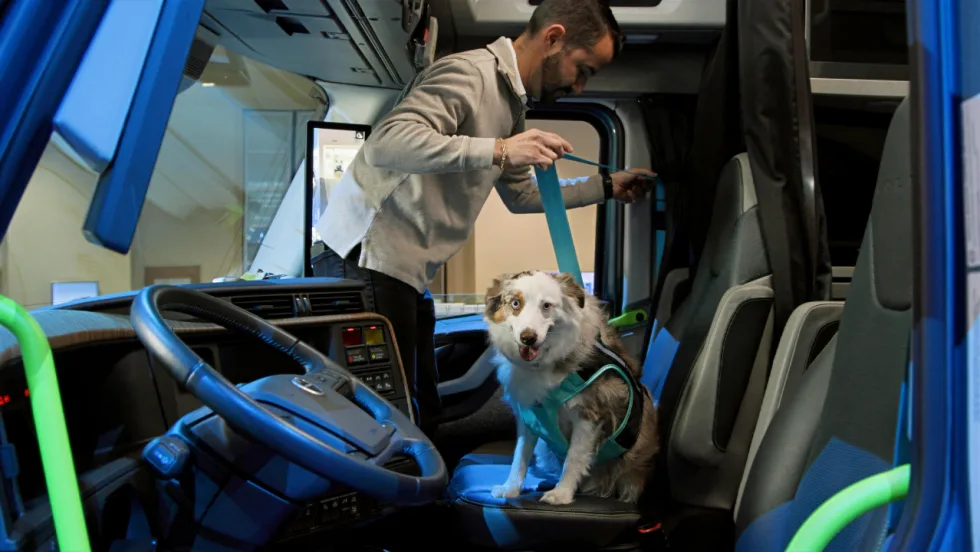
Volvo Trucks Releases New Safety Recommendations for Traveling with Pets
One of the most important recommendations for professional drivers traveling with pets is to ensure pets are properly restrained while the truck is moving. Other tips are available in the new guide from Volvo Trucks North America and Center for Pet Safety.
Read More →
API Issues Refueling Safety Guidelines
The American Petroleum Institute offers a list of safe vehicle refueling guidelines, including ways to avoid potential problems with static electricity discharges in fall, winter, and early spring.
Read More →
Winter Fleet Prep: Expert Tips to Keep Vehicles Running Smoothly
Cold weather can expose weak batteries, tires, fuel systems, and maintenance gaps fast. Use this winter fleet checklist to prepare trucks and drivers before temperatures drop.
Read More →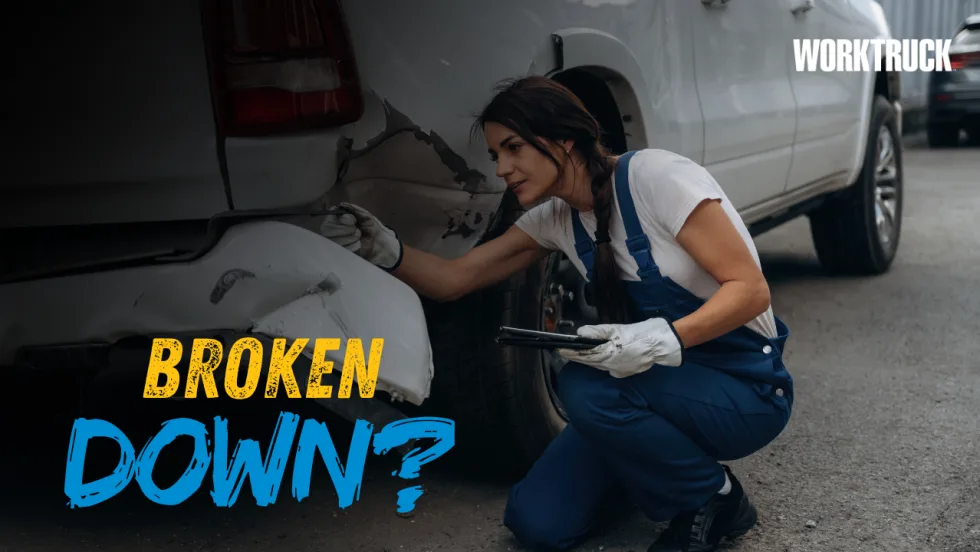
When a Work Truck Breaks Down, the Job Can Stop, Too
A work truck breakdown can stop more than the vehicle. Discover how payloads, jobsites, and specialty equipment change the roadside response.
Read More →
What Stronger Long-Term Fleet Service Partnerships Actually Require
Fleet service partnerships rarely fall apart all at once. Learn the three warning signs that trust is eroding and what fleets and providers can do before downtime, frustration, and lost revenue follow.
Read More →
Applause & TRUCE Software Partner to Improve Driver Safety Through AI-Powered Telematics & Employee Performance Management
Applause has integrated TRUCE driving metrics directly into its employee-first performance and safety platform that transforms mobile devices into AI-powered telematics.
Read More →
How Detroit Assurance with Active Brake Assist Works
Do you want to see what it is like to experience Detroit Assurance’s Active Brake Assist? In this video, Work Truck will put you in the cab to see how it all works and then hear more details from DTNA’s Mike Young.
Read More →
Get Left of Loss: A 5-Step Workplace Violence Prevention Framework for Fleet Operators
Violence risks do not stop at the driver’s door. Learn five practical steps fleets can take to spot threats early and protect workers before loss occurs.
Read More →
Sponsored•July 17, 2026
How Better Visibility Cut Speeding Violations by 48%
Fleet leaders don't need more data, they need clearer visibility into what the data is saying. This case study explores how one utility replaced speeding-event counts with a single metric — miles driven in violation — to strengthen safety and significantly reduce speeding violations.
Read More →