Historically, fleets have depended on truck managers and dispatchers to schedule product pick ups and deliver loads to customers. Mobile devices are changing the face of truck fleet management.
Mobile devices will significantly enhance work trucks, and fleet operators should embrace these technologies.
Photo: iStockphoto
3 min to read
Historically, fleets have depended on truck managers and dispatchers to schedule product pick ups and deliver loads to customers.
Ad Loading...
“While the historical method has proven to be effective, today, dispatchers are responsible for much larger fleets with just a few to a few hundred drivers,” noted Debajyoti Das, VP, Mobile Development at ERP software development company, VAI.
Ad Loading...
Mobile devices are becoming ever more prevalent. According to Pew Research, 96% of U.S. adults owned a cell phone, with 81% of adults owning a “smartphone” as of February 2019.
The adoption of mobile devices may sound daunting, but without these devices and applications, fleets will not be able to map out routes or deliver products accurately or on time.
Enhance Route Management with VAI’s S2K Route Manager
For many truck fleets, getting vehicles loaded and on their way can be a very complicated task. VAI’s S2K Route Manager application helps managers organize routes and ensures that warehouse pickers have the right information and trucks are loaded correctly, minimizing breakage and maximizing efficiency.
“As orders are released to the warehouse, they are cued up in the route manager screen. The route manager screen displays the quantity, weight, and cube for each route with subtotals products. From this screen the user can change the trailer for more capacity, manage stops, allocate inventory, view shorts, allow item substitutions, and much more,” explained Debajyoti Das, VP Mobile Development at VAI.
S2K Route Manager also provides a standard interface to Omnitracs Roadnet for automated truck routing. Powerful inquiry screens allow managers to view the status of each route and the picking progress in real-time.
Backload sheets, trip sheets, bills of lading, and invoices can be generated if required.
“Having mobile technology will allow work trucks to automate the management process - ultimately becoming more efficient. Work truck fleets should be ready to implement mobile devices in their day-to-day operations to streamline and automate interaction between drivers and dispatchers,” Das said.
Mobility solutions add real value to any type of fleet management operation.
The Benefit of Mobile Devices for Work Truck Fleets
Warehouse employees, fleet managers, salespeople, and truck drivers are responsible for the ongoing success of a company. However, many fleet workers are tasked with running various job responsibilities at the same time - requiring them to spend the majority of their time traveling.
Ad Loading...
“By utilizing mobile devices and fleet management software apps, everyone can actively monitor all processes and information involved in their work truck fleet from anywhere in the world,” Das explained.
Additionally, distributors face multiple challenges every day, including high volumes of customer orders to organize, rising fuel costs, drivers and vehicles to manage, changing road and traffic conditions, and tight time windows.
“Fleet managers can also save money through optimal routing. With route management mobile applications, fleets can save time and improve fuel efficiency by planning routes faster, maximizing the investment in fleets. Fleets would be able to avoid or minimize traffic slowdowns and ensure the load is on the fastest route to its destination,” Das said.
Operators and fleets will also have more efficient dispatching.“By leveraging truck routing, warehouse employees and fleet managers can have full visibility into how much time drivers have, helping improve load planning and service quality,” Das said.
Mobile Device Challenges
Along with the challenge of adjusting to mobile devices, communications can be an issue as well.
Ad Loading...
“If the mobile device cannot function without the internet, it limits just how connected fleets can be,” Das explained.
To combat this issue, fleet operators must invest in mobile applications that can be used online or offline.
“If disconnected from the internet, fleets should be able to continue utilizing mobile devices in an offline setting. Once connectivity is restored, the app should automatically synchronize data with the company’s server - updating warehouse employees in real-time and streamlining operation,” Das said. “As a result, fleets will be able to place and process orders, capture proof of delivery, email service completion notifications, and post invoices and payments to accounts receivable, all with complete accuracy.”
Many fleet workers are tasked with running various job responsibilities at the same time - requiring them to spend the majority of their time traveling.
Photo: iStockphoto
The Bottom Line
Mobile devices will significantly enhance work trucks, and fleet operators should embrace these technologies.
“Wireless devices are equipped with purpose-built apps that can be carried or mounted to complete a variety of tasks seamlessly. VAI’s software enables the dynamic load and route management that helps fleets reach their maximum optimization level - scaling businesses and increasing customer satisfaction,” Das concluded.
HCSS has integrated with Verizon Connect to provide near real-time fleet insights so contractors can spend less time tracking assets and more time keeping projects on schedule.
Fuel fraud and theft remain significant challenges for commercial fleets, whether the problem involves third-party fraud or driver misuse. In this video, David Abraham of WEX explains how SecureFuel uses vehicle geolocation, telematics, transaction information, and AI to help fleet managers identify suspicious fuel purchases and make more informed decisions.
Motive's new AI Agents automate fleet safety, maintenance, compliance, and dispatch tasks. Here's how they work for smaller fleets, what managers control, and what early users are seeing.
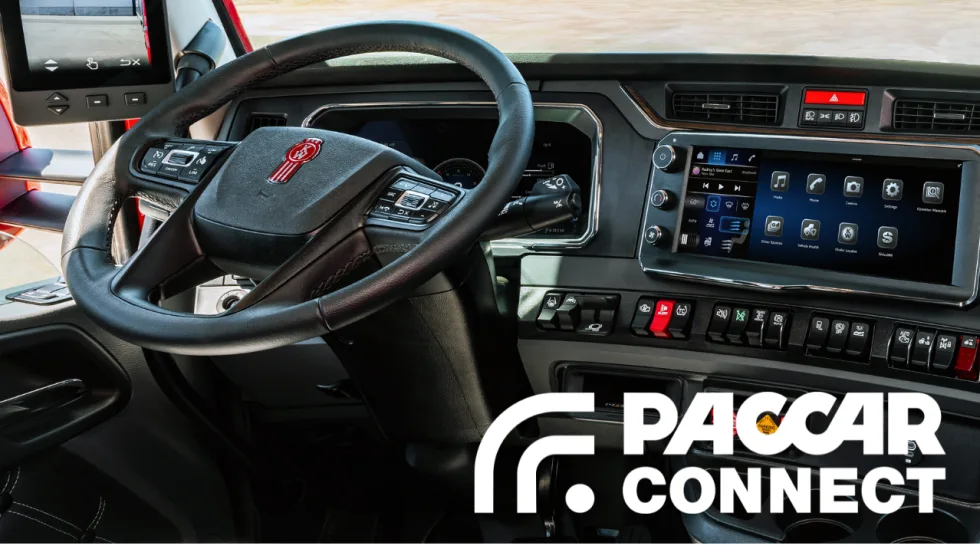
The new Paccar Connect offers touchscreen displays, telematics capabilities, and an expanding app ecosystem to boost productivity and streamline driver workflows.
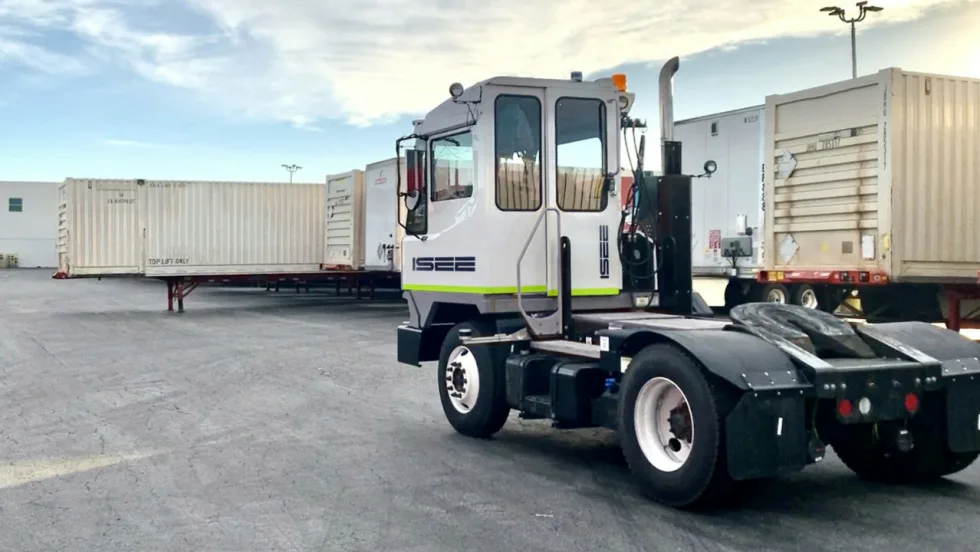
The partnership combines Holman's fleet management and upfitting capabilities with ISEE's autonomous driving technology to help businesses deploy and manage driverless yard trucks.
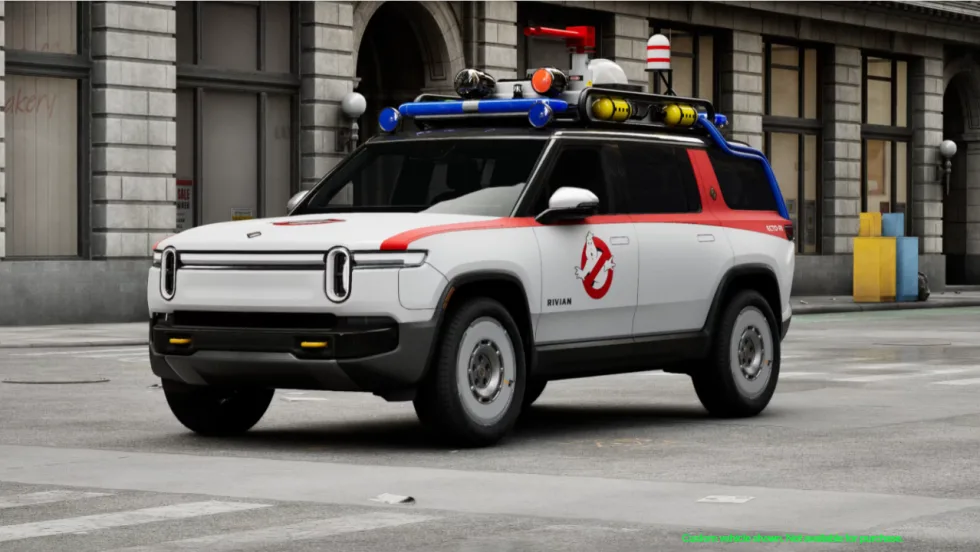
Rivian teams up with Sony Pictures for a Ghostbusters-inspired Halloween software update, complete with custom sounds, lighting effects, and a special Ecto-R1.
For service fleets, missing tools and equipment can lead to second trips, lost technician time, higher operating costs, and delayed jobs. Equipment tracking can help HVAC, plumbing, electrical, landscaping, and other service businesses improve visibility and reduce downtime.
Geofencing is a familiar fleet tool today, but its early adoption marked a major shift in vehicle tracking, route monitoring, and the debate over employee privacy.
Geotab's first U.S. supply chain report finds stable long-haul activity, stronger regional freight movement, tighter hub-and-spoke utilization, and more last-mile trips on shorter routes.