





Keep Reading: Where Are All the Women Technicians? Closing the Gap with Support and Career Pathways
Before Diesel Costs Climb, Find What’s Costing Your Fleet More
Driver habits, maintenance, and truck specs all affect fuel costs. Here’s where to look before cutting expenses that keep your fleet working.
November 16, 2026
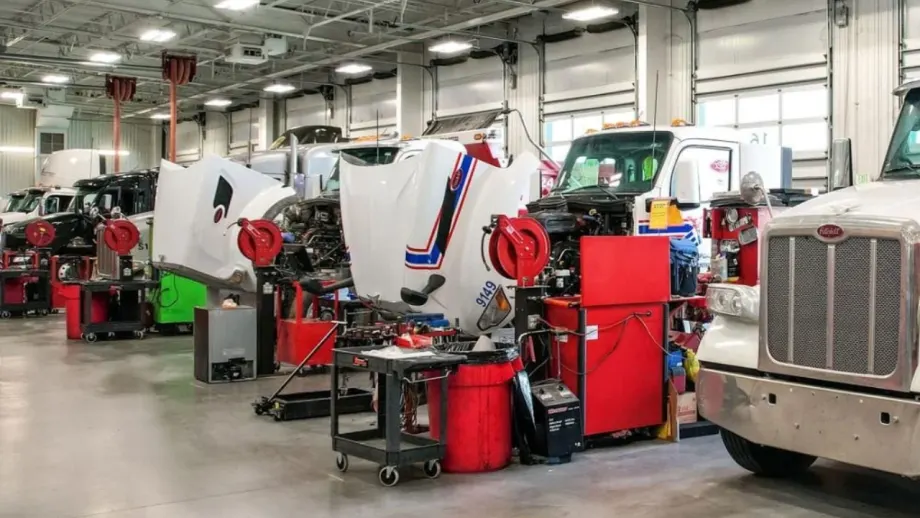
Keeping up with engine maintenance, tire pressure, and wheel alignment can help fleets control fuel consumption. Tracking repair costs and downtime also helps managers evaluate when to replace a truck.
Credit:
The Pete Store
5 min to read
- Driver behaviors have a significant impact on fuel efficiency and overall expenses.
- Regular maintenance is crucial for keeping fuel costs manageable and preventing costly repairs.
- The specifications and efficiency of vehicles in a fleet play a critical role in determining operating costs.
*Summarized by AI
You can’t control the price on the diesel pump. You do have some control over how often your trucks visit it and how much work gets done between fill-ups.
For vocational fleets, cutting fuel expenses takes more thought than simply driving fewer miles. Crews still need to reach the jobsite, equipment still needs to run, and the work doesn’t disappear because diesel gets more expensive. The challenge is finding savings without making it harder to do the job.
Reid Farmer, vice president of sales at The Pete Store, said the options available to fleets vary with their size and type of work. Larger operations may have more flexibility to negotiate fuel contracts and plan for price changes. Smaller fleets may need to pay closer attention to everyday operating expenses.
For vocational operators, he said, workload demands and equipment replacement cycles often carry more weight in long-term decisions than fuel prices alone. That makes it worth looking at fuel use alongside maintenance, downtime, and each truck's work.
Start With How the Truck Is Being Used
Before making a purchase or changing a policy, look at what happens during a normal workday. Driver habits, unnecessary trips, and equipment assignments may offer places to reduce fuel use with the trucks you already own.
“Reducing unnecessary idling, avoiding aggressive acceleration, and maintaining consistent speeds can make a difference without requiring new equipment,” Farmer said.
The word “unnecessary” matters for work trucks. An engine running to power equipment is doing a job. An engine running while a driver waits without a work-related reason deserves a closer look. Understand what’s happening before treating all idle time the same.
Farmer also recommended reviewing routes, reducing unnecessary trips, and matching equipment to the assignment. For your fleet, that means asking whether trucks are making repeat trips that better planning could prevent and whether the vehicle assigned to a job fits what the crew needs to carry and do.
Those conversations give drivers and supervisors a chance to explain where the extra miles or engine hours come from. You need that information to decide what can reasonably change.
Put Fuel Efficiency on the Maintenance Checklist
If a truck uses more fuel, its condition deserves attention, along with how it’s being driven. Farmer pointed to tire pressure, wheel alignment, and engine maintenance as areas where neglected service can increase consumption.
“Underinflated tires, poor wheel alignment, and neglected engine maintenance can all force a truck to work harder and burn more fuel,” he said.
Individually, those problems may not attract much attention. Across multiple trucks, however, the added consumption can become a larger expense. Farmer recommended keeping up with manufacturer-recommended service intervals and paying close attention to tires and alignment.
Vehicle data can help fleets spot performance changes and identify potential mechanical issues earlier. For fleet managers, the next step is making sure that information reaches the person who can act on it. If a truck’s fuel use changes, review its workload and maintenance history before deciding whether the cause is driving behavior, operating conditions, or something that needs a technician’s attention.
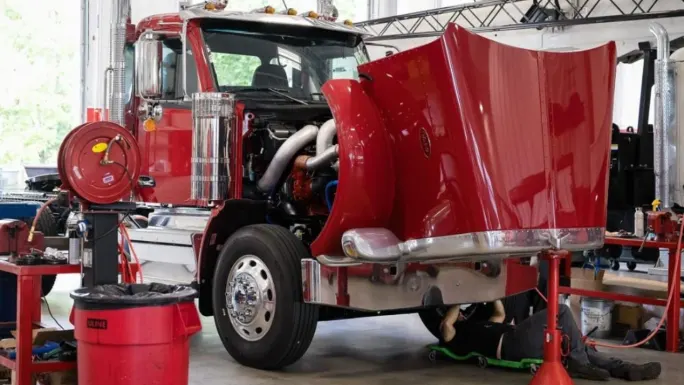
A change in fuel consumption deserves a closer look at a truck’s workload and maintenance history. Reid Farmer of The Pete Store recommended using vehicle data to help identify potential mechanical issues earlier.
Credit:
The Pete Store
Spec for the Work Your Truck Will Actually Do
When it’s time to replace a truck, fuel economy belongs in the purchasing discussion. So do payload, equipment needs, operating conditions, and how much time the truck spends stopping, starting, or traveling at highway speeds.
Farmer said the truck model, engine, transmission, axle ratios, and overall vehicle weight all influence fuel consumption. The right combination depends on the application.
A vocational truck making frequent stops has different demands than one that spends most of its day on the highway. Work with your dealer to review the duty cycle and payload requirements so the recommendation reflects how your fleet will use the vehicle.
“Chasing the best fuel economy number on paper can work against a fleet if the truck isn't properly matched to the job,” Farmer said.
That purchasing decision also needs to account for maintenance, repairs, downtime, and equipment performance. A lower fuel bill is helpful, but you still need a truck that can carry the load and complete the assignment.
Know What Keeping an Older Truck Is Costing You
For fleets that need to keep existing trucks longer, the question becomes how to manage those vehicles without letting repair expenses and downtime take over. Farmer recommended tracking repair costs, cost per mile, time out of service, and how often the same truck returns to the shop.
At The Pete Store, he said, larger repair expenses have begun appearing around 450,000 to 600,000 miles, depending on application and maintenance history. That is an observation from the dealership’s experience, rather than a replacement mileage that applies to every fleet.
“That doesn't automatically mean a truck needs to be replaced, but it is a point where fleets should be looking closely at the economics,” Farmer said.
For vocational fleets, mileage also needs context. Review what the truck does, its maintenance history, and the cost of taking it out of service. Repeated repairs may be more disruptive when the vehicle carries specialized equipment or supports work that another truck cannot easily take over.
Farmer also recommended reviewing extended warranty coverage against the planned ownership period. He noted that additional coverage may be available for existing trucks following a dealer inspection. Ask about eligibility, covered components, and terms before including that option in your cost comparison.
Build Your 2027 Plan Around Costs You Can Track
Preparing for fuel price changes starts with knowing what your fleet spends today. Without a consistent record of fuel consumption, maintenance expenses, and downtime, it’s difficult to tell which trucks need attention or where an operating change could help.
“Now is the time to establish a clear picture of fuel consumption, maintenance costs, and downtime across the fleet so managers can identify where improvements will have the greatest impact,” Farmer said.
Use that information to revisit replacement plans and consider what different fuel prices would mean for the cost of keeping each truck. Include the maintenance and downtime expenses that could change the decision, especially regarding older equipment.
You don’t need to wait for the next price spike to check tire pressure, investigate an extra trip, or review a truck that keeps returning to the shop. Start with those questions now, while there’s time to make changes without another pump price increase adding pressure.
Quick Answers
Driver habits such as aggressive acceleration, excessive idling, and maintaining high speeds can significantly increase fuel consumption and costs.
*Summarized by AI
Subscribe to Our Newsletter
More Fuel

WEX Report Finds Fleet Fuel Spending Climbed as Consumption Held Steady in 2026
New WEX transaction data highlights rising fuel costs, purchasing habits, and potential savings opportunities for commercial fleets navigating 2026.
Read More →
Everything You Need to Know About Renewable Diesel
Learn how renewable diesel works, how it differs from biodiesel, and what work truck fleets should know about costs, emissions, and performance.
Read More →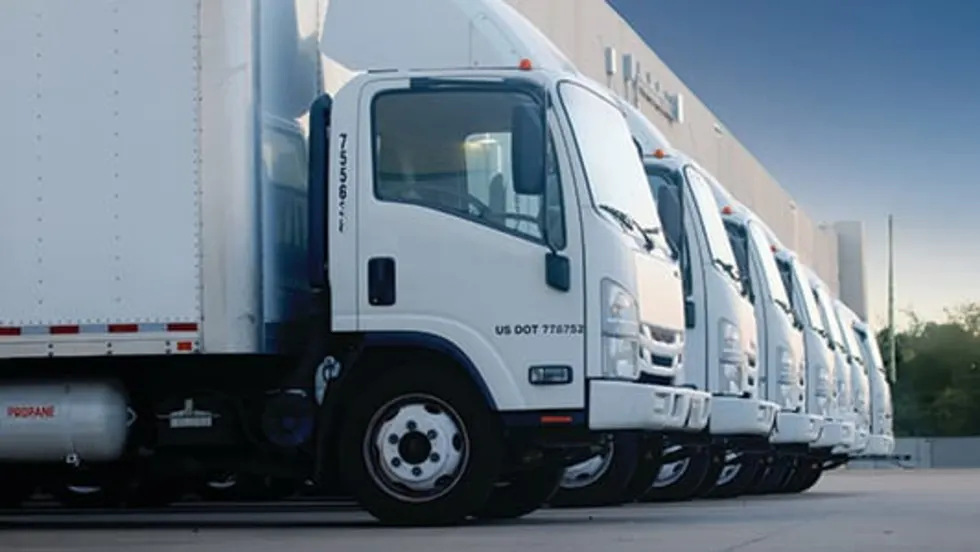
Sponsored•November 3, 2026
New Propane Autogas Program Offers Fleet Compensation
Qualified commercial fleets can receive $7,500 per eligible propane autogas vehicle and up to $10,000 for new refueling site prep. Learn how the program works and see whether your fleet qualifies.
Read More →From Our Partners
New Propane Autogas Program Offers Fleet Compensation
Sponsored by Propane Education & Research Council

Basic Tracking vs Next Generation Fleet Technology
Sponsored by AT&T Business

How AI Video Telematics Boosts Driver Safety and Helps to Avoid Unnecessary Costs
Sponsored by Verizon Connect

Do You Need an Integrated Fuel Management System?
Sponsored by AssetWorks

Precision Under Pressure: Why Modern Diesels Demand a New Fuel Maintenance Playbook
Modern diesel fuel systems leave little room for contamination, deposits, or old maintenance habits. See why today’s HPCR engines demand a more proactive approach to fuel quality, injector health, and DPF protection.
Read More →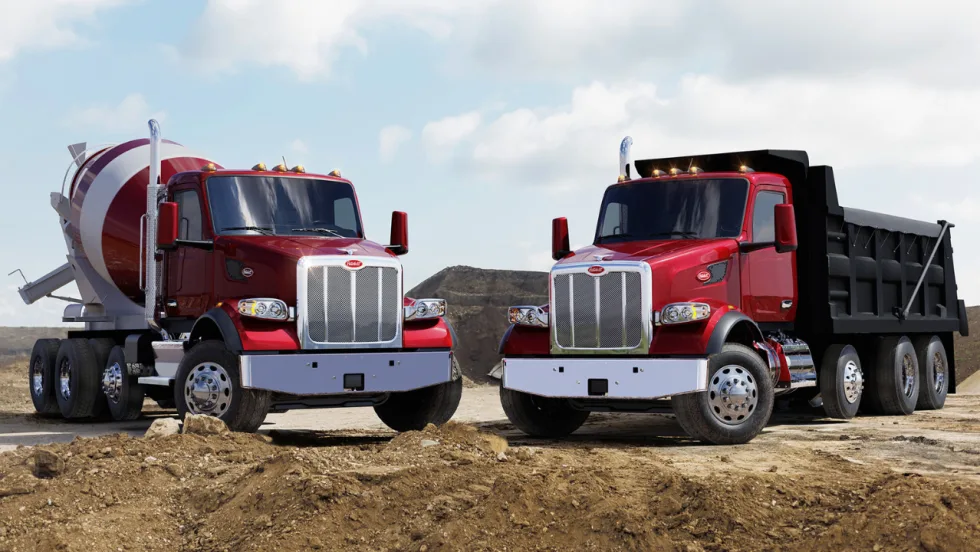
Peterbilt Trucks Equipped with Paccar TX-18 Pro Boost Efficiency for Maryland Fleet
Patuxent Companies is replacing aging trucks with the Peterbilt Model 567 and Model 589, specified with the Paccar TX-18 Pro 18-speed automated transmissions, and is reporting an 8% to 10% improvement in fuel economy.
Read More →
The Smart Way to Build a Mixed-Energy Fleet Isn’t About Picking a Side
Mixed-energy fleets aren’t about picking a winning fuel. Sarah Booth of WEX explains how vehicle data, duty cycles, charging strategy, and real-world costs can help fleets choose the right energy source for each job.
Read More →
Ignoring This Dashboard Warning Could Cost Your Fleet Thousands in Fuel
New research suggests neglected diesel aftertreatment systems could waste up to $30 in fuel per vehicle each day. Here's why vocational fleets should pay attention.
Read More →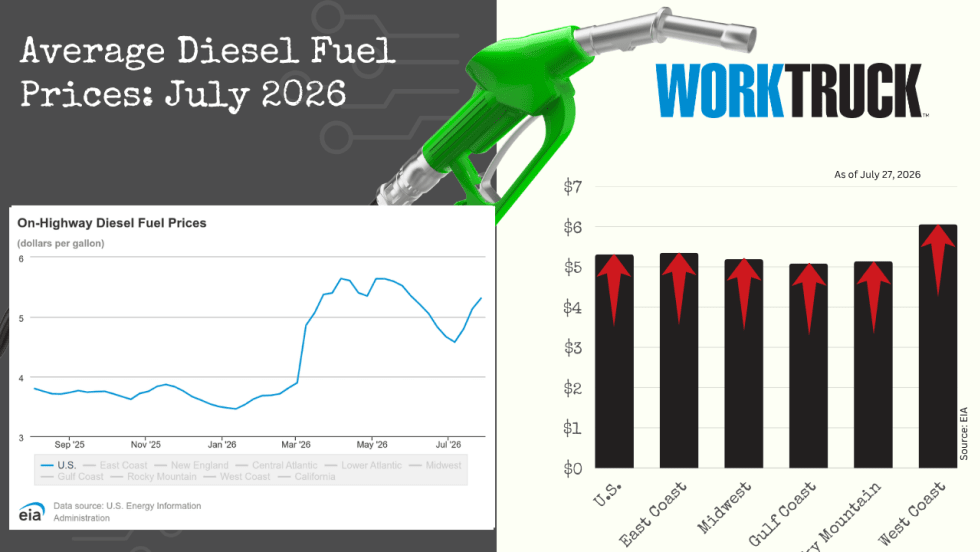
July Diesel Trends Update
The average price of a gallon of diesel increased again this week, and the EIA reported a new national average of $5.31 at the start of the week.
Read More →
WEX Brings Standard Fleet's Connected Vehicle Platform to Fleet Customers
This week’s product launch with Standard Fleet’s connected vehicle platform reflects WEX Venture Capital's strategy of turning startup innovation into customer solutions. Standard Fleet is now available to WEX fleet customers.
Read More →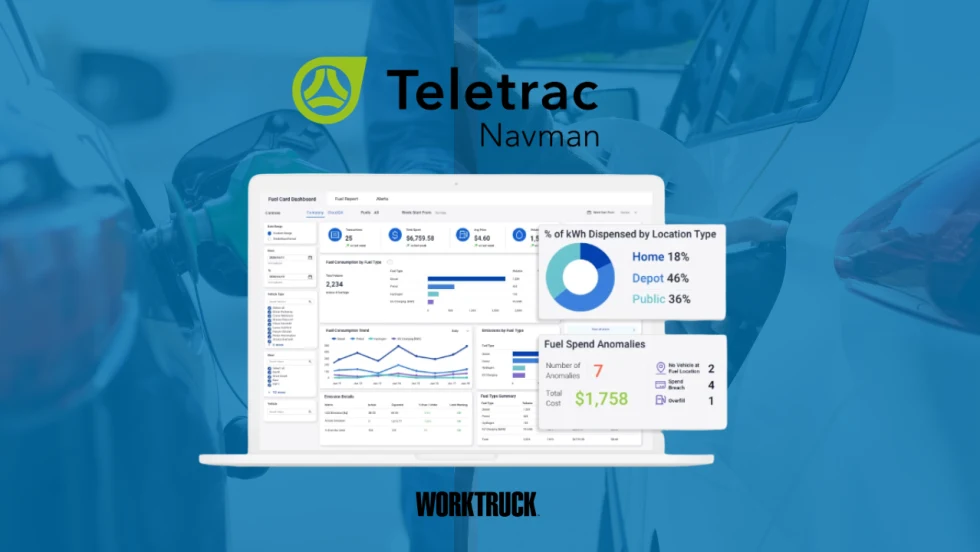
Teletrac Navman Adds Mixed-Energy Fleet Tools to TN360
The new Energy Hub combines fuel transactions, EV charging data, vehicle range, and energy costs in one dashboard for fleets operating multiple vehicle and energy types.
Read More →