




7 Priceless Parking Lot Safety Tips for Delivery Drivers
When more than 60% of delivery crashes happen in the parking lot, it's time to take action. Follow these seven tips to increase driver safety in parking lots.
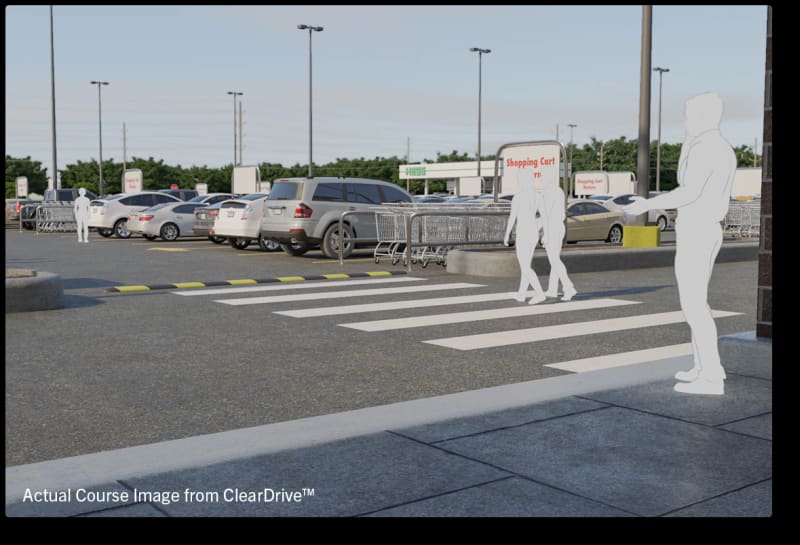
It's important to note that sensors in back-up cameras can have a difficult time detecting thin, cylindrical objects like poles, and may not detect soft objects (people) at all.
Photo: Instructional Technologies Inc.
Did you know that 60% of delivery crashes happen in the parking lot? Most safety professionals spend most of their time focused on roadway collisions. This is for good reason: higher speeds can mean more injuries and higher costs. But almost two-thirds of a delivery fleet’s collisions happen in a parking lot and involve a fixed or stationary object.
Ironically, these crashes are almost worse for a fleet than a bigger crash because they don't meet the insurance deductible, so the costs come straight out of a fleet's profit.
These tips can help you save thousands of dollars per year or more on the most common cause of delivery vehicle crashes.
1. Address the Root Causes of Parking Lot Collisions: Rushing and Distraction
Parking lot crashes are often caused by driver inattention or rushing. Delivery drivers face tremendously tight time schedules and overlapping delivery windows to accommodate up to 30 deliveries per day. Add in the same pressures every human with a family feels — terrible traffic, a sick kid, tough financial situations, an annoying neighbor —and it’s easy to understand how they feel rushed and distracted.
Help your drivers combat the pressure with a combination of training and frequent reminders. Make defensive driving training, including a heavy emphasis on distractions, required for all new drivers. Give regular safety messages to all drivers about the importance of focusing and finishing a task before moving onto the next one.
As one wise driver manager said, “I ask you to do a lot, but I demand you do just one thing at a time.” For example, don’t start thinking about paperwork until the truck is in park. Focus.
2. Train Drivers to Get Out And Look
The best approach to avoiding fixed and stationary object collisions is to apply the GOALden rule: “Get Out And Look!” Inform drivers that the company expects them to re-inspect their surroundings as often as needed. Low parking lot speeds make it easy to stop, activate the truck’s flashers, and hop out for a quick visual scan before making a tight maneuver or pulling under an awning.
If drivers feel too rushed to put this into practice, remind them that they’ll finish faster if they get it right the first time. Nothing slows a driver down more than hitting a pole.
3. Make Cone Drills Impossible
When practicing parking with cones, intentionally make it impossible for drivers to park in the space by just a foot or so. See if your driver will tell you it’s too small or try to force it. Drivers should never assume they can fit into a spot.
If the driver does try to park, they get a valuable learning opportunity in a low-stakes setting. You get to take advantage of a teachable moment and avoid an expensive collision.
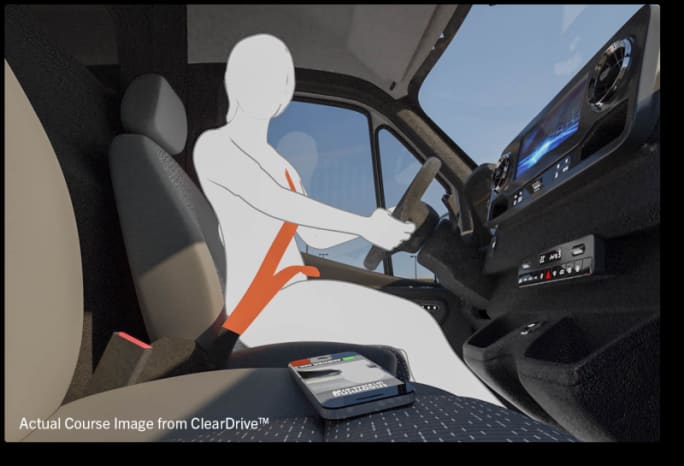
Help your drivers combat pressure with a combination of training and frequent reminders.
Photo: Instructional Technologies Inc.
4. Train Drivers to Back with a Spotter
Many box truck fleets deliver products that require a driver and a helper or team driver. Make training on how to back with a spotter part of a road test. You should require the driver and helper teams to properly demonstrate backing with a spotter as part of a safety meeting. Ask your experienced teams of drivers and spotters for ideas about “close calls” and “tricky situations.”
Additionally, this practice needs to be supported by a strong and actionable policy that holds both the driver and spotter accountable for a backing collision. If the truck is backing, the helper or team driver needs to be out of the truck and spotting the driver as he backs. And it’s always a good idea for the driver to also “Get Out And Look!”
5. Ban Drivers from Busy Lots Altogether
Another idea is simply to ban the truck from unusually busy or congested areas. For example, if you can keep your trucks out of busy fueling stations and tight parking lots, you’ll avoid a lot of incidents. When you know an area will be busy during a time frame, work with the store manager to avoid your delivery windows during that time.
A Director of Safety for a large private fleet reduced parking lot collisions by over 50% per year, simply by banning drivers from using a particular fuel station.
6. Combine Technology with Training
Back-up cameras are proven to reduce backing accidents. But these items should not be considered or treated as “plug and play devices,” no matter what the sales person tells you. Even the best back-up cameras distort the image behind the vehicle to some degree. They should only be used in conjunction with good backing techniques. And as with any new tool, training with the devices is absolutely essential.
Backing sensors, usually installed in the rear bumper, have also emerged as a technology solution. Again, as with the back-up camera, they’re no replacement for good backing techniques. Anecdotally, safety directors have told us the sensors can have a difficult time detecting thin, cylindrical objects like poles, and may not detect soft objects (people) at all.
7. Incentivize Safe Behavior
There are plenty of policies and practices that can have a positive impact on reducing backing accidents as well. As a manager, you can reinforce safety in a positive way, and enforce rules in a negative way.
For example, many fleets have safety bonuses for going a certain period without an incident, or for completing all vehicle inspection reports on time. On the flip side, negative reinforcement — such as citation or termination — can be used for things like a second backing accident or for failing to report a collision. Using both positive and negative reinforcement keeps drivers both accountable and encouraged.
The Bottom Line: Training Prevents Parking Lot Collisions
You may have noticed that all these tips have one thing in common: training! Parking lot incidents may not be as dramatic as big interstate accidents, but they add up quickly and could very easily be costing your fleet far more than “the big one.”
Don’t get caught up in thinking these incidents are minor. Dedicate the necessary resources to train your drivers properly, and you can save a lot of money, and reduce many injuries to your team.
About the Author: Thom Schoenborn is the VP Marketing with Instructional Technologies, Inc. With a copywriting and journalism background, he has several years of experience with trucking OEM and logistics clients.
More Safety
When Work Trucks Under 26,001 Pounds Need IRP Registration
Think trucks under 26,001 pounds are automatically in the clear when it comes to IRP? Not always. Learn where lighter vehicles can still run into trip permit, apportioned registration, and IFTA compliance requirements when crossing state or provincial lines.
Read More →
Volvo Trucks Releases New Safety Recommendations for Traveling with Pets
One of the most important recommendations for professional drivers traveling with pets is to ensure pets are properly restrained while the truck is moving. Other tips are available in the new guide from Volvo Trucks North America and Center for Pet Safety.
Read More →
API Issues Refueling Safety Guidelines
The American Petroleum Institute offers a list of safe vehicle refueling guidelines, including ways to avoid potential problems with static electricity discharges in fall, winter, and early spring.
Read More →
Winter Fleet Prep: Expert Tips to Keep Vehicles Running Smoothly
Cold weather can expose weak batteries, tires, fuel systems, and maintenance gaps fast. Use this winter fleet checklist to prepare trucks and drivers before temperatures drop.
Read More →
When a Work Truck Breaks Down, the Job Can Stop, Too
A work truck breakdown can stop more than the vehicle. Discover how payloads, jobsites, and specialty equipment change the roadside response.
Read More →
What Stronger Long-Term Fleet Service Partnerships Actually Require
Fleet service partnerships rarely fall apart all at once. Learn the three warning signs that trust is eroding and what fleets and providers can do before downtime, frustration, and lost revenue follow.
Read More →
Applause & TRUCE Software Partner to Improve Driver Safety Through AI-Powered Telematics & Employee Performance Management
Applause has integrated TRUCE driving metrics directly into its employee-first performance and safety platform that transforms mobile devices into AI-powered telematics.
Read More →
How Detroit Assurance with Active Brake Assist Works
Do you want to see what it is like to experience Detroit Assurance’s Active Brake Assist? In this video, Work Truck will put you in the cab to see how it all works and then hear more details from DTNA’s Mike Young.
Read More →
Get Left of Loss: A 5-Step Workplace Violence Prevention Framework for Fleet Operators
Violence risks do not stop at the driver’s door. Learn five practical steps fleets can take to spot threats early and protect workers before loss occurs.
Read More →
How Better Visibility Cut Speeding Violations by 48%
Fleet leaders don't need more data, they need clearer visibility into what the data is saying. This case study explores how one utility replaced speeding-event counts with a single metric — miles driven in violation — to strengthen safety and significantly reduce speeding violations.
Read More →