




6 Steps to Obtain a Medical Exemption
For commercial drivers petitioning the FMCSA for a medical exemption, there are specific procedures that must be followed. Six steps to obtain an exemption are shared.


Do you need a waiver or exemption? The federal definitions for waiver and exemption are often mistakenly interchanged.
Photo: Work Truck
When a commercial driver is unable to pass a U.S. Department of Transportation (DOT) physical exam, it’s often a career buster. The driver is left looking for alternatives.
Some may decide to operate solely in intrastate commerce if the state medical qualifications are less stringent than federal medical requirements. Others may pursue a medical exemption from the Federal Motor Carrier Safety Administration (FMCSA) to continue operating commercial motor vehicles in interstate commerce.
But do you need a waiver or exemption? The federal definitions for waiver and exemption are often mistakenly interchanged.
They both offer temporary relief from a portion of the FMCSA regulations to an individual or group with medical conditions. A waiver is only good for up to three months, while a medical exemption may be valid for up to two years.
So, who is exempt from a DOT medical card? For commercial drivers involved in interstate commerce petitioning the FMCSA for a medical exemption, there are specific procedures that must be followed.
Step 1: Physicals for Commercial Drivers
The first step for a medical card exemption is a physical exam, using the medical criteria provided in the regulations and FMCSA guidance materials. If commercial drivers do not meet one of the medical standards, the medical examiner could indicate on a medical examiner certificate that the driver is otherwise medically qualified, and would be qualified if granted an exemption from a specific standard.
A line has been provided on the medical examiners certificate just for this purpose.
But, receiving such a medical card is not certification. It is only valid with an accompanying FMCSA medical exemption. And the medical examiner is not the party to grant the medical exemption.
DOT physical exams are required to acquire your commercial driver's license.
Step 2: Submitting the Application
Procedures on how to go about applying for an exemption are outlined in Subpart C to 49 CFR Part 381. Until the driver actually receives the exemption, the driver remains medically unqualified.
The FMCSA has exemption applications for three of the 12 physical qualification standards:
Seizures.
Hearing.
Missing or impaired limbs.
For all other medical standards, drivers must refer to Section 381.310 for a list of specific medical conditions and data that must be provided to the FMCSA.
One important item to note: all exemptions are for drivers who intend to operate commercial motor vehicles in interstate commerce. FMCSA does not have statutory authority to grant waivers/exemptions to drivers from states' intrastate requirements for commercial driving.
Step 3: Public Comment
The agency publishes a Federal Register notice requesting public comment on an accepted medical exemption application.
The notice gives the public an opportunity to review and comment on all documents related to the application. It becomes public record.
Not sure how to submit comments to proposed rules? Federal regulations require a comment period but prefer comments be submitted electronically. For more information or to submit comments, visit the Federal eRulemaking Portal.
Step 4: FMCSA’s Decision-Making Process
The FMCSA takes into consideration all information related to the application for driver exemptions, including public comments. It will decide whether granting the exemption could harm public safety.
The FMCSA will publish another Federal Register notice explaining its decision, along with any terms and conditions if an exemption is granted.
Be aware that getting to this step could take several months!
Step 5: Handling the Exemption Letter
A driver must carry a copy of their medical certificate and any exemption letter while on duty and present a copy to the employer for the Driver’s Qualification file. Drivers with a commercial driver’s license (CDL) must also provide a copy of this document when submitting the medical examiner certificate to the state licensing agency.
Step 6: Understanding Exemption Renewals
Since the exemption is only valid for two years, the driver cannot wait until the last minute to recertify since it may take up to 180 days for an exemption renewal. Any delay may result in a medically disqualified driver and a commercial driver's license downgraded by the state.
Keeping Your Medical Exemption
One final caution: An exemption will be revoked if a driver fails to comply with the terms and conditions. For instance, some exemptions require periodic medical assessments throughout the two-year period.
For commercial drivers who are unable to pass a DOT physical exam, obtaining a medical exemption or waiver is a possible solution to continue operating commercial motor vehicles in interstate commerce. However, it is important to understand the federal definitions for waiver and exemption, the specific procedures that must be followed, and who is exempt from a DOT medical card.
By following the outlined steps and keeping track of important dates for exemption renewals and compliance, commercial drivers can remain medically qualified and continue their careers.
Curious if you need a U.S. DOT number? We've got you covered!
Editor's Note: this article was originally published in March of 2018. It has been reviewed and updated for more relevant information.
More Safety

When Work Trucks Under 26,001 Pounds Need IRP Registration
Think trucks under 26,001 pounds are automatically in the clear when it comes to IRP? Not always. Learn where lighter vehicles can still run into trip permit, apportioned registration, and IFTA compliance requirements when crossing state or provincial lines.
Read More →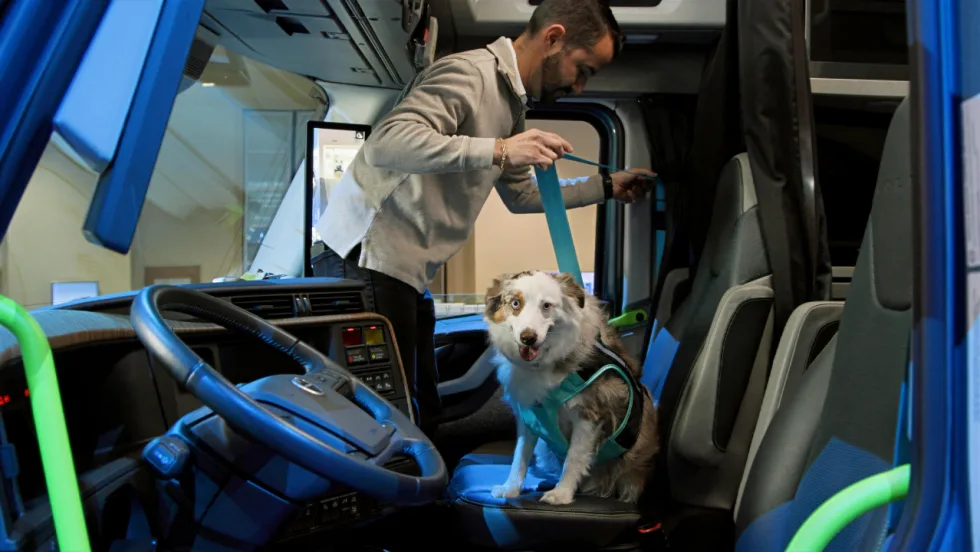
Volvo Trucks Releases New Safety Recommendations for Traveling with Pets
One of the most important recommendations for professional drivers traveling with pets is to ensure pets are properly restrained while the truck is moving. Other tips are available in the new guide from Volvo Trucks North America and Center for Pet Safety.
Read More →
API Issues Refueling Safety Guidelines
The American Petroleum Institute offers a list of safe vehicle refueling guidelines, including ways to avoid potential problems with static electricity discharges in fall, winter, and early spring.
Read More →
Winter Fleet Prep: Expert Tips to Keep Vehicles Running Smoothly
Cold weather can expose weak batteries, tires, fuel systems, and maintenance gaps fast. Use this winter fleet checklist to prepare trucks and drivers before temperatures drop.
Read More →
When a Work Truck Breaks Down, the Job Can Stop, Too
A work truck breakdown can stop more than the vehicle. Discover how payloads, jobsites, and specialty equipment change the roadside response.
Read More →
What Stronger Long-Term Fleet Service Partnerships Actually Require
Fleet service partnerships rarely fall apart all at once. Learn the three warning signs that trust is eroding and what fleets and providers can do before downtime, frustration, and lost revenue follow.
Read More →
Applause & TRUCE Software Partner to Improve Driver Safety Through AI-Powered Telematics & Employee Performance Management
Applause has integrated TRUCE driving metrics directly into its employee-first performance and safety platform that transforms mobile devices into AI-powered telematics.
Read More →
How Detroit Assurance with Active Brake Assist Works
Do you want to see what it is like to experience Detroit Assurance’s Active Brake Assist? In this video, Work Truck will put you in the cab to see how it all works and then hear more details from DTNA’s Mike Young.
Read More →
Get Left of Loss: A 5-Step Workplace Violence Prevention Framework for Fleet Operators
Violence risks do not stop at the driver’s door. Learn five practical steps fleets can take to spot threats early and protect workers before loss occurs.
Read More →
How Better Visibility Cut Speeding Violations by 48%
Fleet leaders don't need more data, they need clearer visibility into what the data is saying. This case study explores how one utility replaced speeding-event counts with a single metric — miles driven in violation — to strengthen safety and significantly reduce speeding violations.
Read More →