




25 Ways to Save Fuel in Medium-Duty Trucks
From the equipment you spec and maintain to the fuel you buy to driver training and incentives, you’ll find tips for nearly any type of fleet.

Follow these 25 tips to save fuel in your medium-duty truck fleet.
Photo: Work Truck
For fleet managers, fuel costs can be a substantial expense that eats into their bottom line. If you're struggling to save on fuel costs or have exhausted all your options, you're not alone. Fortunately, there are several strategies that you can use to reduce your fuel expenses and increase your fleet's profitability (25 to be exact).
Let's explore some of these tactics together.
Look at Your Equipment
Buy higher-mpg vehicles. Crunch the numbers to see what the payback would be of buying a new model.
Make engine and transmission work as a team. Consider both the experience level of your drivers and vehicle application when spec’ing your truck, according to Navistar. This will help you select the most fuel-efficient transmission and engine pairing for your application.
Rightsize the engine. Engine displacement as well as torque and horsepower requirements should be carefully considered, as more than one combination may work for you. Resist over-spec’ing in size and power except in harsh environments where extra durability could be to your advantage.
Move away from manual transmissions. An excellent “fuel-miser” driver may be able to beat an automated manual transmission (AMT) on his or her best days, but AMTs provide a level of consistency that saves fuel day in and day out.
Spec for lighter weight. Lightweight components will ultimately save fuel, but they tend to be expensive at the outset and may not be as robust as heavier, traditional parts.
Don't Forget About Tires
Buy fuel-efficient tires. Getting the right tire at the right wheel position can improve fuel economy by several percentage points.
Use automatic tire monitoring and inflation systems. A U.S. Department of Transportation (DOT) field test of automatic tire inflation and tire pressure monitoring systems found a 1.4-percent reduction in fuel consumption for fleets using the systems.
Keep tires and wheels balanced. Because tires are part of a rotating mass that revolves around the axle spindle, the entire package — hub, brake drum or rotor, wheel, and tire — can affect fuel efficiency. When a tire is not balanced, it vibrates (roughly 10 times a second at 66 mph), causing irregular wear (which contributes to tires being pulled before they wear down to their most fuel-efficient tread thickness) and wasting energy meant to propel the truck forward.
Look at Your Fuel Purchasing and Usage
Negotiate fuel discounts. Negotiate fuel discounts and build a network of best-priced truck stops, advised the Sokolis Group, tsourced fuel management and fuel consulting company.
Look into a fuel card program. If your fleet fills up on the road, look into a card program. There are several excellent programs and companies, for all sizes of fleets, offering discounts and helping to track and control fuel purchases. One is bound to fit your needs. Some even offer a reporting tool that can drop into most accounting systems.
Check your fuel invoices. Nearly 40% of respondents to a survey by FuelQuest suspect errors in their fuel invoices.
Watch out for fuel quality. Fuel quality should be carefully considered, according to J.J. Keller, a provider of regulatory compliance and risk management products and services. Compare fuel mileage vendor to vendor.
Use your telematics information. Much as a vehicle’s telematics system gathers information from various components, trucking management software ties all that and more together in the back office to allow fleets to make the best decisions possible.
Track that fuel data. There are many options to help keep track of data such as fuel consumption, mpg, idle time, hard braking, and road speed.
Optimize your routes. Effective routing has been a problem for truck fleets since before computers were invented, but today’s technologies provide another tool for solving this problem.
Avoid left turns. When optimizing routes, think about left turns — namely avoiding them. UPS learned through time studies that avoiding left-hand turns conserves fuel, saves time, lowers emissions, and avoids collisions. For several decades, UPS has designed routes in a series of loops with as few left-hand turns as possible. Today, UPS has technology that automates the process for minimizing left-hand turns, combining personal and historical experience with computer programs to design delivery routes.
Research alt-fuel options. Fleets may be able to save on fuel costs through the use of alternative fuels, such as compressed natural gas (CNG). Research alternative fuels to see if they would be a money-saver for your operations.
Use data to find your fuel-wasting trucks. Aggressive data collection and analysis allows fleet managers to drill down into their operations and isolate the causes of fuel-guzzling vehicles, noted FleetAdvantage.
Remember to Focus on Idle Management
Use an idle shutdown timer. Idle shutdown timers can help and are used extensively by larger fleets, but they do have some drawbacks when it comes to driver comfort and satisfaction. Ambient temperature override programs can allow the engine to idle in extreme low and high temperatures.
Use an auxiliary power unit. There are many auxiliary power units available, some fired by diesel, others by battery. You can get them from truck makers, refrigeration unit manufacturers, and many independent companies.
Turn off the engine whenever possible. Letting the engine run for more than 10 seconds without moving uses more fuel than it takes to restart the vehicle, according to PHH Arval, and trucks with larger engines waste even more fuel while idling. Drivers should consider turning off their engines if they have stopped for more than a minute, except while in traffic. This action has minimal impact on the starter system. The U.S. DOT estimates that medium-duty trucks burn about 2.5 billion gallons of fuel while idling each year or 6.7 percent of the total fuel they consume.
Harness the power of the sun. Still new on the scene are ways to use solar panels to power auxiliary power units and liftgates instead of idling the engine.
Keep Drivers Involved in Fuel Management Efforts
Keep in touch with drivers about mpg, and invest in driver training. The difference in fuel efficiency between your worst and best drivers can be as much as 30 percent. Automated transmissions can certainly help bring poor-to-mediocre drivers up to near expert level, but shifting is only one part of a driver’s duties.
Use scorecards. An old business adage is that before you can manage something, you have to be able to measure it. One of the ways fleets use the data collected by their telematics system is to develop scorecards for drivers, vehicles, and fleets. Fleets can use their technology to control fuel use by managing data such as idle time, speed, and driving habits. Scorecards show drivers where they rank according to company standards for idle time or mpg, against other drivers within their group or terminal, and across the whole fleet.
Stay on the highway. Two-lane roads and the towns they go through can be scenic and folksy, but the stop-and-go exercises kill economy. You’ll cruise more economically at a steady speed on the interstates.
More Fuel

The Smart Way to Build a Mixed-Energy Fleet Isn’t About Picking a Side
Mixed-energy fleets aren’t about picking a winning fuel. Sarah Booth of WEX explains how vehicle data, duty cycles, charging strategy, and real-world costs can help fleets choose the right energy source for each job.
Read More →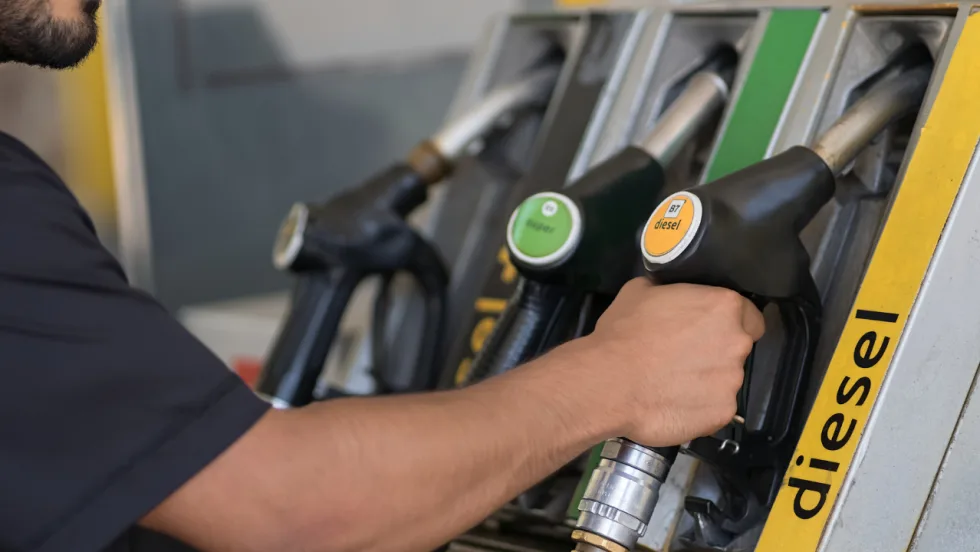
Ignoring This Dashboard Warning Could Cost Your Fleet Thousands in Fuel
New research suggests neglected diesel aftertreatment systems could waste up to $30 in fuel per vehicle each day. Here's why vocational fleets should pay attention.
Read More →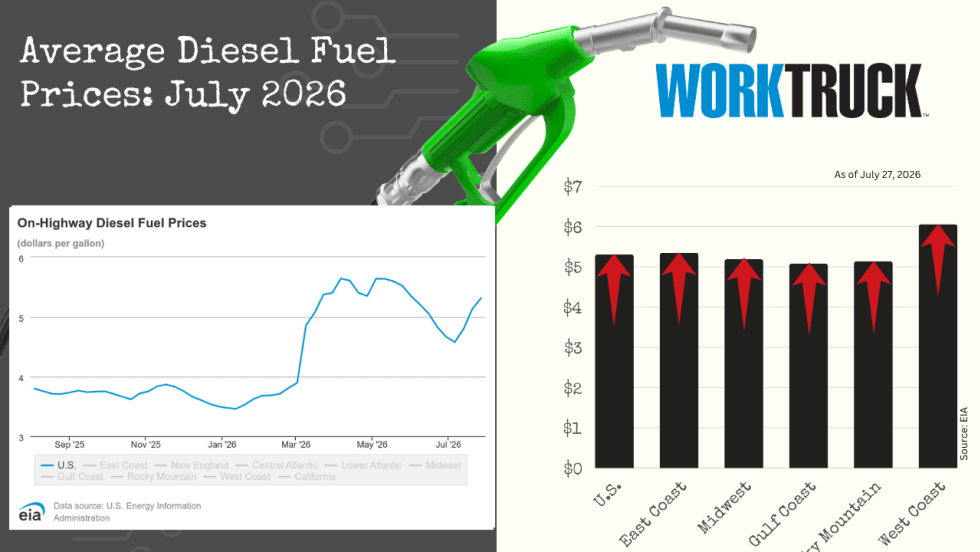
July Diesel Trends Update
The average price of a gallon of diesel increased again this week, and the EIA reported a new national average of $5.31 at the start of the week.
Read More →
WEX Brings Standard Fleet's Connected Vehicle Platform to Fleet Customers
This week’s product launch with Standard Fleet’s connected vehicle platform reflects WEX Venture Capital's strategy of turning startup innovation into customer solutions. Standard Fleet is now available to WEX fleet customers.
Read More →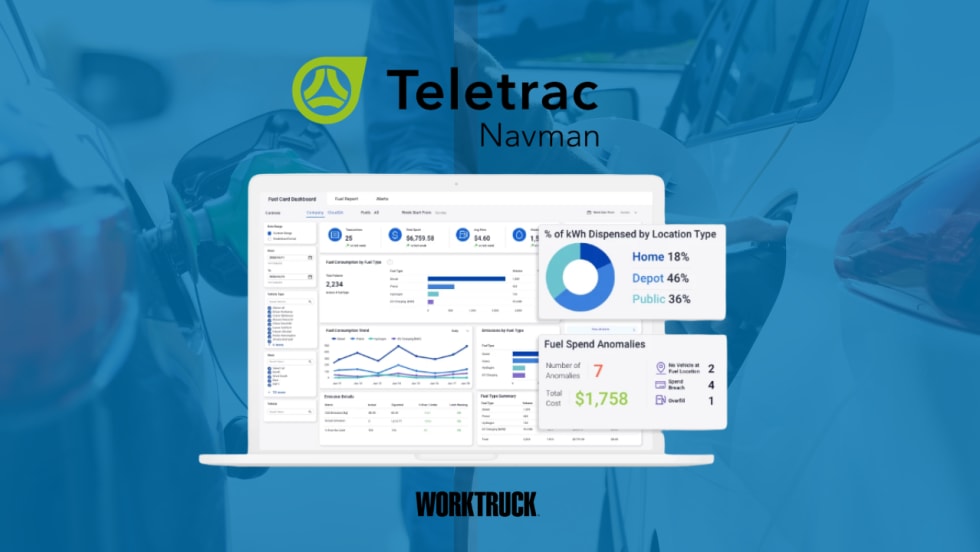
Teletrac Navman Adds Mixed-Energy Fleet Tools to TN360
The new Energy Hub combines fuel transactions, EV charging data, vehicle range, and energy costs in one dashboard for fleets operating multiple vehicle and energy types.
Read More →
WEX DriverDash adds CITGO, Expands Nationwide Access for Fleets
The DriverDash mobile payment app, by WEX, has been integrated into the CITGO merchant network, which means WEX has expanded its U.S. station footprint with the addition of approximately 4,000 CITGO locations.
Read More →
Mixed Energy Fleet Tips for Balancing EVs, Gas and Diesel Vehicles
Mixed energy fleets are becoming the new normal. Learn how fleet managers are balancing EVs, gas and diesel vehicles while controlling costs and planning for the future.
Read More →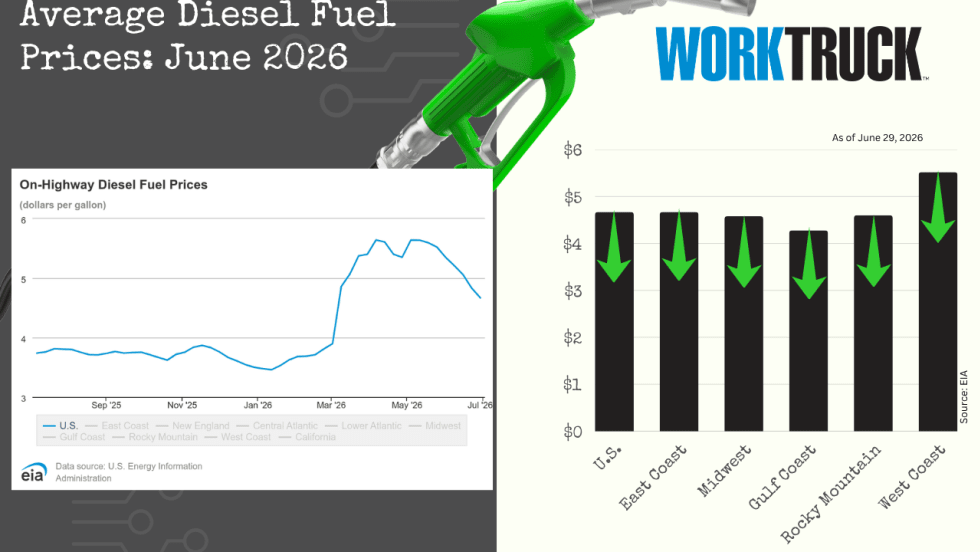
June Diesel Trends Update
The national average price of a gallon of diesel has dropped again, this week by more than 16 cents. All five regions reported lower average prices, ranging from almost 13 cents to more than 28 cents cheaper than a week ago.
Read More →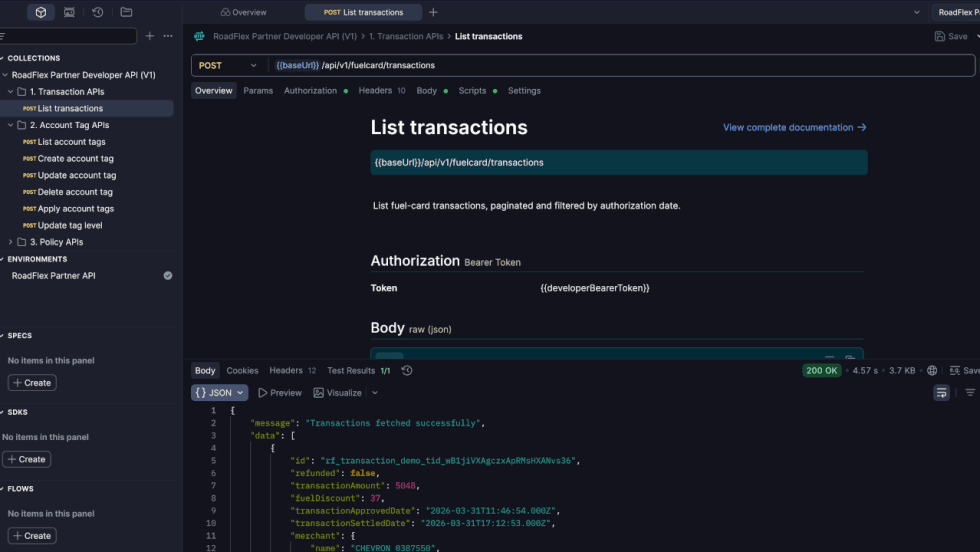
RoadFlex Launches RoadFlex Direct Open API Platform
RoadFlex Direct connects fuel cards, controls, and data to the telematics and fleet management systems fleets already run, from Geotab and Samsara to Fleetio and RTA, with no separate dashboard or double data entry.
Read More →
The Key to Fuel Efficiency Sits in the Cab
Learn how driver behavior, telematics, coaching, and fuel data can help fleets improve fuel efficiency, lower costs, and reduce emissions.
Read More →