




2026 Fuel Outlook: Alternative Fuels
Which alternative fuels will maintain or grow in market share in 2026, which one may be more of a long play, and how do those fuel options align with fleet adoption?

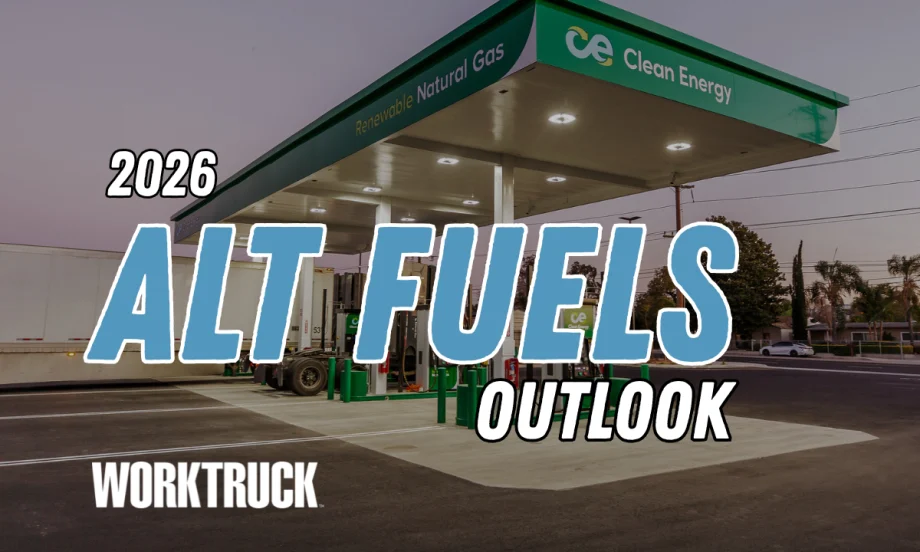
Renewable natural gas (RNG) has been growing among fleets, so in 2026 how will it and the other alternative fuels — compressed natural gas, propane autogas, and hydrogen — perform? Which ones may grow in adoption?
Credit: Clean Energy/Work Truck
In 2026, some alternative fuels continue to maintain their place among commonly accepted fuel options for fleets, while others are still growing in adoption, and one may be on the back burner in the U.S., at least for a while.
Natural Gas: CNG & RNG
Natural gas, whether compressed natural gas (CNG) or renewable natural gas, has been available for some time, and RNG production, availability, and acceptance are still growing steadily.
“There's been a lot of capital investment in growing capacity for renewable natural gas generation. The numbers are in the hundreds of new facilities that are going in all over North America,” pointed out Rick Mihelic, North American Council on Freight Efficiency (NACFE) director of emerging technologies. “So, the capacity to supply fuel has been increasing.”
Likewise, Clay Corbus, senior vice president of renewables at Clean Energy, said the availability of RNG is abundant.
“There’s more RNG being produced than there are vehicles to use it. For the past few years, the growth in demand for CNG/RNG has been exponential with dozens of new production facilities coming online. Companies like Waste Management, BP, California BioEnergy, Maas and Clean Energy have invested hundreds of millions of dollars over the last several years in both landfill and dairy projects,” Corbus said. “The demand continues to rapidly grow through fleets switching from diesel to RNG as well as others converting from traditional CNG to RNG. The switch is seamless and the fleets immediately begin to realize all the environmental attributes of RNG.”
Corbus also pointed out that factors like new diesel-like engine technology, coupled with sustainability-conscious shippers and customer demand, have been core drivers of the continued growth of natural gas as a fuel. The new Cummins X15N 15-liter natural gas engine has been a game-changer for heavy-duty fleets, making RNG a practical, viable option for long-haul trucking, he added.
“Unsurprisingly, we have seen a notable growth in the heavy-duty truck space because of the X15N,” Corbus added. “On top of that, RNG pricing is competitive, with a very attractive TCO while still checking boxes on delivering low carbon emissions and CI scores. There is still a lot of runway left in new RNG supply, so as demand continues to grow, you will see additional supply come online.”
Propane Autogas
Propane is readily available across the United States, with more than 30 billion gallons produced annually, while domestic consumption averages around 10 billion gallons, according to the Propane Education & Research Council (PERC).
“This surplus ensures a reliable and secure fuel supply for fleet operations nationwide,” said Joel Stutheit, senior manager, autogas business development, PERC.
Renewable propane, while chemically identical, is not yet as widely available in all regions. Current production volumes are limited, with supply focused on meeting growing demand as new production pathways and facilities continue to scale.
Stutheit said propane autogas offers some of the most stable fuel pricing available for vehicle fleets. With a national average price around $1.80 per gallon, he explained fleets can better manage budgets without the price volatility commonly seen with diesel and gasoline.
“Unlike electric options, propane autogas also eliminates concerns around demand charges and utility rate increases, helping fleets avoid unexpected operating costs while maintaining predictable fuel expenses,” Stutheit said.
Propane autogas vehicles are best suited for Class 3–7 applications, Stutheit said. The most widely recognized propane vehicles on the road today, according to PERC, are school buses, where the technology has a long track record of reliability and emissions reductions.
“Propane has always been there as a source for medium-duty,” NACFE’s Mihelic said. “When I lived in the Dallas area, there was a lot of growth. Companies like Nestle were using it to make deliveries of bottled water and things like that. Indiana is another great place for propane. There are some regional places where propane has a strong footprint. It's not universally available everywhere as a competitive fuel.”
Transit fleets are also moving toward propane autogas to help meet sustainability goals, control operating budgets, and provide riders with a cleaner, quieter experience, Stutheit explained.
“In the corporate and commercial fleet sector, propane autogas is an ideal solution for vehicles that return to base, have high fuel consumption, and are seeking lower emissions without operational disruption,” Stutheit said. “Propane autogas delivers these benefits while requiring the lowest upfront investment in fueling infrastructure compared to other alternative fuels.”
Hydrogen
NACFE looks at all possible fuel types and all fleet sizes, and with that overview, Mihelic sees hydrogen as more of a long play.
“They introduced it for cars in California and Honda and Toyota had hydrogen cars, and they rolled out something like 50 stations across California. The volume of vehicle uptake there was always pretty small, I think on the order of 1,000 vehicles,” Mihelic said. “The marketplace will always make decisions on these different products, and for automotive, there didn't seem to be a lot of high reception for hydrogen.”
When it comes to cars, he said the market shifted more in favor of adopting battery-electric platforms. But, when talking about commercial trucks and hydrogen, the market has not found a solid foothold, even in California.
“We had a lot of growth in the possibility of production vehicles being available in 2022 or 2023, you had companies like Nikola and others,” Mihelic recalled.
He also pointed to Hyundai’s plan to bring its XCIENT Fuel Cell truck to the United States. Kenworth, Peterbilt, and Toyota began looking into hydrogen fuel-cell trucks.
“You get into 2025, Nikola went into bankruptcy, and so it fell out of the marketplace. Paccar and Daimler kind of backed away from that marketplace. So, they're looking at that being a longer-term potential product. So, the only player today is Hyundai, and they are trying to fill that void in the marketplace with a truck that was designed for Europe,” Mihelic added. “So, they've got some work to do to make a U.S. truck that's more optimized for U.S. marketplaces.”
But then Mihelic also points to the need for infrastructure to support fuel cell trucks, but it has not materialized on the scale needed.
“Right now, there are only a couple of heavy-duty truck stations in California, and I think some are being built in Texas. So, it's got a long way to go. But, you know, it's an evolving market. It's no longer a technical challenge; it's a commercial question,” Mihelic said.
But he sees hydrogen developing as a fuel source in other areas like China, Europe, and Canada, and noted that the technology will mature and evolve there first, making it cheaper over time.
“So, in 2030 or 2035, you might see that it's a more viable product for U.S marketplaces and it takes off. It's very hard to predict the future until you get there,” he added.
But players in growing the U.S. hydrogen market have a more optimistic outlook for the near-term future.
Thomas Stephenson, chair of New Mexico-based Pajarito Powder, said hydrogen remains a robust energy source for light- and medium-duty trucking, surpassing both traditional diesel and battery applications. Pajarito Powder specializes in catalysts for electrolyzers and fuel cells.
"There is a common misconception that there were not more hydrogen vehicles on the road because the consumers didn't want them," Stephenson said. "As I understand it, there were not more hydrogen vehicles on the road, particularly in California, because the manufacturers didn't make and send over more vehicles, but if you talked with dealers, there was a waiting list among consumers."
Stephenson said hydrogen is the optimal solution for emissions-free transport when duty cycles exceed what a battery-electric counterpart can provide.
“For instance, when the range requires a refueling stop within the duty cycle, the loss of several hours or more for a non-degrading recharge, or greater load capacity that compromises range for battery size and weight," he added. "Hydrogen's performance in these conditions is unrivaled.”
"Additionally, fuel cells allow for keeping the logistics around the trucks unchanged, providing a huge cost benefit,” Stephenson said.
More Fuel

The Smart Way to Build a Mixed-Energy Fleet Isn’t About Picking a Side
Mixed-energy fleets aren’t about picking a winning fuel. Sarah Booth of WEX explains how vehicle data, duty cycles, charging strategy, and real-world costs can help fleets choose the right energy source for each job.
Read More →
Ignoring This Dashboard Warning Could Cost Your Fleet Thousands in Fuel
New research suggests neglected diesel aftertreatment systems could waste up to $30 in fuel per vehicle each day. Here's why vocational fleets should pay attention.
Read More →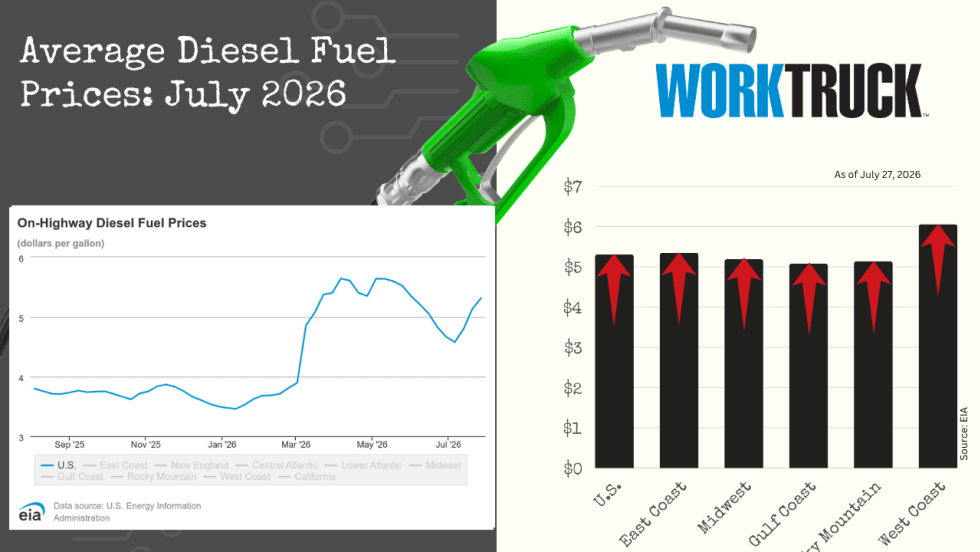
July Diesel Trends Update
The average price of a gallon of diesel increased again this week, and the EIA reported a new national average of $5.31 at the start of the week.
Read More →
WEX Brings Standard Fleet's Connected Vehicle Platform to Fleet Customers
This week’s product launch with Standard Fleet’s connected vehicle platform reflects WEX Venture Capital's strategy of turning startup innovation into customer solutions. Standard Fleet is now available to WEX fleet customers.
Read More →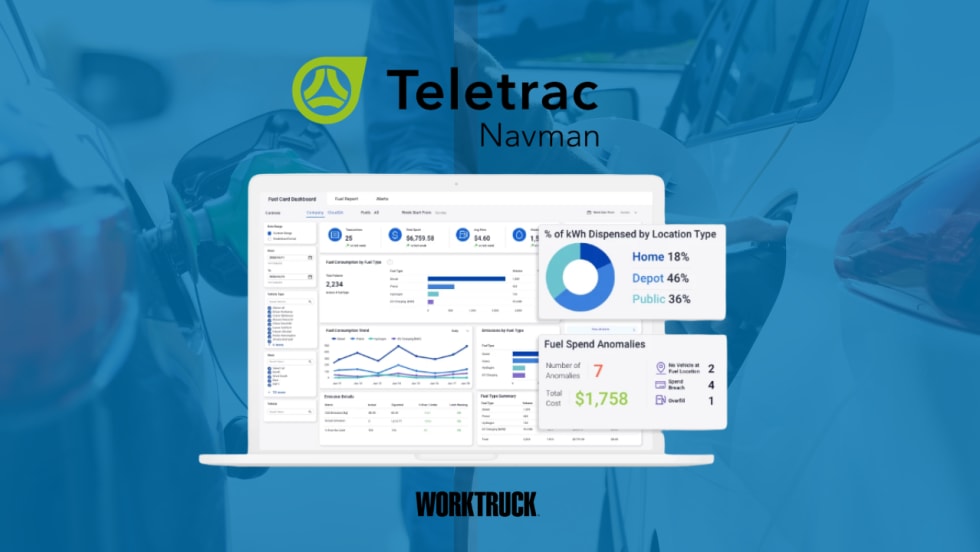
Teletrac Navman Adds Mixed-Energy Fleet Tools to TN360
The new Energy Hub combines fuel transactions, EV charging data, vehicle range, and energy costs in one dashboard for fleets operating multiple vehicle and energy types.
Read More →
WEX DriverDash adds CITGO, Expands Nationwide Access for Fleets
The DriverDash mobile payment app, by WEX, has been integrated into the CITGO merchant network, which means WEX has expanded its U.S. station footprint with the addition of approximately 4,000 CITGO locations.
Read More →
Mixed Energy Fleet Tips for Balancing EVs, Gas and Diesel Vehicles
Mixed energy fleets are becoming the new normal. Learn how fleet managers are balancing EVs, gas and diesel vehicles while controlling costs and planning for the future.
Read More →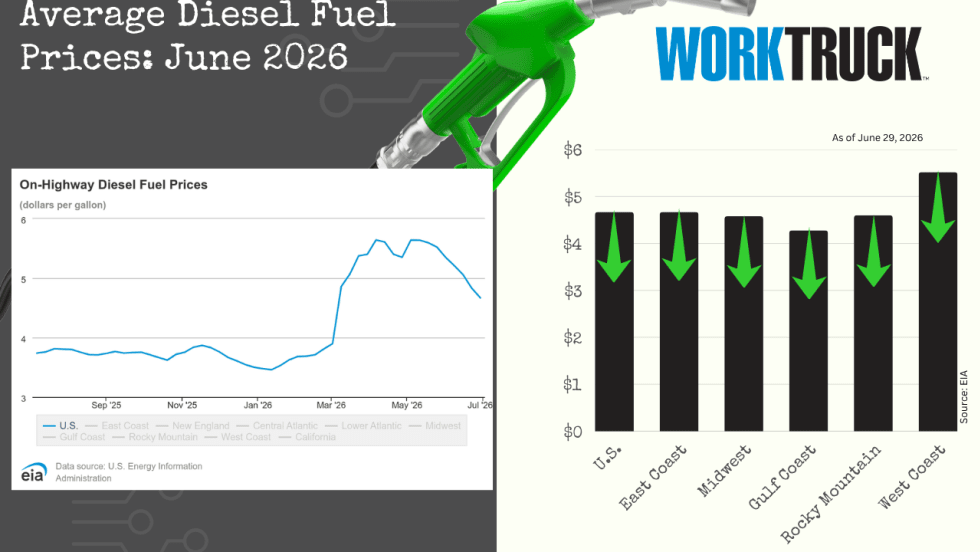
June Diesel Trends Update
The national average price of a gallon of diesel has dropped again, this week by more than 16 cents. All five regions reported lower average prices, ranging from almost 13 cents to more than 28 cents cheaper than a week ago.
Read More →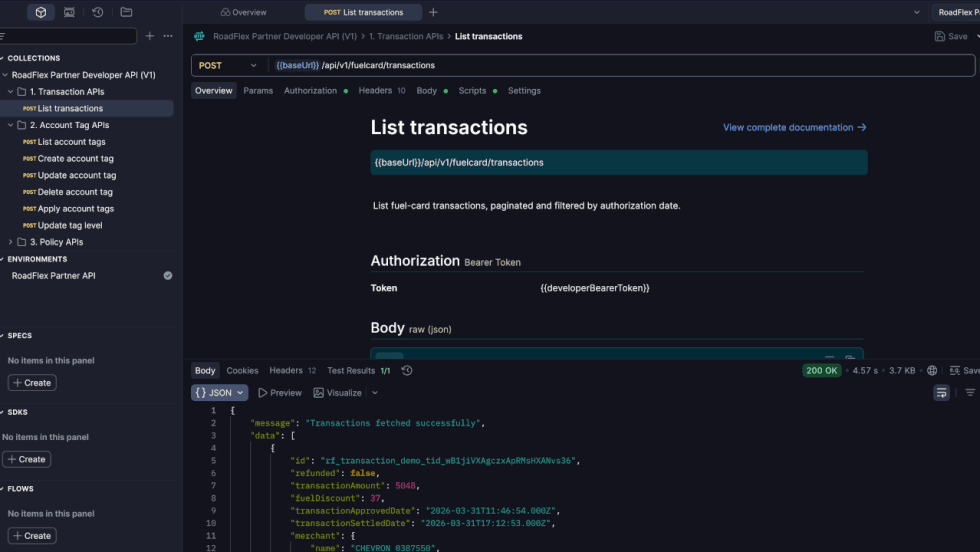
RoadFlex Launches RoadFlex Direct Open API Platform
RoadFlex Direct connects fuel cards, controls, and data to the telematics and fleet management systems fleets already run, from Geotab and Samsara to Fleetio and RTA, with no separate dashboard or double data entry.
Read More →
The Key to Fuel Efficiency Sits in the Cab
Learn how driver behavior, telematics, coaching, and fuel data can help fleets improve fuel efficiency, lower costs, and reduce emissions.
Read More →