




Stellantis Ends Hydrogen Fuel Cell Program as Market Outlook Weakens
Automaker cites limited infrastructure, high costs, and weak demand as it halts hydrogen fuel cell vans. Analysts say heavy-duty uses remain viable.


In October 2023, the Company unveiled a full revamp of the van lineup as a key element of the Pro One strategic offensive for Stellantis’ Commercial Vehicles Business. Today, the future has been discontinued.
Photo: Stellantis
In July 2025, Stellantis announced it will discontinue its hydrogen fuel cell technology development program, citing limited hydrogen refueling infrastructure, high capital requirements, and a lack of strong consumer incentives.
As a result, Stellantis will not launch its planned range of hydrogen-powered Pro One vehicles this year. Series production, originally scheduled to begin this summer in Hordain, France (medium vans), and Gliwice, Poland (large vans), has been canceled.
“In a context where the Company is mobilizing to respond to demanding CO2 regulations in Europe, Stellantis has decided to discontinue its hydrogen fuel cell technology development program,” said Jean-Philippe Imparato, Chief Operating Officer for Enlarged Europe. “The hydrogen market remains a niche segment, with no prospects of mid-term economic sustainability. We must make clear and responsible choices to ensure our competitiveness and meet the expectations of our customers with our electric and hybrid passenger and light commercial vehicles offensive.”
Stellantis noted the decision will not impact staffing at its production sites, and R&D tied to hydrogen technology will be redirected to other projects. The company is also in discussions with Symbio shareholders to evaluate the impact of current hydrogen market conditions and next steps.
The company noted in a release that it did not anticipate adoption of hydrogen-powered light commercial vehicles before the end of the decade.
Digging into Market Challenges for Hydrogen Commercial Vehicles
Market intelligence firm IDTechEx echoed the challenges facing hydrogen light commercial vehicles, noting they were “never a good value proposition” compared to battery-electric options. Analyst John Li pointed out that with Stellantis’ exit, prospects for fuel cell light commercial vehicles have worsened, although Renault and Toyota continue limited programs in Europe and Japan.
According to IDTechEx, fuel cells remain more promising in heavy-duty sectors such as trucking and buses, where range and refueling speed are bigger advantages. The firm highlighted ongoing deployments in California, Germany, and China, alongside government investment in fuel cell buses and infrastructure. Hyundai, Toyota, and Honda are also continuing development of fuel cell trucks, with Hyundai reporting deliveries in 14 countries.
While passenger car FCEVs are still rare, models like the Toyota Mirai, Hyundai Nexo, and Honda CR-V continue to see modest sales in select regions. BMW has also announced plans to enter the FCEV passenger car market in 2028.
IDTechEx forecasts that despite setbacks (including Stellantis’ withdrawal, Renault’s Hyvia joint venture liquidation, and Nikola’s bankruptcy) the global FCEV market could still grow, particularly in heavy-duty segments, if hydrogen refueling infrastructure expands.
More Green Fleet
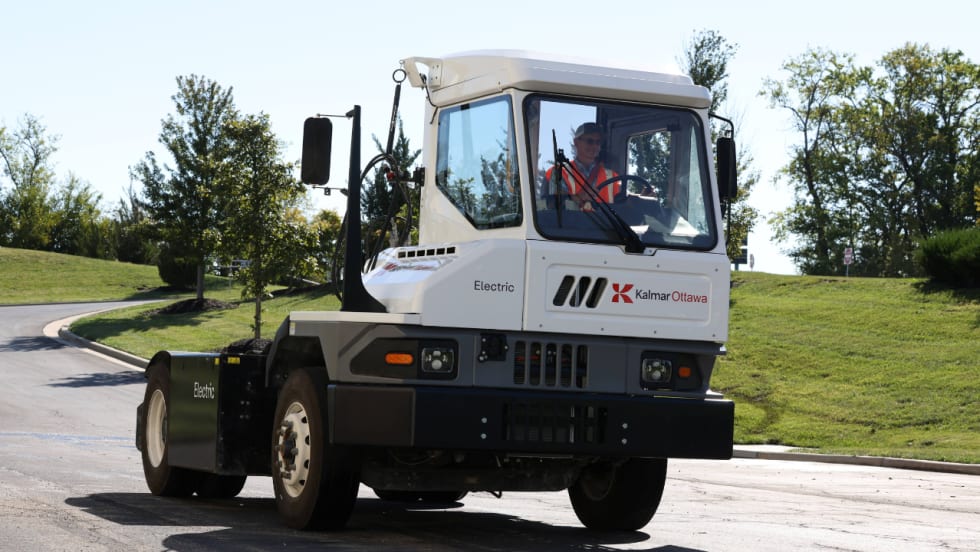
WTC Group Expands Sustainable Operations with Kalmar Ottawa T2 EV Fleet
Commercial adoption of the Kalmar Ottawa T2 EV terminal tractor continues to grow as customers add the zero-emission yard tractor to their fleets. WTC Group has placed an order for a Kalmar Ottawa T2 EV.
Read More →
Where Propane Autogas Fits in Today's Fleet Fuel Strategy
Learn more from PERC's Joel Stutheit, as he explains why propane autogas remains a practical alternative for fleets seeking to reduce emissions without sacrificing operational flexibility.
Read More →
Schneider Electric Simplifies Commercial EV Charging with New Charge Pro for the U.S.
Schneider Electric’s updated Charge Pro Level 2 chargers deliver reliable, flexible charging for multi-unit dwellings, fleets and workplaces, as well as public and destination charging locations such as hotels and retail centers.
Read More →

ChargePoint and Onvo Expand Highway Fast Charging Across the Northeastern U.S.
ChargePoint is working with Onvo, a locally owned travel plaza brand headquartered in Pennsylvania, to install ultra-fast EV charging stations at locations in the Northeastern U.S.
Read More →
The City of Kingston Celebrates Purchase of 2 Mack LR Electric Refuse Trucks
The City of Kingston, Ontario, Canada, a municipality with a vision of being “Canada’s Most Sustainable City,” recently showcased two Mack LR Electric refuse trucks following their successful deployment in 2025.
Read More →
Fuel Management's Next Evolution Centers on Connected Fleet Technology
Learn how fleets are integrating fueling, telematics, tank monitoring, EV charging, and data systems to improve efficiency and visibility.
Read More →
Landi Technologies Achieves CARB Certification of Ford 7.3L RNG/CNG Platform
Landi Technologies has gained CARB certification of its Ford 7.3L Renewable Natural Gas (RNG) and Compressed Natural Gas (CNG) platform for the Ford E-450, F-450/550/600, F-650/750, and F-53/59 platforms.
Read More →
Turning Connected Vehicle Data Into Decisions That Matter
Fleet leaders have more data than ever, but turning that data into clear, actionable decisions remains a challenge. This white paper shows how leading organizations are using connected vehicle data to improve safety, reduce costs, and optimize fleet performance. Learn how to turn insight into action across your fleet.
Read More →
Are You Tracking Your Fleet's True Total Cost of Ownership?
Bobit Business Media surveyed 190 fleet professionals and found that while most fleets are tracking costs, fragmented systems and data gaps are keeping true TCO visibility out of reach. With rising pressure to control spend in an increasingly volatile environment, the gap between what fleets think they know and what the data actually shows is wider than you might expect. See how your peers are managing costs today and where the industry still has room to improve.
Read More →