




April Diesel Trends Update
The national average price of a gallon of diesel dropped by more than 5 cents this week, and all but one region reported price decreases.

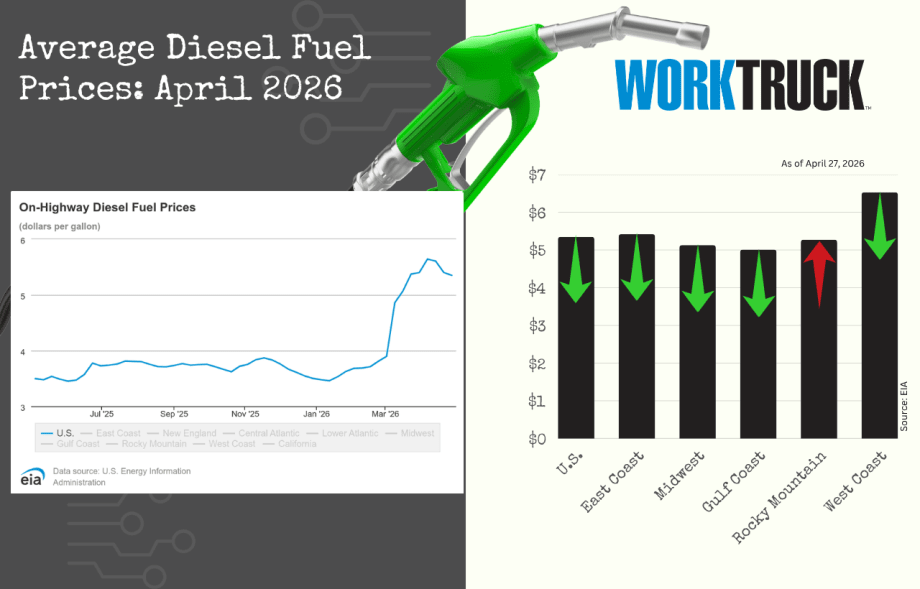
The average price of a gallon of diesel decreased again this week, with the national average price dropping by 5.2 cents.
Credit: Work Truck/EIA
The average price of diesel is still above $5 nationwide and in every region of the U.S., but prices decreased this week in every region but one. This week, the national average price decreased by more than 5 cents.
The national average price of a gallon of on-highway diesel was $5.35 as reported April 27 by the U.S. Energy Information Administration (EIA).
However, the weekly report also provides a year-over-year pricing comparison, showing the national average is now $1.83 higher than in 2025 and $1.40 higher than the same time in 2024.
This week, regional average prices decreased in four of five regions, with only the Rocky Mountain region reporting an increase. The regional price average decreases ranged from 3.4 cents in the Midwest region to 9 cents in the West Coast region.
The most expensive place to buy diesel is California, at $7.48 per gallon, and the least costly is Oklahoma, at $4.69 per gallon.
Regional Diesel Prices: 4th Week of April
Average diesel prices reported by region, as of April 27, were:
East Coast: $5.42
Midwest: $5.13
Gulf Coast: $5.01
Rocky Mountain: $5.27
West Coast: $6.53
Regional Diesel Prices: 3rd Week of April
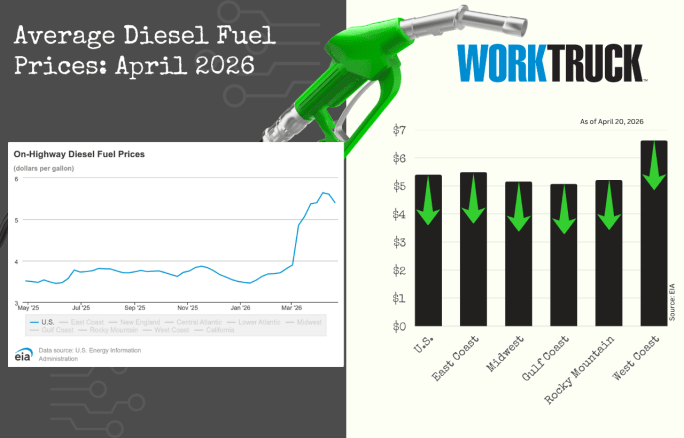
The average price of a gallon of diesel decreased again this week, more significantly than a week ago.
Credit: Work Truck/EIA
Average diesel prices reported by region, as of April 20, were:
East Coast: $5.49
Midwest: $5.16
Gulf Coast: $5.07
Rocky Mountain: $5.21
West Coast: $6.62
Regional Diesel Prices: 2nd Week of April
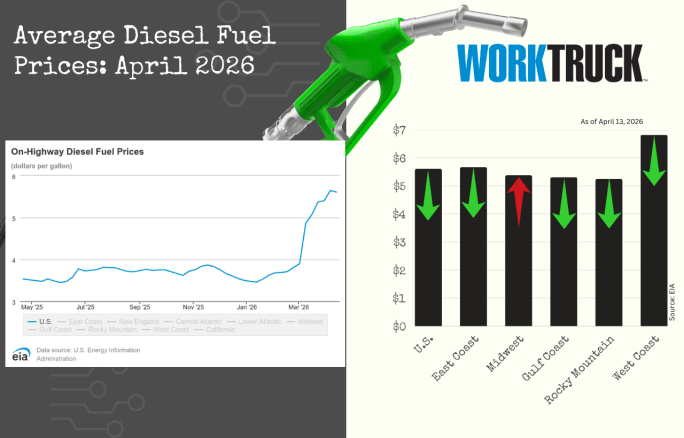
The average price of a gallon of diesel changed direction this week, decreasing nationally and in all but one region.
Credit: Work Truck/EIA
Average diesel prices reported by region, as of April 13, were:
East Coast: $5.67
Midwest: $5.38
Gulf Coast: $5.31
Rocky Mountain: $5.25
West Coast: $6.82
Regional Diesel Prices: 1st Week of April
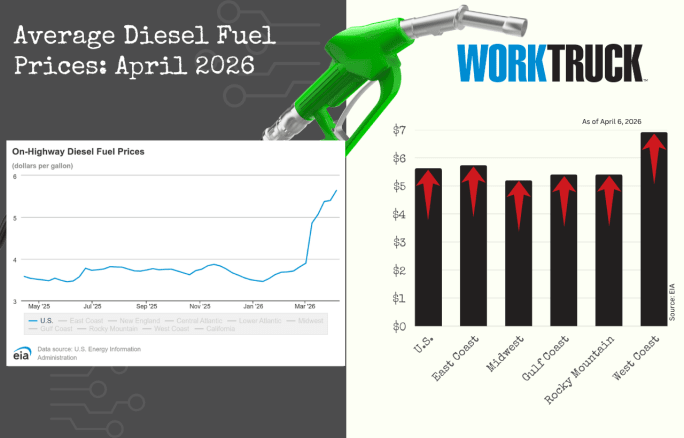
The average price of a gallon of diesel increased nationally again, this week by more than 24 cents.
Credit: Work Truck/EIA
Average diesel prices reported by region, as of April 6, were:
East Coast: $5.74
Midwest: $5.30
Gulf Coast: $5.41
Rocky Mountain: $5.41
West Coast: $6.92
Regional Diesel Prices: End of March
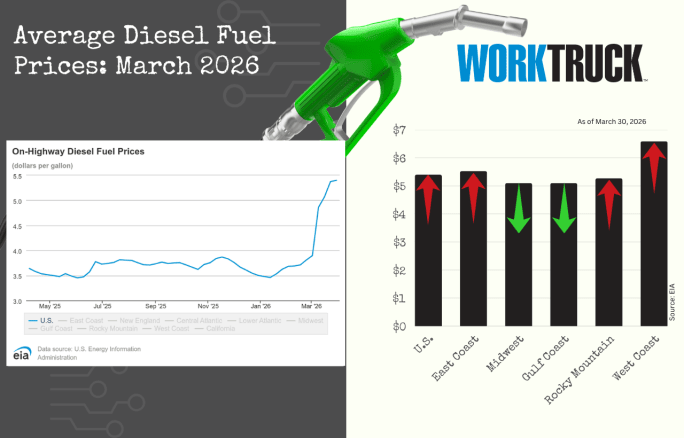
The average price of a gallon of diesel increased nationally again; however, this time the increase was smaller than in recent weeks, just 2.6 cents.
Credit: Work Truck/EIA
Average diesel prices reported by region, as of March 30, were:
East Coast: $5.53
Midwest: $5.10
Gulf Coast: $5.10
Rocky Mountain: $5.27
West Coast: $6.59
More Fuel

The Smart Way to Build a Mixed-Energy Fleet Isn’t About Picking a Side
Mixed-energy fleets aren’t about picking a winning fuel. Sarah Booth of WEX explains how vehicle data, duty cycles, charging strategy, and real-world costs can help fleets choose the right energy source for each job.
Read More →
Ignoring This Dashboard Warning Could Cost Your Fleet Thousands in Fuel
New research suggests neglected diesel aftertreatment systems could waste up to $30 in fuel per vehicle each day. Here's why vocational fleets should pay attention.
Read More →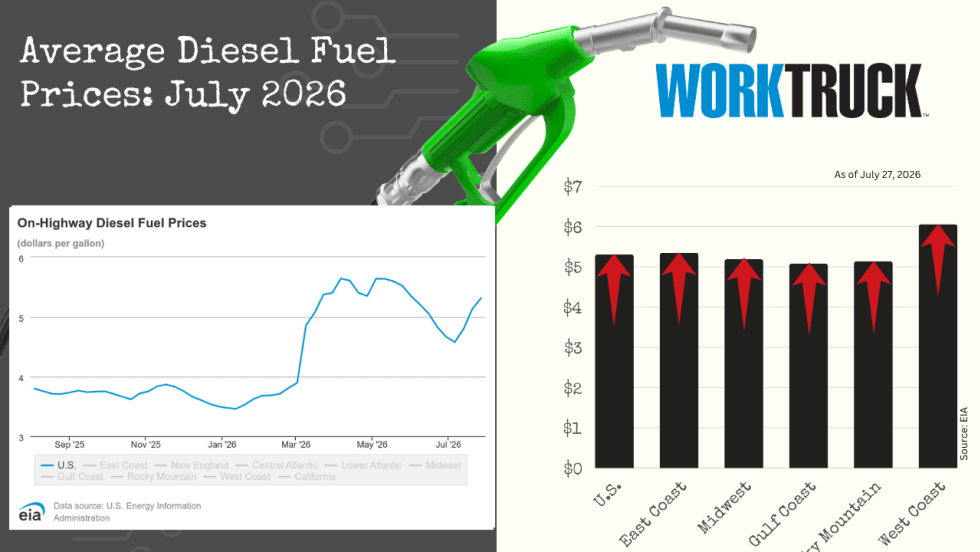
July Diesel Trends Update
The average price of a gallon of diesel increased again this week, and the EIA reported a new national average of $5.31 at the start of the week.
Read More →
WEX Brings Standard Fleet's Connected Vehicle Platform to Fleet Customers
This week’s product launch with Standard Fleet’s connected vehicle platform reflects WEX Venture Capital's strategy of turning startup innovation into customer solutions. Standard Fleet is now available to WEX fleet customers.
Read More →
Teletrac Navman Adds Mixed-Energy Fleet Tools to TN360
The new Energy Hub combines fuel transactions, EV charging data, vehicle range, and energy costs in one dashboard for fleets operating multiple vehicle and energy types.
Read More →
WEX DriverDash adds CITGO, Expands Nationwide Access for Fleets
The DriverDash mobile payment app, by WEX, has been integrated into the CITGO merchant network, which means WEX has expanded its U.S. station footprint with the addition of approximately 4,000 CITGO locations.
Read More →
Mixed Energy Fleet Tips for Balancing EVs, Gas and Diesel Vehicles
Mixed energy fleets are becoming the new normal. Learn how fleet managers are balancing EVs, gas and diesel vehicles while controlling costs and planning for the future.
Read More →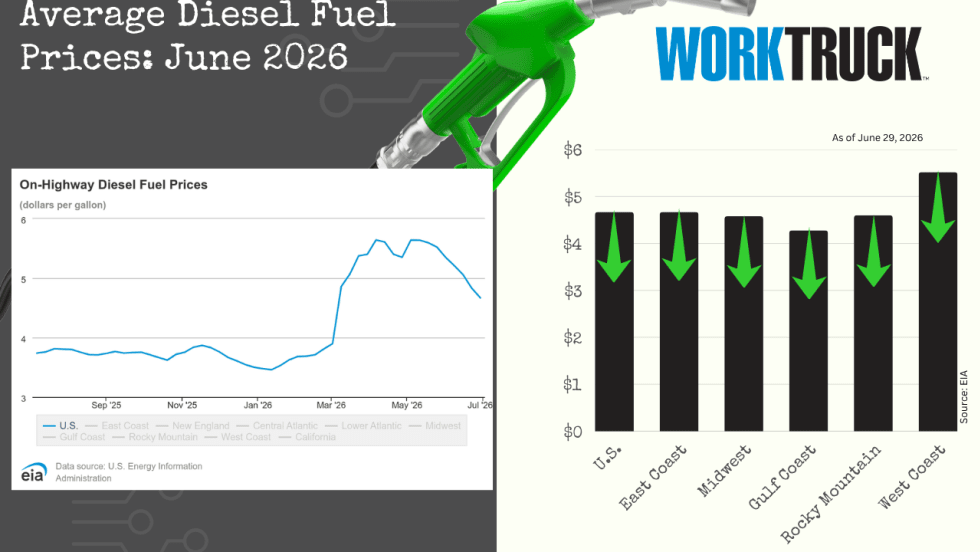
June Diesel Trends Update
The national average price of a gallon of diesel has dropped again, this week by more than 16 cents. All five regions reported lower average prices, ranging from almost 13 cents to more than 28 cents cheaper than a week ago.
Read More →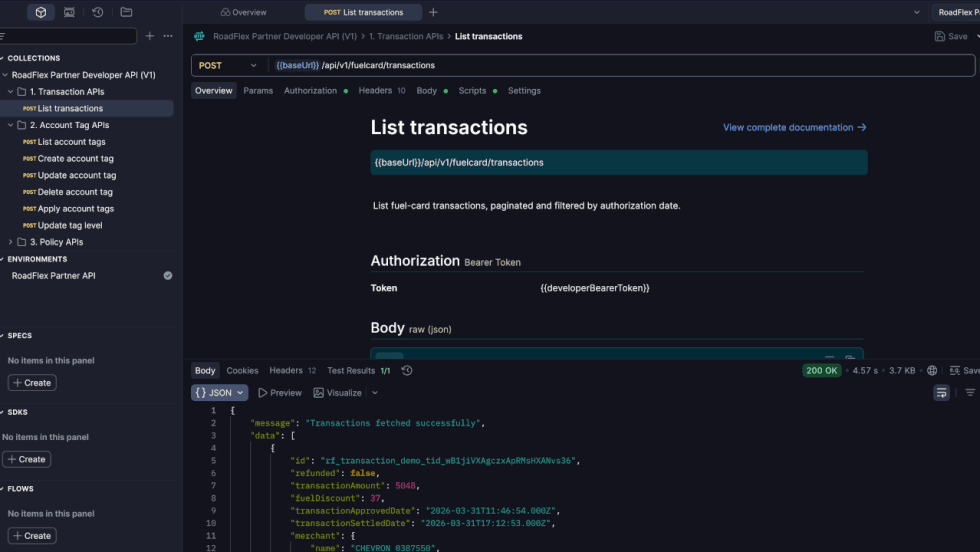
RoadFlex Launches RoadFlex Direct Open API Platform
RoadFlex Direct connects fuel cards, controls, and data to the telematics and fleet management systems fleets already run, from Geotab and Samsara to Fleetio and RTA, with no separate dashboard or double data entry.
Read More →
The Key to Fuel Efficiency Sits in the Cab
Learn how driver behavior, telematics, coaching, and fuel data can help fleets improve fuel efficiency, lower costs, and reduce emissions.
Read More →