




Learn More: Finding Your Leadership Voice in Fleet
Fleets Move From Watching Data to Acting On It
NAFA 2026 Media Day showcased how fleet tech is evolving from dashboards and data into real-time decisions, automation, and tools built to actually get work done.
April 14, 2026
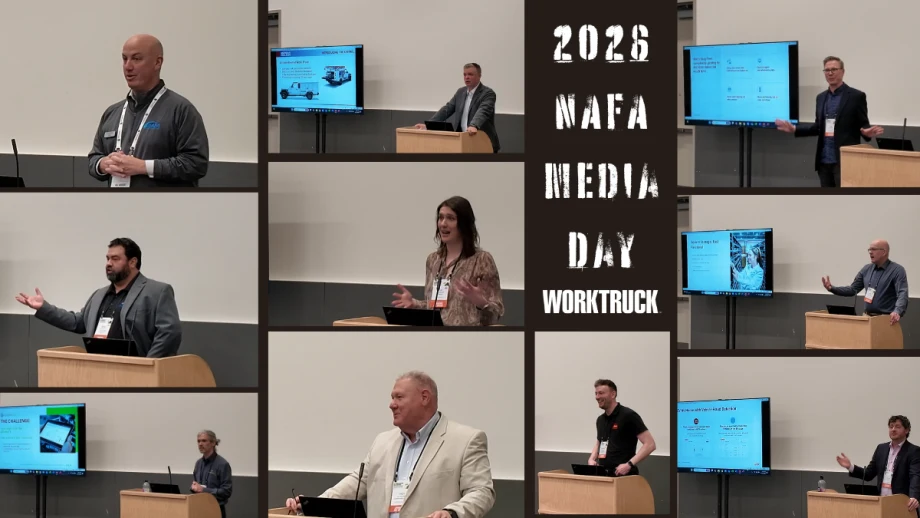
NAFA 2026 Media Day highlighted the biggest fleet tech trends shaping this year’s show in Cleveland.
Credit:
Lauren Fletcher
8 min to read
- NAFA 2026 Media Day highlighted the shift in fleet technology from passive data collection to active decision-making processes.
- The event showcased how automation and real-time tools are being implemented to streamline fleet management tasks.
- Emphasis was placed on moving beyond dashboards to ensure technology solutions deliver concrete, practical results for users.
*Summarized by AI
NAFA kicked off Media Day with a strong signal that the industry is not slowing down anytime soon.
Bill Schankel, CEO of NAFA Fleet Management Association, welcomed the media and shared that this year’s Institute & Expo is the largest the event has been in over a decade. The show floor is sold out, and attendance reflects a nearly even split between commercial and government fleet managers, a balance that continues to influence how solutions are built and deployed.
This year’s theme, Amplify Your Drive, feels especially on point. Because if Media Day proved anything, it’s that fleets are done just looking at data.
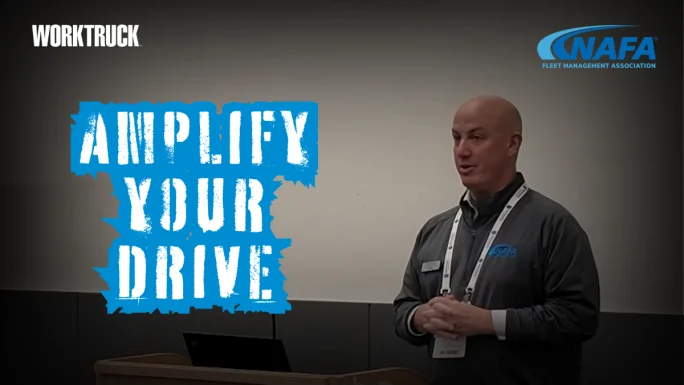
This year's NAFA I&E took place April 13-15, 2026 in Cleveland, Ohio.
Credit: Lauren Fletcher
For years, the industry has invested in dashboards, telematics, and reporting. That foundation is now expected. What stood out across the stage in Cleveland was a clear shift toward something more practical, turning all that information into faster, smarter action.
AI showed up everywhere, but not in a flashy way. It’s being embedded into workflows, quietly doing the work behind the scenes. At the same time, companies are still tackling the basics—fixing fragmented systems, speeding up decisions, and eliminating the small inefficiencies that add up to real dollars.
In other words, fleet tech is evolving from insight to execution.
Collective Data Brings AI Into the Day-to-Day Workflow
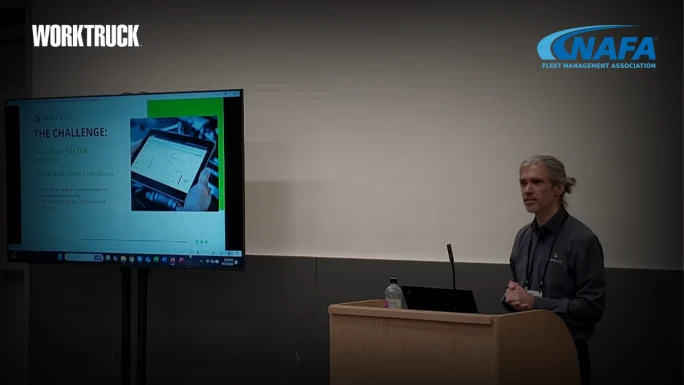
Collective Data showcased how AI can help fleet teams turn complex data into faster everyday decisions.
Credit: Lauren Fletcher
Instead of positioning AI as the future, Collective Data focused on what it can do right now.
Jason Wonase walked through a conversational “Ask Anything” approach that lets fleet managers interact with their data the same way they’d ask a colleague a question. What vehicles should be replaced? What inventory needs to be ordered in the next two weeks? The system responds instantly, pulling from across the platform.
What stood out is how much work is happening behind the scenes. The platform isn’t just retrieving information; it’s connecting maintenance schedules, historical usage, inventory levels, and cost data to produce a usable answer. And then it doesn’t stop there. That answer can be turned into a report, visualized in a dashboard, or saved as a repeatable query.
There’s also a level of control baked in that fleets will appreciate. Organizations can define how decisions are made, what data is accessible, and how AI interacts with it. It’s a practical approach that acknowledges both the power of AI and the need to keep it in check.
Morgan Olson Introduces a Flexible New Work Truck Platform
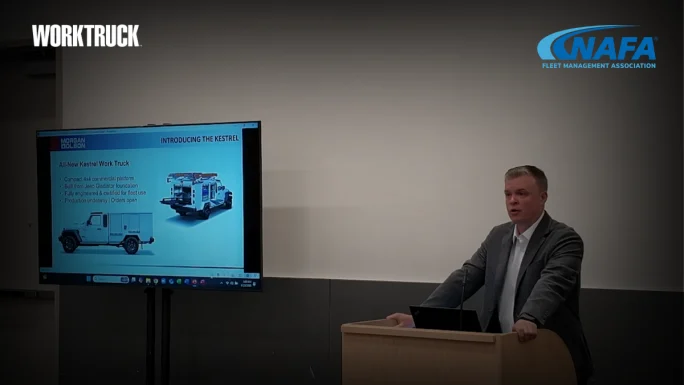
Morgan Olson introduced the Kestrel, a compact 4x4 work truck built for flexible fleet applications.
Credit: Lauren Fletcher
Not everything at Media Day was software-driven. Morgan Olson brought things back to the physical side of fleet with the introduction of the Kestrel.
Presented by Joe Rudolph, the Kestrel is a compact 4x4 commercial vehicle designed to handle a wide range of applications, from utilities and trades to emergency response and last-mile delivery.
The bigger story is flexibility. The platform is built to be modular, allowing fleets to configure interiors, storage, and functionality based on their specific needs. It’s not a one-size-fits-all solution, and that’s the point.
Equally important is the fact that this isn’t a concept. Production is already underway, early units are in the field, and orders are open. In a market where lead times can drag on, that immediacy matters.
Safety and compliance also played a major role in the positioning, with full testing and validation built into the platform from the start. It’s designed to meet real-world demands, not just look good on paper.
Chevin Reimagines the Dashboard Experience for Fleet Teams
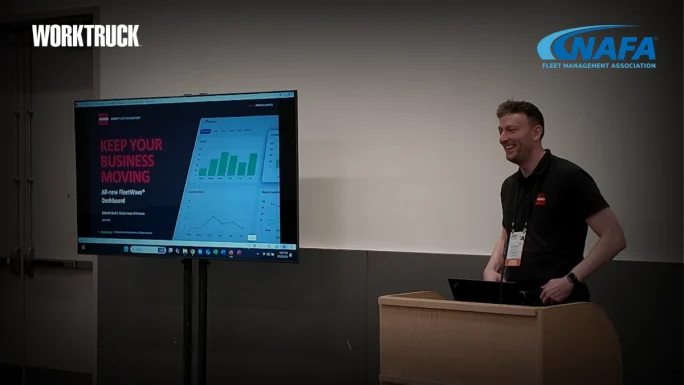
Chevin unveiled a redesigned dashboard experience aimed at making fleet data easier to build, view, and share.
Credit: Lauren Fletcher
If dashboards have been the backbone of fleet management, Chevin is trying to make them a lot less painful to use.
Richard Clark framed the challenge in a way that hit home: Fleet data has become a massive puzzle, and most teams are still trying to piece it together across disconnected systems.
Chevin’s response is a fully rebuilt dashboard experience that focuses on usability, flexibility, and speed.
Fleet teams can build and customize their own dashboards, adjust layouts in real time, and share insights instantly across the organization. The goal is to remove the dependency on IT teams or outside resources just to get basic visibility.
What’s interesting is that AI isn’t front and center here. It’s part of the roadmap, but the immediate focus is on making data easier to access and act on. Sometimes the biggest improvement is simply removing friction.
MotorQ Focuses on Faster Decisions With Fuse
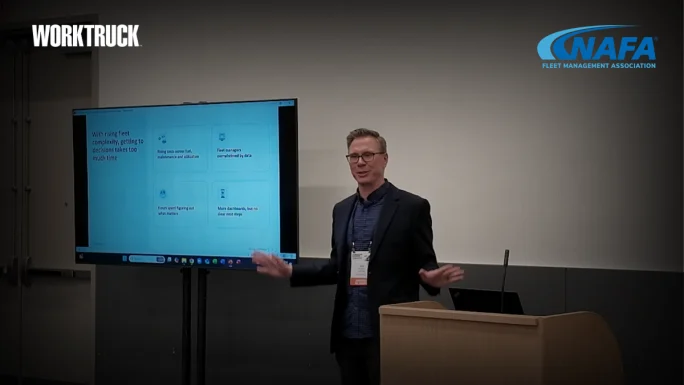
MotorQ previewed Fuse, a platform designed to help fleet managers move from insights to action faster.
Credit: Lauren Fletcher
MotorQ leaned into a reality most fleet managers know well: Getting to the right decision often takes too long.
Ian Dailey introduced Fuse as a way to flip that process. Instead of starting with dashboards and working toward insights, Fuse surfaces prioritized actions from the start.
The system continuously analyzes data on fuel usage, maintenance, utilization, and more, then ranks issues by financial impact. That means fleet managers can focus on what matters most without digging through layers of reports.
There’s also a built-in conversational assistant, allowing users to ask questions and generate custom visualizations on the fly.
It’s a subtle shift, but an important one, and one that means less time spent analyzing and more time acting.
WEX Tackles EV Charging Complexity Head-On
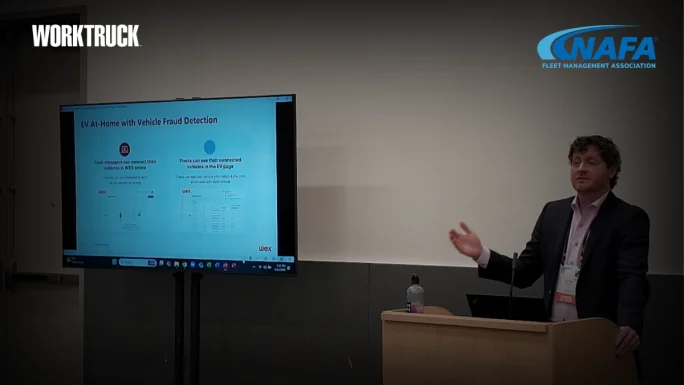
WEX highlighted new tools to bring more control and verification to EV home charging reimbursement.
Credit: Lauren Fletcher
As fleets move toward electrification, the operational challenges are starting to catch up.
Ryan Kelly highlighted one of the biggest gaps: What happens when charging moves into the home. Without clear visibility, fleets are left to manage reimbursement and trust that everything is accurate.
WEX’s solution connects vehicle data, charger data, and utility data to verify that a charging event actually belongs to the fleet before reimbursement is processed.
That level of validation brings a new layer of accountability to EV charging, something fleets have long relied on in traditional fuel programs.
It’s not the most visible part of electrification, but it will become increasingly important as adoption scales.
Fleetio Turns Location Data Into a Decision-Making Tool
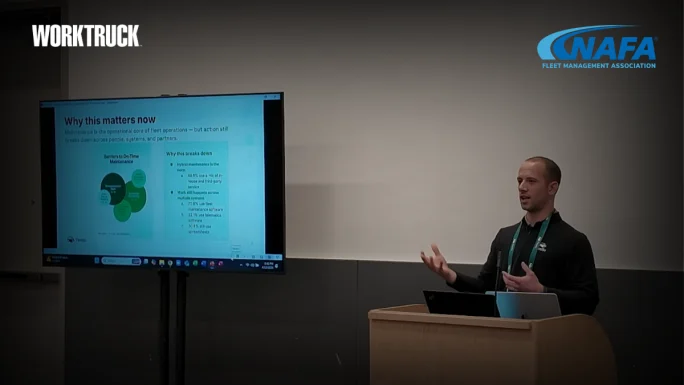
Fleetio introduced Fleet Map, bringing location data directly into maintenance and operational decision-making.
Credit: Lauren Fletcher
Fleetio’s latest announcement builds on something fleets already have — location data — but pushes it further.
Stefano Daneri introduced Fleet Map as a way to bring location directly into maintenance and operational workflows.
Instead of bouncing between systems to figure out where assets are and what to do next, fleet teams can see everything in one place and act on it immediately. Whether it’s identifying the closest vendor, understanding asset availability, or responding to a breakdown, the goal is to reduce decision time.
Automation also plays a role here, with geofencing triggering updates and actions as vehicles move.
It’s a shift from simply tracking assets to actively managing them.
Car Keys Express Simplifies Key Management at Scale
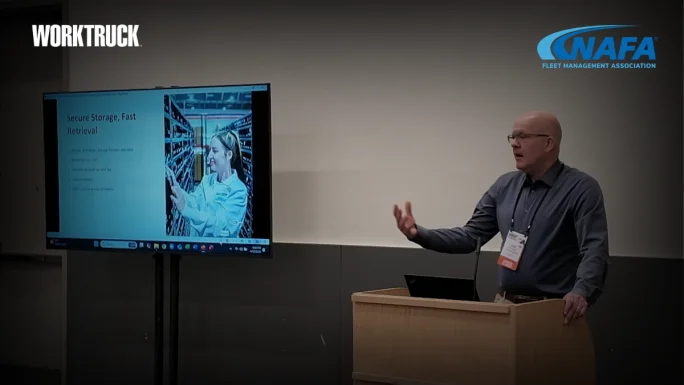
Car Keys Express shared a new platform designed to simplify key storage, replacement, and recovery for fleets.
Credit: Lauren Fletcher
It might not be the first thing that comes to mind when thinking about innovation, but lost keys are a real and costly problem for fleets.
Car Keys Express introduced a platform that manages the full lifecycle of keys, from storage and retrieval to replacement and resale.
Fleets can store backup keys in a secure facility, request them when needed, or dispatch mobile services for immediate replacements. The process is streamlined through a simple app interface, making it easy to act quickly when issues arise.
It’s a practical solution that reduces downtime and cuts unnecessary costs. Not flashy, but incredibly useful.
RTA Fleet Uses AI to Eliminate Manual Invoice Work
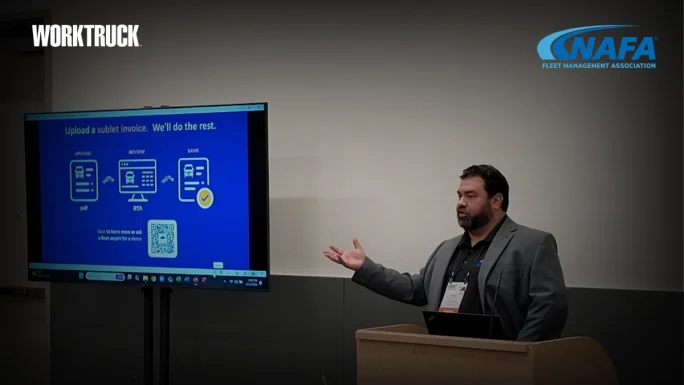
RTA Fleet demonstrated AI-powered invoice capture built to reduce manual entry and improve maintenance records.
Credit: Lauren Fletcher
Manual data entry isn’t going anywhere fast, but RTA is trying to take a big chunk of it off the table.
Marc Canton introduced an AI-enabled sublet invoice capture tool that pulls data directly from vendor invoices and converts it into structured records.
The time savings are significant, especially at scale, and the added accuracy helps build a more complete maintenance history.
It also ties into a larger vision for RTA, which is building an AI-driven ecosystem that combines data, best practices, and workflows into a single experience.
It’s a good example of AI being used where it makes the most sense, removing repetitive, time-consuming tasks.
Samsara Expands Commercial Navigation for Real-World Fleet Needs
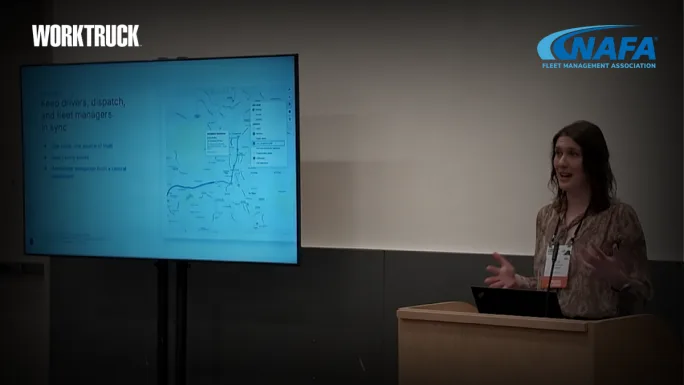
Samsara expanded its commercial navigation tools to better support safer, more efficient fleet operations.
Credit: Lauren Fletcher
Navigation might seem like a solved problem, but for fleets, it’s anything but.
Eve Alexander highlighted how relying on consumer-grade navigation tools creates inefficiencies, safety risks, and compliance challenges.
Samsara’s commercial navigation platform is designed specifically for fleet operations, taking into account vehicle size, restrictions, and company policies.
New capabilities include Apple CarPlay integration, real-time coordination between drivers and dispatchers, and more control over routing decisions. Fleets can guide drivers to preferred fuel locations, avoid restricted routes, and ensure compliance with internal policies.
The impact goes beyond navigation. It reduces wasted miles, improves safety, and cuts down on unnecessary communication between drivers and dispatch.
Hammerhead Armor Stays Focused on Durability and Customer Relationships
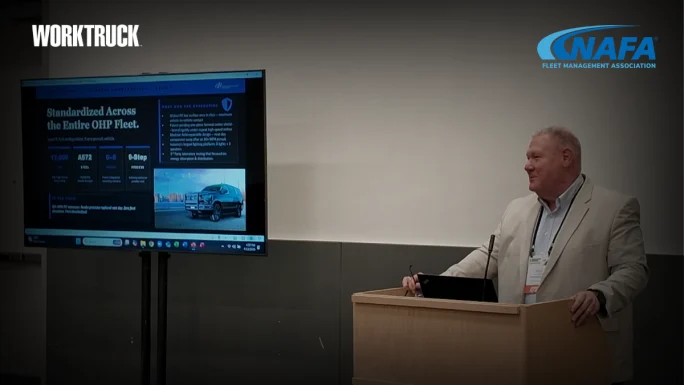
Hammerhead emphasized a customer-first mindset, focusing on long-term partnerships rather than one-off sales.
Credit: Lauren Fletcher
Not every Media Day conversation was about software or AI. Hammerhead Armor brought things back to fundamentals, including durability, reliability, and relationships.
Their approach centers on creating bumpers that can withstand the realities of fleet use, including daily wear, jobsite conditions, and the abuse work trucks endure over time. Built from high-strength steel and engineered for precise fitment, the products are designed to bolt directly onto vehicles without modification, while maintaining functionality such as towing and accessory integration.
But the bigger message wasn’t just about the product. It was about the relationship with the customer.
Driving Thoughts
Across every presentation, the message was consistent. Fleet technology isn’t trying to show you more anymore. It’s trying to do more for you.
And if this is where things are headed, the future of fleet management might look a lot less like staring at dashboards and a lot more like actually getting things done.
Dig in further on the showfloor over the next few days and follow us as we connect deeper with several of these experts and more!
Subscribe to Our Newsletter
More Operations

Automotive Fleet Opens 2026 Personal Use Survey for Commercial Fleet Managers
Less than two weeks left! Commercial and corporate fleet managers are invited to share how their organizations handle company vehicle personal-use policies, charges, and driver eligibility.
Read More →
What Resilient Fleets Do Differently When Conditions Change
Fleet resilience is about more than reacting to disruption. Lauren Fletcher talks with AP Fleet’s Alex Coveney about flexibility, planning, scaling, and what helps fleets adapt when business conditions shift.
Read More →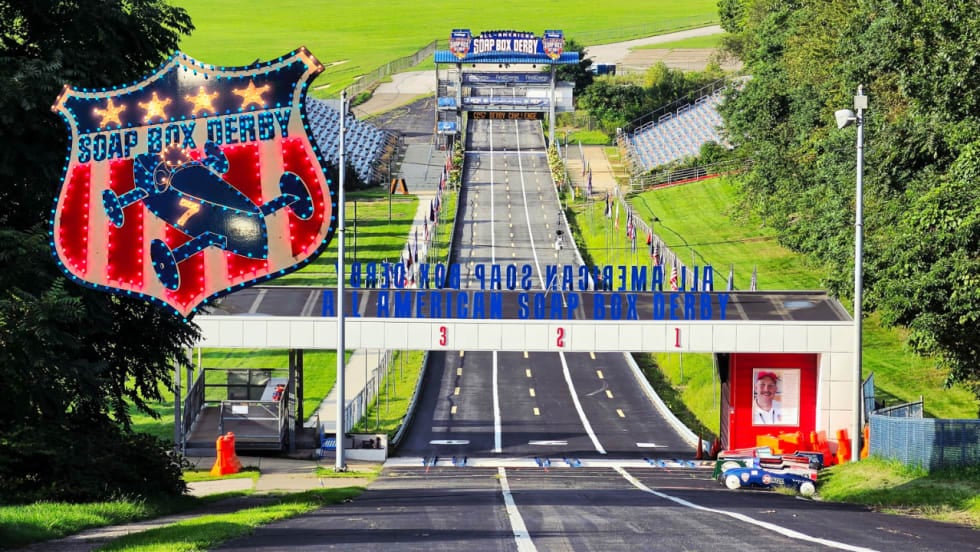
If We Want the Next Generation in Automotive, We Have to Give Them a Reason to Care
The automotive industry talks constantly about its workforce shortage. But before we can recruit the next generation, we may need to do a better job giving kids a reason to care about automotive in the first place.
Read More →
Ram ProMaster City Under $40K, Truck Tariffs, and AI Maintenance Lead the News
A sub-$40K commercial van, tariff questions, AI-powered maintenance, and a new EV production strategy headline this week’s Truck Chat Cheat Sheet.
Read More →
Bob Adamsky Shares the Fleet Lessons You Usually Learn the Hard Way
After more than 30 years in fleet, Arrow International’s Bob Adamsky has learned that the job is about far more than vehicles. He shares the lessons he wishes every fleet manager could learn a little earlier.
Read More →
Why Fleet Leaders Have to Keep Asking Why
What if the biggest fleet improvements start with one simple question? After decades managing budgets, policies, technology, teams, and some of the largest fleet operations in the business, Jeff Hurrell shares why fleet leaders should keep asking “why” before deciding what comes next.
Read More →
Drones, EV Reality, Truck Production & Smarter Fleet Operations Lead This Month
August’s biggest work truck stories go beyond the vehicle, from disaster-response drones and EV reality checks to truck production, roadside uptime, and smarter fleet operations.
Read More →
Team Fletcher Takes 2nd Overall at the Corporate Soap Box Derby
Team Fletcher came to Akron as a rookie and left with a win over Team Brown, a second-place overall finish, and $22,000 raised for The Hourglass Foundation. See how race day unfolded.
Read More →
Shades of Fleet Call for Voices: Fleet's Hidden Heroes
Fleet’s hidden heroes are often the ones keeping everything moving behind the scenes. September’s Shades of Fleet is looking for dispatchers, coordinators, parts specialists, and other support pros to share their stories.
Read More →
What is the WEX NAM Summit?
What makes the WEX NAM Summit different from other fleet industry events? It's a meeting of the minds that brings fleet and mobility leaders together to discuss emerging trends, AI, new solutions, best practices, and the future of the industry.
Read More →