





Video: What Does AI Mean to Fleets?
How Work Truck Fleets Are Using AI for Compliance and Why Adoption Is Still Uneven [Part 1]
AI is everywhere in fleet compliance, but it’s not always used well. Here’s where work truck fleets are winning, stalling, and risking audits.
January 13, 2026
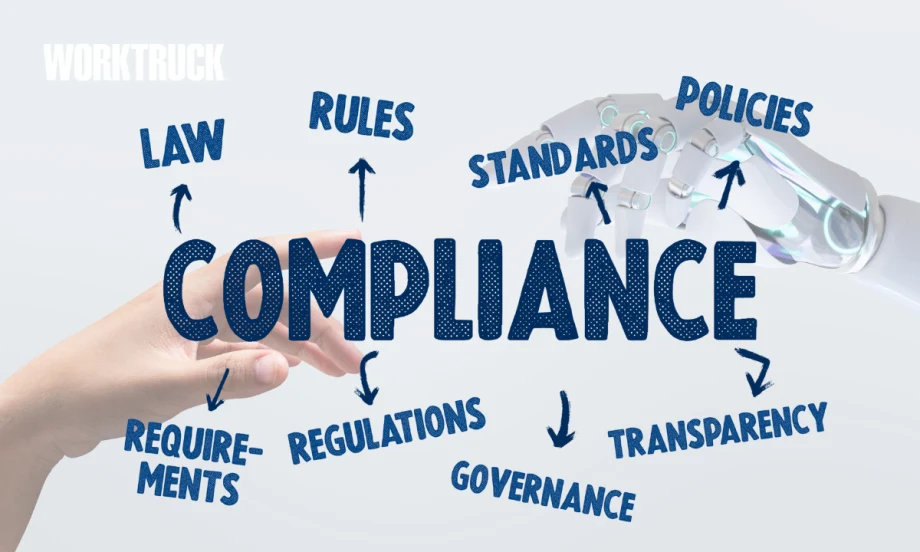
As work truck fleets adopt AI for compliance, uneven integration across laws, rules, policies, and governance highlights why technology alone isn’t enough without clear processes and follow-through.
Credit: Work Truck
4 min to read
Fleet compliance has always been a game of volume. Volume of logs. Volume of inspections. Volume of documentation that must be reviewed, verified, stored, and produced on demand. As fleets have grown and regulations have become more complex, the burden has only increased.
AI entered the compliance conversation not as a silver bullet, but as a response to scale.
“Fleets are increasingly using AI to support auditing and compliance, but adoption today is uneven and often narrow in scope,” said Adam Kahn, chief marketing officer at Netradyne. “Most fleets are applying AI to reduce manual effort and speed validation, while significant gaps remain in how deeply AI is integrated into compliance workflows.”
That uneven adoption shows up in how fleets deploy AI, how consistently they use it, and how well it’s connected to real compliance processes.
That lack of structure is often less about intent and more about infrastructure.
The Data Silo Problem
Even fleets that want to go deeper with AI often struggle with fragmented systems.
“Fleets are currently using AI applications and solutions to shift from reactive compliance to preventative compliance,” said Eric Lambert, VP legal and employment counsel specializing in transportation and logistics at Trimble. “One of the biggest challenges fleets find is AI adoption data silos.”
In many organizations, ELD data, maintenance records, safety data, and HR or driver qualification files live in separate legacy systems. That lack of integration limits AI’s ability to identify trends across compliance domains.
Another challenge is staffing and process maturity.
“While AI is excellent at flagging potential violations, fleets may lack the internal protocols and skilled personnel needed to review those flags efficiently and apply the necessary regulatory judgment,” Lambert said. “That can lead to alert fatigue instead of effective risk reduction.”
How Are Fleets Actually Using AI Today?
Across fleet sizes and operating models, the first entry point for AI is usually safety-related.
“Today, most fleets are using AI in a fairly narrow, reactive way,” said Naeem Bari, co-founder and president of Linxup. “The most common use is AI-driven detection through dash cams and telematics, things like tailgating, phone use, and seatbelt violations.”
That AI-generated data is often paired with traditional telematics events such as harsh braking, rapid acceleration, speeding, and potential impacts. Fleet managers use that combined data to review driver behavior, surface areas that need attention, and coach drivers accordingly.
Those coaching sessions are not just about safety culture. They become compliance assets.
“These sessions then create a digital ‘paper trail’ that can later be used for audits, insurance reviews, or legal defense,” Bari said.
But Bari also warned that partial adoption can introduce new risks.
“For insurance purposes, it’s not enough to simply collect AI telematics data,” he said. “Fleets also need documentation that shows how those insights are being used, especially when it comes to driver coaching.”
Installing technology without follow-through can actually increase liability.
“If risky behavior is documented but never addressed, insurers and attorneys may argue that the fleet had the information and failed to do anything with it,” Bari said.
Compliance and Safety Are Not the Same
Mark Schedler, senior editor at J. J. Keller and Associates, Inc., emphasized a distinction fleets often miss.
“Carriers should use dash cams with AI for fatigue detection, not just ELDs, to ensure compliance with HOS rules,” Schedler said. “Compliant does not always mean safe.”
ELDs can show hours were logged correctly, but they do not indicate whether a driver was fatigued, distracted, or alert. AI-enabled video adds a layer of insight that connects regulatory compliance with real-world risk.
This disconnect between compliance data and safety context is one of the biggest reasons AI adoption feels uneven. Fleets often adopt AI to solve one problem without fully integrating it into broader compliance workflows.
In Part 2, we’ll look at the specific compliance problems AI can actually solve today and where human judgment still matters most. In Part 3, we’ll look at how fleets can use AI to improve compliance without increasing risk and what to ask before buying into any solution.
Subscribe to Our Newsletter
More Technology & AI
GeoFencing Adds to Your Truck Security Arsenal
Geofencing is a familiar fleet tool today, but its early adoption marked a major shift in vehicle tracking, route monitoring, and the debate over employee privacy.
Read More →
Geotab Data Shows Regional Trucking Growing Faster as Last Mile Routes Get Denser
Geotab's first U.S. supply chain report finds stable long-haul activity, stronger regional freight movement, tighter hub-and-spoke utilization, and more last-mile trips on shorter routes.
Read More →
When Fleet Technology Helps and When It Just Adds Complexity
New technology can help fleets work smarter, but only if it solves the right problem. Lauren Fletcher talks with AP Fleet’s Alex Coveney about innovation, AI, data, and knowing when a new solution is actually worth adopting.
Read More →From Our Partners
Basic Tracking vs Next Generation Fleet Technology
Sponsored by AT&T Business
5 Facts Every Fleet Manager Should Know About Embedded Telematics
Sponsored by Stellantis/Mobilisights
How AI Video Telematics Boosts Driver Safety and Helps to Avoid Unnecessary Costs
Sponsored by Verizon Connect

Charting the 8 Bottom-Line Benefits of Workforce Optimization
Sponsored by Verizon Connect

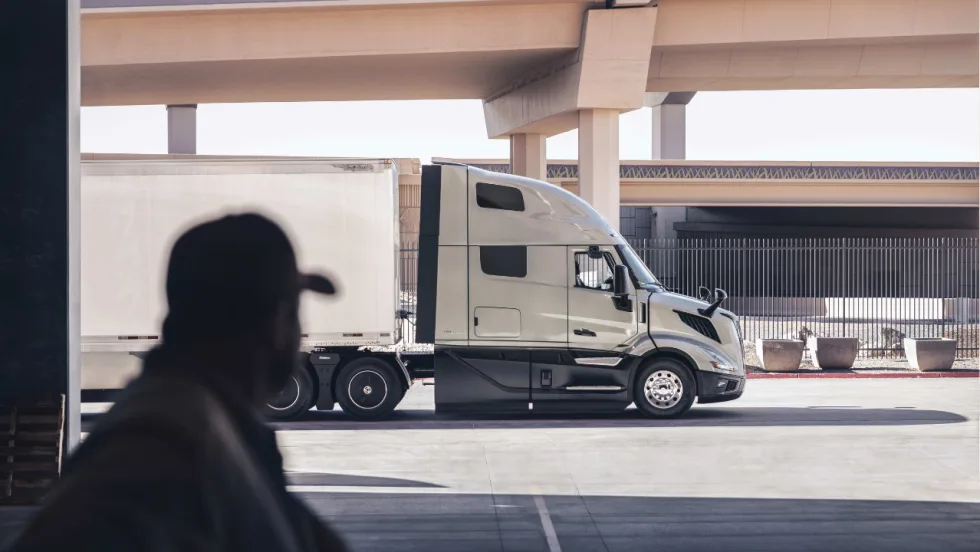
Volvo Trucks’ 'Lock and Leave' Software Updates Go Live Across North America
Unattended over-the-air software updates are now available in Volvo trucks across the U.S. and Canada. The new capability lets trucks stay current with the latest software without interrupting operations or requiring a dealership visit.
Read More →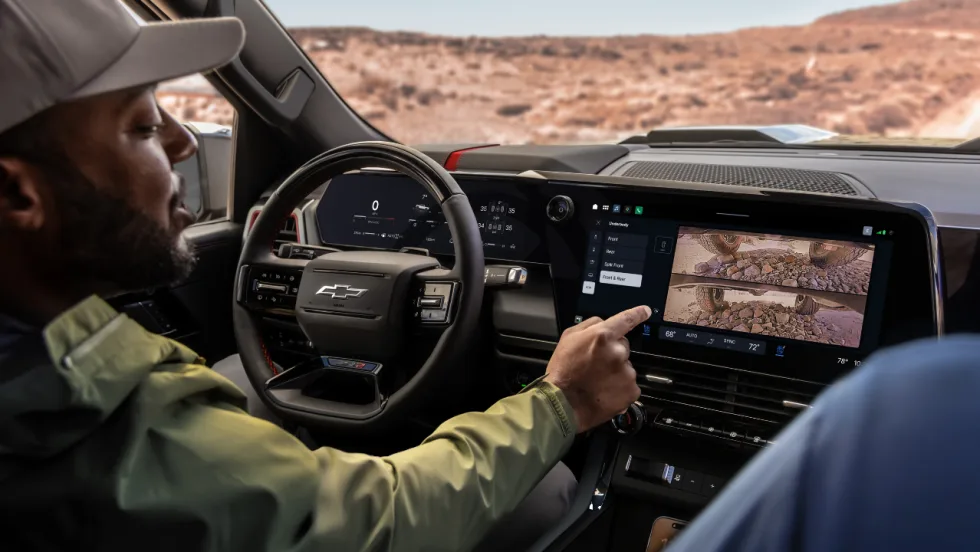
GM Brings New Truck Focused Interface to 2027 Silverado and Sierra
GM's new pickup interface puts trailering data, camera views, vehicle controls, and smartphone integration closer to the driver in the 2027 Silverado and Sierra.
Read More →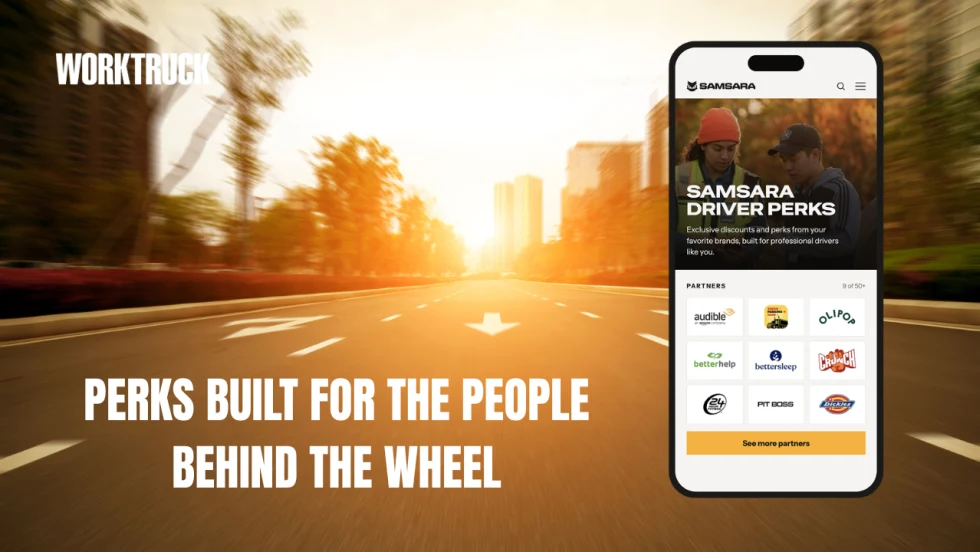
Samsara Driver Perks Expands Rewards Beyond the Long Haul Driver
Samsara’s new driver rewards program was built with a broader professional driver in mind, including employees who split their day between driving, job sites, service calls, and other work.
Read More →
AI Service Advisor Aims to Cut Fleet Repair Downtime
Fleetio said its AI Service Advisor can help fleets cut repair downtime by an average of 2.5 hours per repair while reducing manual maintenance work.
Read More →
Verra Mobility Launches AI-Driven Title & Registration Solution
Verra Mobility has launched a new AI-driven Title & Registration platform to help fleets move vehicles from acquisition to the road the same day while reducing compliance risk.
Read More →
Wialon Unlocks OEM Data to Give Fleet Owners Data Ownership & Operational Clarity
Wialon has introduced hardware-free OEM integration as the EU Data Act accelerates the shift in vehicle data access across the fleet industry in many countries.
Read More →
Teletrac Navman Promotes New CEO from Within
Teletrac Navman’s next CEO, Ricardo Buranello, has served as the company’s chief financial and operating officer. He brings deep financial and operational expertise, a strong strategic orientation, and an intimate knowledge of the business to his new role.
Read More →