




What Wheels Are Actually Doing at 60 MPH | Fleet Vehicle Science Explained
Tire Science for Fleets: Neil deGrasse Tyson breaks down why the tire contact patch hits 0 mph and what that means for traction and wear.

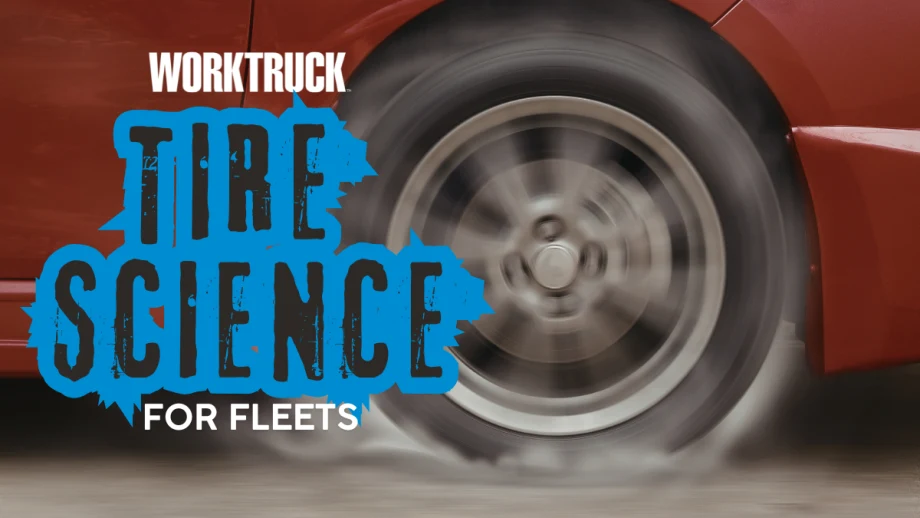
Work Truck’s “Tire Science for Fleets” explores the physics behind tire traction, explaining why the contact patch briefly reaches 0 mph and how that affects safety and wear.
Credit: Work Truck
If you manage a fleet or drive for a living, you already know wheels and tires are where reality lives. You can have the best engine, the cleanest telematics dashboard, and the most carefully spec’ed truck in the yard, but the moment traction gets weird, everything gets real fast.
Stopping distance and handling changes. Tire wear shows up on your budget and your schedule. And the driver feels it immediately. That’s why this explainer grabbed me.
Neil deGrasse Tyson and comedian Chuck Nice take something we all think we understand, “a wheel rolls,” and then flip it into a physics lesson that’s genuinely useful for fleet folks. Not because anyone needs to become an engineer overnight, but because once you see what’s actually happening at the tire and pavement, you start to understand traction, skidding, and tire stress in a totally different way. It makes the invisible stuff visible.
They start with a riddle that sounds like a trick question: What part of a moving vehicle is going backward while the vehicle is going forward?
And before we even get to the backward part, Tyson drops the fact that made me pause: If your driver is cruising at 60 mph, there is a part of that vehicle that is going zero miles per hour.
The Part of Your Truck Going 0 MPH
Here’s how Tyson explained it: “The part of the wheel at any moment in contact with the pavement is not moving at all.”
That little patch of tire touching the road is at 0 mph relative to the pavement.
It sounds insane, but it's legit physics. That momentary zero is exactly why the vehicle moves forward instead of just spinning in place. Tyson puts it simply: “Because part of the wheel is not moving at all… because if it were, you’d be spinning in place.”
If that contact point were sliding, instead of briefly stationary, you’d have a skid, not a clean roll. And for anyone managing drivers, equipment, and risk, the difference between rolling and sliding is everything.
So, every time one of your trucks moves down the road smoothly, it’s because that contact patch hits zero, grips, and rotates through again. Over and over, thousands of times per mile.
Why the Top of the Tire is Moving Twice as Fast
Now here’s where it gets really interesting. Tyson broke down what’s happening across the rest of the wheel: “You get zero at the bottom, the speed of the car in the middle of the wheel, and twice the speed of the car at the top of the wheel,” he explained.
Let’s put numbers on that: If your fleet vehicle is traveling at 60 mph, the bottom of the wheel is at 0 mph. The wheel's center is at 60 mph. The top of the tire is at 120 mph. Every single rotation.
The top of the tire is moving forward at double the vehicle’s speed because it has to rotate down and around to become that stationary contact point.
Tyson summed it up perfectly: “This is the geometry, the math, and the physics of an axled wheel on any moving vehicle.”
And this is where I start thinking about tires differently. Every rotation contains a full range of speeds. Zero. Sixty. One twenty. And everything in between. Multiply that by highway miles, loaded cargo, hot pavement, uneven surfaces, tight turns, and braking cycles, and suddenly, tires feel less like a commodity and more like a physics experiment happening in real time.
They’re absorbing load, managing heat, and maintaining grip, all while parts of them are moving twice as fast as the vehicle itself.
What Part of the Tire is Actually Moving Backward?
Now, back to the original riddle. Once you understand that the bottom of the wheel is at zero, you can follow the logic one step further.
Tyson explained, “Anything lower than the bottom of the wheel is moving backwards. There’s the wheel rolling. The part that’s below the contact point is moving backward… it actually lands in a place behind where it started… that means it moved backwards.”
So even while your fleet vehicle is moving forward, the physics of rotation mean that any part of the wheel assembly that dips below that zero-speed contact point is, at that instant, moving backward relative to the pavement.
So yes, your vehicle is moving forward, but a little slice of the wheel’s rotation is technically happening in reverse relative to the pavement. Which is the kind of sentence that makes you blink, and then go, wait… wow. It feels like a brain teaser, but it’s just rotational geometry doing exactly what it’s designed to do.
And one of the most important lines in the whole conversation is this: “There’s a part of your car that’s going at all speeds from zero up to twice the speed of the car.”
Think about that from a fleet perspective: At any given moment, your wheel includes zero speed at the contact patch, every speed between zero and vehicle speed, the vehicle speed at the center, and every speed up to double that at the top. All happening simultaneously.
That’s not just trivia. It’s a reminder that your tires are doing a lot more work every mile than we give them credit for.
Is a Circle the Only Wheel Shape that Works?
Because Tyson can’t resist going one level deeper, he also pokes at the assumption most of us carry around without thinking about it: a wheel has to be a perfect circle.
He points to the shape used inside a Wankel engine and describes it as “an equilateral triangle, but curve the corners of it and make the sides a little bit convex.”
And then he shares the part that makes your brain do that little buffering wheel of its own. “The distance from the bottom to the top remains the same no matter how it’s oriented.”
So even though it’s not a circle, it can still roll in a way that keeps the “height” consistent. Tyson adds, “You can design a shape where the top is always the same distance from the bottom, even though the center is moving.”
Technically, that means you can create a non-circular shape and still get a steady ride in the right setup. No, we’re not swapping your fleet’s wheels for rounded triangles anytime soon, but I love the bigger point: engineering doesn’t just accept what feels obvious. It tests it.
Where Safety and Tire Costs Actually Start
If you take nothing else from Tyson and Nice’s wheel rabbit hole, take this: your tires only “work” when that contact patch can grab the road instead of sliding across it.
And honestly, it's in fleet where that mindset matters. We live at the intersection of physics and practicality every day, whether we call it that or not.
Because every mile your fleet runs depends on that tiny patch of rubber hitting zero miles per hour at exactly the right moment. Every safe stop depends on traction. Every avoided skid depends on that contact point doing its job.
So, for a fleet manager with zero physics background, here’s why this matters in plain language: when tires are underinflated, worn, overloaded, or out of spec, that “zero mph grip moment” gets harder to maintain. That’s when you start seeing the things that cost you money and sleep, like longer stops, less control in bad weather, and faster wear that leads to downtime.
Your wheel isn’t just turning. It’s managing zero speed, double speed, and everything in between, thousands of times per mile. So the next time someone says we’re just talking about tires, maybe we’re not. Maybe we’re talking about one of the most important physics lessons happening in your fleet all day, every day.
Ready to learn more? Watch the full interview below:
More Technology & AI

Fleet Downtime, Truck Theft, and Electric Growth Lead This Month
Where is your fleet losing time? This Truck Chat recap connects repair delays, theft risks, storm planning, and lessons from scaling electric trucks.
Read More →
HCSS Partners with Verizon Connect to Deliver Fleet Intelligence for Construction Fleets
HCSS has integrated with Verizon Connect to provide near real-time fleet insights so contractors can spend less time tracking assets and more time keeping projects on schedule.
Read More →
How Fleets Can Use Technology to Fight Fuel Fraud
Fuel fraud and theft remain significant challenges for commercial fleets, whether the problem involves third-party fraud or driver misuse. In this video, David Abraham of WEX explains how SecureFuel uses vehicle geolocation, telematics, transaction information, and AI to help fleet managers identify suspicious fuel purchases and make more informed decisions.
Read More →From Our Partners
Basic Tracking vs Next Generation Fleet Technology
Sponsored by AT&T Business

5 Facts Every Fleet Manager Should Know About Embedded Telematics
Sponsored by Stellantis/Mobilisights

How AI Video Telematics Boosts Driver Safety and Helps to Avoid Unnecessary Costs
Sponsored by Verizon Connect

Charting the 8 Bottom-Line Benefits of Workforce Optimization
Sponsored by Verizon Connect

Can AI Agents Help Small Work Truck Fleets Do More With Less?
Motive's new AI Agents automate fleet safety, maintenance, compliance, and dispatch tasks. Here's how they work for smaller fleets, what managers control, and what early users are seeing.
Read More →
Paccar Launches Paccar Connect for Peterbilt and Kenworth Trucks
The new Paccar Connect offers touchscreen displays, telematics capabilities, and an expanding app ecosystem to boost productivity and streamline driver workflows.
Read More →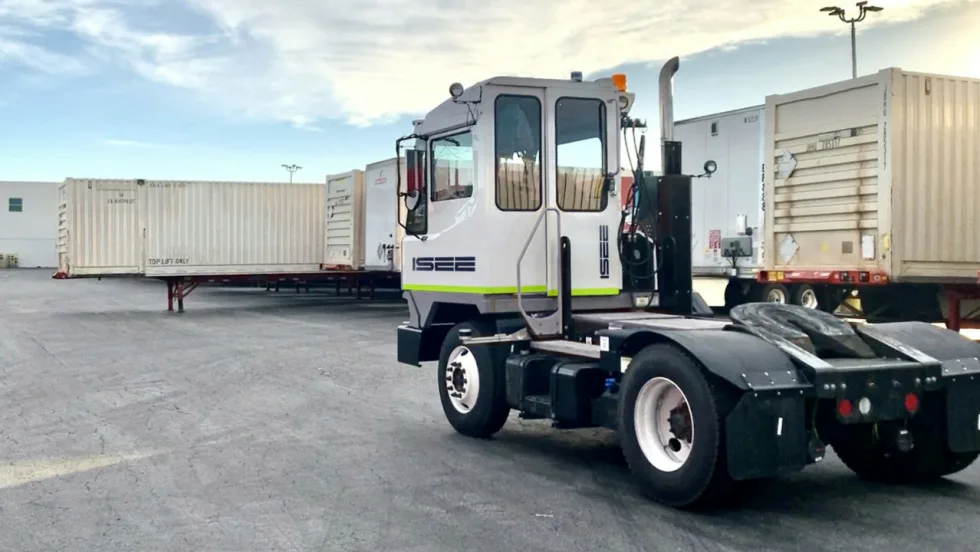
Holman and ISEE Partner to Expand Autonomous Yard Truck Operations
The partnership combines Holman's fleet management and upfitting capabilities with ISEE's autonomous driving technology to help businesses deploy and manage driverless yard trucks.
Read More →
Who You Gonna Call? Rivian Turns Electric Vehicles Into Ghostbusters Rides
Rivian teams up with Sony Pictures for a Ghostbusters-inspired Halloween software update, complete with custom sounds, lighting effects, and a special Ecto-R1.
Read More →
The Second Trip and What Missing Tools Really Cost a Service Business
For service fleets, missing tools and equipment can lead to second trips, lost technician time, higher operating costs, and delayed jobs. Equipment tracking can help HVAC, plumbing, electrical, landscaping, and other service businesses improve visibility and reduce downtime.
Read More →
GeoFencing Adds to Your Truck Security Arsenal
Geofencing is a familiar fleet tool today, but its early adoption marked a major shift in vehicle tracking, route monitoring, and the debate over employee privacy.
Read More →
Geotab Data Shows Regional Trucking Growing Faster as Last Mile Routes Get Denser
Geotab's first U.S. supply chain report finds stable long-haul activity, stronger regional freight movement, tighter hub-and-spoke utilization, and more last-mile trips on shorter routes.
Read More →