




2025 Work Truck Safety Study: Basics Strong, Tech Adoption Still Unsteady
Safety Starts in the Cab: Why Refuse Truck Tech Must Serve the Operator
From blind spots to busy streets, refuse operators face it all. Modern safety tech helps keep them protected and confident on every route.
by James Johnston, Autocar Trucks
December 4, 2025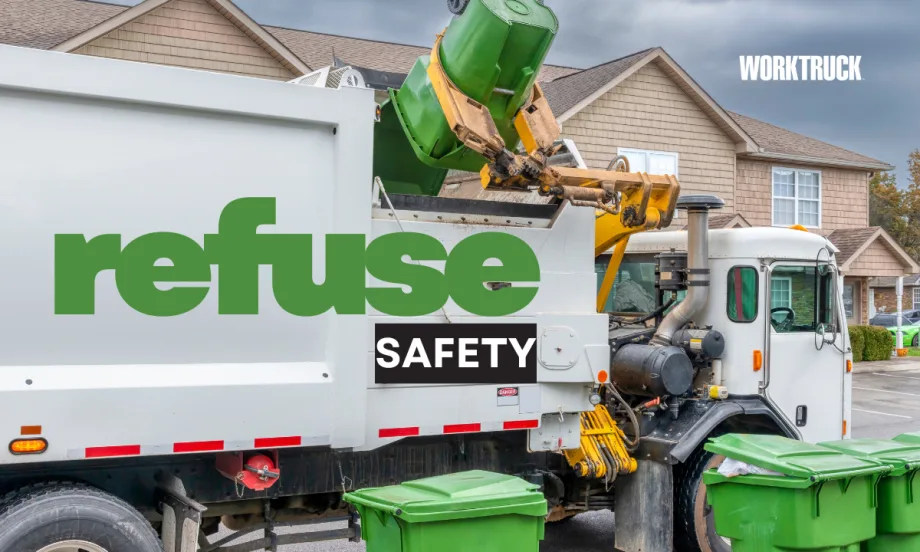
Refuse operators work in tight neighborhoods every day, and modern safety tech helps them stay aware, avoid hazards, and protect the communities they serve.
Photo: Work Truck
6 min to read
- Refuse truck operators encounter challenges such as blind spots and navigating through busy streets.
- Modern safety technology is integral in ensuring the protection and confidence of operators during their routes.
- The implementation of advanced tech in refuse trucks is crucial to improve safety from within the cab.
*Summarized by AI
Every morning before the sun comes up, a refuse truck operator like Mike starts his shift. He rolls out into quiet neighborhoods, steering a heavy vocational vehicle that gets heavier as the day goes on. He navigates it through tight residential streets, alleys, and intersections, all before most people have had their first cup of coffee.
It’s a tough job. And from where I sit, as someone who’s been in this industry for over three decades, I’ll tell you this: if we don’t give that operator every possible tool to help him do his job safely, we’re not doing our jobs.
That’s why I believe the operator is the most important person in the loop. When we talk about safety, uptime, and community impact, it all begins and ends with the person behind the wheel.
And if we’re serious about protecting lives and livelihoods, we must be serious about equipping operators with advanced, integrated safety technology designed specifically for the way they work.
Fortunately, technology has come a long way, and it’s more advanced and capable than I believe most customers realize (and even more than many in the industry realize, too).
Turning Tech into a Second Set of Senses
The reality is that operating a refuse truck today means making hundreds of decisions in a single route. You’re watching for kids darting out between cars, managing constantly shifting situations, navigating tight turns in alleys, and trying to stay on schedule.
Operators can handle a lot, but why make them do it all by themselves? Why not give them intelligent systems that help watch those blind spots, scan the road for hazards, and step in to assist when milliseconds count?
Take Mike, our hypothetical operator. Let’s walk through his day.
He starts up the truck and gets ready to head out. There are a lot of traffic signs along the way, and they’re all important. We want to make sure they're seen and followed.
That's why Mike’s truck is equipped with road sign recognition technology that identifies critical signs — speed limits, school zones, and weight restrictions — and alerts him instantly. He doesn’t have to squint or second-guess.
That’s what it means to assist the operator: help make him safer, sharper, and more confident in his decisions. I'm amazed by just how well safety systems today can augment an operator’s senses, and I’m excited for what they can do in the future.
A Layered Approach to Operator Assistance
Back to Mike’s route. He’s approaching a busy intersection, and a delivery van suddenly brakes in front of him. In that split second, Mike starts to react, but the automatic braking system has already handled it. It’s been scanning the road ahead, calculating distance, velocity, and stopping time. It engages the brakes automatically, helping him avoid what could’ve been a serious collision.
That kind of help is invaluable in the refuse world. Because let’s face it: our operators are dealing with the unexpected every day. Dogs running loose. Bicyclists sneaking up on the side. A toddler chasing a ball into the street. These are not theoretical scenarios; they’re real, and they happen fast.
With a combination of cameras, radar, and smart braking logic, today’s refuse trucks provide multiple layers of awareness. The truck gives the operator another set of eyes. It responds when there’s no time to hesitate. And it communicates with the operator in real time, through subtle alerts, clear visuals, and automatic actions when necessary.
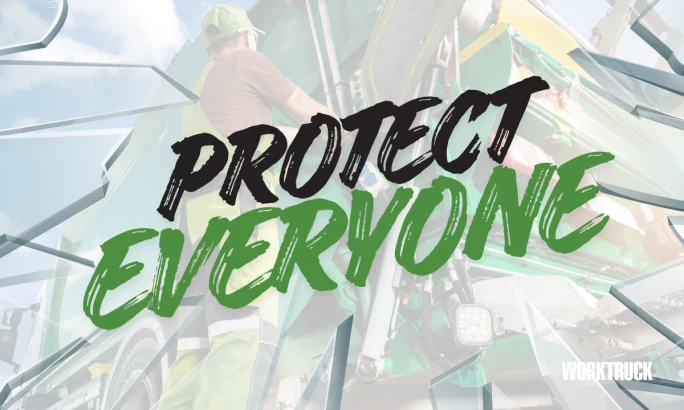
Advanced refuse truck safety systems help operators protect pedestrians, cyclists, and the communities they serve on every route.
Photo: Work Truck
Seeing More Than Mirrors Ever Could
One of the most transformative changes I’ve seen over the years is in 360-degree visibility. We used to rely entirely on mirrors, backup alarms, and an operator’s memory of what was around the vehicle.
Today, our trucks can be equipped with a suite of high-resolution cameras (rear-facing and side-mounted) so operators like Mike can see everything happening around them.
Turn signals trigger the side cameras. Putting the truck in reverse activates the rear view. Radar supplements the visuals by detecting pedestrians or objects that might be hidden from the camera’s view.
When these systems work together, they give Mike a full picture, one that no mirror or single camera could ever provide on its own. That kind of situational awareness helps prevent accidents, reduce stress, and build operator confidence.
Protecting the Most Vulnerable People on the Route
Our operators work in proximity to people, on sidewalks, in crosswalks, and near playgrounds. These are our neighbors and families, and we want to deliver great service to the highest possible safety standards.
That’s why trucks today can be built with pedestrian and cyclist detection to recognize people. Not just large vehicles or objects, but human forms, who are all moving at different speeds, from different angles, and in all types of weather.
When a cyclist is approaching on the blind side, or a pedestrian gets too close during a turn, the system alerts the operator and, if needed, applies the brakes automatically.
This is where real engineering shines, not just detecting motion, but understanding context and distinguishing a mailbox from a stroller. That’s the result of years of hard work from bright engineers for whom safety is a personal mission.
Reverse with Confidence, Not Guesswork
One of the most stressful parts of operating a heavy-duty refuse truck is backing up. That’s where many accidents happen, because it’s tough to see back there, especially in tight quarters.
But with modern reverse safety technology options, we’ve changed that. Systems today can use a combination of radar and cameras to create a zone of awareness behind the truck.
When Mike backs into a tight alley, he’s not relying on memory. He’s got sensors watching every angle, alerting him if something enters the danger zone. And if needed, the truck can brake on its own.
That’s how you back up a vehicle of varying weights in a variety of road conditions: with the confidence that your tool was built for your work.
Built for the Job, Not Borrowed from the Highway
Now, let’s be honest: refuse work doesn’t look anything like a highway haul. Constant stops. Tight quarters. Side streets. Reversing into alleys. These are edge cases for OTR trucks, but they’re constant in refuse.
Our trucks operate in a totally different world. We stop and start constantly. We reverse in tight quarters. We drive through crowded neighborhoods, past schools and parks, often with limited maneuvering space.
Building a tool once correctly will always yield a safer product. Integration of chassis and body from the start, with safety in mind, is the only way it can happen, because that’s how you can ensure your tool is calibrated for the unique demands of our industry.
When Mike pulls that truck into the bay at the end of the day, there’s one thing on his mind: going home to his family.
We owe it to our operators to help them get there safely, every single time, satisfied that they did their job and took care of their communities. That they were able to do their part to protect their family and the families they served that day.
Technology can help; we must commit to equipping our fleets with the latest advancements, train our operators to use them, and keep thinking of and building better ways to do better tomorrow than we did today.
Subscribe to Our Newsletter
More Safety

Volvo Trucks Releases New Safety Recommendations for Traveling with Pets
One of the most important recommendations for professional drivers traveling with pets is to ensure pets are properly restrained while the truck is moving. Other tips are available in the new guide from Volvo Trucks North America and Center for Pet Safety.
Read More →
API Issues Refueling Safety Guidelines
The American Petroleum Institute offers a list of safe vehicle refueling guidelines, including ways to avoid potential problems with static electricity discharges in fall, winter, and early spring.
Read More →
Winter Fleet Prep: Expert Tips to Keep Vehicles Running Smoothly
Cold weather can expose weak batteries, tires, fuel systems, and maintenance gaps fast. Use this winter fleet checklist to prepare trucks and drivers before temperatures drop.
Read More →
When a Work Truck Breaks Down, the Job Can Stop, Too
A work truck breakdown can stop more than the vehicle. Discover how payloads, jobsites, and specialty equipment change the roadside response.
Read More →
What Stronger Long-Term Fleet Service Partnerships Actually Require
Fleet service partnerships rarely fall apart all at once. Learn the three warning signs that trust is eroding and what fleets and providers can do before downtime, frustration, and lost revenue follow.
Read More →
Applause & TRUCE Software Partner to Improve Driver Safety Through AI-Powered Telematics & Employee Performance Management
Applause has integrated TRUCE driving metrics directly into its employee-first performance and safety platform that transforms mobile devices into AI-powered telematics.
Read More →
How Detroit Assurance with Active Brake Assist Works
Do you want to see what it is like to experience Detroit Assurance’s Active Brake Assist? In this video, Work Truck will put you in the cab to see how it all works and then hear more details from DTNA’s Mike Young.
Read More →
Get Left of Loss: A 5-Step Workplace Violence Prevention Framework for Fleet Operators
Violence risks do not stop at the driver’s door. Learn five practical steps fleets can take to spot threats early and protect workers before loss occurs.
Read More →
Sponsored•July 17, 2026
How Better Visibility Cut Speeding Violations by 48%
Fleet leaders don't need more data, they need clearer visibility into what the data is saying. This case study explores how one utility replaced speeding-event counts with a single metric — miles driven in violation — to strengthen safety and significantly reduce speeding violations.
Read More →
13 Safe Driving Tips for Commercial Vehicle Drivers
Make sure you are spending time on the road safely with these important tips.
Read More →